

About 4.5 billion years ago, the miscellaneous material orbiting a
star at the edge of the Milky Way coalesced into a planet that we call
Earth. It took another billion years—a thousand million years—before
it cooled enough for life’s self-replicating biochemical processes
would flourish in the primeval stew of the oceans. Another billion
years was required before multicellular organisms would evolve. Not
until about 500 million years ago did fungi and plants appear on the
land that had risen out of the oceans. Insects evolved in this
terrestrial ecology. Then 100 million years was required for some
marine animals to transition to the continents on their long and
convoluted journey from simplicity to complexity. Thus began the magic
of life and death that has alternated between the prolific and the
extinct throughout the subsequent eons of history. We, as a distinct
species, evolved as Homo sapiens only about 200,000 years ago.
All posts by Ray Grigg

The Quadra Project – Enoughness
Our primordial history continues to haunt us. Try as we might, we can’t seem to escape the psychological dynamics that have so indelibly shaped us during our many millennia as primitive foragers and hunters eking out our precarious survival in an untamed nature. This vulnerability is so baked into our genetic memory that it subconsciously expresses itself in behaviours that are irrational and ultimately destructive. This subject is introduced by Jodi Wilson, an Australian health journalist and author, in an essay, Enough’s Enough: We Are Overwhelmed With Having Too Much Stuff (The Guardian Weekly, January 23, 2026).
Continue reading The Quadra Project – Enoughness
The Quadra Project – The Democracy of Nature
Humanity’s attempted dominance over nature is becoming a
problem—attempted because we think that we are in control whereas, in
fact, we are disturbing natural ecologies to such an extent that we
are creating biological and biophysical systems that will be hostile
to our survival as a civilization and as a species.
This illusion of control and its consequences have been the concern of
Daniel Lim, the principal of a consulting firm that specializes in the
“advance of social justice through nature-based whole systems change.”
Lim is not worried so much about biological systems as sociological
ones, and how some cultures rise to such power that they dominate and
obliterate smaller ones. History is replete with examples of these
“supremacy cultures” and the social injustices that they create as a
result of exercising their power and influence. But what is the
alternative?
The Quadra Project: Biological Wonders – Part 3
Click here to access part one of this series and here for part two .
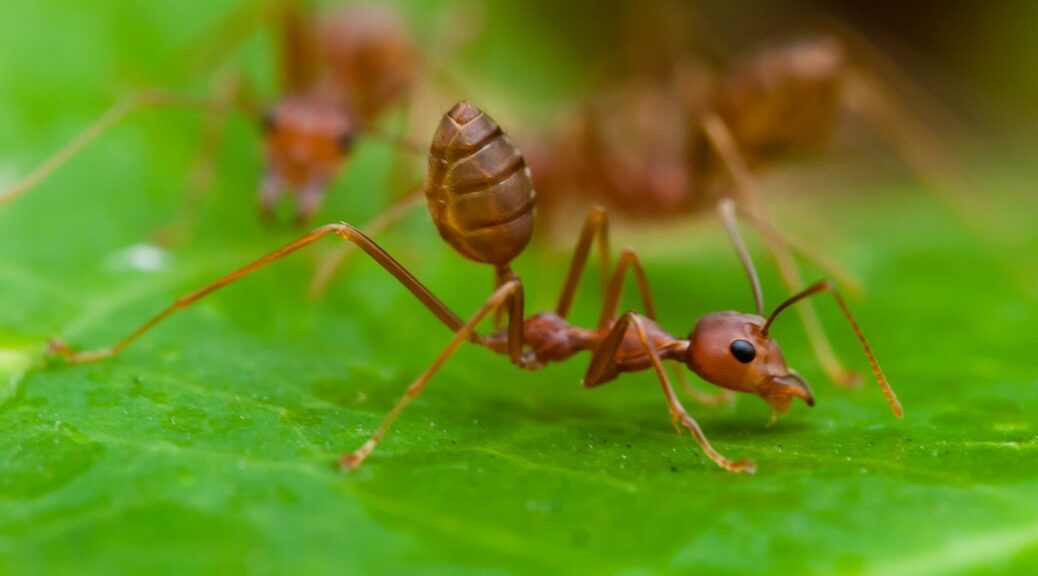
• A species of weaver ant found from India to northern Australia
(Oecophylla smaragdina) makes its nests by curling leaves into loops.
The leaves, however, are too stiff for any single ant to accomplish this feat. To solve this problem, the ants form a chain of up to 17 individuals. Using their mandibles, each ant grabs the abdomen of the previous ant, and they all pull together to bend the leaves. Using this tug-of-war strategy, the ants are able to pull up to 100 times their individual body weight (New Scientist, 23 August, 2025).

The Quadra Project – The Dark Tetrad – Part 2
In Goliath’s Curse: The History and Future of Societal Collapse, Dr.
Luke Kemp attributes the cause of civilizational failures in 400
societies over the course of 5,000 years of history to the
contaminating effects of leaders who possess the “dark triad” of
narcissism, psychopathy and Machiavellian manipulation. A related but
equally intriguing perspective comes from Dr. Leanne ten Brinke, a
professor of psychology and director of the University of B.C.’s Truth
and Trust Lab, who has done extensive studies on the behaviour of
convicted criminals (University of British Columbia Magazine,
Spring/Summer 2025, “The ‘Strongmen’ Who are Breaking Democracies” by Jared Downing).