
By Moira Wyton, The Tyee, Local Journalism Initiative Reporter
British Columbia’s indoor mask mandate and vaccine card will remain in place as the province begins to ease pandemic public health orders on Thursday and transition to a strategy focused on personal risk management.
The Omicron variant, which took hold amid loosened public health measures and drove the province’s fifth wave of COVID-19, is waning enough to look at a less “restrictive” means of pandemic management, provincial health officer Dr. Bonnie Henry said Tuesday.
Capacity limits on indoor gatherings and events like weddings and receptions will be removed, and people will be able to dance and mingle at bars, night clubs and restaurants again.
There will also be no limits on indoor social gatherings for those who are unvaccinated, and fitness centres, dance studios, sports tournaments and gyms can operate as usual with no capacity limits.
Mask mandates and the BC Vaccine Card will be reviewed on March 15 and April 12, Henry said, which is also when the province will consider easing visitation restrictions in long-term care, faith service guidance, and orders in industrial work camps.
B.C. is now the only province outside Atlantic Canada without a set expiration date for its mask mandate and vaccine passport programs.
“We’re not out of this pandemic. We are very much, I believe, in a transition phase,” said Henry, noting that more than 90 per cent of B.C. has some protection from either vaccination or a recent infection, though that protection is unpredictable and likely to wane with time.
“We have the ability with the amount of immunity and transmission we’re seeing, to begin to lift those restrictions.”
Tuesday’s press conference marked a decisive shift towards individuals managing their own pandemic risk while rapid and PCR tests remain inaccessible for all but a select group of high-risk individuals in long-term care and health care, and for those who are immunocompromised.
Limited testing makes it difficult to know the exact trajectory of community transmission in B.C.
But hospitalizations have begun to slowly decrease after peaking at 1,048 on Jan. 31. As of today, there are 787 people in hospital with COVID-19, 124 of them in intensive care.
And 17 more people died due to COVID-19 between Friday and Monday. An average of about nine people have died each day in February in B.C.
When asked by The Tyee how confident high-risk and immunocompromised individuals could be with this new approach, Henry said that people need to go at their own pace and respect others’ comfort levels.
That may mean limiting gatherings and people taking additional measures if they are at-risk, she said. “We’re not through a period yet where the risk is low enough to stop taking precautions entirely.”
When asked what level of long-term illness or death would be acceptable with the gradual easing of measures, Henry did not directly respond. The risk of long COVID still looms for 10 to 30 per cent of people who survive their initial illness.
Henry said that because British Columbians have gotten vaccinated, the vast majority of cases do not result in serious illness or death. Those who are dying are unvaccinated people as young as their 30s or 40s, as well as many seniors and elders in long-term care.
“We do know that with high rates of transmission, this small number of people would be so much greater if we didn’t have that protection of vaccination,” Henry said.
Henry stressed that B.C. is not yet out of the woods, and that future variants are a likely possibility. But she said once current orders end, she doesn’t “believe we will have to go back to broad societal measures.”
“We have downsides of opening up… but we do have societal downsides of public health orders,” said Henry. “It’s about finding that balance.”
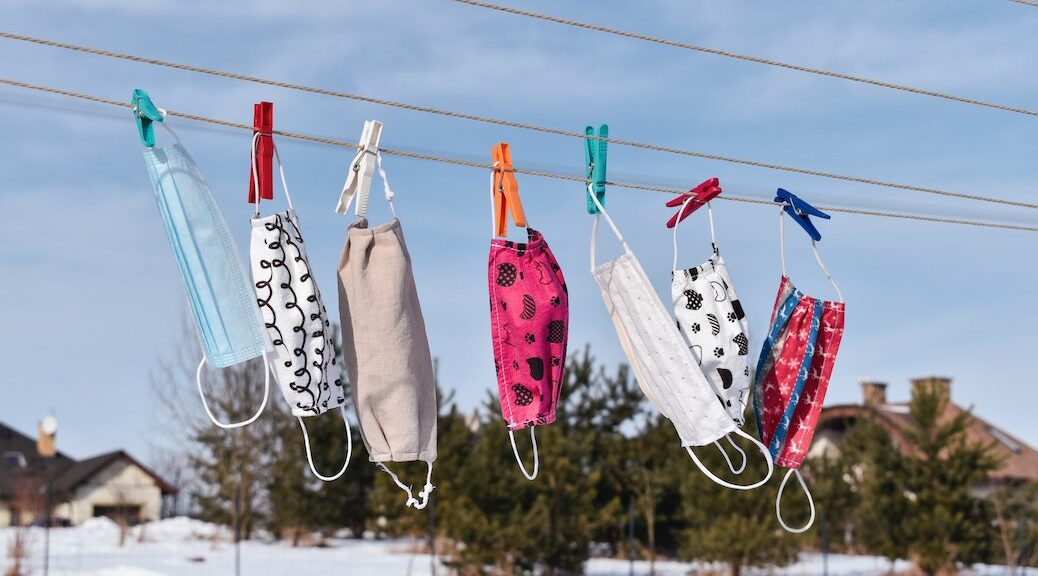
Top image credit: Hanging out the laundry – Photo by Jacek Pobłocki on Unsplash

Sign-up for Cortes Currents email-out:
To receive an emailed catalogue of articles on Cortes Currents, send a (blank) email to subscribe to your desired frequency:
- Daily, (articles posted during the last 24 hours) – [email protected]
- Weekly Digest cortescurrents – [email protected]