


Every year, the Friends of Cortes Island (FOCI) give the Jo Ann Green Award to a Cortes Islander who has made a significant contribution to the environmental wellbeing of the community. Bruce Ellingsen is this year’s recipient.
“Jo Ann Green was an exemplary environmentalist who came to Cortes in 1969, and she immediately became involved in social environmental activities on the island,” explained Helen Hall, Executive Director of FOCI.
“She was a leader in the formation of Friends of Cortes Island, and she was an active homemaker in support of home services on the island too. She represents the spirit of Cortes Island’s resilience and it’s residents recognition of the vital importance of the natural environment. In recognition of all of that, we developed the Jo Ann Green Award in 2001.”
“So it’s been running now for well over 20 years, and I’m delighted to say that this year’s winner is Bruce Ellingsen, who has worked tirelessly for the natural environment on the island, particularly through his work in ecoforestry and I would just like to read out his nomination.”
“Bruce Ellingsen consistently and humbly, year after year, commits himself to better forestry practices on Cortes and supports the community in various other ways. Watching him work on the perimeter fence around the natural burial area at Manson’s cemetery for close to two months, putting in posts and rails that he purchased. So the cemetery can be a place where trees grow, is just another example of his steady and cheerful dedication. So, well done to Bruce.”

Bruce Ellingsen: “Thank you very much for that, Helen. That’s a great honour for me to be awarded this Jo Ann Green Award. Having known her and interacted with her in her early days on the island.”
“It was probably shortly after she arrived on Cortes, when Raven Lumber came to start their logging on the South Point Road area in 1979, and that certainly engaged all of the Cortes community and the concerns around the rapid change to the island environment with the modern harvesting activities that were going on over that period and into the eighties. We engaged in ongoing discussions about the impact of it, how people felt about it, mostly at Gorge Hall. We put out a survey that we had a very good response to and generated something approaching 80% consensus in the long run, after all of these discussions, that Cortes community wanted to be actively involved in the management of the forest on Cortes as broadly as possible.”
“That has continued. I feel comfortable in saying that support of around 80% of the population for what we’re doing with the ecoforestry approach and getting the community forest in the long run in partnership with the Klahoose First Nation has been a very good start to the island community taking control of management of the forest on the island, and that’ll be continuing and hopefully be broadened in the coming years.”

Natural Burial
Cortes Currents: Do you want to say a couple of words about the natural burial site?
Bruce Ellingsen: “Yes, I will, Well, after Ginny passed in 2019, I naturally was focused much more on the end of life period, which I’m into now, not knowing exactly when I might clock out as sometimes is said, and my days as a human on this beautiful earth of ours.”
“With all the thoughts of my own and conversations with other people, sharing ideas about end of life and what comes and goes in a lifetime. I’m very comfortable with my body being interred in the natural burial site, as opposed to six feet down in the conventional burial site within the Manson Cemetery.”
“I’d rather be more shallowly buried and let the recycling of my body advance as rapidly as nature will do it. To be recycled into trees in this case where there’s going to be trees allowed to grow on that natural burial site in the long run. And other things in the under shrubs and so on, whatever nature puts there will be allowed to grow over my remains and, who knows where I’ll go on this next great adventure.”
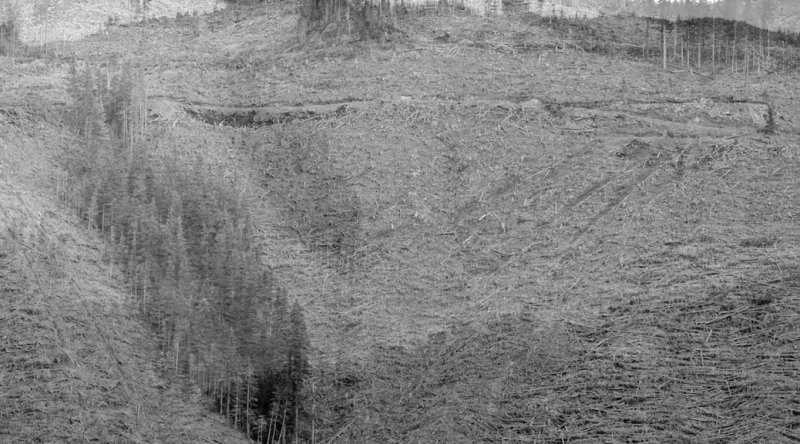
When M&B logged Cortes Island
Cortes Currents: Do you want to talk about your involvement with Cortes Island’s community forest movement?
Bruce Ellingsen: “Around 1988, when MacMillan Bloedel (M&B) returned to Cortes to start logging their privately owned forest lands on Cortes, there was a Cortes representative group. I forget exactly what it was called. Martha Abelson and Pam Knowles, I think, were the two who volunteered to be the intermediaries with M&B to talk to them about how they were going to manage their harvesting. They were starting off with clear cutting over near the Klahoose reserve in Squirrel Cove, and in 1988 they clear cut probably 40 acres or so.”
“In 1989, they came back to do around 40 acres. Then they were going to come back a third time to carry on with that. I remember Kathy Francis telling me that when she asked them why they were doing it in Squirrel Cove area, they said the rest of the island was too sensitive, which was the reflection of the conversation that was going on between Cortes and the M&B Forester who was in charge of activities over here, Rod Tisdale. That was because most of the objections to what M&B was doing and the rate of harvest that they were undertaking on Cortes was far greater than the Cortes Island consensus felt was sustainable in the long run from all of the deliberations during the eighties.”
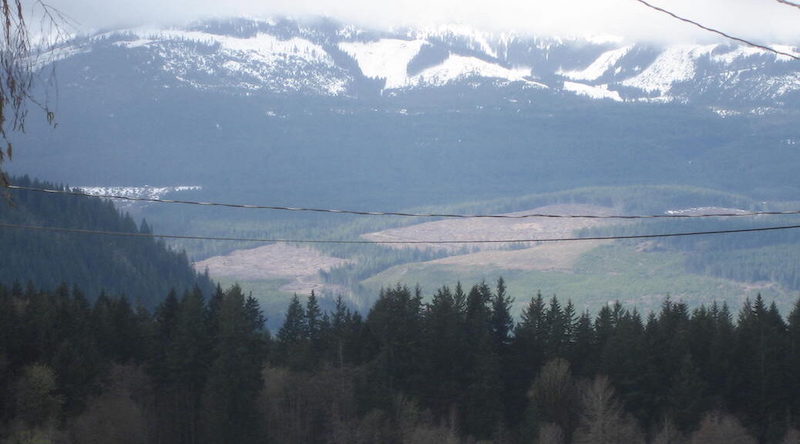
The 1990 logging Blockade
“So it ended up with a confrontation at the proposed recommending of the harvest in 1990. The contractor was blockaded by a combination of First Nations from the Klahoose Village and non-Indigenous people. About 120 people showed up for two days and blockaded the contractor from getting in and resuming his work.”
“I think it was one of the pivotal points in the development or the evolution of the relationship between the non-native community on Cortes and Klahoose First Nation. The strong support and the sense that we are all in this together as an island community. We’re going to be living here for as far ahead as we can see, and we better get working together for the betterment of the Island community.”
“That stopped M&B. They agreed with the intermediary volunteered support of Colin Gablemann, a longstanding NDP representative for the North Island who knew Cortes quite well. He agreed to come and act as a mediator with the conversation with M&B and about their proposed practices and the dissatisfaction with the Cortes community. After about a couple of days of talks, they agreed to discontinue their proposed return to carry on their clear cutting. They would hold off until they came back with a different approach to harvesting, which they did in, I think it was the winter of 93.”
“They came back saying that they wanted to do lens cuttings, openings on the areas they were going to harvest, and then thinning of the remaining stand on those parcels of land that they were going to harvest from. That was going to be removing about one-third of the tree cover on the areas that they harvested from. They would come back in another 15 years and take another third. Then after 30 years, they would be coming back and taking the rest. It would effectively be clearcut in 30 years.”
“They were still going to carry on with their 10,000 cubic meters per year proposed harvest from their four and a half thousand acres of land that they had, which we still felt uncomfortable with.”

M&B changes the way it logs
“I was engaged in the conversations frequently with Rod Tisdale about it. We still felt uncomfortable with the volume that they were proposing to harvest, but we didn’t really have a good sense in our side of the discussion to counter that and demand that they reduce it significantly. We felt that their move to a lens cutting and thinning approach was a big change in their management, enough to let them resume operations.”
“So that’s what they did for the next couple of times that they came here.”
“Then in the late nineties M&B got into red ink as a corporation. The Clayoquot demonstrations in the early nineties set them back, I guess. Immediately after the Clayoquot demonstration, the Chairman of the board decided to make peace as much as possible with the woods by changing their methods of harvesting, and their areas that they were going to harvest. He also decided to sell off what he called extraneous or outlying properties that M&B owned, which impacted the Seaford Y property on Cortes and the parcel up in Lewis channel, opposite Teakerne Arm that was clear cut up the hillside there, up to Corby’s Peak. He turned M&B’s fortunes around into the black Ink side of things and I suspect there was probably behind the scenes negotiations going on with Weyerhauser that led to an offer from Weyerhauser to buy all of M&B’s assets in BC in early 1999.”
Negotiations for a Cortes Community forest
“Cortes at that time was in negotiations with M&B to see if we couldn’t find some mechanism by which we could obtain their four and a half thousand acres of private forest lands on Cortes, and roll them into the Crown forest lands on Cortes and create a community forest that would’ve ended up with a significant larger area of control for the Cortes community under such a community forest than the one we presently have.”
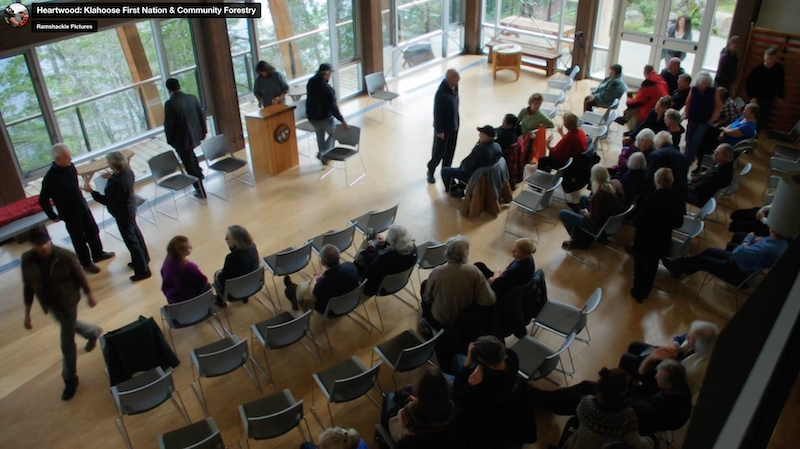
“In 1999 a commission was set up to plumb the opinions of people on the coast of BC where M&B’s activities were going on, about whether or not that should be sold to a foreign company. David Perry was the head of that. He came to Campbell River, amongst other places, for public input.”
“Kathy Francis and I went over to Campbell River to present on behalf of the two communities on the island. David Perry was very interested in what was going on here because Kathy and I were not only expressing concerns about the impact of selling to a foreign corporation and possibly engaging the NAFTA concerns about further control of things on forest lands in BC by a foreign company, we also talked about what the efforts we were undertaking with M&B to try and negotiate with them to acquire or obtain control of their private properties on Cortes and roll ’em into a community forest. I remember sitting directly opposite him and he was looking me right in the eye while I was talking to him, and I saw him doing the same with Kathy, and really interested.”
“When the Province finally decided that they would allow the sale to go ahead, one of the 13 requirements was that Weyerhauser continue to negotiate in good faith with Cortes. Colin Gabelmann was flabbergasted. He’d been in the NDP government for 17 years. He’d never seen a small item like that end up on being one of the provincial requirements for a sale of significant assets like that.”
“So it’s really interesting to me how much influence a little island like Cortes has on affairs that affect it. I think it’s a reflection of all the engagement of this community that I’m so happy to be part of, that I chose, in 1968, to come back and live on and make my life. It certainly was the right thing for me and for Ginny and my family to be here.”
“It’s a reflection of the engagement of such a large portion of our community in current affairs or ongoing affairs around Cortes that rises to the challenges of whatever comes along as time goes by to respond and reflect what Cortes would like to see happening and gets involved in making it happen, as well as we can.”

The dream stalls
“In the fall of 1999, Dosanjh was the Premier of the province and he had directed Gordon Wilson, his Forest Minister to make this transaction or arrangement with M&B to get them off Cortes and get control over their lands. Then unfortunately, for the whole process, the NDP government chose to call an election very early in 2000 and they got swept out of power. So that was the end of that. At the same time, the Klahoose had a new Chief elected and he was not that comfortable working with the non-native community.”
“So that also led to stalling any efforts in that direction, it was dead in the water. Weyerhauser did, I would say, honour their requirement to continue negotiations, although they weren’t actively willing. We kept on pushing them to it, but nothing was happening for about three years.”
“So they started selling off properties, and that’s when I think they had nine significant properties of formerly M&B’s lands on Cortes. They sold many to friendly purchasers, but a couple of them went to loggers, including the one that goes up to the quarry there at the Gorge and a couple out in the Mary Point area. They were promptly logged and then resold.”

Birth of the Community Forest
“Cortes still has to work our way through the impact on those parcels of land, but the efforts keep on going. Finally, in 2008, the new Chief in Klahoose revived the desire to work with the non-native contingent on the island. We got going on lengthy negotiations over the next, basically three or four years to get a committee together. Liz Richardson, Ron Waldo, and myself and Kathy Francis. Then Greg Hemphill, who used to be the district manager in the Sunshine Coast Forest District agreed to act as an advisor in any intermediary, which was valuable with the Ministry of Forest, because he knew all the parties that were at play there, and talking about community forest.”
Cortes Currents: Eventually Island Timberlands came into possession of Weyerhauser’s land. What can you tell me about the 2012 logging blockade?
Bruce Ellingsen: “I was really puzzled about why I couldn’t remember much about it. It was because I wasn’t involved in that side of things. We were dealing with MOF (Ministry of Forests) to try and get a community forest tenure while the local resistors were stalling Island Timberlands to the point where they left the island feeling Cortes was inoperable socially inoperable, which it is unless outfits do it the way we want them to do it.”
“Now we’re dealing with Mosaic on the remains of those lands, that Mosaic now is managing for them.”
“So it’s an interesting evolution of things around the forestry aspect of Cortes Island’s landscape that I’ve been engaged in for well over 30 years and all the time thinking about just what the hell is sustainable logging, sustainable management, and how can you figure that out?”
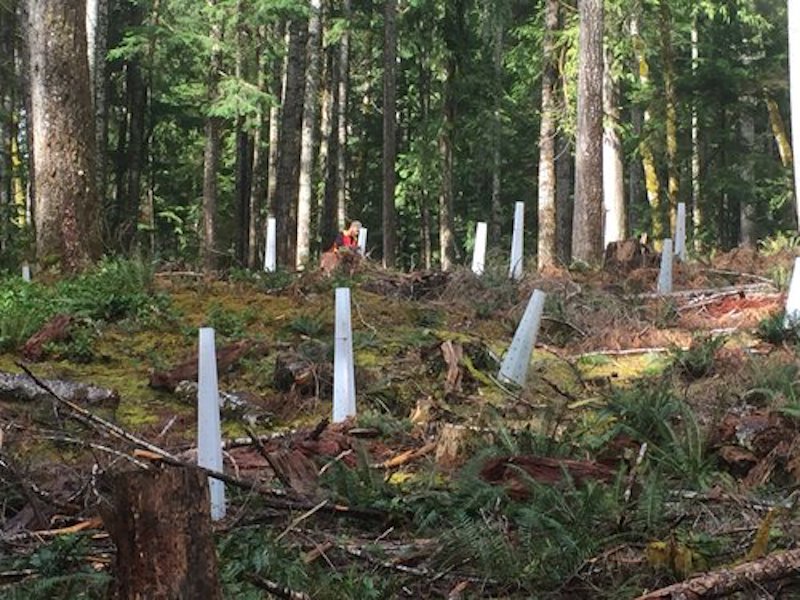
“I met, actually through Kathy Francis and Klahoose in the middle nineties, Herb Hammond, the person I consider to be the originator of the ecosystem based management approach to managing forest and we were very comfortable with that. I would say all of the folks that were interested in sustainable forest management on Cortes felt it fit very well with the Cortes attitude about what was sustainable harvesting.”
“So that’s an interesting conjunction with my personal thoughts about sustainability which boiled down to the question of how much can you take out of a living forest ecosystem before it starts becoming degraded over time, either slowly or rapidly according to how much you’re taking out of it. I slowly found evidence that sort of supported what I felt was probably a common sense approach, that ended up with me arriving at somewhere around 15 to 20% of what actually grows in the forest each year is the volume of timber you can harvest. That leaves the other 80%-85% of the nutrients that are reflected in that growth remaining in the forest system to keep it alive and healthy. If you take much more than that out of that, it’s going to lose its ability to thrive and sustain itself. The interesting conjunction with going back to Herb Hammond was that he came to the conclusion that was virtually a mirror of what I was saying from my common sense considerations. 15% of what grows in the forests on Cortes could be harvested each year, the equivalent of one cubic metre per hectare per year. That’s virtually identical to my approach that you can take out 15%, which he determined through his very scientifically based approach and explanation.”
Cortes Currents: You were one of the founding directors of the Cortes community forest as well. Can you tell us a little bit about it?
Bruce Ellingsen: “The papers were signed with Ministry of Forest in 2013, I think it was September. I can remember Kathy Francis and, I forget who she was with, at the Whaletown Ferry lineup. She had the papers in her hand and was taking them to Campbell River to deliver, but she needed somebody else to meet her there and add their signature. So they met there, signed the papers in the lineup on the hood of David Guthrie’s truck, and he signed as a witness. That was the last thing to send off, to complete that.”
Nov 28-30 meeting on Salt Spring Island
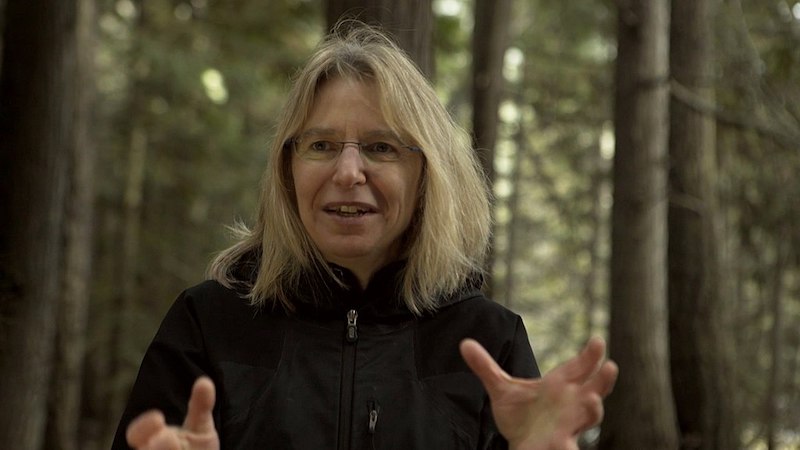
“I’m still active in the interest of sustainable forestry and that’s why Mark Lombard and I were down for the three day conversation on Salt Spring from Monday to Wednesday. I just got back yesterday.”
“It’s quite an interesting thing to get involved with the Mother Tree Network that Suzanne Simard has almost mushroomed out of her book, ‘Finding The Mother Tree.’”
“I almost have the sense that we’re approaching a tipping point with the interest in what is happening in British Columbia for the management of our forest, connected to climate change impacts.”
“It was a real crash course in what’s going on in the outside world for me, coming from Cortes with my relatively quiet life here and thinking about things and a few conversations and a few activities in the forestry side of things on Cortes going down into the thick of it down there, with that group. But they’re all heading in the right direction.”
“I’m optimistic that Suzanne Simard with her Mother Tree network will find a way and be supported in establishing an educational facility on Cortes, or centered on Cortes, because Suzanne is certainly personally interested in doing that. She brought out some really hard hitting evidence from the research that her ground team has done this last summer. One of the young ladies was gathering the information and then putting it onto graphs that illustrated the impact of each harvest on the reduction of nutrients in the landscape.”
“I was guessing half of the volume that represents the nutrients that it took to grow those trees, is heading out on the logging trucks and disappearing from that environment completely. Her evidence and graphs that she showed to us on Monday afternoon was about 70% of the nutrients that are in the landscape leave within a very short period of time. It was really a visual, hard hitting reflection of what she and her team have found is going on in sequential harvest that have occurred in different places.”
“It’s really quite stimulating, exciting actually, to be engaged with all of this emerging information. I think it gives great ammunition for her, her team and others to talk to the provincial government about changing directions in how they manage our forest.”
“The government has been hammered in the last 21 years.”
Global Forest Change website
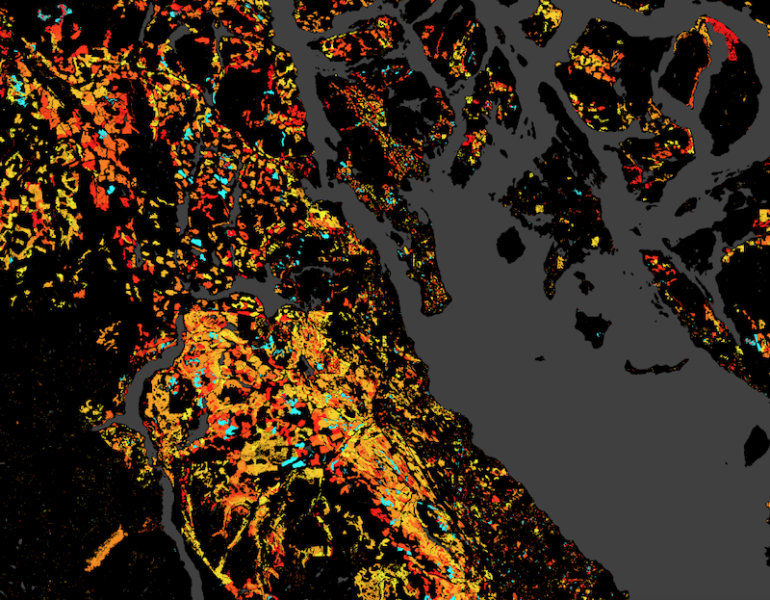
“The evidence on the University of Maryland Global Forest Change website is tracking the changes in forests around the world. It’s one of these interactive websites where you can shuffle it around and click on any area of the world that you want to look at and zoom it in right down to the pixels and see what’s been happening in the last 21 years.”
“In the same way as the graphs that Suzanne was showing to us on Monday demonstrate how the nutrients in the forest landscape are impacted by each harvest of timber that occurs, I consider the Global Forest Change website just as illustrative of the rapid deforestation that’s been going on over the last two decades in virtually any place in the world.”
Click on this link to access the website.
“You can certainly zoom in on BC and see what’s happening here and why mills are shutting down in the interior and elsewhere. Also a reflection of why the timber companies that are harvesting in BC are probably undercutting the annual allowable cut that the ministry has allocated to them by about 15 or 20%, just because the trees aren’t there anymore. So that’s why they’re still going after the more valuable remaining 1% or 2% of the old growth on the province because that’s where the best money is of course.”
“They want to get it before there’s nothing much left to cut and they have to turn to second growth, which is much less valuable. Even though in the seventies they were touting it as the way to effectively farm trees, or have trees growing sustainably year after year, or planting after planting, that’s not the way the world works. You keep on taking nutrients out of any living system and pretty soon it can’t live anymore. It can’t sustain itself, it is about as simple as that.”

Going Forward
“Things are coming to a bit of a crunch with the climate change impacts that more and more people are becoming aware of. To what we’re doing to our own forest in the province and the impact that has on changing climates, as well as carbon sequestration and so on.”
“The Federal Government’s idea that we can turn it around by planting 2 billion trees in Canada over 10 years, or whatever their suggestion was, is literally stupid. You cannot replace a big, well established tree that’s still standing, still breathing and taking in carbon dioxide out of the atmosphere, with a little seedling that’s a foot high. It is not going to take in anything close to the same volume of carbon dioxide out of the air. It’s a ridiculous assumption.”
“It seems almost like greenwashing, like that can still sell with the general public because most people aren’t aware of it enough. But I’m optimistic that we’re getting close to a point where enough of the general public is sufficiently aware that the way things are going is not working now, and it is going to be increasingly disastrous if we carry on that way.”
“We’re all connected to the impacts of what’s going on and what we’ve been doing and will continue to be an even greater degree as the years roll by. So we had better get on with it as quickly as we can.”
Top image credit: Bruce Ellingsen, recipient of the 2022 Jo Ann Green Award – Photo courtesy FOCI
Sign-up for Cortes Currents email-out:
To receive an emailed catalogue of articles on Cortes Currents, send a (blank) email to subscribe to your desired frequency:
- Daily, (articles posted during the last 24 hours) – [email protected]
- Weekly Digest cortescurrents – [email protected]