
By Sonal Gupta, Canada’s National Observer, Local Journalism Initiative Reporter
New camera footage from Canada’s first LNG export terminal is raising concerns about invisible pollution and whether current monitoring adequately detects what reaches nearby communities.
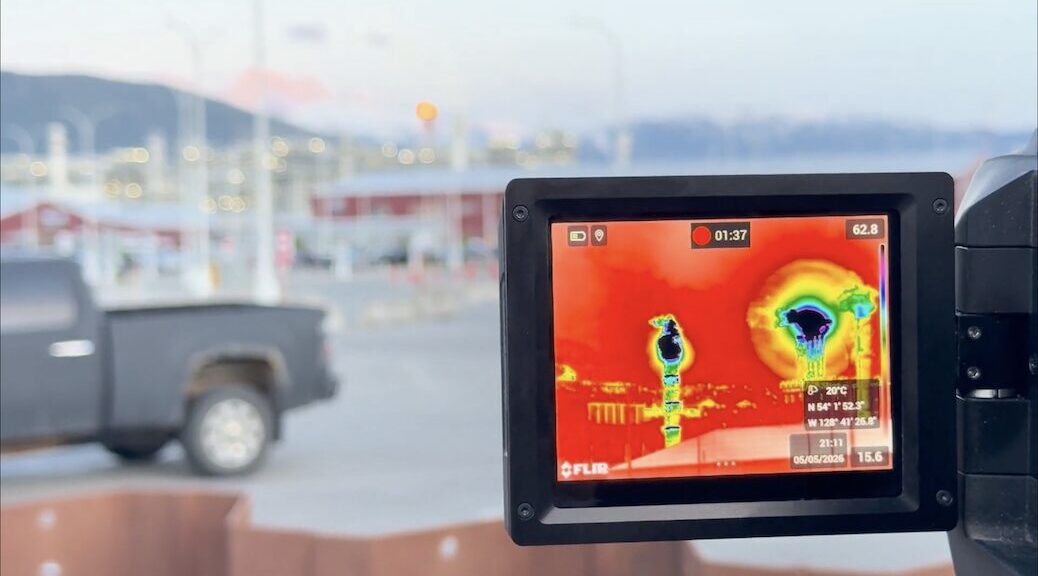
To the naked eye, the sky looks mostly clear above LNG Canada’s Kitimat facility on the northern coast of BC. But footage taken with a specialized infrared camera and presented at a media briefing Wednesday showed dark plumes around flares, stacks and processing equipment.
Continue reading Camera footage of Canada’s first LNG terminal raises questions about invisible pollution