Tag Archives: California

House of Commons Exchange: Ongoing Neonicotinoid Insecticide Controversy

Neonicotinoid pesticides (neonics) are widely believed to be the most effective chemical insecticides and in one study their usage was linked to a 70% crop increase in the United States. Yet numerous scientists have pointed to their lethal impact on beneficial insects like the honeybee. According to a study published in the National Library of Medicine, “neonicotinoids can affect the reproduction, foraging, and flying ability of honeybee and other insects including pollinators.” Many believe they are a principle contributor colony collapse disorder. The EU banned three key neonicotinoids (imidacloprid, clothianidin and thiamethoxamin) 2013 and, starting in 2026, will prohibit imports of products containing even trace amounts. In North America, there are partial bans in Ontario, Quebec, Illinois, New York, Rhode Island and California. So far, the federal  governments of Canada and the United States have not taken action. 

Green Party leader Elizabeth May has brought this issue before the House of Commons many times since 2014, often requesting that Canada follow the lead of the European Union, exercise the precautionary principle, and remove the authorizations for neonicotinoid insecticide use within Canada. May raised this issue once again on the  snowy evening of December 4, 2025

Continue reading House of Commons Exchange: Ongoing Neonicotinoid Insecticide Controversy

Recent Concerns with Eating Raw Oysters; Unaffected Oysters & Areas (like Cortes)

Editor’s note: Someone pointed out this article is too specific for International readers who, for example, may not even know where Vancouver Island is. There is a lack of specific information. I have written Fisheries and Oceans Canada, pointing out: “Most of The articles I see mention Tidal Area 14 (which is the little stretch of Vancouver Island coast between Comox and Parksville), but when I talk to Cortes growers they mention Baynes Sound, which is only a small part of Tidal Area 14. If it is only Baynes Sound, a lot of growers in other parts of Tidal Area 14 are being negatively impacted for something that is not even in their immediate vicinity. At the moment, a lot of Vancouver Island growers appear to be negatively impacted for something that is not in their Tidal Area.

There was a 10 hour interval during which Erik Lyon of Rising Tide Oysters, on Cortes Island, thought he was going to reap big profits. Dozens of Californians had fallen ill after eating raw oysters from ‘Tidal Area 14’ in British Columbia. That’s on the east coast of Vancouver Island, between Comox and Parksville. Lyon specifically pointed to Baynes Sound, where there are oyster growers that sometimes ship 20,000 dozen oysters in a week. By way of contrast, he described most Cortes Island growers as ‘little mom and pop operations.’ 

“We’re a little bit removed from Baynes Sound. We tend to have cleaner water and a lot of the buyers can reliably pick up more product from us when the big guys go down,” he explained. 

That’s what seemed to be happening on Saturday, December 13, 2024. 

Continue reading Recent Concerns with Eating Raw Oysters; Unaffected Oysters & Areas (like Cortes)

The Pacific Herring Spawn and Nurseries Project

A citizen scientist project to photograph Pacific herring spawn along the West Coast, from Alaska down to California, has been underway for close to two months. It is based in the Comox-Courtenay area, and one of its many partners is the Friends of Cortes Island (FOCI).

Project lead Jacqueline Huard, a scientist with Project Watershed,  explained, “I work with the Coastal Forage Fish Network. We are very community scientist based and working on a herring project in iNaturalist just was a natural fit for us. I wanted to encourage the folks that we work with to put their data somewhere where they could also access it. The goal is twofold, both to collect some data and address a gap, but also to get it out to the public and have a publicly available data set for the public created by community scientists.”

Continue reading The Pacific Herring Spawn and Nurseries Project

West Coast toxic hot spots threaten endangered salmon and killer whales

Editor’s note: Though Cortes Island is not mentioned in the following report, it is on the embedded map of metal hotspots. We appear to be either bordering on, or close to, the areas for cadmium (Cd), nickel (Ni) copper (Cu) and lead (Pb).

Canada’s National Observer, Local Journalism Initiative Reporter

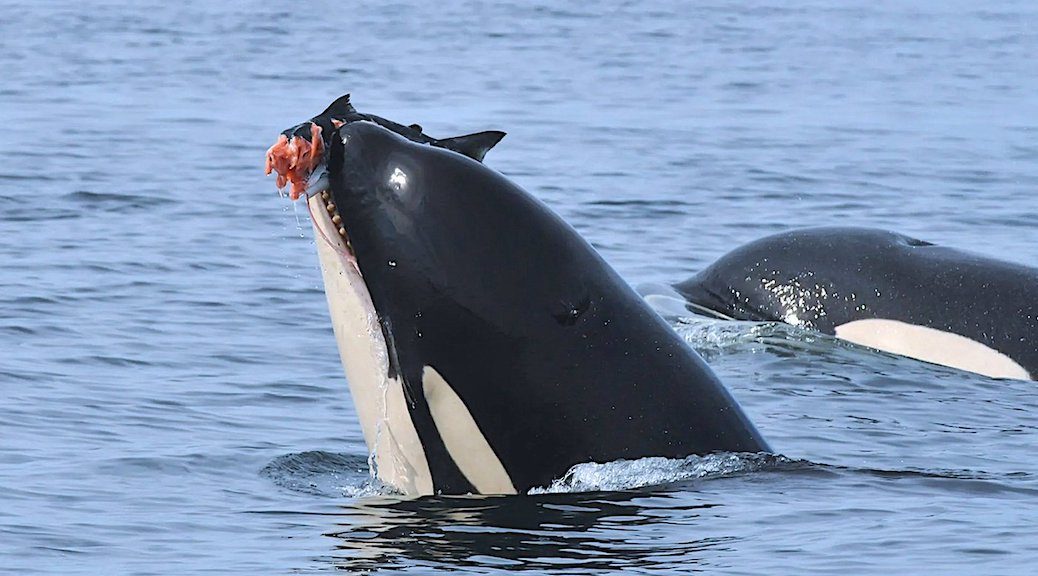
Newly identified toxic metal hot spots on the West Coast further threaten endangered killer whales and their key food source, a recent study shows.

Continue reading West Coast toxic hot spots threaten endangered salmon and killer whales

Canada under pressure to ban deep-sea mining as global ocean summit starts in Vancouver

National Observer, Local Journalism Initiative Reporter

Canada is under increasing pressure to declare a moratorium on seabed mining just as federal leaders are set to host an international marine conservation summit. 

More than 700 international scientists and a multitude of environmental organizations are calling on Canada to ban the search for deep-sea minerals in its own waters and show global leadership by joining a chorus of countries, such as France, Germany, Chile and Pacific Island nations, in calling for a mining ban in shared international waters. The country will host the fifth International Marine Protected Area Congress (IMPAC5) starting Friday in Vancouver.

Continue reading Canada under pressure to ban deep-sea mining as global ocean summit starts in Vancouver