Tag Archives: Meat Eating

The Quadra Project – What’s the Beef?

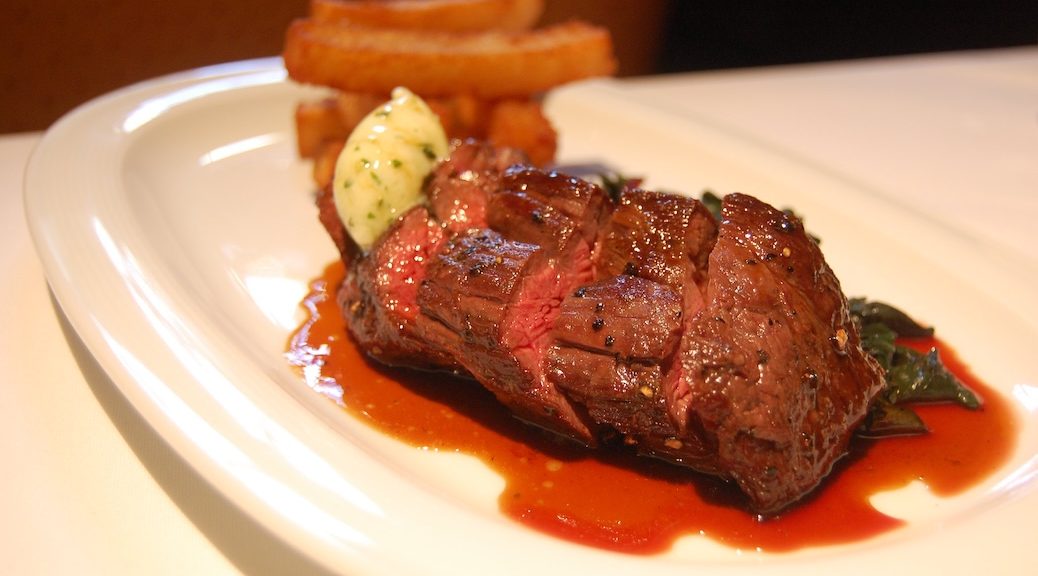
A team of Australian and Japanese researchers have quantified the damage to human health that is done by eating red meat. If people shifted their diets from beef to such forage fish as anchovies, herring and sardines, the study found, an estimated 750,000 lives could be saved per year (The Guardian Weekly, April 19, 2024). The comprehensive study of 130 countries identified that human health deteriorates as red meat consumption rises.

The study also revealed the clear environmental benefits to shifting away from beef. Instead of feeding these nutritious forage fish to animals, which are how most of these aquatic species are consumed, the nutritional benefits that were passed directly to people would reduce the diseases caused by excessive beef consumption, but also save huge amounts of agricultural land that is presently used to raise cattle for beef.

Continue reading The Quadra Project – What’s the Beef?

Turning Down the Heat Part 2: Change Your Life Bulb

By Carrie Saxifrage and the Climate Action Network

In early July of 2024, a small group of Cortes Islanders, supported by Friends Of Cortes Island (FOCI), screened the film “How to Boil a Frog” for the community. You can watch the film here. The film is about the five-pronged problem life on Earth is currently facing — overpopulation, a war on nature, wealth disparity, peak oil (hee hee), and climate change—and offers five actions that can help—boycott Exxon, change your “life bulb” (reduce consumption), a change of heart, one kid per couple, and kick some ass. 

This article is the second in a series focused on each of these five solutions. You can read Maureen Williams great first article on a change of heart here. This second article is about changing your “life bulb.” The term refers to the end of Al Gore’s 2006 movie An Inconvenient Truth in which minor suggestions, including a switch to LED bulbs, float across the screen. The disconnect between the size of the problem and the size of the suggested solutions was so very obvious. It still is. Whether or not you change your “life bulb,” it is still important to “Kick Some Ass.” That will be the next article in the series.  

Continue reading Turning Down the Heat Part 2: Change Your Life Bulb

The Smelt Bay Goose Hunt

On Monday, November 6, Max Thaysen and Travis Powiak posted a notice on the Tideline. They would be hunting Canada geese at Smelt Bay and Hollyhock Beach, between 12 and 3 PM, on Thursday. 

“I like eating goose for a variety of reasons, including wanting to have the most ethical and environmentally responsible diet that I possibly can,” Max explained.

Continue reading The Smelt Bay Goose Hunt

A summer scarred by wildfire and drought puts climate crisis top of mind as university resumes

Canada’s National Observer, Local Journalism Initiative Reporter

After a summer marked by unprecedented wildfire and drought, it’s not surprising the climate crisis is top of mind as the school year launches, Vancouver Island University (VIU) geography professor Jeff Lewis says. 

There’s the usual hustle, bustle and excitement with the start of every school year, but virtually everyone returning to campus likely had direct experience with some sort of climate impact over the past few months, said Lewis. 

People across B.C. and most of Canada faced a range of issues — whether it was road closures, interrupted travel plans, cloying smoke, or more extreme threats and stress to themselves or loved ones due to mass evacuations or the loss of homes, businesses or communities to flames or floods. 

Continue reading A summer scarred by wildfire and drought puts climate crisis top of mind as university resumes

The Quadra Project: Climate Karma

Karma, from the Sanskrit word “karman” is an amalgamation of “action, effect, and fate”. In the popular sense of the word, it has come to mean that actions have consequences, and that our individual human behaviour exists in a cause-effect relationship with a vague sense of a moral cosmos. Often described as the Principle of Karma, it means that personal acts motivated by “good” intentions are eventually rewarded in kind, and that “bad” acts are also rewarded in kind.

Although karma usually applies to the cause-effect relationship of our individual actions, it might also apply to our collective actions, a more expansive understanding that is worth considering, given the consequence of the unfolding havoc we are causing on our planet.

Continue reading The Quadra Project: Climate Karma