Tag Archives: Penelakut tribe

Feds ignore calls for moratorium, approve commercial herring fishing

By Sonal Gupta, Canada’s National Observer, Local Journalism Initiative Reporter

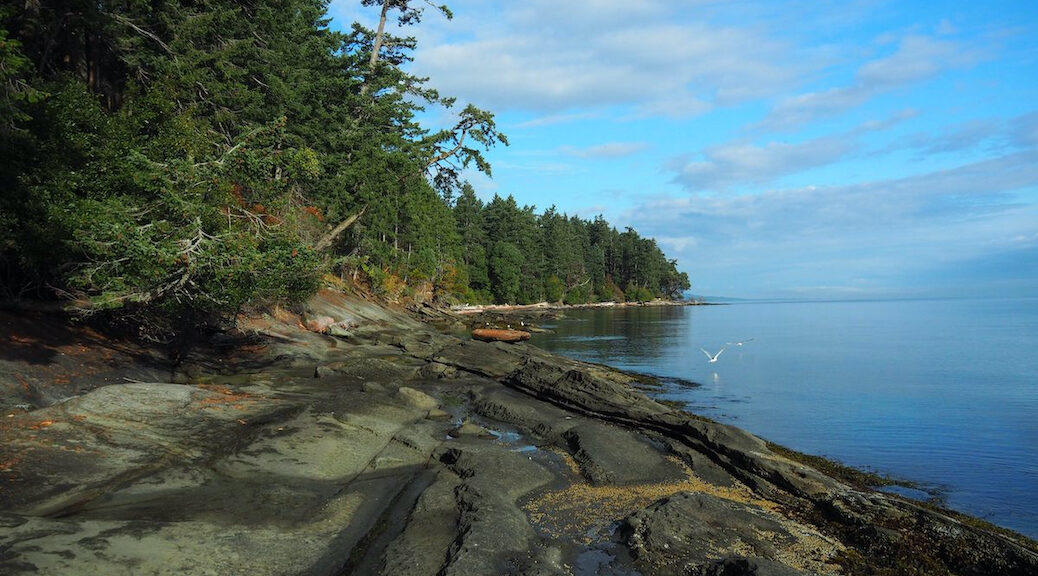
When Kurt Irwin was growing up near Salt Spring Island on British Columbia’s southern coast, spring meant herring season. He remembers the ocean turning white as the small fish filled the harbours, the sky alive with gulls and salmon chasing them just below the surface.

“We haven’t seen that in many years… They [commercial fishing boats] literally fished it out,” said the now 58-year-old Irwin, a councillor for the Penelakut Tribe, located near Chemainus on Vancouver Island. Their members have also been pushing for a five-year moratorium on commercial herring fisheries to allow stocks to recover.

Continue reading Feds ignore calls for moratorium, approve commercial herring fishing
With court win, Quw’utsun Nation sees a ‘spiritual homecoming’ after 150 years

By David P Ball,  IndigiNews, Local Journalism Initiative Reporter

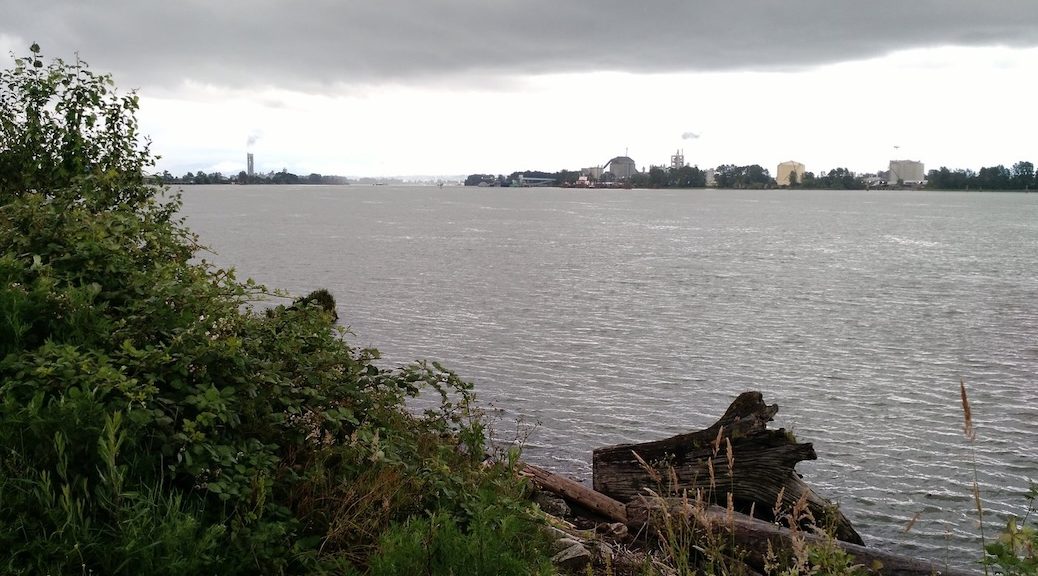
The shoreline at Tl’uqtinus village — once the annual home to more than a thousand people during salmon season — is today a tangle of blackberry bushes and shipping terminals in what is today ‘Richmond, B.C.’

The riverside village of Tl’uqtinus — once the annual home to more than a thousand people during salmon season — is today a sprawl of retail warehouses, mostly unused municipal lots, a Coca-Cola plant, and a fuel facility for the nearby Vancouver International Airport.

Less than 15 kilometres up the “Fraser River” from the Salish Sea, the former fishing village’s once-busy shores are today host to shipping terminals and a tangle of thorny and invasive blackberry bushes.

Last week, Tl’uqtinus village sparked an even thornier public debate over Indigenous people’s right to land — and settlers’ private property — across the province.

The B.C. Supreme Court, after a record-length trial, declared the Quw’utsun (Cowichan) Nation holds title to the 7.5-square-kilometre village site and the right to fish near it — a century-and-a-half after the province sold it to settlers.

Continue reading With court win, Quw’utsun Nation sees a ‘spiritual homecoming’ after 150 years

Salvaging the sacred from climate disaster

Canada’s National Observer, Local Journalism Initiative Reporter

The floodwaters rose swiftly and silently inside Nicole Norris’s family home and other residences of the Halalt First Nation on Vancouver Island when a storm unleashed a furious deluge of rain in November 2021. 

Her brother, asleep in the home’s ground-floor suite, awoke when his leg, hanging off the side of the bed, became submerged by overflow from the Chemainus River, said Norris, an Indigenous planning officer for the B.C. Ministry of Emergency Management and Climate Readiness. 

“Our home took on four feet of water in the basement. There was no sound to it,” said Norris, also known as Alag̱a̱mił. 

“Instantly, he yelled for my daughter and they were able to start pulling things from the basement.” 

Not everything of value escaped unscathed, said Norris, a regalia maker, weaver and cultural knowledge holder. 

Continue reading Salvaging the sacred from climate disaster

Hul’qumi’num First Nations & the “Great Land Grab”

Originally published on Ramshackle Pictures (2014)

Robert Morales represents the six Hul’qumi’num First Nations (Cowichan, Chemainus, Penelakut, Lyackson, Halalt, Lake Cowichan), whose territories span the southeastern coast of Vancouver Island. These lands were almost entirely sold off by the Federal government in 1887 to coal baron Robert Dunsmuir, in order to finance the construction of the E&N Railroad from Nanaimo to Victoria, which enabled BC and Vancouver Island to join confederation and become part of Canada.

Continue reading Hul’qumi’num First Nations & the “Great Land Grab”

Environmentalists protect local history and seabirds on Galiano Island

National Observer, Local Journalism Initiative Reporter

A new conservation area on B.C.’s Galiano Island with deep cultural significance for local First Nations will protect a pristine shore for a multitude of seabirds and help an increasingly rare ecosystem withstand global warming.

A kilometre of beach in Cable Bay and the adjoining 66 acres of land inside the threatened Coastal Douglas-Fir biogeoclimatic zone (CDF) have been acquired by the Galiano Conservancy Association (GCA) and the Nature Trust of British Columbia.

Continue reading Environmentalists protect local history and seabirds on Galiano Island