

Tag Archives: Salmon

50 years of data reveals true extent of climate change impacts on kelp forests

Originally published on UVic News

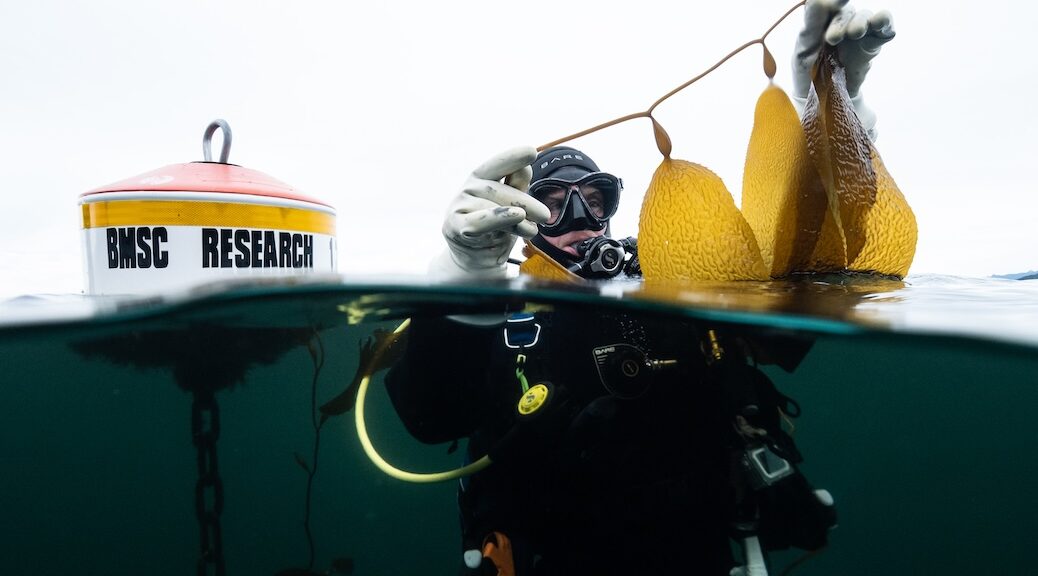
New research from the University of Victoria (UVic) has found that some kelp forests around Vancouver Island were disappearing far earlier than scientists previously thought, highlighting that climate change has been altering our ecosystems long before most people were aware anything was wrong.

“Most research has focused on recent kelp forest losses resulting from well-known marine heatwaves, like the record-breaking ‘Blob’ heatwave that hit our coast a decade ago,” says Brian Timmer, a UVic PhD student, National Geographic Explorer and lead author of the study, recently published in Ecological Applications.

“These recent changes to our kelp forests have been intense. But our research shows that some areas of the BC coast have been warming much faster than the global average, and associated kelp declines began decades ago. We’ve been underestimating the magnitude of ocean-warming impacts for years.” Chris Neufeld, co-author and senior aquatic ecology at LGL Limited

Continue reading 50 years of data reveals true extent of climate change impacts on kelp forests

Some species benefited from BC’s 2021 heat dome — but at an enormous cost, study finds

Editor’s note: Millions of marine creatures may have perished in the Discovery Island’s during the 2021 heat dome. Their remains covered the beaches at places like Smelt Bay, Mansons Lagoon and Squirrel Cove on Cortes Island. Dr. Chris Harley, from UBC, initially told the media that more than a billion mussels, clams, sea stars and other invertebrates may have cooked to death in the area between Campbell River and Washington state. The article that follows cites his initial estimate. As more data became available, Harley revised that figure to possibly as many as 10 billion.

By Hope Lompe, National Observer, Local Journalism Initiative Reporter

Some plants and animals are better off than they were before the 2021 heat dome, despite a week of record-breaking heat intensity across Western North America. 

In a study of approximately 50 species, researchers from across Canada found more than three quarters were negatively affected by the heat dome, while about 25 per cent actually saw a positive outcome. 

Continue reading Some species benefited from BC’s 2021 heat dome — but at an enormous cost, study finds

Conservative candidate targets Great Bear Sea marine protection plan

Canada’s National Observer, Local Journalism Initiative Reporter

Northern Vancouver Island Federal Conservative Party candidate Aaron Gunn wants to sink plans for a network of Indigenous-led marine protected areas on the West Coast.

A month before announcing his bid in September 2023 to become the North Island-Powell River candidate, the right-wing social media personality from Victoria released a YouTube video taking aim at the B.C. Northern Shelf Marine Protected Area (MPA) Network, better known as the Great Bear Sea MPA Network. 

Continue reading Conservative candidate targets Great Bear Sea marine protection plan

Who gets to fish for B.C. salmon in the future?

National Observer, Local Journalism Initiative Reporter

The West Coast’s commercial salmon fleet is clearly in the midst of transformative change.  

Ottawa has shuttered approximately 60 per cent of B.C.’s commercial fisheries since 2021 and last month launched a licence buyback program to lure fish harvesters to exit the industry to protect plummeting salmon stocks. 

Continue reading Who gets to fish for B.C. salmon in the future?

Spill to Sustenance

Six years on from the fuel spill that devastated Heiltsuk waters and clam gardens, the nation is pulling together to proactively build food sovereignty

Originally published on the Watershed Sentinel

by Jamie-Leigh Gonzales

The central coast rainforest, with its horizons of emerald islands roamed by wolves, orcas, and bears, is a source of life and wellbeing for all peoples who live there. The Heiltsuk Nation have lived off their land since time immemorial, and their culture is deeply rooted in the land and marine ecosystems. They continue to protect their relationship with the land against extractive industry and ongoing colonial practices that seek to eradicate Indigenous land stewardship.

In 2016, the Nathan E. Stewart tug ran aground, spilling over 110,000 litres of diesel oil in Heiltsuk waters of Gale Creek Pass. The devastating impacts on marine life and the surrounding ecosystem continue today, nearly six years after the spill. A healthy clam beach has yet to return, and the site remains a danger to the marine life, such as herring, salmon, and kelp, that once thrived there.

Continue reading Spill to Sustenance