

With the Friends of Cortes Island (FOCI) AGM coming up on November 28, it seemed like an ideal time to ask Executive Director Helen Hall what the society achieved in 2023.
“We’re actually doing 14 different projects, which involve everything from habitat restoration and conservation through to environmental monitoring and community education. I just wanted to highlight some of those projects,”she explained.
“One is our Western Screech Owl project. It’s the first time we’ve really worked properly with the Ministry of Water, Land and Natural Resources on a big project. Another organization we worked with, the Pacific Megascopes Research Alliance, were really intrigued about us doing this work in the Discovery Islands because it’s an area they didn’t know much about. I think we received a lot of recognition from the scientists involved. We’re very fortunate to receive three years of funding to monitor Western screech owls on Cortes and our neighbouring islands of Read, Maurelle and Sonora.”
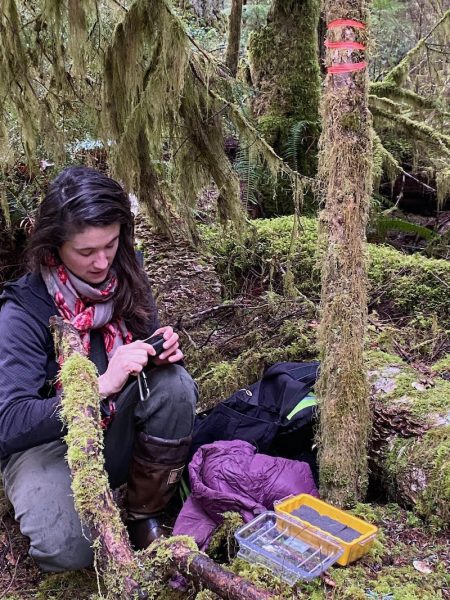
“This spring we carried out a whole range of different surveys throughout Cortes and on the other islands involving two techniques. A call playback survey where you play the owl call at night on a predetermined route, and see if you can find the owls that way. Another technique is putting up what’s called an ARU, or autonomous recording unit, to record all the sounds over a period of time. We actually did manage to find owls on the very north of Cortes, and also on some of the other islands.
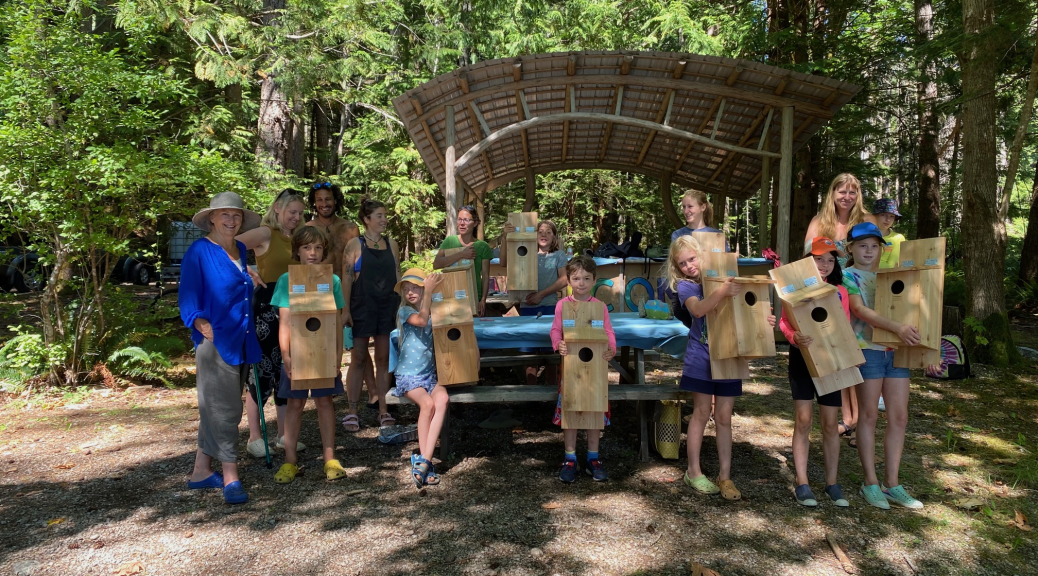
“The next step of the project has been running community nest building workshops on Cortes and on Read Island. Those nest boxes are going up in suitable habitat and we’re hoping that they might get occupied by screech owls in the spring.”
Helen’s personal highlight of the year occurred during this project:
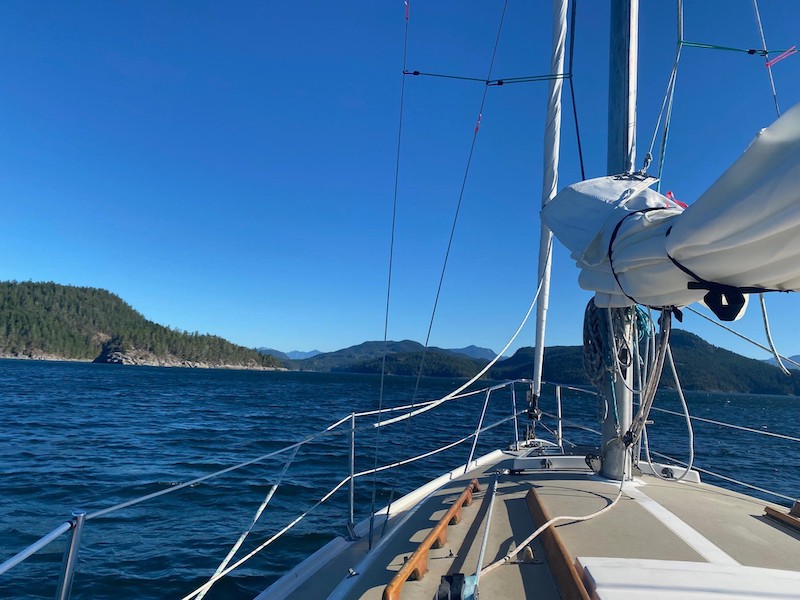
Helen Hall: ““I had Manuel Perdisa as my summer student, a boat, and through the Western Screech Owl Project we wanted to run a nest box building workshop with the Discovery Islands. So we made up all these nest box kits, and sailed across to Read and it was just a gorgeous sunny day. We offloaded the kits and then we had this fantastic community event where we had people coming from the different islands to make nest boxes. I’d love to work more with them.”
“I emailed the pictures to some friends in England and they said, ‘wow, Helen, you’ve got the best job in the world.’ And I thought, ‘on that day, it felt like it. It was such a fabulous day, really good fun.’”
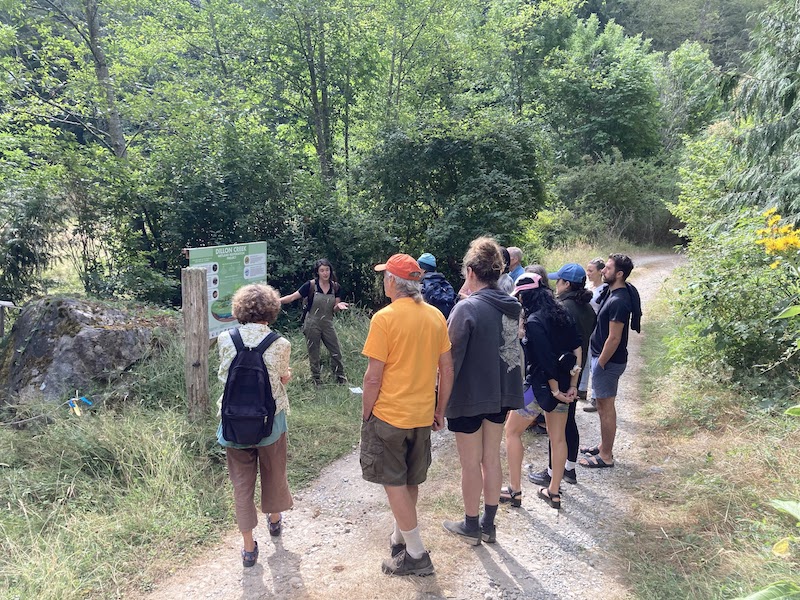
“The Dillon Creek Wetland Restoration project put us on the map as an organisation that can deliver a big restoration project. We received three years of federal funding , which allowed us to construct two wetlands . The goal was to reduce nutrients going into the lakes and to create wetland habitat for wetland wildlife and also a great resource for the community. The grant finished in March. We had a big celebration. We’re still doing monitoring work, and we’ve been running a whole bunch of community events there too.”
“So those are two big projects which both received federal funding and are pretty exciting for us to be doing.”
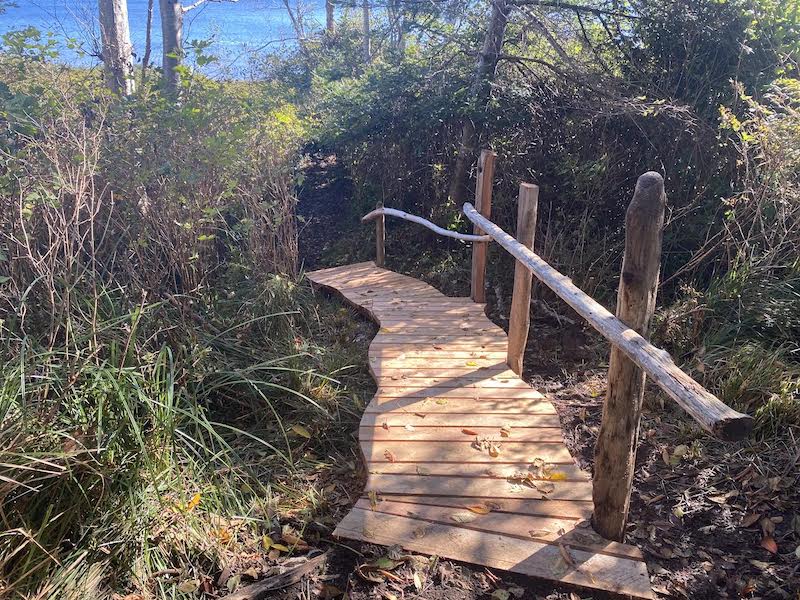
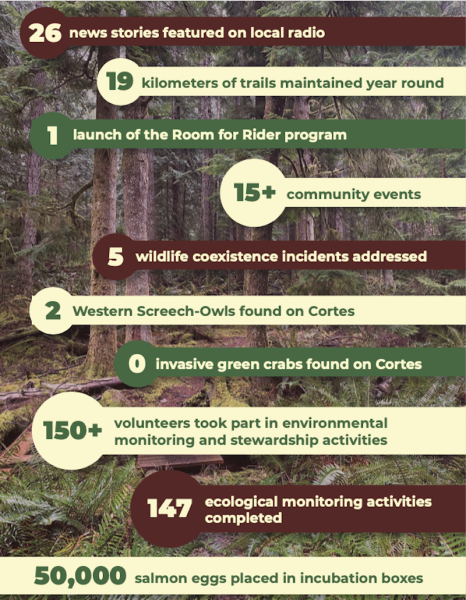
“One other project I would love to mention is our Parks and Trails work. We maintain nine regional parks and trails, everything from Kw’as and Carrington through to the Moon Beach access and the Whales Rest Park near the ferry. In writing this annual report, I thought I’d measure how many kilometers of trails we maintain every month. And it’s 19 kilometers of trails that are maintained every single month of the year, which is phenomenal. We have a fantastic team, Alex Bernier and Sam Gibb, doing that work. In the spring, we also said goodbye to Ryan Harvey, who’d been doing that work for 20 years. So we’ve been doing it now for about 20 years and I just wanted to highlight that. A lot of people enjoy those parks. I’m sure some of them don’t realize we’re even maintaining them, but it means people can get out and enjoy those parks.”
Cortes Currents: Tell me about some of the other projects that have caught the attention of the scientific community. What about the forage fish project?
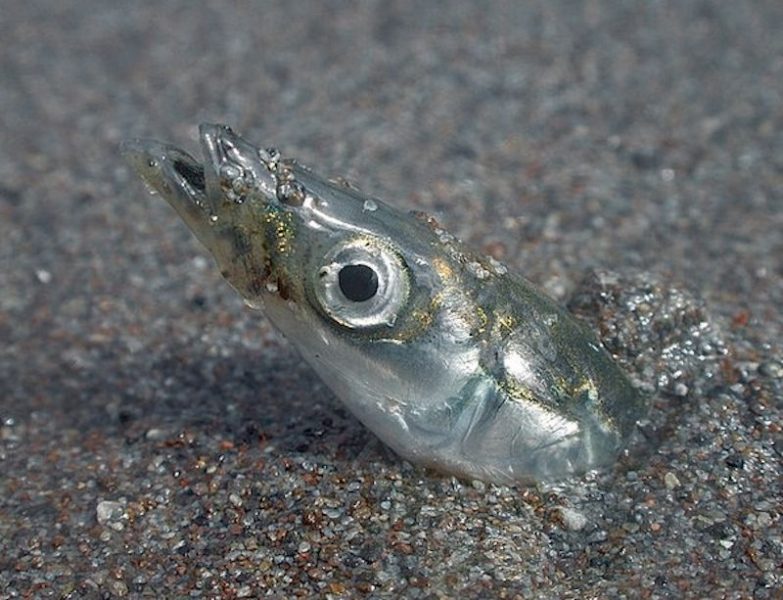
Helen Hall: “We’ve been doing that in partnership with Project Watershed for four years. We’re monitoring for forage fish in the winter months. They lay their eggs on sandy beaches. And they’re also really important in the marine environment because they are forage food for other creatures.”
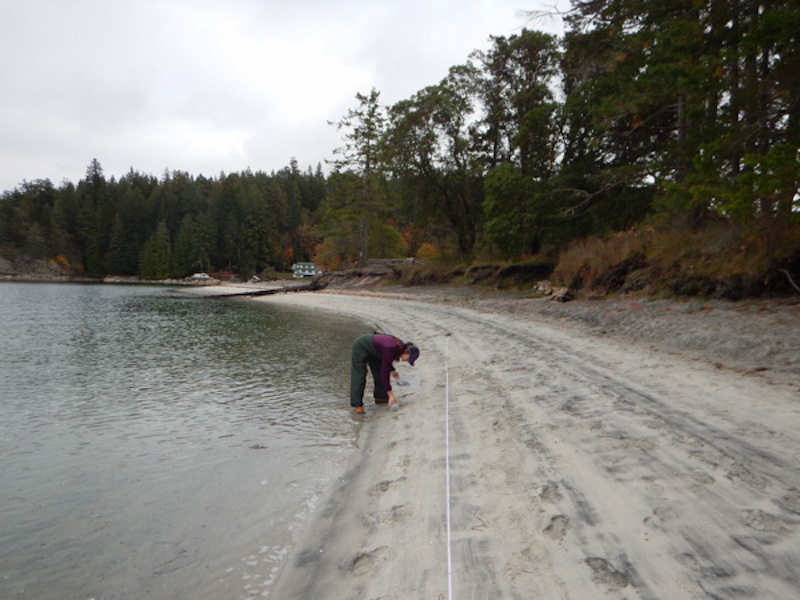
“What we’ve discovered is that Mansons Spit, in Manson’s Landing Provincial Park, is a really important area for forage fish and actually is one of the most important areas for Pacific Sand Lance in the northern reaches of the Salish Sea.”
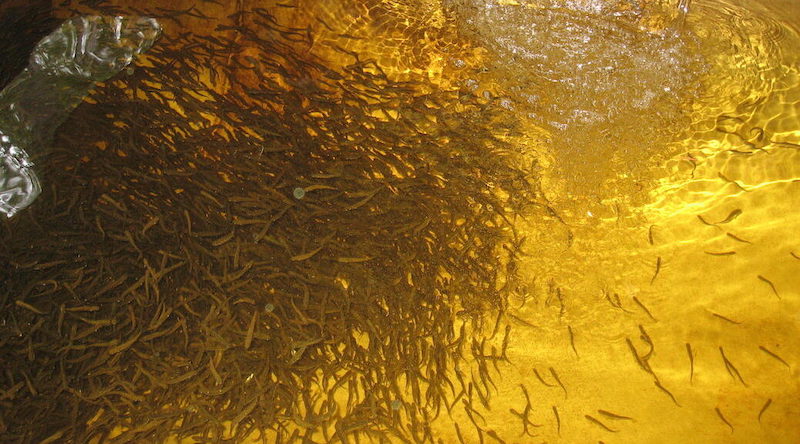
“The two main forage fish for us in this area are Surf Smelt and Pacific Sand Lance. I’ve been down at the government dock in the fall. I remember one day the water was full of literally thousands, even millions, of these Pacific Sand Lance coming in to lay their eggs on the beach. They’re super important. I think they’re food for everything from Salmon to Humpback Whales. If we lose our forage fish, the marine ecosystem could collapse.”
“All that information is going back to Project Watershed, they’re sharing it with researchers. There’s other people up and down the coast, looking at where people are finding forage fish and why they’re finding them. They are doing this to predict which beaches could be important for forage fish, and then thinking about protecting them.”
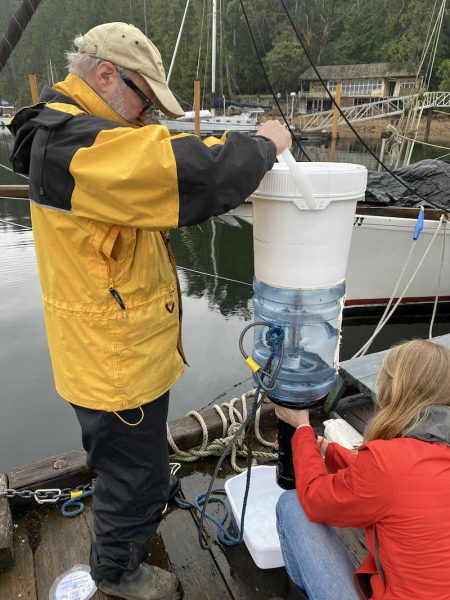
“Another project, which we’re doing in partnership with the Hakai Institute, is our Dungeness Crab Light Trap project. It has been running in Cortes Bay for five months this year and is one of 20 traps throughout the Salish Sea. Two brilliant volunteers, Lorne and Monica, have been doing the light trap monitoring. They actually pulled that trap 59 times in 5 months. What Hakai are doing is they’re actually getting the data to go straight back to them as soon as we collect it, which is helping them inform conservation measures for Dungeness Crabs, because unfortunately Dungeness Crabs are in decline.”
Cortes Currents: In the 2023 Annual Report, it states that more than 150 people volunteered for FOCI this year.

“Every single one of our projects involves volunteers, which is great because we want to be a community based organisation. We have lots of different volunteers doing lots of different things. Everything from coming out to do a beach cleanup, which we did in the spring – we had about 10 to15 volunteers turn up for that. We’ve been doing practical conservation work parties at Dillon Creek Wetland and also our Broombash at Manson’s Landing Provincial Park. I think a lot of people love coming out for that.”
“One of the other really great groups of volunteers on the island is the streamkeepers, about 14 people led by Cec and Christine Robinson. They count the salmon returns in the fall and they’ve also been placing eggs in incubation boxes in two streams on Cortes to try and boost the Chum returns to the island. That’s a partnership with the Tla’amin and Klahoose First Nations.”
“Anyone who wants to get involved and volunteer, please get in touch with us and we’ll see if we can get you involved in a project.”
Cortes Currents: Tell us about the five wildlife incidents that FOCI helped address on Cortes Island.
Helen Hall: “We have a project called a Wildlife Coexistence Project.”
“Not many other islands in the Salish Sea have large predators like we do. We have wolves, cougars and the occasional bear.”
“We want to make sure that they can live here and they can co exist with humans or we can coexist with them. So we want to keep our wildlife wild and we want to keep everyone safe. We promote what we call primers on wolves and bears that are up around the community, as a continuous education project.”

“When an incident occurs, we try to get involved to educate the community. There was one recently in Whaletown Commons. We went out very early the next morning and we put up signage advising people not to walk their dogs in there at that time because we knew there were wolves around. We also contacted the conservation officer service to get their advice and we talked to the person involved. We put out an education piece on Tideland, and on our Facebook page.”
Cortes Currents: Have there been any incidents with other creatures this year?
Helen Hall: “Yes, we had a cougar kill very close to Kw’as Park and people were really concerned about that. So again, we put notices up in Kw’as stating, ‘Hey, look, there’s been a cougar around this area. Please be careful. Keep your dogs on the leash.’ Some people won’t go into the park because of that. Again, it was an education piece.”
“In general, if people follow the protocols which are on our website, we should reduce the number of incidents, but when an incident occurs, we do try to help the situation.”
“We changed our logo this year, it says ‘For nature, for people, for life.’ We’re about trying to look after this really precious island that we all value so much, try to look after the habitats and species that live here, but also to engage people in what we do. Like I’ve mentioned, we have volunteers working with us on all of our projects. We’re educating the community. The full life bit is about ‘How do we stay resilient as an island?’ and ‘how do we make sure that what we have here is still going to be here in 50, or 100 years?’”
“We’ve just been launching our annual report because we have an AGM at Mansons Hall from 5 to 7 PM on Tuesday the 28th of November.”
“We also realized it’s Giving Tuesday on the same day and, on the back of our annual report, we’ve launched an appeal to raise $10,000. That money will go to what we call the hearts and lungs of the organization, to literally keep us running and keep our boots on the ground. We’d love it if people want to donate and they can do that by going to our website or putting a cheque in the post to Friends of Cortes at P. O. Box 278, Manson’s Landing.”
Top image: The nest box building workshop on Read Island – courtesy FOCI
Sign-up for Cortes Currents email-out:
To receive an emailed catalogue of articles on Cortes Currents, send a (blank) email to subscribe to your desired frequency:
- Daily, (articles posted during the last 24 hours) – [email protected]
- Weekly Digest cortescurrents – [email protected]