
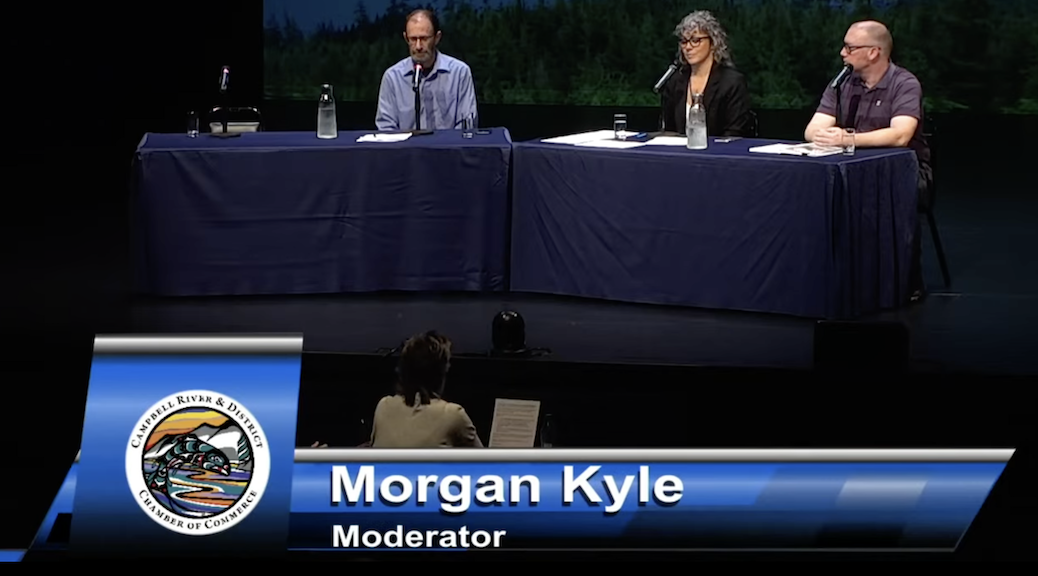
Edited transcript of the Oct 16, 2026 Provincial Election All Candidates Debate at the Tidemark Theatre plus the event’s YouTube.
The Campbell River & District Chamber of Commerce, the Campbell River Mirror and the Tidemark Theatre Society co-hosted the 2026 Local and Provincial Election debates.
Introductions
Correy Mcgowan, Chair of the Cowichan River and District Chamber of Commerce.
On behalf of the chamber, I would like to welcome all of you to tonight’s all candidates debate. Before we begin, I would like to acknowledge that we are gathered on the unceded territory of the Laich-Kwil-Tach people.
We honour our relationship with the Laich-Kwil-Tach Nations, including the We Wai Kum First Nation and Wee Wai Kai First Nation, as well as all First Nations, Métis, and Inuit people who live, work, and contribute to our community Thank you all for taking the time to join us this evening and for your interest in the issues and discussions that help shape the future of our community.
The chamber’s role this evening is to provide a fair, respectful, and impartial forum for the exchange of ideas. We are not here to endorse any candidate or position. Rather, our goal is to help voters hear directly from the candidates, learn about their priorities, and make informed decisions at the ballot box.
We thank all candidates for their participation and all attendees for engaging respectfully in the democratic process. It is now my pleasure to introduce our moderator for this evening, Morgan Kyle.
Morgan Kyle, moderator:
Thank you, Corey. Good evening, everyone, and welcome to tonight’s MLA Candidates Debate, the last of our series of debates.
As Corey said, my name is Morgan Kyle, and I’m honoured to be moderating this evening’s discussion. Joining me is Laura Mcgowan, who will serve as our timekeeper and help us stay on track. I’d like to begin by thanking each of our candidates for putting your name forward. Running for public office requires commitment, courage, and a genuine willingness to serve.
We appreciate your participation this evening and your readiness to share your perspectives on the issues facing our communities in the North Island, as well as the province at large. To everyone joining us here at the Tidemark Theatre and those watching via live stream, thank you for taking the time to be part of this important conversation.
An informed and engaged electorate is fundamental to a healthy democracy, and your participation matters. I’d also like to acknowledge our hosts, the Campbell River Mirror, the Tidemark Theatre, and the Campbell River and District Chamber of Commerce. Thank you for creating opportunities for residents to hear directly from those seeking to represent them.
Tonight is an opportunity to better understand each candidate’s priorities, perspectives, and proposed approaches to the challenges and opportunities facing the North Island and British Columbia as a whole. Before we begin, a few reminders about this evening’s format. Each candidate will have 90 seconds to introduce yourselves, as well as 90 seconds to respond to questions that are posed.
Laura will provide a 20 second warning, and I will move us along when that time is up. We ask our audience to hold applause until all candidates have responded to each question, ensuring everyone has an equal opportunity to be heard. The first half of our debate will focus on questions submitted by members of the public.
During the second half, we’ll invite questions directly from audience members that are here tonight. When we open the floor to audience questions, we ask that you keep a few things in mind. You will have thirty seconds to pose your question. If you haven’t reached your questions as thirty seconds approach, I’ll ask you to ask a direct question so we can maximize our time with our candidates.
Please frame your question so that all candidates have an opportunity to respond, rather than directing it to one particular candidate We also ask that you avoid repeating questions already addressed, and if you have a follow-up question, return to the end of the line to give others an opportunity to participate.
Our goal is to hear from as many members of the community as possible while ensuring each candidate has a fair and equal opportunity to share their perspectives. Thank you for helping us make tonight’s discussion respectful, informative, and meaningful for everyone. So with that, let’s begin. I’ll invite each of our candidates to briefly introduce themselves, and then we’ll move to our first question.
The Candidates
Anna Kindy, Conservative Party of BC
(Anna Kindy did not attend. She sent her regrets.)
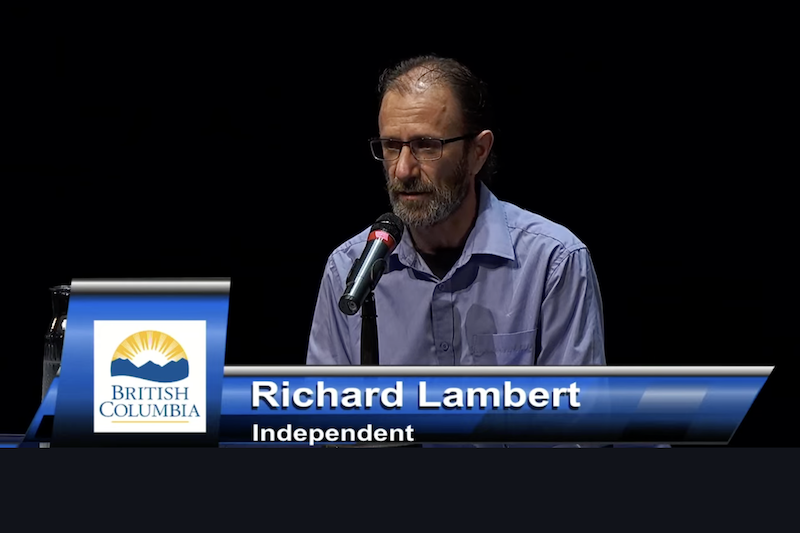
Richard Lambert, Independent
Morgan Kyle: Richard, if you could start us off for tonight. Thank you.
Richard Lambert: Thank you. Good evening. Thank you for attending tonight, and thank you for watching. I’m Richard Lambert, independent candidate. I’m not a career politician. I haven’t spent the last month knocking on doors, begging for votes. I’m still currently working a full-time job doing this.
I’m refusing to take a single dollar in donations from anyone. With the cost of living what it is right now, I’m not going to ask anybody to open up their wallets and give me their hard-earned money I don’t want to answer to a committee. I want to actually answer to the people of North Island. I’m here to win.
The North Island is hurting. Our voices are not being heard in Victoria. I want this community to be heard, and I want myself to be heard. I spent fifteen years in the Canadian Forces. When I got out, I retrained to become an electrician. When that work dried up I found myself… Sorry, a little nervous here, so please bear with me.
I found how brutal the prices have become and how our healthcare is crumbling. I want to offer you my blunt integrity, my honour, and a voice that cannot be silenced by a party line. Thank you
Sandra Lopez, NDP
Sara Lopez: Hi, I’m Sara Lopez, and I’m running to be your BC NDP MLA. I grew up in Montreal, the daughter of Spanish immigrants who came to Canada looking for opportunity and for a better future for their kids.
My parents were small business owners, and my dad went on to serve as a federal MP for 9 years. I grew up on Parliament Hill, doing my homework on the corner of his constituency desk. He taught me what it means to show up and to serve your community. From my parents, I learned grit, hard work, and perseverance.
From my dad, I learned that public service means listening and fighting for the people you represent. More than a decade ago, I made Campbell River my home. I fell in love with this place, our wild spaces, and the people here. This is a place worth fighting for. We deserve better than divisive politics, fear-mongering, and strongly worded letters that do very little to solve our very real problems.
We need leadership that’s rooted in care, that builds bridges and brings people together to deliver real solutions on affordability, health care, and good jobs. I have the experience, the relationships, and the determination to do that work. I have the humility to hold myself accountable, and I will always show up, no matter how difficult the conversation.
Benjamin Olsson, BC Greens
Benjamin Ollson: Hello, everyone. I’m Benjamin Ollson. I also go by Ben. And thank you all for coming this evening and for all those watching as well. Thank you for our hosts and everyone who helped put this on tonight. My name is Ben, and I live in Campbell River. I’ve lived here since 2010. I moved here with my family in from Saskatchewan, and we just love it here.
We’ve wanted to come out for a very long time, and we’re so happy to be in this community and live in the North Island. We’re so fortunate to have such beauty and such amazing people around here and across the whole North Island. I’m running because I really believe that we need another option on the ballot.
We don’t want a two-party system, and we also have an independent, which is fantabulous as well, but I really think we need to have some other options and a different vision for our province. I’m hoping to represent that. We have a fantastic leader, and we also have a fully costed platform.
So it’s an alternative vision. It’s something different. It’s something that’s not brand new, but it’s also offers something a little more fresh and as we also want to listen to you. We want to also be independent and not just toe the party line all the time.
Our main thing is the 4, just 4 main pillars: a life you can afford, care you can count on, economic fairness for all, and fighting for the future. So those are the main things, and I look forward to your questions tonight. And thank you again for coming.
Why do You Want to be Our MLA?
Morgan Kyle: All right, we’re on to the first question that had been submitted by the public prior to tonight. You all have touched on this, but if you want to expand on it, feel free. What motivated you to seek the role of MLA, and what unique experiences, skills, or perspectives would you bring to that role? We’re going to start with you, Sara.
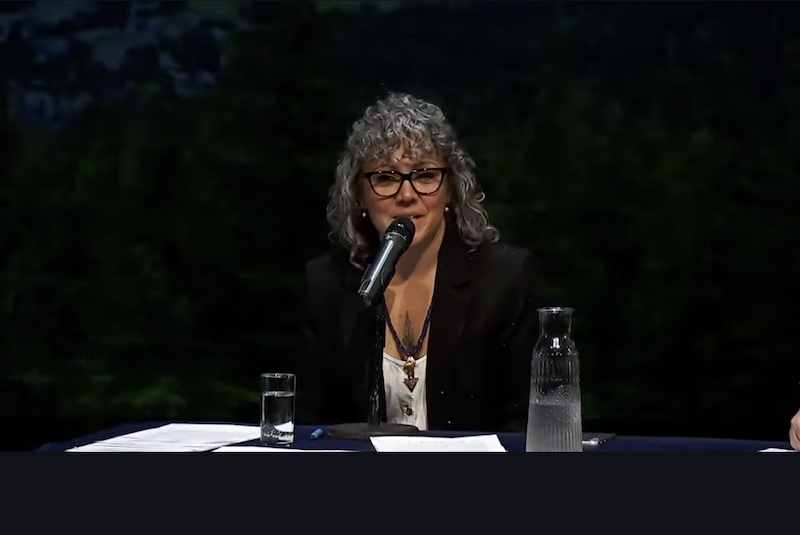
Sara Lopez: Sure. Thank you. So as I explained, I was raised in a political home where rather than watching Sunday night football, we were watching debates, and we were watching political pundits. I was inspired by my father’s commitment to public service, and that’s what I followed suit in my career. I worked for many years at Concordia University, helping students access higher education that was otherwise unattainable for them.
When I moved to Campbell River, I went on to work for the Campbell River Art Gallery as the executive director. And there, I ensured that everyone had access to art-making opportunities, barrier-free. Most recently, for the last two years, I’ve been working for Habitat for Humanity as their director of communications and fundraising, and that has allowed me a deeper understanding of the impact that affordable homeownership can have on community health as a whole.
For the last two years, we’ve had an MLA who hasn’t really shown up, who hasn’t fought for what the North Island deserves, and that’s what compelled me to run in this election. I know that I will show up for my community. I know that I lead with integrity. I hold myself accountable, and I think that we deserve better.
Benjamin Ollson: I grew up in Moose Jaw, Saskatchewan, and by age seven, I was on a picket line with my dad, a conductor with the railroad. My family is very political as well, but they also like watching football and hockey. And but yes I basically got was grew up in a very political family as well, fighting for mostly social justice issues.
So that was one of the main things that, that I was around and that had a huge impact on me. That helped me to choose a career in social work, and that’s what I do now. I’ve been a registered social worker for about twenty-five years now, and I have experience in both social services, government in healthcare with health a-authorities, and also with my labor union.
I’ve been an activist for many years. I also believe strongly in community, so I’ve been helping out with m-many causes that I really believe in and a lot of organizations that I support here in town. I’ve been helping out with Save Sins Creek, with Habitat for Humanity with the Campbell River Hospice Society, and many others.
I was a board member with the North Island Co-op for five years, so I have some experience on boards as well as a director. And I really just feel that I like to be involved in the community and be very active. It’s my passion. As an MLA, I hope to continue that activism and to bring other voices forward that aren’t heard enough.
Thank you.
Richard Lambert: Hi. I grew up in Port McNeil at the north end of the island. I graduated high school there. After high school, again, everything was shutting down at the time when I was graduating. I ended up having to move down to the southern side of this in Campbell River and Courtenay area just to find work and make ends meet.
After a while, I decided it, it was just too much for me. So I decided to throw myself out there, and I joined the Canadian Forces. So I spent fifteen years with the PPCLI (Princess Patricia’s Canadian Light Infantry?) moving across the country, couple tours, and after a while it got too much, so I decided to release. So me and my wife decided to actually come back to this island to where we both grew up.
Coming back here, I had to retrain. I had no usable skills from the infantry to the real world. From there, I became an electrician. And again, the same thing, the work dried up as usual. Then I did what anybody else would do to provide for their families here, and I retrained and moved into retail.
Seeing the rising cost of everything, seeing how everything and everything is crumbling from where we were in the past, I just want to be the one to put my head down and get the job done here. Thank you.
Water Rates for BC’s Largest Water users
Morgan Kyle: Thank you, and Ben, we’ll start with you. If elected, would you and your party support raising rates on BC’s largest industrial water users and dedicating the new revenue back to our watersheds so communities like ours can better prepare for drought, wildfire, and flooding without putting those costs onto local taxpayers?
Benjamin Ollson: Yes, absolutely. Water is such a huge important resource for us. BC Hydro has identified that in the last 64 years, we’ve never had water levels this low in the system, and it’s very scary. The fires we deal with every summer are getting bigger and worse and more dangerous and harm more lives.
The water is one thing, and then we also have other natural resources too that we need to look at as well. And are we getting the actual return on that we should be? Oil and gas, for example. Our logs. Why are raw logs being shipped out all the time? So we have a lot of resources.
Those are our resources as citizens of this province, and we need to protect those and to value those more a, a lot better so that they benefit the citizens of this province.
Richard Lambert: To protect us here on the north end of the island, I actually sat down and created legislation to actually do this, and I’ve provided copies to the media, to my fellow candidates. What it’s designed to do is prevent the loopholes from multinational firms coming in and taking our resources.
It’s going to be going after the gas sectors, the forestry sectors, and the agri-agriculture and the mining and the big box stores from coming in and actually just taking what we have on the north end of the island. But it also gives the local communities and the local districts access to that money by putting everything in a stewardship to make the businesses a little bit more viable. To accept this, it’s going to allow them to actually use it as a tax write-off. I’m trying to protect our environment. There’s environmental protections in here, so if anybody actually wants a copy of this afterwards or wants me to email them to this, I’m more than willing.
Thank you.
Sara Lopez: I love our natural spaces. I spend days kayaking our coastal waters, exploring islands, forests, beaches. I have kids of my own, and I want them to grow up experiencing this region’s incredible biodiversity. I believe in science, and I know climate change is real and an urgent crisis. I also understand people’s concerns around land management and protecting good jobs, so we need to get that balance right.
While the Conservatives use treaty negotiations to stoke fear, what they’re do– what are they doing to protect the environment? They count climate change deniers among their ranks. We can’t protect what we refuse to acknowledge is a risk. The BC NDP has protected the North Coast through the tanker ban and is working with First Nations and the federal government to protect the Great Bear Sea.
Here at home, Campbell River has received more than $600,000 to bring food and yard waste collection to over 10,000 homes. The NDP is also proposing thirty million annually for watershed security, addressing critical water needs, fifty million for permanent old growth protections, and fifty million towards the Clean Futures Fund.
Data centres are top of mind when we’re thinking about water use. The NDP is also proposing a cap on how much these data centres can use, offer electrical grid and our water resources. We can protect our environment and create good jobs. We can work in partnership and support responsible economic development.
Morgan Kyle: Thank you.
Healthcare for North Island
Morgan Kyle: This one is for you, Richard. Sorry. Many British Columbians continue to experience challenges accessing family doctors, specialists, emergency care, and timely medical procedures, particularly in smaller and rural communities like the North Island. What specific changes would you advocate for to improve access to timely, quality healthcare, and how would you measure their success, all the while keeping health workers safe?
Richard Lambert: Healthcare is not a political chessboard. It’s a logistical mission. We don’t need flashy new government experiments, top-down bureaucratic overhauls, and years for them to deploy. I actually want to expand some of the current systems that the NDP brought in to scale up the recruitment pipeline and retention bonuses and local medical training seats.
I want to target the rural gaps and find the gaps like Port Hardy and Port McNeil and Alert Bay and stop the closures in the ERs. I just don’t want to talk healthcare infrastructure. I want to help build with my own two hands and create foundations and stop the partisan bickering between all the groups and just find a bilateral agreement to make things work for our people.
They’re not cargo to be moved around from place to place. I just want everybody looked after. I want our seniors looked after. That’s the best I can say
Sara Lopez: Healthcare is deeply personal. Here on the North Island, our worries are very real. For the past year, I myself have had to drive my son to Victoria every month so he can receive specialized care.
So I know how hard it is when getting your family the care they need means leaving your community. We need leadership that’s focused on solutions, not misinformation or division. We’ve had a Conservative MLA for two years, who’s a doctor herself, yet instead of the relentless advocacy that our region needs, we’ve seen vaccine misinformation and attacks on culturally safe indigenous health centres.
The NDP’s making progress. We’re moving forward with the Campbell River long-term care home, and we’ve announced a new urgent and primary care center in Port Hardy. That will make care more accessible and help reduce the pressure on our emergency rooms. We’ve recruited more than 800 healthcare professionals from the US, and our plan plans to triple that number.
Additionally, training more doctors here in BC through the new SFU Medical School. So we need to keep pushing and building on that progress because healthcare isn’t a political point. It’s your parent, your child, your neighbour. And when someone needs care, it shouldn’t matter where they live or how much they make
Benjamin Ollson: One of the things around healthcare is how we’ve seen the erosion of healthcare support service access, and the need for better staffing levels.
North Island is one of the most poorly served areas in the province, unfortunately. That’s got to change. What are we going to do? Green Party is committed to establishing community health centres across the province and especially here in the North Island where we need them.
That’s going to include having salaried physicians which many physicians are actually very interested in because they don’t have to run a business. They’re actually salaried. They can be concerned about providing care, which is their main duty and their main job and their main passion.
The other thing we want to do is we want to make sure that we follow through on the on the nurse-to-patient ratios. It’s so important that that people have the care they need and have the service and the s– and the attention that they need from nurses. So that’s a, a really huge one that we want to s-support as well.
The other thing too is we want to look at the effective triage in ER with more long-term beds as well. So the, the long-term care situation is dire in this area as we know. There was an announcement. We were supposed to get a long-term care facility. That’s been canceled. It’s a wrong choice.
We need better
Cost of Living
Morgan Kyle: Sara, this one will start with you. The rising costs of housing, groceries, utilities, and other essentials continue to place financial pressures on individuals, families, and seniors. What two or three concrete actions would you prioritize to make life more affordable for British Columbians, and how would you ensure those actions provide meaningful relief?
Sara Lopez: Affordability. It’s keeping people up at night. Through my work with Habitat for Humanity, I’ve seen firsthand what’s at stake when people can’t afford a safe and stable home. Habitat’s own research shows that homeownership can improve mental health, children’s educational outcomes, and community connection and engagement.
Affordability isn’t just about getting by. It’s about having that stability to build a future. I’m a renter myself and a single mom. I know what it means when bills climb and there’s less left at the end of the month, and that’s why we need immediate practical action. The BC NDP is proposing savings of up to thirty cents per litre at the gas pump.
We’re also proposing to take on grocery giants by capping prices on essentials like bread, eggs, chicken, milk. We’re banning surveillance pricing, and we’re opening up competition for smaller grocers and creating a food hub that connects farmers with those grocers. The Conservatives’ answer is a tax break, but that alone won’t bring down the cost of groceries, gas, or other essentials.
We need to ask, what will actually make life more affordable? We have more work to do, but people deserve more than vague promises. They deserve a fair chance to build a good life here on the North Island.
Benjamin Ollson: Affordability is one of the first things that the government, or sorry, that the Green Party of BC has in their 4 pillar platform affordability for all British Columbians.
So how do we do that? First of all, we need to really look at the housing situation. So many people are unhoused or poorly housed or almost one step away from being homeless. What are we going to do? We need to build 26,000 housing units this year. That’s what the Greens are committed to doing.
We want to implement vacancy control so that when someone exits a unit, the landlord can’t just jack up the rent or double it or whatever they want to do. And also we want to do things like restart the ten dollar a day childcare plan which has stalled out apparently. So childcare takes up a huge amount of young people’s budget young families’ expenses, and we want to make that more affordable and actually accessible and increase spaces.
So those are some of the things that we want to do. We want to increase access to better transportation as well in, in some– not so much in our area, but also we need to look at our area as well, but transportation across, across the province better options to access care, access resources and to– and services.
Those are some of the things that we want to do. Also encourage co-op housing.
Richard Lambert: For the affordability and cost of living everybody’s seeing inflation every day. What I would like to propose is to actually step back on some of the programs that are running right now that are causing the inflation namely like the step code and the mandates,
I want to actually get to cut into the actual financing of what the government’s spending and hold them accountable and going through line-by-line audits and trying to figure out where the excess money is going and maybe actually cutting some of the taxes to the people out here to actually reduce instead of making promises and dealing with party bickering back in Victoria.
With the senior care and housing this should– these are our elders. We should be protecting them. We should be finding ways and sorting out ways to actually get them in their– into nice, suitable locations instead of having to be shipped from places like Port Hardy all the way to Victoria and then back to Campbell River again just to be closer to their home and family and loved ones.
This is ridiculous. This is something that should have been solved a long time ago. People shouldn’t be having to be treated as cargo. Housing should be there. For the lower income, yes, I understand a lot of the medical issues that are carrying on and addictions that are putting a lot of these people homeless.
So I want to start looking at the addictions and getting these people treatment at the same time, and everything should start cascading into a positive direction. Thank you.
Effective Protection for the Community
Morgan Kyle: Ben, this one’s for you to start. Communities across BC are grappling with concerns about public safety, homelessness, mental health, and substance use.
How would you balance the need for effective enforcement, prevention, treatment, and recovery services while ensuring that residents, businesses, and vulnerable individuals feel safe and supported?
Benjamin Ollson: I think our leader, Emily Loewen, said it best, is that we need to make sure that people have access to the services that they need, that they should start with voluntary services for mental health and addictions, for example. Still aren’t available across the board enforcement is fine, but why is it that we have to wait to that point. It was also mentioned too that, if we could house everyone, if we could feed everyone, if we could provide meaningful employment or some kind of activity so that people feel that they’re valued and that they count and that what they do matters, that would greatly reduce any kind of like social diff-difficulties that are– that we’re having.
The Green Party is very focused on looking at assisting people to live dignified productive lives and providing the services and supports that folks need in order to do that. That will greatly cut down on more expensive legal costs, policing costs, medical costs. So the prevention is actually the, the big piece of what the Green Party is proposing.
And so we’re going to focus on that, and that’s where those are some of the main things we want to do. Yes, we still want to have the other pieces in place. Those are needed as well, but there’s way too much way more that we need to be doing at the front end, so we can help people before they fall too deep in the hole.
Thanks.
Richard Lambert: Public safety and mental health addictions. We really got to focus on rehab first. We can’t fix any public safety on the North Island without addressing the root cause of the problem. We must prioritize the drug rehabilitation. We got to break the cycle, and the current system focuses on Band-Aid solutions that keep people trapped in addictions, which directly fuels the property crime, social disorder in our streets.
We must build up a fund, accessible, structured drug rehabilitation facilities right here on the north end of the island. We need to reform our justice system Once established a robust system, localized rehabilitation naturally creates a framework we need to reform our justice system. Right now, we have a revolving door because there’s nowhere for these individuals to go.
By putting rehabilitation first, we can effectively fix the in and out of the offenders. Systematic changes do take time. This reform, it won’t happen overnight, and it won’t be fixed by major parties shouting ideological slogans at each other. As a veteran, I know what complex missions require patience, structure, and tactical execution.
I’m prepared to do the long-term work on this. Thank you.
Morgan Kyle: Richard, you’ll start this question.
Sara Lopez: I don’t believe I’ve had a chance to respond.
Morgan Kyle: I’m sorry.
Sara Lopez: So through my work at the Campbell River Art Gallery, I saw first hand how complex the mental health and addictions crisis is. I heard concerns about community safety, but I also saw that recovery isn’t linear.
Everyone’s journey is different, and we need a range of supports that meets people where they are. At the gallery, for us, it meant providing free trauma-informed spaces for people to make art, build relationships, and find community. That showed me the value of peer-informed holistic approaches that work alongside organizations already doing this difficult work.
The Conservatives use this crisis to fuel fear, but we need real pathways forward. Our own MLA claims expertise in addictions, yet people are still dying and families are still struggling. We need more than rhetoric. The NDP has added 860 addiction treatment beds since 2017 and doubled youth treatment beds.
We’re expanding involuntary care as an additional tool in our toolbox. We’re growing foundry services in Port McNeil, and we’re adding additional RCMP officers to help keep our communities safe. We need to address the circumstances that bring people into crisis. There is no silver bullet. We need prevention, treatment, recovery services, peer support, and safe spaces where people can reconnect with their communities.
Ensuring Schools have the Necessary Resources
Morgan Kyle: Thank you. Now it’s your turn, Richard. BC classrooms have become increasingly complex, with educators supporting students who have diverse academic, behavioural, social, emotional, and mental health needs. At the same time, school districts face significant financial pressures. What specific measures would you support to ensure schools have the staffing, resources, and specialized services necessary to provide safety for students and staff, inclusive and effective learning environments for everyone?
Richard Lambert: Today, teachers aren’t just teaching. They’re managing an increasing complex set of classroom with fewer resources. The classroom complexity is logistical allocation problem, and the current provincial funding model is failing our kids. Frontline support, putting frontline directly into our classrooms to hire more specialized support staff, educational assistants, and speech pathologists.
Our teachers need reinforcement on the front lines now, not bureaucratic policies handed down from Victoria. We need to ensure small schools in places like McNeil and Port Hardy deserve the exact same proportional support and specialized learning resources in schools like in the big urban centres here.
We need to invest in trades, expand the programs and hands-on apprenticeships in our secondary schools. Not every kid is destined for university or lecture hall. We need to give our kids a direct path to the high-paying jobs. To do this, we’re going to have to actually find a way in our system to cut funding within our government spending for– and tighten our belts to get our kids educated.
It’s the most important thing here to us, is our children. Thank you.
Sara Lopez: So I’m a mom raising neurodivergent learners. I know every child learns differently. I’m grateful for our teachers and educational assistants who dedicate themselves to helping our kids thrive, and they deserve the resources and the support to be able to do that work.
I also spent nearly a decade working in post-secondary, helping learners find pathways that fit their goals. And just today, I met with North Island College leadership, and that reinforced for me how important responsive, community-centred education is. NIC is training healthcare workers to meet our immediate needs, and they’re working with communities like Port Hardy to prepare local people for emerging opportunities.
That’s the kind of forward-thinking education we need. We’ve seen what the Conservative governments have done in the past when they’ve been in power with education. The last time they were in power, 250 schools were closed, and they fought teachers in the Supreme Court over class sizes and composition.
Now, their proposed fiscal plan leaves a projected $5 billion shortfall. What would that mean for our schools and our kids? There’s more work to do. We need more educational assistants. We need better support for neurodivergent learners and strong pathways into good local jobs. Every learner deserves a chance to reach their full potential
Benjamin Ollson: Thanks.
Education is so important obviously, and Greens really a hundred percent support public education, number one. The other things that we want to do is we want to make sure that inclusive education is a top priority. So we would like to eliminate the inclusive education funding gap.
We’ll review the per-pupil funding formula, develop a new needs-based, stable, and sustainable model to fund actual costs, resource needs, and professional development requirements of each school district. Some districts in our region are really underserved. Some of the school districts don’t have access to a lot of the resources and the supports that they need.
And so the equitable access is a huge priority of mine for our region, for North Island and to help level the playing field a lot better so that folks who are in Tahsis or Gold River and other places that are more rural, remote communities still have good access to the supports and the educational opportunities.
We want to reallocate private school funding to public school system. Like I said, we want to support the public school system a hundred percent in a phased approach to support students currently enrolled. We’ll develop a detailed capital improvements plan to ensure school facilities meet high standards of safety, functionality, and climate resilience.
Don’t forget that we had an announcement a couple years ago here around Cedar School, and we’re still waiting for that. And those are things that the Greens will definitely move on and support our communities. Thank you. Thanks.
Strengthening BC’s Economy
Morgan Kyle: Sara, this question to you. Many Vancouver Island communities face challenges related to economic diversification, sustainable employment, and the future of resource-based industries.
What would you do to strengthen BC’s economy, support existing industries, and attract new investment in well-paying jobs, particularly in communities outside of major urban centres?
Sara Lopez: Absolutely. Those resource industries are vital to the North Island, and I hear workers worried about their livelihoods and what comes next.
They see raw logs leaving our communities, and they wonder why we aren’t creating more jobs processing that wood here. I’ve met with the Chamber of Commerce to discuss retraining and certification pathways that build on workers’ existing skills. My background in urban planning and in business has taught me to look at how we can create sustainable local economies, embrace new technologies, and build good jobs that last.
We can’t protect jobs by ignoring the health of our forests, waters, or wild salmon stocks. The choice isn’t jobs or the environment. It’s how we can deliver both. I see promise in the Provincial Forestry Advisory Council’s work, for example, and I look forward to seeing its recommendations translate into action.
For forestry, that means more value-added manufacturing, better access to fibre for our local mills, and new markets for BC wood products, so we’re less vulnerable on those US tariffs. In aquaculture, the transition away from open net pens must protect wild salmon while supporting workers and our coastal communities.
We need to invest in training, support workers through change, and hold companies accountable to the communities that have supported them
Benjamin Ollson: Our region and our province in general gives away a lot of stuff for free or close to free. Our natural resources, we talked about water our energy our logs.
A lot of those things we’re giving away for next to nothing it seems we’re getting less and less for them, and there’s still not as much work. This is by design. Raw log exports, for example, basically killed the forestry industry. It wasn’t the only reason, but it was one of the main reasons, right?
Value-added production is what needs to come back, or at least getting better res-return on the resources that are leaving at the minimum. A provincial economy starts with strong local communities. We believe in supporting strong small businesses and starting there first. They employ the most people, and they contribute the most back to our local economies and to our local communities.
More public spending to support BC suppliers and workers, and more economic decisions that will be shaped by regions and First Nations. We want affordable and reliable clean power, obviously, and so we want to support smaller projects that will give us the power we need and also provide local employment.
Those are some of the things that we’d like to do. I agree with my neighbour here around that the economy and the jobs should not be two separate things. They can co coexist. Thank you. Thanks.
Richard Lambert: We’ve been regulated out of existence on the North Island. We’re a resource-dependent region. Victoria’s treated our forest workers, agricultural operators, and our miners… They’re regulated out of existence They’ve never even stepped in a lot of these resource-based towns. I want to target legislation to actually design to protect our communities with some land-tied covenants and successor liabilities. My legislation that I really hope my fellow candidates up here take a good look at it because this is something that’s good for all our North Island communities. I don’t care if I’m up there doing it or they’re up there doing it. To me it’s something important that they actually take a look at and everybody else takes a look at.
I don’t really have the true answers for all this. I’m not a career politician. I’m just here trying to get things done for everyone. So thank you.
Reconciliation and Land Dased Decisions
Morgan Kyle: Ben, you’ll start us off. Reconciliation and decisions involving indigenous land rights, including the return or transfer of land, have generated differing perspectives among British Columbians. Some see these actions as important steps toward reconciliation, while others have concerns about transparency and the broader implications for communities.
How would you approach reconciliation and land-related decisions in a way that respects indigenous rights while addressing the concerns of all British Columbians?
Benjamin Ollson: yes. Reconciliation is a top important piece of the work that we need to do in this province and how do we do that?
We need to build relationships. We need to build trust with indigenous communities, and we need to work together and for the be-benefit of everyone in the province. So one of the things that we want to do is we want to respect DRIPA, and we want to follow DRIPA to a hundred percent and commit to it.
We don’t want to waiver. We don’t want to rescind it like some of the other folks want to do. We want to be fully committed. I myself am a Treaty 4 person, and I grew up as, as part of that history and one of the number treaties and I’m proud of that fact. I think it’s really important that we continue that process and to build treaties that work for everybody through negotiation open communication, trust, and working together through to further the process of reconciliation.
I think we need to understand too what the kind of guidance is out there around this and to work together and just basically trust the process.
Richard Lambert: Reconciliation is actually an important item that always needs to be addressed. The things that happened have already happened, and we have to remember, and we have to reconcile and bring the truth to the scenario that we’re living in. I grew up in a community surrounded by First Nation groups. I’ve always treated everybody as equal, and we should all be looking and striving for us all to be equal in our society as we stand.
We can never forget the cultural history that these people have went through and are going through right now. This is, as I said it’s a non-debate thing. We need to all actually come around and agree what has happened was wrong, it has happened, and we need to come by and find the truth to all this and sort this out.
We have to bring everybody up onto the same level, and we all have to be equals, no matter which way we look at it. No matter what they look like, we’re all the same. Thanks.
Sara Lopez: So truth and reconciliation is non-negotiable for both myself and for the NDP. Personally, I’m raising three kids who are indigenous, living in community on reserve, ensuring that I’m upholding their rights as indigenous people here in British Columbia.
My work through the Campbell River Art Gallery has been a testament to that commitment towards reconciliation and decolonization, looking at other pathways forward that will uphold and uplift indigenous voices and indigenous rights in all spaces. Yes, the NDP wanted to revisit parts of DRIPA that were causing unnecessary red tape, bottlenecks in our legal system.
We’ve since listened to the guidance and the leadership of indigenous nations across British Columbia, and we’re working towards a pathway to create more efficiencies while still upholding DRIPA. Meanwhile, the Conservative Party holds within its ranks residential school deniers and upholds hateful and harmful rhetoric.
That has no place in British Columbia, in government, and frankly, we’re better than that.
Competing Demands for Funding
Morgan Kyle: Richard, you’ll start us off. The provincial government faces competing demands for funding in healthcare, education, housing, infrastructure, and public safety alongside significant fiscal pressures. If elected, what would be your three highest priorities for provincial spending, and where would you look for efficiencies or changes to ensure taxpayers are receiving the greatest value for their investment?
Richard Lambert: Some of the first things I would actually be really truly looking at is definitely the spending. Some of the spending that we see even at the fiscal year-end spending where everybody goes out on mass buys, where their budgets– they’re trying to use up their budgets. Why can’t that money actually go back into the coffers and be used on a lot of these programs that we have?
I have no qualms going through or even demanding an independent audit on all these lines just to find the extra cash. I want to save everybody a buck or two just so we can fund these programs for housings, for education. This is something that we need to actually look for our savings, not promising all the big spending or all the payouts for all these programs.
We got to find it what’s already getting in. Everybody’s already taxed too much. Everybody’s getting maxed out. Seeing it every day. Working in retail right now I see the cost going up over and over again, and people having to actually change their lifestyles and move on to other things because they can’t afford it.
People are opening up their homes and making rentals just to make ends meet and actually helping other people out at the same time. This is something that we really need to look at our government and go after our savings. Thank you.
Sara Lopez: So I understand the concerns about BC’s deficit. I’ve heard it on the doorstep lots.
They’re big numbers, and people deserve to know where their tax dollars are going and if they’re delivering value. In my own household, when we take on debt, we ask, “Is this investment worth it?” Is it worth investing in childcare spaces so parents can work, or urgent care clinics in rural communities? The NDP believes it is.
The Conservatives say they’ll fix the deficit, but their plan has a projected five billion dollar shortfall. Promising economic growth isn’t enough. Without a credible plan, we have to ask, what will get cut? What gets privatized, and who will pay the price? The BC NDP has a fully costed plan to reduce the deficit by $2 million over two years without cutting essential healthcare and education.
We’re asking the wealthiest 4 percent to contribute a little bit more, so people earning $200,000 are looking at a $200 annual increase. Meanwhile, for the rest of us, there will be no change. The Conservatives warn that this will drive doctors and investments away, but people choose BC for more than just our tax rate.
They choose our communities, our quality of life, and our opportunities, so we need to keep investing- Thank you. -in what makes this a good place to live- Thank you, ma’am … while managing public money.
Benjamin Ollson: The Green Party wants to raise some more funds that are sitting out there waiting. So one of the things we talked about was resource royalties.
Getting more for our resources that belong to all British Columbians. We want to raise more revenue through that. Oil and gas, forestry, water, if it’s, if that’s being used by h- large industries. So we could actually generate some additional revenue that way. We could also go after the point one percent in this province, the multi-billionaires with the asset tax.
The asset tax could raise $22 billion dollars in its first year. That money could be used towards new and better schools, affordable childcare, better healthcare, and more supports for young people and seniors, housing. Those 26,000 housing units I was talking about, that could be paid for.
Those are the things we want to do. Those we want to go after the folks that make the system a little more fair for folks. People who are working people who have limited incomes or fixed incomes are the ones who are actually spending money in our communities. We want to support those folks.
The people who actually live here, the people who actually spend their money here, people who buy groceries here, things that are just basic to our community and making it strong. Thank you.
Youth Involvement in Crime
Morgan Kyle: This will be the last question from me, and Sara, you will start us off. Communities are reporting concerns about youth involvement in criminal activity, substance use, and disengagement from school and community.
What role should the provincial government play in strengthening early intervention, youth mental health services, recreational opportunities, and community-based programs that help prevent young people from entering the criminal justice system?
Sara Lopez: That’s where I’ll lean on my education in urban planning and my early career working for the YMCAs of Montreal.
Those were critical community spaces that serve as third spaces that are barrier-free, where youth can engage, find community, and participate in community life. We are lacking some of those spaces here in the North Island, and certainly critical and thoughtful investments in providing more opportunities like that would benefit our youth.
Similarly, as a mom, I’ve had to grapple with putting my kids in organized sports. Those costs are prohibitive for so many families. That’s why, among other things, the BC NDP has committed permanent funding for our libraries, double what it was, $28 million a year, so that libraries can thrive and become those critical third spaces where our youth can go, participate in community, all of the after-school programs that are so desperately needed in our community
Benjamin Ollson: Thanks. Great ideas. I want to say a big shout-out and thank you to the BCGEU (BC Government Employees Union), my union, for pressuring the provincial government to actually announce that funding that’s, has been long awaited and long needed for our libraries. I agree, we do need more spaces that are public, open spaces, other opportunities for young folks.
We’re severely lacking in our region, and we need to have more funding and more supports for that. The sports programs, arts programs literacy, all kinds of different things that, that folks can get involved in to help them feel a part of the community as well.
So we want to make sure that we have good supports in place for families for young people to feel like they belong, to feel like they matter. To feel like their voice matters, and that they have opportunities to excel and pursue things and to be involved and to help their community.
Because a lot of young folks really do want to help. They want to be involved. They want– They’re just not sure how. They might need some guidance. And how are we going to do that? We need to offer some more supports and have better programming and more opportunities for that. I’m really looking forward to i– the work that I’ve done in the community as well.
Really I was a volunteer coach for many years, and I really enjoyed that work. I love working with young folks. I want to support that. There’s lots of gaps out there. We need to close them.
Richard Lambert: I’m not going to really lie to anybody here. Everything that these two have just said for community engagement with our youth, I a hundred percent agree. They’re both awesome. I don’t want to beat around the bush and say the exact same thing, but they both put it very well. The kids are the most important thing in our future.
So that is all I say is I agree with both of them right here tonight. Thank you,
Questions from the Audience
Morgan Kyle: At this point of the evening, I’ll ask folks from the audience that may have questions to come up. And just again, a reminder that it’s thirty seconds for you to ask a direct question that all three candidates will respond. If you have a follow-up question, you’ll go to the back of the line. And looking forward to an informative and respectful questions that come forward
Government Severance Packages
Question 9: Hi, my name is Jamie Wood. My family has been in the island area forever. My grandparents built the Forbidden Plateau Lodge. My grand sold it after the war. They put first electric light to Campbell River. I’ve worked fifty years in the forest industry. I moved here to work in the shake and shingle business.
That’s pretty well disappeared, like all our pulp mills that we had.
Morgan Kyle: I’m so sorry to interrupt you.
Question 9: My question is I lost my job in 2000, and I got a severance, the last one my company could afford, that went bankrupt five years later. The question I have to you is, do you think it’s right, the severance packages that are given to the government and the pensions that they get? I get $1,700 a month.
Morgan Kyle: Thank you. I’m so sorry. We’ll have them answer that question on… And please correct me. Do you believe it is equitable to have severance packages for government officials and pensions as well? And we’ll start with Ben.
Benjamin Ollson: I’m really sorry that you lost your job. I just have to say that and I feel like I’m really sorry.
It’s an awful thing to lose your position in work that you enjoy and in an industry that really isn’t as poorly supported. And the answer to your question, I would rather see it go to actual working people than go to politicians and bureaucrats.
So I don’t know if that helps answer the question or not, but I’d rather see it go to working people and supporting working people to get retrained. I’d rather see the money that goes to bureaucrats and hundreds of thousand dollar payouts to rich people who don’t need it. I’d rather see that go to working people to help them get retrained and stay in our community.
Richard Lambert: I am truly sorry that the scenario that happened with you has ha-happened.
Question 9: No big deal. I started my own company, and I’m okay. I had a three and a five-year-old when I lost it. All’s good.
Richard Lambert: So I also agree about the pensions for political leaders for their time served and what they get for a pension and severance. I don’t agree with that amount. That is all I really have to say. I don’t understand the scenario with everybody and their pensions, so I don’t really want to speak to it.
Sara Lopez: So first of all, your resilience and your grit is exactly what I think makes the North Island so incredible. We are faced occasionally with really hard situations, with industries changing, and the collateral is essentially our hardworking individuals and constituents. So I’m sorry that happened, but I’m so happy that you were able to still go forward.
In terms of BC employment standards, contracts, things of that nature I think that is always an area that can be looked at, bringing the right people to the table, those who have been impacted and those who are experts in policy to see if there’s anything that we could be doing differently to ensure protections for all of our workers, not just for a certain class of workers.
So absolutely there, there’s always room for improvement, and I think that what’s most critical is having the leadership in place who’s willing to listen to stories like yours and say, “Okay, maybe our system isn’t working for everyone the way that it needs to be working,” and is ready to start pulling some of those levers to make life a little bit easier for our hardworking individuals in the constituency.
Morgan Kyle: Thank you for your question, sir.
Residential School Denialism
Question 2: Sara, you had claimed that some from the Conservative Party, are residential school deniers. I’ve never heard anybody from the Conservative Party actually deny that residential schools happened. I have heard that there’s questions about whether the remains of, I think it’s two hundred and fifteen children were found, which apparently they haven’t been. So would you call that residential school denialism just because people are questioning that-
Morgan Kyle: Sorry, do you have a direct question?
Question 2: That is my direct question,
If she can explain what she calls residential school denialism.
Morgan Kyle: We’ll start with Richard. Do you believe in residential school denialism?
Question 2: No, that’s not the question. it was really posed for Sara.
Morgan Kyle: Sorry to interrupt again. I will interrupt again. The question must be general in nature that all of the candidates will answer it.
Question 2: Okay. Where have they anybody from the Conservative Party put out their residential school denialism, and if so, what did they say?
Morgan Kyle: Richard, if you could start with that question. Have you heard or are you aware of Conservative members with Residential school denialism
Richard Lambert: I am 100% not aware of anybody actual denying the residential schools.
I grew up in Port McNeil, like one boat ride away in Alert Bay, there was a residential school. I have family friends that actually went to those residential schools. I grew up in these communities, and this was common. There was all the grave markers there at one point in time. I’m not denying that.
Children lost their lives in some of these schools. The people that need to be held accountable should be held accountable for that back in the time, but the schools, there’s no denying this. They were there. A lot of them are still standing. That’s all I can really say to that.
Sara Lopez: So I’ll be brief.
Yes, anyone who questions whether or not there were children buried on residential school grounds, to me, counts as a residential school denier, and there have been Conservative MLAs who have made those claims. That kind of rhetoric is harmful. It solves absolutely nothing and only serves to divide us and farm rage.
We need to start rising above this. Residential schools happened. It caused incredible intergenerational trauma for an entire community of our neighbors and community members. We need to do better in holding ourselves accountable to the truth that happened, holding our party members accountable to that, denouncing when they do spread that kind of misinformation and denialism that harms community. But the fact it-
Benjamin Ollson: It’s actually my turn right now.
Morgan Kyle: Ben?
Benjamin Ollson: It’s actually my turn right now.
Morgan Kyle: Ben,
Benjamin Ollson: So I’m going to stand in solidarity with anyone here who believes that residential schools are real, and anyone who minimizes the impact of residential schools is a denier. Hear. It’d be nice if our Conservative candidate was actually here to speak to this and about a lot of the other things that it would be nice to actually report back to constituents here about, and to actually defend, if they could, their progress or lack thereof over the last two years.
I don’t know if anyone here attended, but the Truth and Reconciliation Day event that was held here at this Tidemark, amazing Tidemark Theatre, was so powerful. I was so fortunate to be able to be here to hear the wisdom and the impacts and the words and the stories really behind how seriously bad and how awful the experience of residential schools were.
Anyone who actually minimizes that or denies that I’m not going to say whether who did or who didn’t, but anybody who’s minimizing it is also, in my view, denying it.
Co-op Housing
Question 3: My question was regarding housing. I never hear co-op offered. Is there a reason for that?
Morgan Kyle: Thank you for your question. Sara?
Sara Lopez: I’m a renter. I’d love for there to be more co-op opportunities in our communities. I know how quickly housing insecurity can become a reality. I felt it. We have lots of seniors on fixed incomes that are struggling, and more people turning to our food bank, community kitchen, women’s resource center because the cost of living has become too overwhelming.
Again, I have a degree in urban planning, and through my work at Habitat for Humanity, I’ve seen how housing affects our health, our kids’ education, and our ability to build a future. Certainly, co-op housing offers that kind of stability. It is yet again a tool to add to our toolbox. The Conservatives want to scrap the speculation tax, roll back short-term rental restrictions.
I believe we should be making housing more accessible for the people who live and work here, not making it easier for speculators to profit while families struggle. The BC NDP has preserved 278 rental homes here in Campbell River and Port Hardy through the Rental Protection Fund. And across BC, we’re building more rental housing and keeping annual rent increases at or below inflation. But there is more work to do, and I will always welcome a diversity of perspectives and solutions so that folks can live with housing stability
Benjamin Ollson: I love housing co-ops. I ran out of– myself out of time, but I was trying to talk a little bit about it. We used to live in Prince Albert, Saskatchewan, and there’s an organization there called Riverbank Development Corporation. It’s a community economic development entity that was created many years ago in the 90’s. Through that organization, they helped secure and get funding and get support for ten housing co-ops in Prince Albert, which is roughly the same, not too much larger than Campbell River. So I think if we could make it happen there, we can totally make it happen here.
Ten housing co-ops were included, ten homes per co-op, so we could have a hundred homes here, bang with the support for a housing co-op model and taking older homes refurbishing them and getting people some skills to help with home maintenance, helping to fix up these homes and to make them available.
Also with new builds there’s so much potential with housing co-ops. It’s an amazing model that works really well. It’s an, it’s a model that I really strongly believe in. It’s very effective for economic development as well, including farming and other industries as well. It’s one that I support 100%. I would love to see more housing co-ops for sure. Thanks for bringing it up.
Richard Lambert: I literally can’t say anything more to what you guys just said in regard to the co-ops. They’re a great idea and there could be a few extra things to incentivize building these co-ops through government programs, which would be awesome to do. Literally kudos to the both of you on that one because I’ve got nothing.
Morgan Kyle: Thank you for the question.
Getting Schools Built
Question 4: Hi. The North Island region houses a number of school districts, each decreasing in size as we head further north and to our east. Infrastructure is a huge problem in rural communities, and I recognize that education is competing with healthcare structures, infrastructure, and that the funds are low.
Please can you describe to me a way that you would work in partnership with other levels of government to help us get new schools built, and more importantly, some schools that have been fire damaged and not replaced. Thank you.
Morgan Kyle: Okay. And Ben, if you could respond to that question.
Benjamin Ollson: Do we need more support and resources for better schools, safer schools, and for well-supported school districts? Hundred percent.
It’s about roughly two years ago, we were promised that something significant was going to happen with Cedar School. We’re still waiting. That’s just one example, certainly in other school districts as well. Part of my work involves supporting school districts I definitely I’ve seen some inequity across different districts and around access to resources and to the supports that they need in order to function well, to support students, to have staff supports in place.
Those are inequities that we need to address for sure. A person shouldn’t get better education ’cause they live in, Vancouver than they do in living in Port Alice. It’s just not right. We need to fix those inequities.
Richard Lambert: Completely agreeing with what you’re saying there.
Some of the things that I’ve actually planned goes back again to my North Island assessment framework. Again, I would love you guys to take a good look at this ’cause it actually gives the framework to the individual communities, and it actually locks in money where they can actually use this money. It’s coming out of the corporations and it’s land-locked to the community. So the money that’s actually earned and paid into it by this assessment framework can be actually directly used for scenarios like this. Education is a super important thing to everybody, and things need to happen.
Waiting on the Cedar School look how long it even took them to get their playground redone. When my child went to Cedar themselves, it was decrepit. It still took another ten years just to get anything to happen with that, and it’s completely unacceptable. So I do agree that we really got to start looking at this as a whole and a collective, no matter which party is in line.
This is where we all have to band together and talk to each other and sort things out as our government and not have any parties in between when it comes to children or our healthcare carrying on with that. Thank you.
Sara Lopez: So thank you, Kat, for your question. Some of my public service has involved sitting on boards of directors here in the community.
When I started, it was with the Women’s Center, then the Transition Society and, most recently, I was on the board of directors for Laichwiltach Family Health Society. We too went through a devastating fire. We are two years past that date, and we still don’t have a new space for Laichwiltach Family Services. That Cedar School was a possible pathway for that critical not-for-profit to continue doing the work it needs to do with our young learners, with our families, and in that inner-city school that is Cedar School.
So I completely agree. We need a new Cedar School. The NDP government promised it two years ago. We’re halfway through the, our mandate, and with a reelected NDP government and me as your MLA, I can assure you I will fight like hell to get that new Cedar School because it is deeply personal. Otherwise, I can absolutely appreciate that there are conflicting priorities when it comes to infrastructure spending, and I am happy to see that there’s now progress being made to fix Carrie High so that those critical spaces become online again, and our students aren’t being bused thirty minutes out of town.
So there’s still more work to do. We have to keep pressing.
Morgan Kyle: Thank you.
Where is the Money Coming From?
Question 5: I heard you, Sara, earlier saying that the NDP was going to give thirty million dollars to this and more million dollars to there, but just wondering where the money’s coming from, considering that the NDP government has put this province into a hundred billion dollar deficit in 4 years.
Morgan Kyle: Can I ask you to reword it as a general question that everyone can respond to?
Question 5: Well I’m just saying that’s what Sara said. The other candidates didn’t say what the NDP is planning on doing or what they are putting aside, so that’s why I directed it to her. But yes, that’s open to all. So with the deficit that the current NDP government has put this province into, where is this money going to come from?
Morgan Kyle: Richard, could you start that? Thank you for making it a general question.
Richard Lambert: This one straight out is attacking budgets and finding the provincial budgets and attacking line by line everybody’s individual spending.
This money for our government and the overspending that’s happening right now is actually beyond ridiculous. The only thing that’s going to be left standing at the end of it is a bill for our kids. So I’m totally happy to start going line by line myself, looking for ways to find money, save money, to get these jobs that are critically needed to be done.
Cutting back and withholding from middle areas where it’s over-bloated. We need to stop the bloating within the system right now and find it and somehow deal with it Thank you.
Sara Lopez: So thank you for that question. It is an absolutely important question. BC NDP has a fully costed plan, so the answer is within that fully costed plan.
Our plan includes asking the top 4 percent of earners in British Columbia to contribute a little bit more. So for anyone making under $200,000 a year, individuals, there will be no change. Then the change becomes incremental depending on how much you earn. The biggest impact will be with those making one million dollars per year or more, that they will be contributing a little bit more.
And that’s how the bulk of our spending is planned out to generate revenue. In addition to that, we’re obviously looking at some of the royalties from the major infrastructure projects and investments that we’re getting from the federal government, so that we can reinvest that into the local communities.
What the BC Conservatives haven’t done is actually present us with a plan. They made some wonderful promises that we would see one, and here we are on the first day of early voting, still with no plan and a $5 billion shortfall in their projected budget. We need to start asking where that money’s going to come from and where will the cuts happen.
Benjamin Ollson: Thanks. Yes. That’s true. And that was what our leader Emily Loewen, was asking as well during the leaders debate. Where are the cuts going to come, because the Conservatives aren’t answering that question. It should be a concern to everyone to say, Where do they actually plan on cutting?
Where are they going to find these savings that they’re talking about?” Having said that I used to work in the public service. When I was there it was a lot of change going on, and there were some cuts happening in the public service. One of the things that they said they were going to be doing was they were going to be reducing the amount of out-of-scope or non-contract type managers but they didn’t really do that. This is a thing where follow-through needs to happen. When the government says they’re going to be doing something, it’d be nice if they actually follow through with that – especially when it’s a good plan. That’s something that needs to happen, especially when it comes to things like finances and healthcare and things like that.
Our party the Green Party wants to introduce a one-time fair share tax on extreme wealth, beginning at five percent on net wealth above $50 million. So is there anyone making over $50 million here? No, you’re not going to get taxed more. We’re going to start there.
So we’re looking at generating $22 billion from this value, this extreme wealth tax. We’re going to establish an ongoing annual tax on extreme wealth beginning at two percent on net wealth above $50 million.
Morgan Kyle: Thank you.
Island Rail
Question 6: Hi there. My question regards transportation and what the three of you have any ideas or thoughts or band-aids if your party was to come in government regarding Island Rail?
Morgan Kyle: Sara, this one to you.
Sara Lopez: I can’t speak specifically to Island Rail. What I can speak to is how we need to do a better job of serving our rural and remote communities here on the North Island. My own son comes from the Ka:’yu:’k’t’h’/Che:k’tles7et’h’ First Nations (KCFN) . That’s a boat-in-only community. Those folks need better access to transportation services that are low barrier, low cost, so that they can come and get the services they need in some of these hubs like we have here in Campbell River.
I know that there are some efforts being made even with our federal, our peers at the federal level around BC Ferries, and that’s another area where the BC NDP has committed to resident first tickets for BC Ferries. Again, helping increase the accessibility of some of our most remote island coastal communities.
We’re committed to ensuring that people can get to where they need to go and we’ll keep working on that. And if that means exploring Island Rail, absolutely, we’d be open to looking at what those pathways might look like.
Question: What does resident first mean?
Benjamin Ollson: Yes, I would love to see rail back on the island. I’d like to see the line extended up to Campbell River which was something that is doable. It’ll take quite a big cost to get it back up and going, of course, but I think it’s worth investing. Eighty percent of folks who live on Vancouver Island live within ten kilometres of that line. So it will be easily accessible. It’s already there. It just needs to be fixed up, and it needs to be reinvested in. We can definitely have a system similar to what they have in Europe. When I was in Europe, it was amazing the kind of regional transit system they have in place there especially in Germany. It was cheap, it was on time, it was well-functioning, it was well-managed, and we can totally have that here as well. The Green Party will implement a province-wide wheelchair accessible intercity network with at least hourly service for 80% of British Columbia and at least daily service for every part of BC. That’s the commitment right out of the platform of the Green Party. I definitely want to see that for our region, and I think it’s doable. Thanks.
Richard Lambert: The Island Rail, I think that’s actually not even feasible for us here on the North End of the island. It’s again more money going away and not coming back to our communities. I would rather see that money if it was a goal for the Island Rail, yes, if the jobs actually came down to here and to us. But again, it’s another project that gets pushed away from the North End of the island where everybody is pushing for that down to there. But realistic and feasibility on the Island Rail up to Campbell River is slim to none.
It’s not going to directly suit our needs here. Putting something in place to get to our northern communities, a hundred percent. Like maybe a scheduled bus run a little bit more frequent or ferry rides. Even a guarantee for the North Island people that when we go down to the ferries, that we don’t have to get a reservation.
Our reservation should be our driver’s license and where we live. That would be a lot more feasible for the island residents. Not a rail that is more money and spent on stuff that doesn’t typically serve us here in Campbell River or North End, Port Hardy, Port McNeil. It’s not there for ’em. So realistically, no.
Thank you.
Where’s Anna?
Question 7: Two years ago, the candidate for the Conservative Party refused to attend public all-candidate debates. She became our MLA. Why is our Conservative candidate again absent tonight? And it might be a question that the three of you cannot answer.
Morgan Kyle: My understanding is that all candidates were invited regrets were sent, and there is an open house tomorrow. I’m not sure where.
Question 7: Who is invited to the open house?
Morgan Kyle: I’ve just been informed that it is at her campaign office tomorrow. That’s a little space. Not many people in there. 13th Avenue. I’m so sorry that I didn’t have the specific information.
Question 7: Great question, though. Would any of you care to answer?
Richard Lambert: I can’t personally even speak to her whereabouts at the moment, so no.
Benjamin Ollson: I think what would be really cool is if someone’s really good at writing stories and doing art, we could have a Where’s Anna book. Instead of Where’s Waldo, it’s Where’s Anna? Where’s the Conservative? Because this happens every election now. Where are they? How come they’re not showing up? This is the open house right here. yes. And I thank you all for coming tonight ’cause this is the open house. Thank you.
Sara Lopez: I have nothing to add. Thank you.
Substance abuse among Youth
Question 8: I work on a youth team in the community that is one that supports youth that either use substances or experience substance affected home. It’s a challenge finding housing when their home is not safe. There’s no group home or shelter for anyone under the age of 19 north of Nanaimo. I would like to know if you guys have any ideas on how to improve this and better.
We don’t have group homes. We have very minimal foster care. And parents aren’t able to maybe safely care for their children, and their children are unhoused.
Morgan Kyle: Okay. Sorry. Direct question. Thank you.
Question 8: Please address how you would correct this situation.
Morgan Kyle: Thank you. Ben, could you start us?
Benjamin Ollson: yes. It’s so sad to see and to hear about. The lack of supports for young folks is actually unacceptable. I would really like to see more resources and more support put into our young people, especially our young people who are at risk.
They’re at risk. Their safety’s at risk. They’re driven to substance use quite often, and then they’re into situations where then we’re wondering why they’re wandering around, downtown or they’re getting into trouble. It’s because they’re not being supported properly. So this is what I was getting back to again. The other part is around we need safe housing, we need good food, we need adequate supports and ways to get involved and be part of the feel, part of the community.
How do we do that? We need more resources. We need more better training, and we need some more support for our young people. Not doing that is neglect. It’s government neglect, and it needs to end.
Richard Lambert: As for support for the youth as far as I know, there is one or two programs that are currently running in Campbell River for supporting the youth.
To be honest with you, I can’t remember the name of them. I will be looking it up, and if you need that information there is a program and they do take out donations, and they do try to support the youth. Now, as for the addictions aspect of it any child that’s going through addiction should be supported.
I don’t remember. I know there is for sure one group that is doing that here in Campbell River. If you see me later I’ll get your information, and then I’ll see if I can get the name of that group through local friends of mine.
Sara Lopez: So this is a big and complex and really scary issue, right? How do we best care for these youth that are at risk? Bottom line is there are organizations indeed that are already doing that frontline work. We need to be looking at those organizations and treating them as critical partners in doing that work.
We don’t need to reinvent the wheel. The organizations that I’m thinking of that I’ve had personal experience with are John Howard Society and Foundry. Those services available at Foundry save lives. They need to be upheld. They need to be funded adequately, and the NDP has committed to expanding Foundry services across the province, including in the North Island in Port Hardy.
So that’s a critical investment that needs to happen to keep our youth safe. Absolutely. What I’ve also been inspired by are folks in community that tell me their ideas about how they could be helping. A dear friend works for Sasamann Society, and her dream and her plan, and it’s becoming more and more formulated, is around Auntie’s House, where she can provide culturally safe, culturally grounded emergency housing for youth in our community.
Those are the people in our communities that we need to be leaning on, bringing to the table, and working on those plans and those proposals together so that they can be funded and make the change that’s needed.
Government employee pensions
Question 9: I have a follow-up question to both this pension and severance. I don’t know if any of you are aware how much it is, but when Christy Clark turned the reins over, we had a $6 billion surplus. That year, they paid $20 million to get rid of all the Liberal bureaucrats and replace them with NDP.
Our MLAs had two years. My whole life here, we’ve had the NDP.
Morgan Kyle: Sorry, and could-
Question 9: The question is how are any of you going to pay back the $180 billion that our kids are going to get stuck with from the incompetent handling of our province by Horgan and Eby? I call them Dumb and Dumber.
Morgan Kyle: Richard, can you respond?
Richard Lambert: Honestly, I can’t respond at this moment to this, sorry.
Sara Lopez: I think fiscal responsibility means smart investments, managing debt, and protecting essential services. Debt can be accrued. It gets accrued in any kind of circumstances.
What matters is ensuring that you’re getting a return on your investment and that your debt that you’re accruing is still providing value to the communities that you serve. We have opened schools. We have upgraded hospitals. We have upgraded critical infrastructure. So there are very tangible things that we have done to improve the lives of every British Colombian.
I would advise against some of those kinds of sensational headlines because again, the Conservatives are presenting a $5 billion shortfall with no plan on how to address it. Meanwhile, you do have parties that have a fully costed plan on how to provide those services, and I think that’s what matters most.
Morgan Kyle: Ben, would you like to respond?
Benjamin Ollson: Just to respond that, we need to look at our finances for sure. They’ve been all over the place. Good fiscal responsibility is something the Green Party believes in. I know a lot of people might look at some of the ideas that we have, and it’s like, “Oh, that sounds really expensive. How are we going to pay for that? That sounds like a lot of debt and deficit.” We have ways that we want to increase revenue as well. In terms of like things like severances and things like that a lot of those political decisions it’s not, I don’t like it either. Having big payouts for people who, are top-level bureaucrats, for example, folks that are part of that group that we want to tax the crap out of, to be honest.
yes, that’s what we’re going to do. Those huge payouts and stuff like that, we’re going to get a lot of that money back. But a lot of that stuff needs to be reviewed, and can we be making better decisions in government and, things that actually work for the people of the province? Absolutely. We’re going to look at that. Thanks.
Morgan Kyle: Thank you for the question.
Proportional Representation
Question 10: One more question, and thank you for the three of you for sure being here tonight. I’m wondering if you have plans for proportional representation if voted in and if you can address that.
Morgan Kyle: Sara, could you start us off?
Sara Lopez: Sure. So there is no formal plan that’s part of the current NDP platform to reform our electoral system. It’s certainly something that I’ve heard many MLAs talk about and present varying diverse perspectives around. I think it is an area that’s ripe right now for consideration, and it would just require the willingness and the right people around the table to start instilling that change.
But as it stands, I can say that no, the NDP doesn’t have a concrete plan towards proportional representation. They do have a desire to listen and to potentially find pathways that make our electoral system more just for everyone.
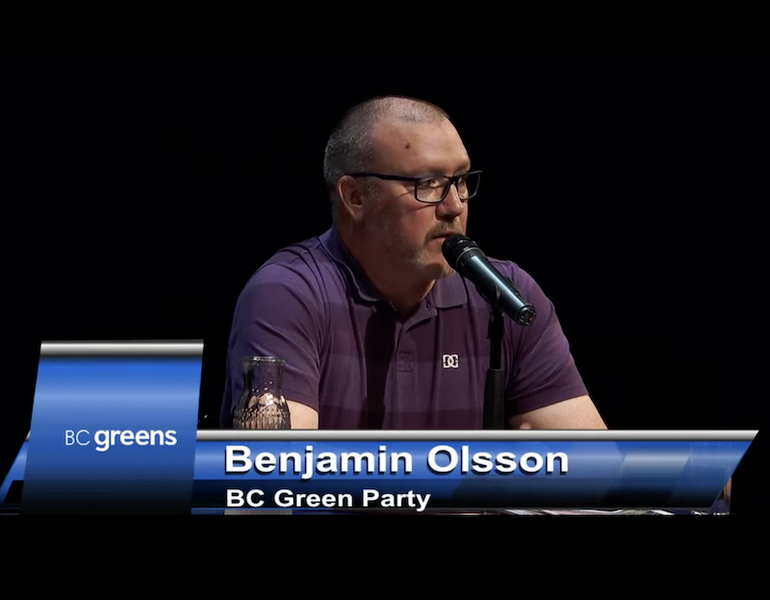
Benjamin Ollson: Proportional representation is a key platform issue for the Green Party of BC.
It’s been on our agenda for many years and several elections. We’re not letting that one go, and we’re never going to give up on that one. Other countries are using it. It’s working. There’s no reason why we can’t do it here. One of the reasons why the Greens couldn’t support the NDP was because they weren’t willing to move on electoral reform and even though they said they would. We’re still going to keep pressing for that, and quite frankly, if we had a system of proportional representation in this province, we wouldn’t be having these picking the lesser evils arguments since vote splitting and all this other stuff that gets talked about. We would actually have a system where everybody’s vote counts.
If you voted for Richard, your vote’s still going to, or an independent or a Green or somebody else, it’s still going to count towards something. And so there’s going to be certain seats applied based on your party or based on your candidate, and you can have a mixed-member proportional system, so you can vote for the person you want, but also you can have another vote for you voting for the party that you want.
So say, you like the NDP, great. But you like Richard, so you want to vote for Richard as a candidate. Great. So you can do that. There’s many other systems out there. Mixed-member proportional is the one that I prefer myself, but there’s many other ones. We should be keeping talking to this.
Thank you so much for the question. This is not something we’re going to let go of. Thanks.
Richard Lambert: I completely agree with you on the proportional here. I actually see the bickering and the infighting, just straight out on the party system. Nobody likes to lose on anything that they do. It’s always a constant battle and a constant fight where people aren’t just getting along and trying to actually look after the needs of the individuals and the people that they’re trying to represent. So yes, I’m a hundred percent for this, but we also have to have the checks and balances in place.
But with the system we have right now, we should still be just trying to look after the general needs of our people. Thank you.
Morgan Kyle: Thank you for the question.
What would you cut?
Question 11: yes. Mine has to do with finances and when you can’t afford any longer to support all of the wonderful things that you want to do, what would you vote to cut first?
Morgan Kyle: Ben, please.
Benjamin Ollson: I think one of the things that we would want to do is we want to cut the subsidies given to dirty industry. That’s number one. So the resource royalties, having an easy ride for big oil and gas companies, people who are shipping raw logs out of this province are our resources.
Again, those are our trees. That’s our resources. They should not be given away with cheap subsidies. When we talk about cuts, that’s the same thing we’re going to cut out. What’s that going to mean? It’s going to mean increased revenue for our province or for the stuff that we need for as citizens of this province.
Thanks.
Richard Lambert: The cuts I’m going to straight out and say I’d definitely go after first is the cuts to the major industries also. Or not the industries, but all these multinational companies that are making millions and millions of dollars. Cutting some of these, the perks and the extras that they’re getting and the tax breaks that they are getting.
I want them to be paying the same tax bracket as everybody else and cutting those, the gifts that they’re getting currently from the government that’s being currently involved right now, where we’re not going to tuck tailor to certain unions, or we’re not going to tuck tailor to the higher paying people or the higher making companies like the multinationals.
About all I got on that one
Sara Lopez: I work for the not-for-profit sector. I am very familiar with funding cuts, and what I can tell you for certain is that the not-for-profit sector knows how to stretch a dollar, and that’s exactly the kind of mindset that I would bring in a tough fiscal situation. Oftentimes partnering with your not-for-profit sector is actually where government can find huge economies of scale.
Working with, again, those frontline organizations, with our not-for-profit sector to provide services for community, you can often do that at a fraction of the cost as providing those services as the government. So that’s where I would find efficiencies before going to cuts. Additionally, you can pause projects.
The long-term care home here in Campbell River is a great example of that. It wasn’t canceled. It was repaced so that it could be more economically viable. And now that we’ve been able to reduce the cost per bed down from $1.8 million to #1.18 million, now it can be back on the table.
So I think we need to be able to have those discussions, see where we can find economies and efficiencies, rely on those who can provide those services at a lower cost before throwing the baby out with the bath water. We know that’s what Conservatives will do. They’ll cut healthcare and education.
Morgan Kyle: Thank you. For remaining questions we’ll have two more that they need to be direct questions and respectful with whoever remaining at this time. Yes. Thank you.
Teaching Acceptance of Other Gender Identities
Question 12: Hi. Thank you. SOGI, sexual orientation, gender identity, it was a pilot program. It was put out, I think, in 2016. It was pushed on all the families and parents and students, and nobody got to actually vote on it. There’s lots of very frustrated parents and students that want these radical gender ideologies not shoved down their children’s throats and just getting back to-
Morgan Kyle: That’s not a question.
Question 12: Yes I’m getting there.
Morgan Kyle: No,
Question 12: What would you say to these frustrated parents that want SOGI out?
Morgan Kyle: Richard, could you please respond?
Richard Lambert: Yes, I’ll definitely respond to that. My kids went to school here in this town. I’m completely unaware of what you’re talking about. Our education should be education. Sexual orientation is sexual orientation.
That is about all that needs to be said. These programs that you talk about, I was active in my kids’ school. I did not once hear a thing about this, and my kids went to Cedar, they went to Southgate, and then Timberline, and not once any of these programs were mentioned.
Question 12: These kids go to Southgate. It’s been there for ten years.
Sara Lopez: So I’ll start by saying that SOGI in and of itself is about creating inclusive, safe spaces where our children feel seen, heard, respected within the school environment. It’s 2026, I think we can move beyond nurturing- -classrooms where discrimination, hatred and bullying still occurs.
So SOGI absolutely has its place. Meanwhile, we have Conservative MLAs who are platforming ideologies like homosexuality is pedophilia. And we have a Conservative leader who won’t denounce that. Again, this is hate farming. It’s harmful, toxic ideologies that pits us against each other and solves absolutely nothing. We need to rise above this.
Benjamin Ollson: I echo that. SOGI is a resource guide for educators in schools to teach inclusion, to teach respect, and that’s what it’s actually for. No matter what your sexual identity is, no matter how you identify yourself it’s about including people. It’s about making people feel human, no matter what we are or how we identify.
That’s the goal of SOGI. Is that still needed today? Clearly, by some of the, the comments that we hear, yes, it is still needed. Yes, our children do need to be educated around these kinds of things, ’cause guess what? They’re not getting it from their parents.
Morgan Kyle: So thank you. We’ll be moving on to the next question. There will be no further comment on that. We’ll go to the next question. This is our last question, and then candidates will have an opportunity to have a concluding statement.
Core Beliefs
Question 13: Ooh, I get the last word. I guess feeding on that, my question would be, because this is more, more about not just an election and parties and all of that, but it is about your core values. So what I’d like you to do is to comment briefly on your beliefs regarding belief in science, medicine, reconciliation, and basic human rights.
Morgan Kyle: Sara
Sara Lopez: Thank you, Monica, for that question, and it is actually part of my closing remarks. I think that this right now, the moment that we are finding ourselves in, is a litmus test on our core values. What is it that we want to stand for here in the North Island? For myself, personally, I believe in science, I believe in climate change, I believe in equal rights, equal human rights for our most marginalized people, for indigenous people, black people people of any racialized background, our 2SLGBTQ community.
Truth and reconciliation matters. It’s everyone’s job to do so that we can create a better environment for our kids and for our seniors aging, and so that together we can rise. When the tide rises, we all rise together, and that’s really what we need to remember here. We need to stop with the hate farming and the fear mongering.
See each other for what we’re capable of. The biggest thing that I’ve learned and that I’ve loved during this campaign is door-knocking and meeting folks from all stripes, folks who voted for all sorts of parties for their own reasons. And truly, I think that we are far more alike than the media gives us credit for.
So we need to focus on those shared goals so that we can rise together.
Benjamin Ollson: Thanks for the question. Yes, absolutely, science works. Respect works, those kinds of things. Do we need to do a lot more work on that? Yes, we do. Do I want to see less division? Absolutely. Do we need to work better as a community to create a stronger region, have more voices in Victoria that are diverse, that have different ideas, new ideas?
Absolutely. yes there’s so many things that we could be doing. I really– My vision is healthy people, healthy planet. Simple as that. How do we do that? There’s so many different things. We have a 74 page fully costed platform, Green Party. It’s bcgreens.ca if you haven’t checked it out.
74 pages, it’s fully costed, gives lots of great practical ideas a, a roadmap of how to get there and I’m proud to support that. I’m really looking forward to traveling the community. I was out in Cortes and Quadra today, meeting with folks and hearing concerns and talking about the issues.
Love that stuff. And looking forward to go up North Island here this weekend and connecting with more people, hearing what people got to say. What are your concerns? What is important for our area? What do we need to do? What things should we be bringing to Victoria? And how can I best represent you?
And thank you for coming tonight again and look forward to more conversations. Thanks.
Richard Lambert: Again, science is science. My big thing is core values. It’s been instilled into me within the military growing up, my morality. The way I look at everybody sitting here in the audience and even moving through town, no matter what they look like, what gender they are, it’s the core value to it is we are all equal, and we’re all striving to look after each other in this community.
No matter if you’re on the low side or high side, when it comes down to at the end of the day, we are all just people in our society. That is my value, and that’s my belief. And no matter which person you look at, no matter where they are, if you can help somebody, you always help them. It doesn’t literally matter for any of it.
You have youth helping seniors teaching youth. This is like a big circle that has to be instilled, and it keeps getting set aside by people putting other people ahead of everybody, right? It’s about quality of life.
Morgan Kyle: I misspoke. This is the last question.
Supporting People with Dementia and their Caregivers
Question 14: Thank you very much.
I’m interested in hearing your perspectives on dementia care in our community. I speak for the thousands of unpaid caregivers, spousal caregivers who are doing an unfathomably difficult job 24/7 with no reprieve. The current government supports are minimal, unreliable, and completely inadequate. The long-term care I was looking for-
Morgan Kyle: I’m sorry. Your question. You did ask a question at the very beginning, so let’s get back to that. Thank you.
Question 14: The question really is: what are you going to be doing to support those with dementia and their caregivers in our community? How do we make it a dementia-friendly community?
Morgan Kyle: Thank you for your question And Ben, could you start please?
Benjamin Ollson: Thanks so much for your question. Yes, caregiver burnout is real and thank you for everyone who helps a family member or loved one with dementia. It’s something that is a serious critical issue as you identified. I agree with it a hundred percent.
Are more supports needed for families and caregivers? Absolutely. We need to be doing more. There’s more services that are needed and more supports needed for caregivers. Caregivers are so important and are really undervalued and sometimes not listened to very well at all. We need to change that. We need to start listening. We need to start listening to families and caregivers and supporting people with dementia and to provide the best care possible. Whether it’s at home, whether it’s in a facility wherever it is that, that makes sense, whatever to provides the best care that we possibly can.
It involves families and caregivers in that planning. That’s when we need to do. I worked in a long-term care facility across the northern island and central island for a while. Saw lots of families who really want to be involved and want that support and the Green Party definitely supports that a hundred percent.
We want to provide and increase that support. Thank you.
Richard Lambert: All as I can say is I agree that we definitely need to support. I actually had to do work here in the dementia ward when I was working electrical up here and seeing it I got no- nothing but respect for the nurses and the families that are going through that and seeing how the state of the people are.
I truly agree with what you said and the supporting those healthcare workers too. What are you going to do? I consider them part of the frontline workers too myself
Sara Lopez: So absolutely. I’ve heard on the doorstep folks concerned around dementia care hospice care for our seniors and our critically ill, respite care, critically important as well, long-term care.
All of these are very complex issues and very personal issues that put a strain on the individuals caring for those family members. The NDP has committed to more positions for at-home care, which will hopefully alleviate some of the burden of those caretakers that are family caretakers. But there is absolutely more work to do.
Our seniors need to age with dignity. They need to age with the same level of care that they gave us growing up, and that’s something that we need to address unequivocally, and the NDP government is already looking at providing supports at this time via at-home care services.
Closing Arguments
Morgan Kyle: Thank you for your question. At this point, we’ll give everybody an opportunity to have 90 seconds to have concluding statements. So Richard, start us off, please.
Richard Lambert: I get to start, and I get to finish first here tonight. That’s awesome. I really do want to thank everyone here and the host tonight and everyone here listening.
Tomorrow, I’m going to be basically enjoying my last day off and then going back to my full-time job. I do live and work in this community still, and I will be carrying on living and working in this community just like the rest of you. We’ve heard a lot of different perspectives tonight from the other two candidates here, – that showed up tonight, and I do agree with a lot of the things that you stand for tonight.
Some of the biggest things I don’t stand for is the bipartisanship that we see in our government tonight. That’s why I wanted to come in as an independent. I don’t want to be tied to a strict party line. I understand that you guys are in certain aspects but I hope no matter which the outcome is when we have coming up, that everybody’s actually going to look after our community first.
I really strive for that, and I really want that to happen. I truly want to be the one to answer to you guys, and I’m running because I don’t want my uncompromised voice, and I want it to be heard by everybody on the north end of the island. If not I want my fellow people sitting here to promise the same thing because that’s the only thing that I can promise tonight. Thank you.
Sara Lopez: Thank you. Let’s be honest about what’s at stake here. In the North Island, this is a choice between the NDP government and a Conservative one. The NDP is the only party positioned to defeat the Conservatives in this riding. I know we haven’t been perfect, and I’ve heard you loud and clear on the doorstep.
There are frustrations. You’re worried about the climate, caring for your family, cost of living. I’m a renter, I’m a single mom, and I work for the not-for-profit sector. I am in this fight with you. Connecting with you during this campaign has been a pleasure. The Conservatives aren’t the answer. Their fiscal plan leaves a projected $5 billion shortfall, and they can’t be bothered to come here and answer your questions tonight.
We can’t afford leadership that divides us, undermines science, human rights, and puts private interests ahead of people. I hope I’ve earned your trust. I will keep showing up just as I have for the past ten years in this community. I believe in science, in human rights, in reconciliation, and I believe in the people of North, the North Island.
This election is about more than party platforms. It’s about what we value: opportunity, caring for one another, protecting the land we love, and building communities where everyone has a chance to thrive
Benjamin Ollson: Thanks. I want to thank our candidates, all our candidates here who came tonight to be here to answer all your questions and to basically, yes, help be here as a possible representative for this riding and for our North Island that we love so much. I decided to run because I ran for the Green Party before a couple times. It was many years ago. And I thought, “Hey, my kids are grown, and I have a little bit of time, so I can actually maybe do it again.”
I believe in the Green Party values. I believe in our values of community, of local economy, of local of lifting everyone up locally and having local decision-making. I’m really proud to fly the green banner. Having said that are there ways for us to work together.
There’s lots of things we agree on tonight even. And so that I think the statement that, sometimes we agree on more than we think we do at first is true. But then at the same time, we also have to understand that, what we say and what we actually do are two different things.
So we could promise the world, but are we going to follow through? Keep that in mind as well. I just ask folks to encourage the almost 4 in ten people who didn’t vote in the 2024 election to please come out. Don’t feel like your voice doesn’t count because it definitely does.
4 in ten people if those 4 in ten people multiplied, actually came out and voted, we would have a very different result in this election. Thank you.
Bringing the Debate to a close
Morgan Kyle: As we bring tonight’s debate to a close, I’d like to sincerely thank each of our candidates for putting your name forward, for sharing your perspectives, and for your willingness to serve the people of our communities and our province. And to everyone here tonight and those watching online, thank you for taking an interest in the future of our province.
I’d also like to remind everyone that tomorrow, October 17, is municipal election day, and the provincial election takes place October 24. I encourage everyone to get out and vote and take a friend, a family member, or neighbour with you. Encourage someone who may not normally participate to make their voice heard.
Democracy is not a spectator sport. It requires us to be informed, to ask questions, to listen to perspectives that may differ from our own, and most importantly, to participate. The decisions made by those we elect will shape our communities, our opportunities, and the future we leave for our next generation.
Your voice matters, your vote matters, and our democracy is stronger when we all take part. Thank you again for being here, for being engaged, and for caring about the future of our community and our province. I would personally like to thank the Tidemark team and volunteers who have been an absolute joy to work with, as well as Vern and Sue, who have provided us security with compassion and a smile.
I think they should get a round of applause, to be honest.
And thank you to the Campbell River and District Chamber of Commerce for making these debates happen, as well as giving me the opportunity to moderate seven debates. It has been a learning curve and a true pleasure. With that, have a wonderful evening and weekend, and please get out and vote and take care.
Links of Interest:
- BC Green Platform
- Articles about, or mentioning, Benjamin Olsson
- BC NDP platform 2026
- Articles about, or mentioning, Sara Lopez
- Conservative Party platform 2026
- Articles about, or mentioning, Anna Kindy
- Articles about, or mentioning Richard Lambert
Sign-up for Cortes Currents email-out:
To receive an emailed catalogue of articles on Cortes Currents, send a (blank) email to subscribe to your desired frequency:
- Daily, (articles posted during the last 24 hours) – [email protected]
- Weekly Digest cortescurrents – [email protected]