
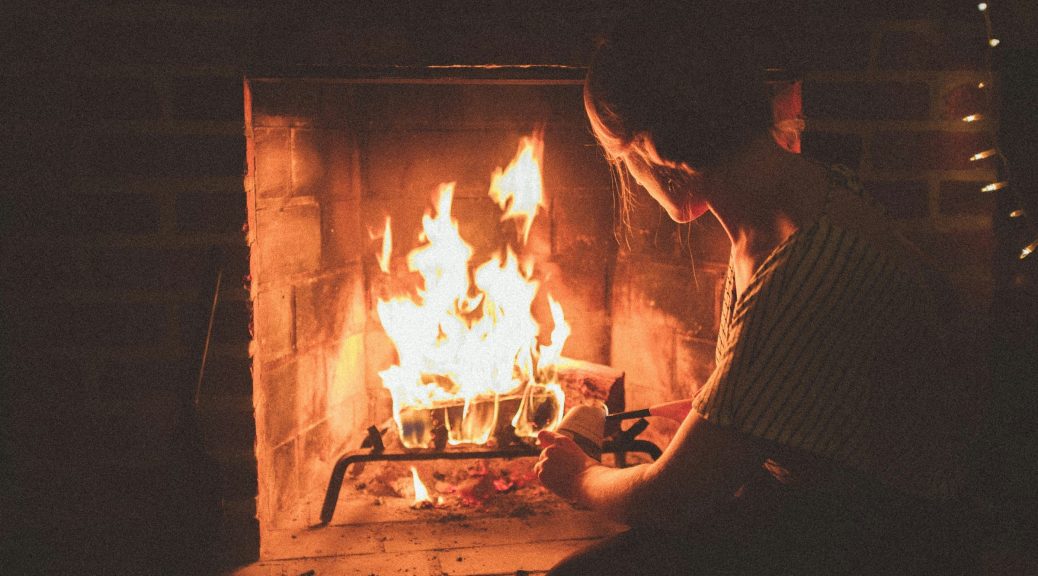

Wood smoke is not good for your lungs or the planet. It produces particulate matter less than 2.5 micrometers, which is small enough to inhale, travel through our bloodstream, and cause a range of health problems. According to Dr Gary Fuller, the average wood burning stove emits six times as much particulate matter as a modern diesel lorry. This can be a problem in a cities like London, Vancouver or Victoria, but what about rural Vancouver Island communities like Courtenay, Campbell River and Cortes Island?
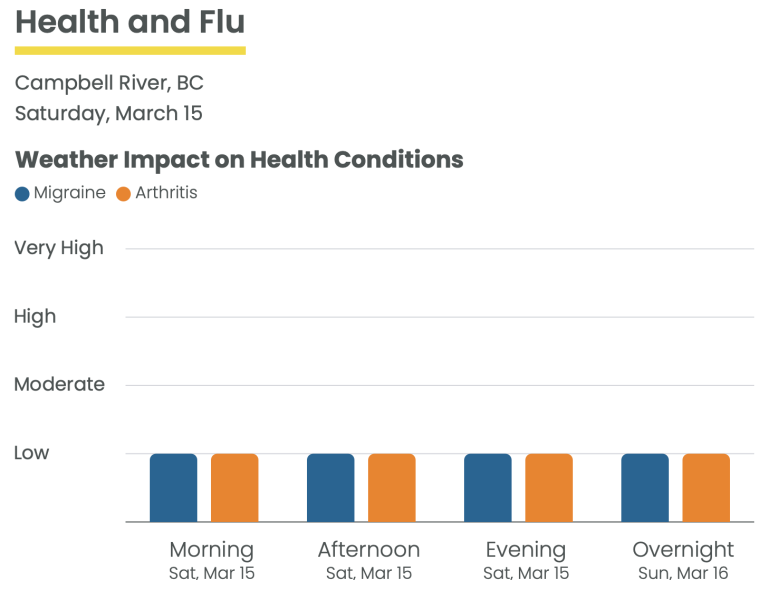
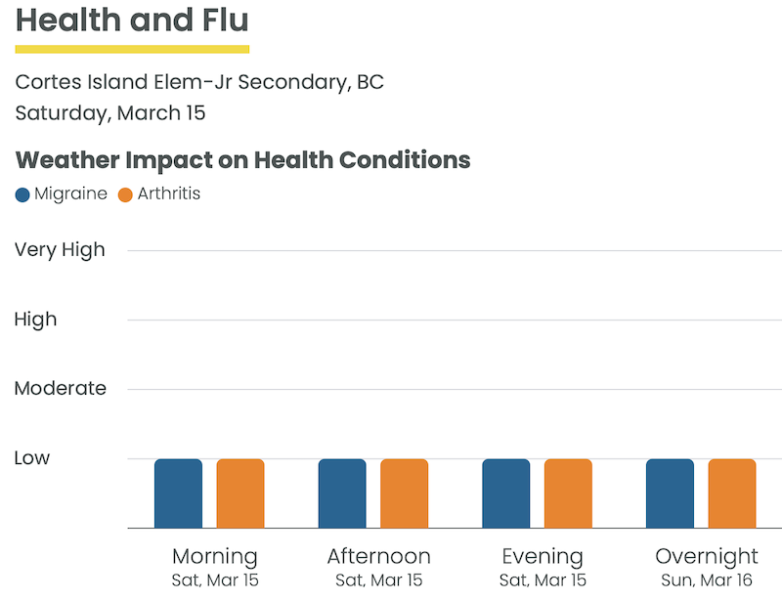
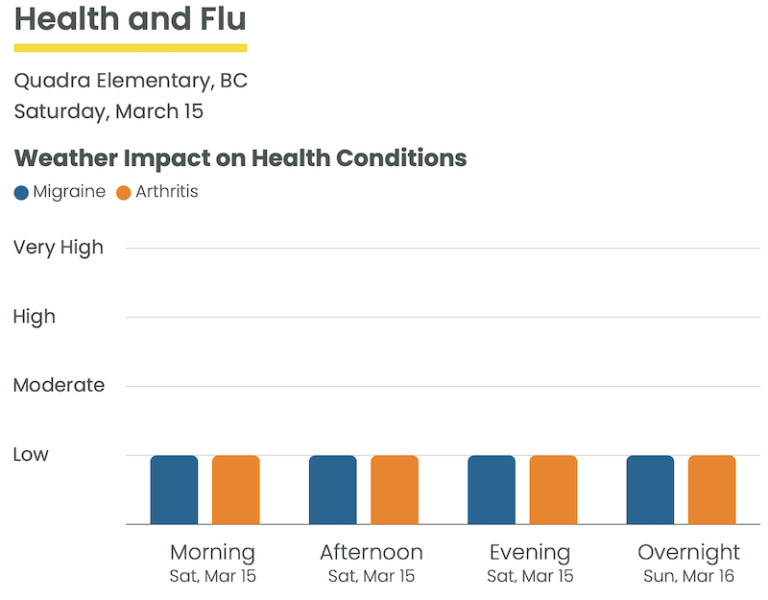
The Weather Network’s Health conditions monitor shows low risk for migraines and arthritis for the past 24 hours on Cortes island, Quadra Island, Campbell River and Courtenay.

Air Quality in Courtenay
Air quality has long been a concern in Courtenay and the number one source of the of problem is wood smoke.
On February 12 Jeanniene Tazzioli, Manager of Environmental Engineering for Courtenay, reminded council that, “In the city of Courtenay, the predominant source of PM2.5 is residential wood burning appliances. This was determined by observing the pattern and timing of elevated concentrations of fine particulate matter. Concentrations of PM2.5 are highest during winter evenings, as seen in the average monthly and hourly readings collected by the provincial air monitoring station. This pattern aligns with the usage of wood burning appliances in the community. Poor atmospheric venting conditions often occur at night, which traps smoke close to the ground and further worsens air quality. Wood burning applicances were identified.”
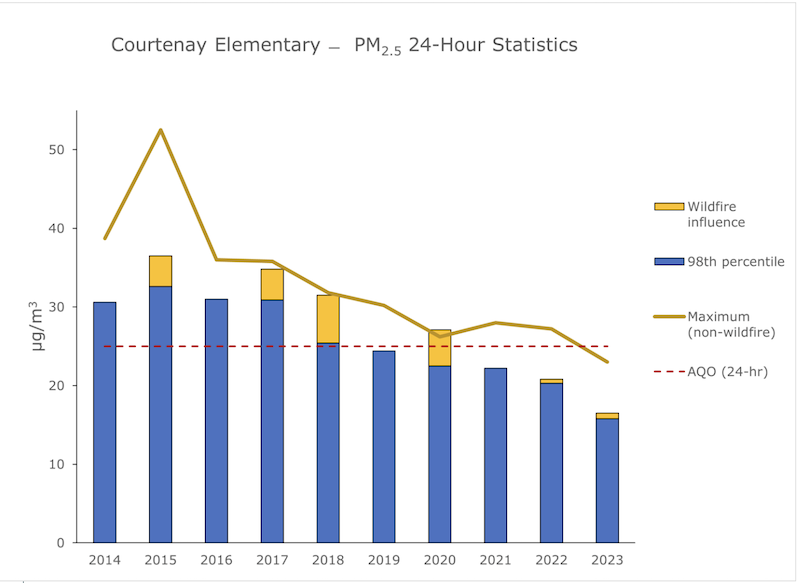
However Tazzioli came to report some good news. As a result of the city’s actions, the air quality has been improving since 2017. Two years later, Courtenay met B.C.’s daily average Air Quality Guidelines objective, which is 25 micrograms of fine particulate matter per cubic meter (µg/m3).

Over the course of the past 30 days air quality has exceeded 25 µg/m3 twelve times, climaxing at 42 on February 15, but the average daily reading was only 7 µg/m3 .
In the 24 hours prior to 8 AM on Saturday, March 15, Courtenay’s average PM 2.5 reading was 6.29 micrograms per cubic metre (µg/m3).
A second reading, taken at 10 AM on Sunday, March 16 found:
- PM2.5 (mostly wood smoke) – 6 µg/m3
- NO2 (vehicle emissions) – 2.8 ppb
- O3 (Ozone) – 25.1 µg/m3
Plumes labs, in France, offers an alternate data stream with different results for Courtenay (albeit also finding the health risk from smoke low):
- PM2.5 (wood smoke) – 2 µg/m3
- PM10 (particulate matter) – 4 µg/m3
- NO2 (vehicles emissions) – 5 µg/m3
- O3 (ozone) – 47 µg/m3

BC Air Quality uses a different system:
- Low Risk readings (1-3) are ‘ideal for outdoor activities.’
- With Moderate risk readings (4-6) there is ‘no need to modify your usual outdoor activities unless you experience symptoms such as coughing and throat irritation.’
- At High Risk (7-10) ‘Reduce or reschedule strenuous activities outdoors. Children and the elderly should also take it easy.
- If the rating goes to Very High (10+) ‘Avoid strenuous activities outdoors. Children and the elderly should also avoid outdoor physical exertion.’
The Air Quality Health Index indicates the risk has been low (1 or 2 out of a possible 10+) throughout the Comox Valley for most of the past 30 days. There have been days in which the numbers rose into Moderate Territory, but never more than 5.
At 9AM on Sunday, March 16, 2025 the air quality reading was 2 (low risk).
All data sources agree that the air quality in Courtenay is currently ‘Excellent!’
Air Quality in Campbell River
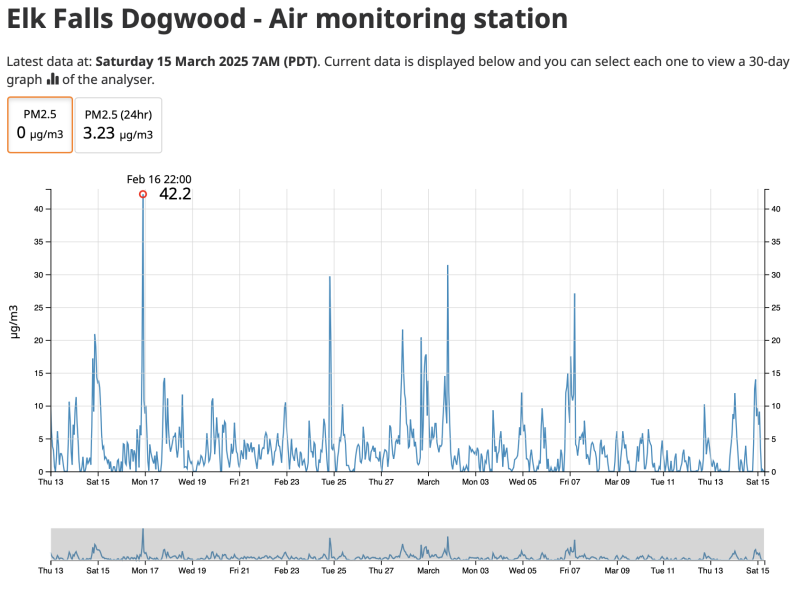
The monitoring station at Elk Falls Dogwood reports they went over the 25 µg/m3 limit four times during the past 30 days. The high was 42.2 µg/m3 on February 16, similar to Courtenay’s high a day earlier, but the average monthly PM 2.5 reading was only 3.23 6 µg/m3. That’s half the amount of particulate matter reported in Comox.
ON 8 AM, Sunday March 16, 2025, the smoke measurement for the past 24 hours was 1 µg/m3.
While Cortes Currents could not find other local sources for Campbell River’s air quality, the data from Air Plumes for Campbell River at 9 AM on Sunday, March 18, 2025, was:
- PM2.5 (wood smoke) – 2 µg/m3
- NO2 (vehicle emissions) – 5 µg/m3
- PM10 (particulate matter) – 10 µg/m3
- O3 (ozone) – 44 µg/m3
Overall, the scientists from Plumes France declare Campbell River’s air quality is ‘Excellent!’
Air Quality on Cortes Island
So what would be the reading on Cortes or Quadra Islands, where there are far less people and a great many more trees than either Courtenay or Campbell River?
The only detailed data Cortes Currents could find came from Plume Labs, which gave an overall rating of 16 AQI (Excellent) for Cortes Island’s air quality at 6:15 AM on Sunday March 16, 2025. They detected:
- PM2.5 (wood smoke) – 2 µg/m3
- PM10 (other particulate matter) – 4 µg/m3
- NO2 ( vehicle emissions) – 5 µg/m3
- O3 (from the ozone) – 44 µg/m3
Cortes Island’s annual average was 18 AQI (Excellent) and this was also the daily average for 243 days a year.
Air Quality on Quadra Island
Plume labs also gave an excellent rating for Quadra Island, an AQI rating of 17 (Excellent) results for Quadra Island at 6:59 AM on Sunday, March 16, 2025. The main pollutants detected were:
- PM2.5 (smoke) – 2 µg/m3.
- PM10 (particulate matter) – 4 µg/m3.
- NO2 (primarily vehicle emissions) – 4 µg/m3
- O3 (ozone) – 44 µg/m3
Quadra Island’s annual results were 18 AQI (Excellent), and the reading was actually 18 AQI for 132 days a year.
These are measurements of the noticeable local impact, not of our contribution to the region’s overall emissions.
Top image credit: Woman in front of fireplace – Photo by Ashim D’Silva on Unsplash
Links of Interest:
- Air quality in the City of Courtenay is improving thanks to local initiatives, report says – repost from the Discourse
- Articles about, or mentioning, wood smoke
- Articles about, or mentioning, heat pumps
Sign-up for Cortes Currents email-out:
To receive an emailed catalogue of articles on Cortes Currents, send a (blank) email to subscribe to your desired frequency:
- Daily, (articles posted during the last 24 hours) – [email protected]
- Weekly Digest cortescurrents – [email protected]