

The 2026 New Forest Act Roadshow will be coming to our area next month. The Sentinel Educational Foundation and Watershed Sentinel magazine are the sponsors of the Vancouver Island leg of its tour. Jennifer Houghton, Campaign Director of the New Forest Act Proposal, will be speaking at the Campbell River United Church at 7:00 on Thursday, June 11, and Quadra Island Community Centre at 7:00 on Saturday, June 13.
Jennifer Houghton: ”Right now we’re seeing a decline in timber supply, mill closures, degraded lands, degraded watersheds, rising disaster costs, and less stable communities. The current system isn’t even protecting the future of forestry itself. Ecosystem decline is a serious problem across BC, and the whole structure of forestry needs to be replaced. That’s why we’ve developed a legislative proposal to restructure all forestry in BC.”
A New Forest Act
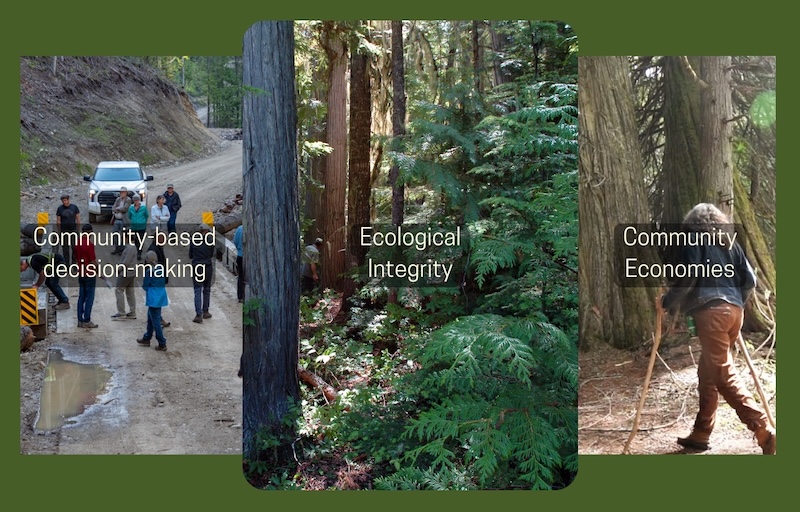
“It’s a proposed replacement of BC’s current forestry legislation, including the current Forest Act, the Forest and Range Practices Act and the Private Managed Forest Lands Act. Right now, BC’s forestry laws are built around maximizing timber extraction. The New Forest Act framework is a citizen-developed proposal to shift forestry towards ecological limits, stable communities, and long-term ecosystem function, instead of short-term liquidation.”
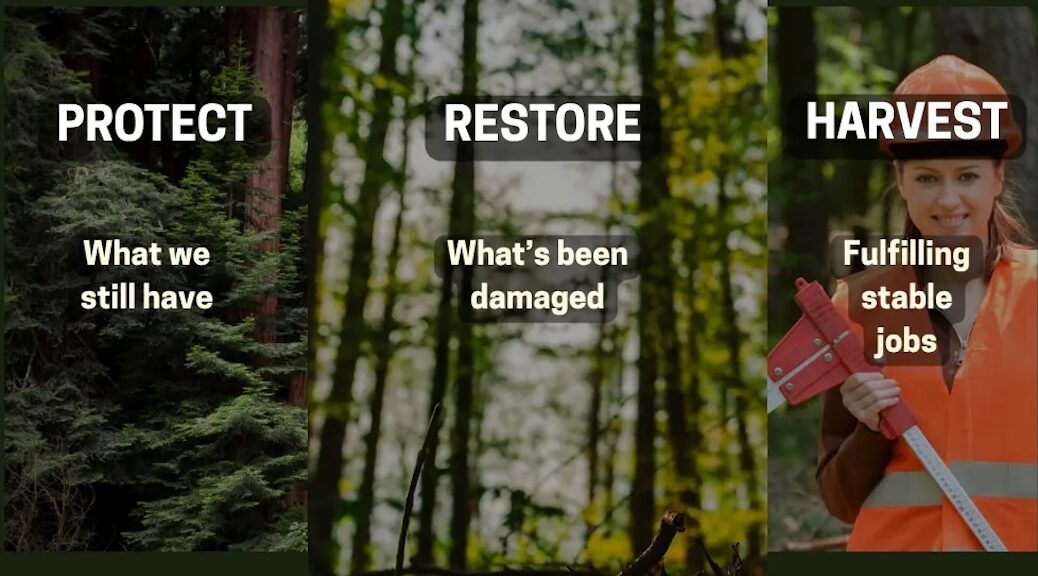
“It’s based on a simple framework. Protect what still functions, restore what’s been damaged, and harvest carefully where the land can actually support it. Our goal is not to end forestry. The goal is to stop destroying the systems communities depend on: water, slope stability, biodiversity, and long-term timber supply itself.”
Cortes Currents: Have you presented these ideas to any politicians?
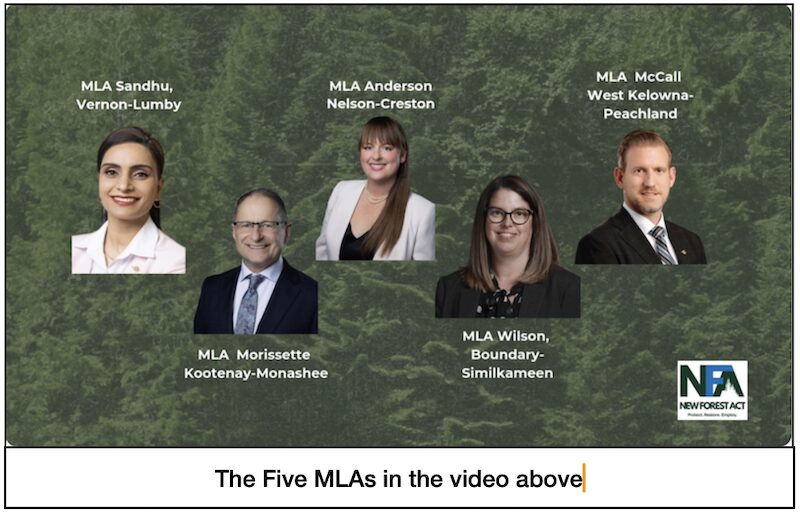
Jennifer Houghton: “We’ve presented the new Forest Act framework to five MLAs. Some of them were BC Conservatives, some of them were BC NDP, and they were interested. They were engaged. They’re pretty non-committal at this point, but they did show appreciation that we’re offering a replacement for the current system because they’re used to hearing complaints. This is the only fully developed replacement system for the current forestry system in BC.”
“We recently talked to the Deputy Chief Forester, Nora White. We presented the new Forest Act proposal to her, and she finds it very pragmatic. There’s a lot of parallels to the conversations that they’re having inside the Provincial Forest Advisory Council about forestry in BC.”
“It seems like people inside the government, whether they’re politicians or public servants, recognize that the current forestry system is faltering. It’s collapsing. At this point in time, the government hasn’t come up with a viable alternative. That’s what we’re doing, we’re presenting a viable alternative.”
Cortes Currents: Have you been getting pushback from industry?
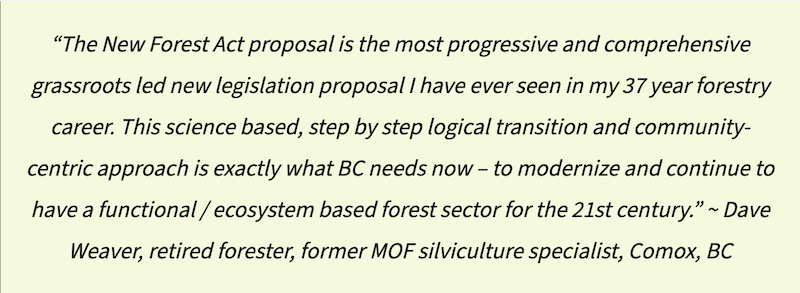
Jennifer Houghton: “We’re not getting too much pushback specifically from industry. Some of the people who were involved in the development of the new Forest Act proposal actually worked in industry and government. Dave Weaver was a forestry professional. He has 37 years experience. He worked for the government. He also worked for industry, he was involved in silviculture. Also our group, the Boundary Forest Watershed Stewardship Society, which is based in Grand Forks: our founding members are loggers. Herb Hammond, who helped develop the proposal, he’s not only a forest ecologist, he used to be a registered professional forester.”
“We’re approaching this not just in terms of restoring ecosystem function, which is the top priority of the new Forest Act: we’re also approaching this from the perspective of reestablishing jobs.”
“The new Forest Act is not anti-forestry. Logging would actually continue under the new Forest Act, but it changes dramatically. The proposal shifts away from industrial clear cutting and volume-based extraction towards selection forestry, partial cutting, and focusing on ecological limits. The proposal specifically includes harvest zones where forestry continues under nature-directed stewardship principles.”
“In BC, the issue isn’t whether we log, the issue is what are the long-term outcomes of the system. We’ve lost close to 60,000 forestry jobs in BC over the past 25 years, and people are concerned. People aren’t so concerned about profits for corporations. People who live in BC want stable, long-term jobs. Under the new Forest Act proposal, jobs would stabilize. There’d be long-term jobs, not just for doing different kinds of harvesting, but also restoration. That’s a key focus of the new Forest Act.”
(Video by Daniel Pearce, Heartwood Documentary Series)
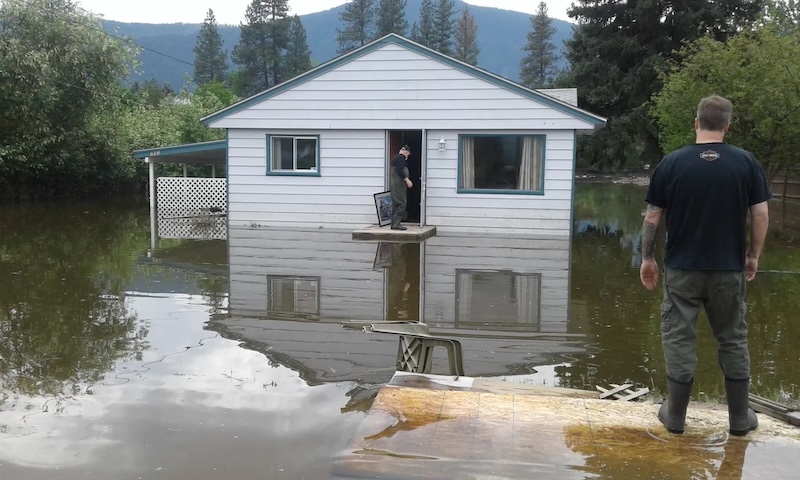
The 2018 Flood
Cortes Currents: Let’s go back to the beginnings of the New Forest Act Proposal, what inspired you?
Jennifer Houghton: “We got into this because of the catastrophic flood that hit Grand Forks in 2018. My home was hit along with 400 other houses. The question that I asked was what caused this?” So I looked into it, and through a lot of research and touring on the ground with our loggers. I’ve come to see that the massive scale of industrial clear-cutting in our watershed contributed to the scale of the flooding. So that set me and a few locals in our area to form our group, and then to develop this proposal because it wasn’t just happening in our watershed, it’s happening all across BC.”
“There’s lots of little groups like ours. People are struggling to get forestry done differently. They’re hitting a block when they run up against legislation when they want forestry done differently. So at the root of forestry problems and the forestry crisis in BC is this legislation, that’s why we’re aiming to get structural change with the legislation.”
Protect, Restore, Harvest
Cortes Currents: Do you have any models of how this would work in practice?
Jennifer Houghton: “We developed a mapping project of the Kettle River Watershed, that’s the watershed that flows down into Grand Forks. Our zoning framework is called PRH, so that’s Protect, Restore, Harvest. So our 8,000 square kilometer watershed was mapped out into Protect, Restore, Harvest to show the difference between the current system and what it would look like under the PRH system.”
“Under the current system, there are extensive areas in our watershed that are in the harvesting zones that are getting hammered by industrial extraction.
Under the PRH system, a big chunk of it shifts under protection. Primary forests get protected. There’s no logging there at all. Primary forests include old growth. Then under the restoration zone would be areas that are ecologically unstable. In our watershed, hydrological risk is a big problem, obviously because we had that huge flood, so areas that contribute to hydrological instability get put in the restoration zone. That’s areas that have already been logged. We use scientifically validated methods to restore those areas, so there’s no longer logging there either. The harvesting zones get reduced and logging gets done through partial cutting or selection style logging. Instead of large scale clear cuts and simplified plantations, you maintain, where possible, continuous forest cover, you protect water systems, preserve biodiversity, and work within ecological limits.”
Cortes Currents: What would you do with diseased old growth?
“If it’s a safety concern, then it should be cut down, but disease and pests are part of nature. If a tree falls on its own in the forest, that dead tree that’s lying on the forest floor actually provides a nursery for new growth. So as it rots and decomposes, it provides home for insects and microorganisms, and the forest goes through its natural cycle. Rot is not an issue under nature-directed stewardship. That’s something that is part of the industrial forestry lingo. Ecosystem function is the most important thing, and dead standing trees and dead trees on the ground are part of ecosystem function, so they would be left.”
Jennifer Houghton: “There would be fewer trees cut, but under the new Forest Act framework value-added processing would be emphasized. Instead of producing cheap dimensional lumber, the emphasis would be shifted to value-added products.”
“If you go to YouTube and you look up @BoundaryForest, you will find how we mapped out our sample watershed.”
2026 New Forest Act Roadshow
Cortes Currents: So what is your next step?
Jennifer Houghton: “In order to spread public awareness about the new Forest Act framework, we have a tour in June. Most people across BC are already living with the consequences of the current system. Everybody’s dealing with declining timber supply. Many people deal with flood concerns, wildfire, watershed disruption, and economic instability.”
“Most people have never been presented with an alternative, so the tour in June is about putting that conversation directly into communities. We’re going across the province in the Interior as well as Vancouver Island. We’ll be talking about the future of forest management in BC, presenting the new Forest Act proposal, explaining the proposal clearly and directly to the public. We’ll talk about what the current system is producing, why those outcomes are occurring and what structurally changes under the new Forest Act.”
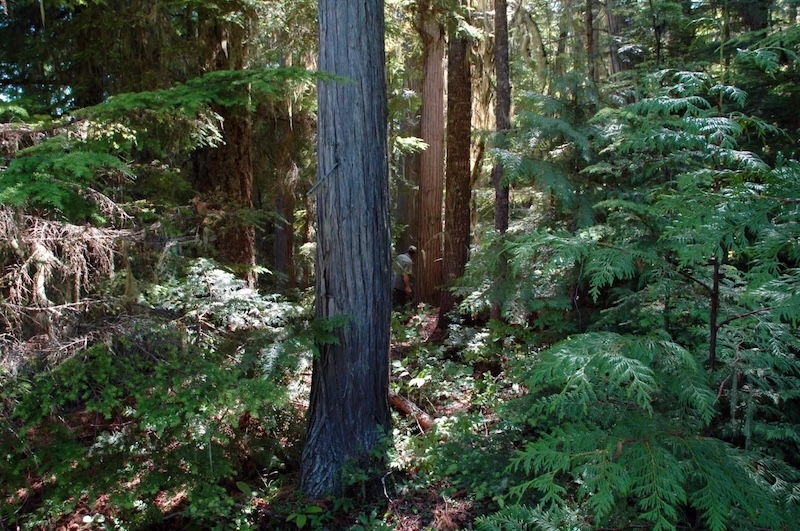
“The tour includes interior communities like Golden, Nelson, Trail, and Hundred Mile House. That’s followed by Vancouver Island stops, including Campbell River, Quadra Island, Courtney, Port Alberni, Powell River, Victoria, and Honeymoon Bay. All of the details can be found on our website, which is boundaryforest.org under Tour 2026.”
Cortes Currents: Have you thought of coming to Cortes?
Jennifer Houghton: “On this tour we have 11 stops. At this point in time, we can’t add any new stops, but we’d always be open to doing a virtual presentation for Cortes or coming there sometime in the future.”
Links of Interest:
- The New Forest Act: Protecting Communities and Nature with a New Forest Act (download)
- Boundary Forest Watershed Stewardship Society (website)
- Boundary Forest Watershed Stewardship Society YouTube Channel
- From Conflict to Care: BC’s Forest Future – Provincial Forestry
- Advisory Council
All undesignated images and YouTube videos courtesy the New Forest Act Proposal
Sign-up for Cortes Currents email-out:
To receive an emailed catalogue of articles on Cortes Currents, send a (blank) email to subscribe to your desired frequency:
- Daily, (articles posted during the last 24 hours) – [email protected]
- Weekly Digest cortescurrents – [email protected]