
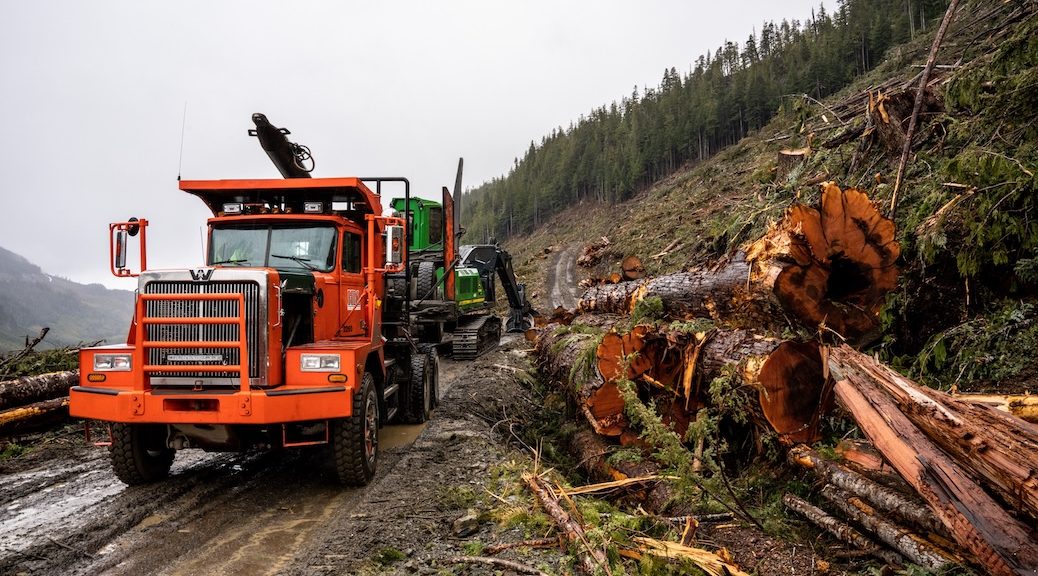

Five years have passed since the provincial government’s Old Growth Review panel published its report on BC’s old growth forest management. Sierra Club BC recently commissioned two of the panel’s three scientists to do a study on how their recommendations were carried out. In today’s interview, Karen Price talks about their report ‘Closer to the Brink.’
“We need to shift the paradigm because we all depend on the Earth and we need to start putting ecosystems and human communities ahead of industrial profits. To do that, we need to protect big tree forests. That’s my bottom line. That means supporting nations in their planning and it means working towards protecting 30% of each ecosystem by 2030 and 50% by 2050,” she explained.
The 30% by 2030 goal was adopted by the 188 nations that signed the Kunming-Montreal Global Biodiversity Framework in 2022. Canada was one of them. While the Kunming-Montreal Framework did not specifially endorse the 50% by 2050 goal, it does state we need to “substantially increasing the area of natural ecosystems” by 2050. One of the better known advocates of a 50% goal is the late Edward Osborne Wilson, a foundational figure in modern biology. Wilson stated the next big thing will be global biodiversity loss. “If we protect half the Earth’s land and sea and manage sufficient habitat to safeguard the bulk of biodiversity, living Earth can continue to breathe.”
Our Fortes Are Important
Karen Price: “The forests in BC play a really important role in both the climate and the biodiversity crises. People have probably heard about nature-based solutions. Our forests are some of the world’s best options for nature-based solutions to both climate and biodiversity crises.”

“Our trees in BC and particularly our big tree old growth are the best carbon bank that we have. Terrestrially, we need to be storing carbon and some of these ecosystems can store more than a thousand tons per hectare.”
“The industry always talks about carbon capture technology and from the numbers I’ve seen can only likely reduce the carbon from the last few seconds of the last day of a year. Trees are the ultimate carbon capture technology, taking carbon from the air, using it to build their bodies. They do this for free, whether they’re alive or dead. A lot of people say a dead tree – we don’t need that; we’ll get rid of it, but it’s still storing carbon for decades, if not centuries. So that’s the first thing: we really need to keep these trees for carbon.”
“Planting won’t do it. I did a little calculation. Canada plants 2 billion trees for the climate. Well, those 2 billion trees over a 10-year period, those little seedlings would have the same carbon benefit as not logging 500 hectares of old growth over 10 years, and those 2 billion trees would cover a million hectares. So 1 million planted trees are the same as just not logging 500 hectares of old growth. So planting trees won’t do it. We need to keep the big trees standing.”
“Secondly, there’s so much more than just the big trees in these forests.
They’re also a community of organisms: trees, plants, microbes, fungi, and animals who’ve lived together long enough that they formed an interconnected web which commmunicates and shares resources over time. Sometimes, not in all the forests in BC, but certainly the rainforests, they’ve developed complexity.”
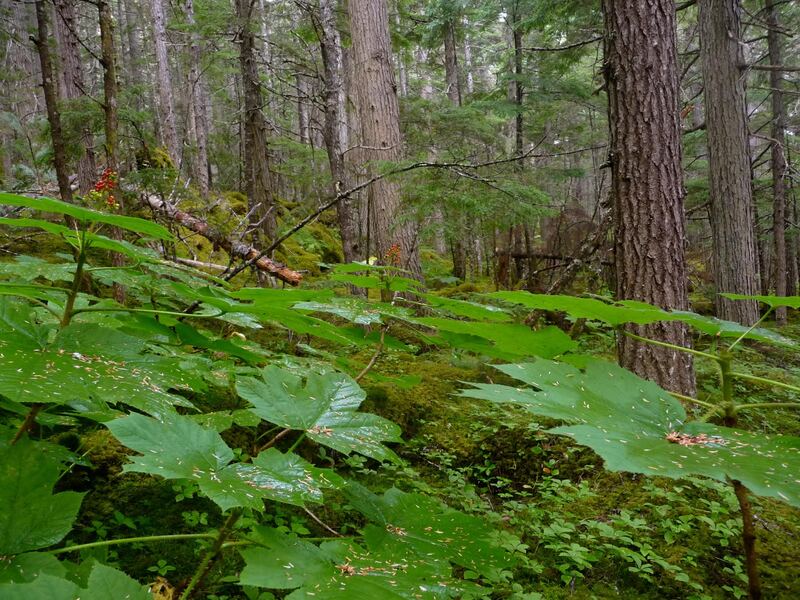
“If you walk in an old forest, you notice it’s not all dark; it’s not all light; it’s patchy, which means we’ve got a diversity of plants. This complexity and diversity means that it provides home to diverse species. Some of these are species that humans care about for food, medicine, other resources, and also just a lot of species that are specialists, some depending on old growth. Think of marbled murrelets that need big branches, mossy branches. Think of the epiphytic lichens that drape old forests and that gather nitrogen from the air and fertilize the forest floor. Goshawks, Spotted owls, tailed frogs, and all sorts of other species. So it’s home to diverse species, and then that’s the biodiversity piece.”
“Then also, these forests can help us adapt to climate change; so as well as helping us mitigate climate catastrophe, they can help us adapt to some of the climate events. If you walk into a forest, it’s cool and damp. Particularly, old forests are like living sponges that gather water, store it in their soil, store it in the logs, store it in the vegetation, and pump it up and down so that they keep the air moist. They can ameliorate both floods by capturing the water and drought, by letting the water out slowly. Also, in these wetter, damper, cooler ecosystems, they’re less likely to burn severely. They will still burn, particularly in the interior, but even though they’ve got more biomass, they’re not going to burn more and often they will burn less.”
“I haven’t even mentioned the spiritual value of these irreplaceable forests. The community has been together long enough to build up knowledge—and I hesitate to use the word, but I feel it’s wisdom—of time and community that will allow these forests to be more resilient to disturbance.”
“Old growth is a carbon bank. It can help us mitigate climate catastrophe. It’s a living sponge, so it can help us adapt to climate events. And it’s an interdependent web that’s home to many, so it is critical for biodiversity. That’s why we should care about old forests, primary forests, and particularly why we should care about big-tree forests.”
“These are the ones that have been targeted by industry. These are the ones that are most at risk.”
11 million hectares of old growth forests
Cortes Currents: The province’s chief forester says that BC has 11 million hectares of old growth forests, and they have to log old growth forests. Do you have a response to that?
Karen Price: “It really depends on what you mean by ‘have to log.’ It is true that the second-growth forests in BC mostly are not old enough to log yet.”
“So in that case, if we want to keep logging, yes, we have to log old growth forests. What we don’t have to do is keep logging the most at-risk old growth forests, and what we don’t have to do is keep clear cutting all old growth forests. Personally, I think that it would be good for BC and Canada to follow a lot of the world that have stopped harvesting their primary forests. I’m not sure of the feasibility of that. We don’t have a lot of second-growth that’s online. In most of the province, and the Interior for sure, industrial forestry has only been going on for 60 years. So (most of) our oldest second-growth forests are only 60 years old.”
“They’re not ready to harvest. What we do need to do is figure out how we can use some of those smaller trees. Then we can actually do some selective cutting in these young, dense second-growth plantations that are barely forests. They have totally different functionality.”
“They’re incredibly simplified, but if we could actually go in and thin some of these, it would be marginally economic, maybe. But if we can retool mills to do that, we can improve habitat, improve biodiversity, and maybe figure out something to do with these smaller trees. So that’s my answer there.”
“Yes, we have 11 million hectares of old growth. A lot of it has small trees. There’s very little that has the big-tree old growth that is at such high risk and such high value.”
415,000 hectares of Big Tree Old Growth
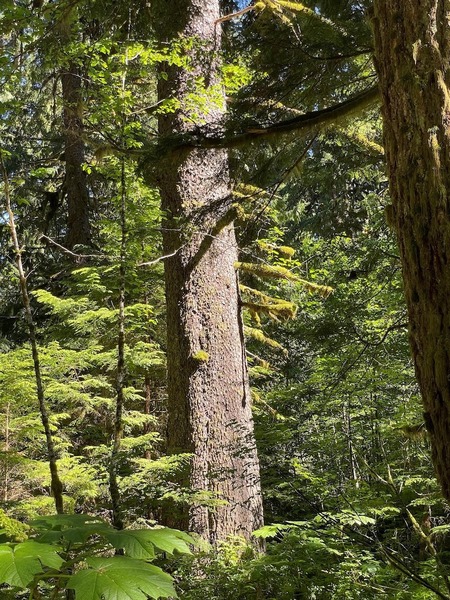
Cortes Currents: Do you have a figure for how much old big-tree old growth there is?
Karen Price: “Less than 415,000 hectares; 3% of old growth has high productivity. So we know that less than half a million hectares of that 11 million is high productivity.”
Cortes Currents: What were your recomendations five years ago and what has happened since then?
Karen Price: “In 2020, the government realized that they needed to do something differently, and they convened a couple of foresters to do an Old Growth Strategic Review. They talked to thousands of people around the province to find out what people thought about forests, and they found a consensus. Everyone thought we should do things differently. They thought we really needed to change our paradigm from putting profit and timber first to putting ecological integrity and people first.”
“To their credit, John Horgan’s provincial government committed to all the recommendations in this report and this Old Growth Strategic Review in 2020. The first one was to work collaboratively with Indigenous Nations. The second one was to commit to a paradigm shift to doing things differently, to putting ecosystems first across (the various) ministries. I think these two are the two big recommendations.”
“What we were doing with this latest report was seeing, well, are we seeing any evidence of a paradigm shift? Is the government thinking differently?
2.6 million hectares recommended for deferral
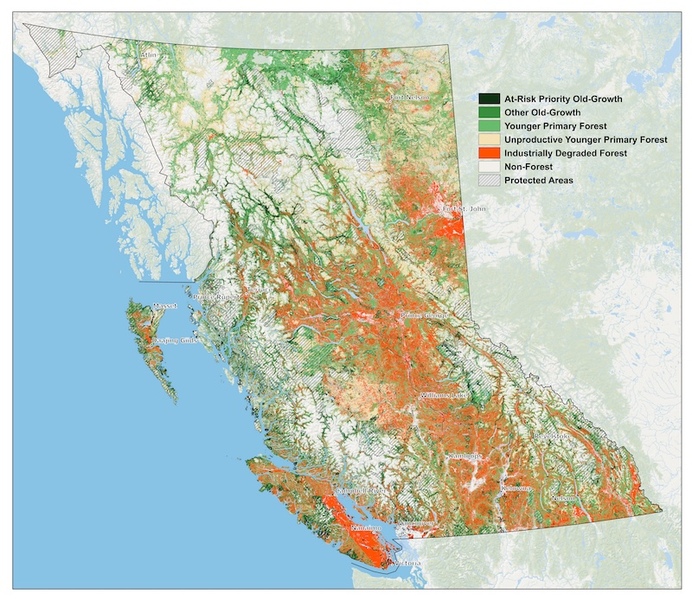
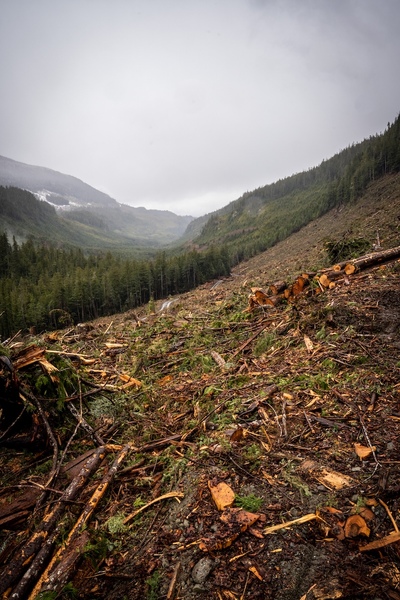
“One of the other recommendations back in 2020 was to temporarily pause harvest in some of the most ‘at-risk’ old growth, which included these big-tree old forests that we’ve been talking about. We were given the task of figuring out which forests were at risk and where we should recommend a harvest pause. We came up with 2.6 million hectares out of the 11 million hectares recommended for harvest deferral.”
“In this recent report, we looked at the status of old growth altogether and also the status of the areas that were recommended for harvest deferral. One of our big findings was that the deferrals had failed to protect these at-risk ecosystems from being harvested, and that in fact, the rate of harvesting of old growth inside the deferrals was four times higher than the rate of harvesting of old growth outside of the deferrals. So not only had they not worked, but it almost looked as though there was targeting of logging in the old growth deferrals. Now, this doesn’t have to mean that they purposely targeted, although we actually know of some cases where that happened. In most cases, it’s just that the deferrals are the biggest-treed forests, which are also the ones that industry wants.”
The deferrals were logged
“So it doesn’t have to be anything nefarious necessarily. But it really looks as though the deferrals failed, except in a few cases where there were nations that were already ahead of the conservation game and just needed a tool to help them give an argument to the province for conserving some parts of their territory; the deferrals worked for them.”
“So at local scales, I know that certainly the Gitanyow First Nation was able to use that, and I think some nations in the Kootenays were able to as well. So there were places that were able to use the deferrals, but for anywhere else, including forests that are within the provincial government’s mandate to manage—specifically, BC Timber Sales—the deferrals have been logged.”
“Further proof that the government hasn’t changed its paradigm is that the government gave direction to BC Timber Sales that they could still put up for bid forests that were in big-tree deferrals. So there’s logging going on in the deferrals that the province could stop.”
“There’s no reason that they need to be doing that if they’re changing their paradigm. Okay, there are some rules if you go out in the field and a particular forest doesn’t meet the criteria for deferrals. We knew there’d be errors. This is provincial scale data. Then you don’t have to defer it; you can log it. But if there are areas that you go out to the field and you find, oh, look, there are big trees here. They do meet the deferral criteria. Well, you can log that too because they didn’t catch it. So bias changed where you could take forests out of the group of deferrals, but you couldn’t add them in.”
“I don’t want to trash the provincial government fully because I know that there are lots of good folks in there who are trying to change this kind of behemoth system.”
“It’s just working within a capitalist, colonialist system, and it’s very difficult to change, particularly in uncertain economic times.”
“There are a lot of fears driving decisions, and unfortunately deciding from a place of fear leads to long-term negative outcomes.”
Run out of old growth in five or ten years
“In this case, those long-term negative outcomes are critical in so many ways. If we keep logging old growth now and we don’t change what we’re doing, we’re going to run out of old growth in five or ten years anyways. All of the jobs are going to be gone anyways.”
“Our report is called ‘Closer to the Brink.’ It’s like we’re running towards this cliff. We’ve got a little parachute that we could put up, and that little parachute would be, ‘let’s change the way that we’re stewarding forests. Let’s put ecosystems first. Let’s put people and climate first.’ So we’ve got this little parachute that we can put up as we jump off the cliff because we don’t really have a choice. We’re going to go off the cliff, and the province is going, ‘Ooh, I don’t think we can afford that parachute. We are not going to bother; we’re going off the cliff anyways. We’re going to run out of trees.’”
“This was planned 50 years ago. They knew that we were going to run out of trees. They decided in the 70’s that they would keep cutting old growth, and that was going to be 50 years down the road when they were going to run out. They were going to have what’s called ‘the fall down,’ when the sustainable level of harvest was going to decrease, but let’s not worry about that. By then, we’ll have lots of fast-growing trees, so we’ll be able to change that and have lots of new trees growing. So they knew this was going to happen.”
“We’re now at that cliff, and the choice is not whether we jump off. The choice is do we change what we’re doing now and try to restore some of the degraded forest and its functionality? Do we work to try and have sustainable jobs that are going to last the long term? Do we work to try and maintain carbon, biodiversity, and food sovereignty? Do we try to do that with what little we have left, or do we continue what we’ve done in the past until there’s nothing left? That’s the bottom line.”
Harvesting within the deferrals
Cortes Currents: I’m very contractually minded, so I have to go back to the point where you said that they were logging areas that were already deferred.
Karen Price: “The deferrals were recommendations, and ideally, if you’re going to pause harvest, the status quo should be that you leave the trees standing. And because they are also committed to Indigenous rights and collaboration, Indigenous Nations have a choice on their territory as to whether they want to not harvest or harvest an area. If there’s a deferral area and a nation says, ‘Well actually, we need the money, so we want to harvest that,’ that’s up to the nation doing their conservation and land use planning.”
“Instead of saying, ‘Okay, the status quo is that deferrals are going to stand up, and if a nation decides they want to harvest them, then that’s their decision through their planning process and we’ll support that,’ the province said, ‘Well, you can keep on logging deferrals until nations say that they want the deferrals approved.’ Not only do the nations have to approve, but if there are overlapping territories, all of the nations with territories overlapping a particular deferral have to agree that they want the deferral. So this pitted nation against nation. It threw this whole deferral process into the lap of nations who weren’t ready for it for the most part.”
“There was a handful of nations who had already gotten their planning far enough along that they went, ‘Great, we’ll grab these deferrals and yes, we want to conserve them.’ Most nations went, ‘Huh, what’s this? This is just taking away our sovereignty on our land. You’re telling us what to do,’ and the government didn’t bring enough support to nations so that nations could, A, understand the deferrals, or B, make a decision.”
“The government didn’t bring conservation financing to the table and didn’t bring information to the table, and so nations went, ‘Well, no, we’re not going to support these deferrals,’ and understandably so. That was part of the problem.”
“The government also made some calls—and I was on one of the calls as a woodblock owner- The government was not encouraging people to not log deferrals. People on this call were asking, ‘Well, can we log deferrals?’ And the person who was giving the presentation, a high-up government official, said, ‘Oh, you can log them until you’re told not to.'”
“So the government direction was not to be cautious around these deferrals. I wish I’d had a tape recorder of that phone call, but I did hear that with my own ears. That’s what’s happened; they were not required to be deferred unless nations said they wanted them deferred.”
“So they were open to be harvested, and many of them have been. The ones that BC Timber Sales has logged -The province had power to do whatever they wanted in those cases because they had the responsibility to manage and put up for bid. So they failed there too.”
The 1973 Pearce Report
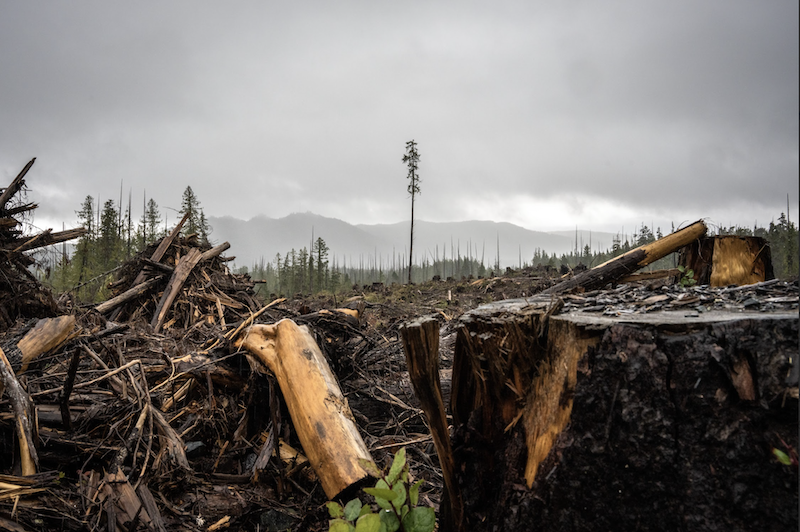
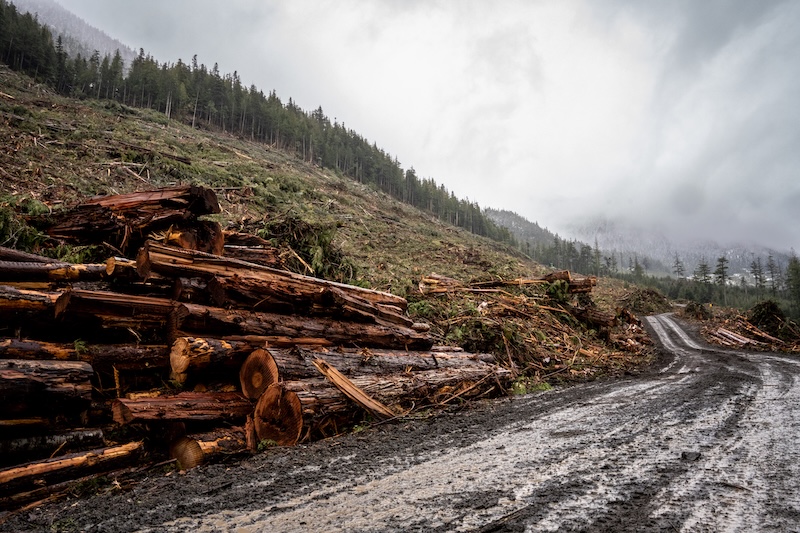
This area near Port Hardy, was logged after the Old Growth Strategic Review was released. Photo by Mya Van Woudenberg_Sierra Club BC
Cortes Currents: You also said they knew we were going to run out of primary forests back in the 1970s.
Karen Price: “This was the Pearce report in the 1970s, which has some really interesting language that talks about a distant uncertain future. They decided, ‘We’re going to log all the old growth quickly so that we can plant fast-growing new trees and get it up to an agricultural model of the province.’ They were overly optimistic about silviculture. They thought they could grow trees faster than the old growth was growing, and they didn’t take into consideration that the old growth they were removing had a much higher volume than any of the new forest would by the time it got logged. The volume of timber that comes off any piece of land is much less from second growth than it was from old growth because you had these massive trees. The rate of cut that they decided to have back then in the 1970s was high enough that they knew they were going to run out of trees; they were going to run out of timber 50 years down the road. This was planned, and it’s called ‘the fall down.’ There are graphs that show, ‘Oh, the sustainable level of harvest is going to be a certain level until we run out of old growth, and then it’s going to go down to a sustainable level for second growth.’”
Cortes Currents: A quick search of the net confirmed that the 1973 Pearce report did suggest that Canada would run out of primary forests in 50 years, at its current cutting rate, and suggested tree planting as a possible solution.
Links of Interest:
- CLOSER TO THE BRINK: The state of the forest in BC in 2025 (2025) – Sierra Club BC
- A NEW FUTURE FOR OLD FORESTS: A Strategic Review of How British Columbia Manages for Old Forests Within its Ancient Ecosystems (2020) – Old Growth Review Panel
- Articles about, or mentioning the Old Growth Strategic Review
Top image credit: A fresh old-growth clearcut on Vancouver Island, Kwakwaka’ wakw territory. Credit Mya Van Woudenberg_Sierra Club BC; Map by Dave Daust.
Sign-up for Cortes Currents email-out:
To receive an emailed catalogue of articles on Cortes Currents, send a (blank) email to subscribe to your desired frequency:
- Daily, (articles posted during the last 24 hours) – [email protected]
- Weekly Digest cortescurrents – [email protected]