

On November 17, Canada’s Liberal Government narrowly survived a non-confidence vote on the Budget: 170-168. It passed because Green Party MP Elizabeth May supported the motion and four other opposition MPs abstained.
May told reporters that up until Question Period on the day of the vote, she had not seen any evidence that Prime Minister Mark Carney was going to try to address the climate crisis, or Indigenous reconciliation. Many Greens urged her to help bring the government down.
Before taking office, Carney spoke out about the climate crisis on numerous occasions. One of the most oft cited was a 2015 speech as governor of the Bank of England:
“The combination of the weight of scientific evidence and the dynamics of the financial system suggest that, in the fullness of time, climate change will threaten financial resilience and longer-term prosperity. While there is still time to act, the window of opportunity is finite and shrinking.”
During Question period, May asked, “Can the Prime Minister agree that it is a deficiency in the budget that our legally binding Paris commitments are not mentioned? Can he confirm here on the floor of the House that in passing this budget, the government is committed to holding to as far below the 2°C limit as possible, to funding climate adaptation, to delivering on the nature strategy and to continuing to engage in meaningful Indigenous reconciliation?”
Carney responded, “Mr. Speaker, I would like to thank the hon. member for her advocacy for the Youth Climate Corps, which is in this budget and which the House can vote for, to vote for the future of this country. This budget puts us on the path for real results for climate, for nature and for reconciliation. I can confirm to the House that we will respect our Paris commitments for climate change, and we are determined to achieve them. I can confirm with the House that consistent with our Kunming-Montreal commitments, the nature strategy will be released in the coming weeks. We will build this country strong, sustainable and pure for future generations.”
In a press release later that day, May declared, “This is not a blank cheque. Greens will hold the government to every word of that statement. Meeting our Paris targets requires real action, immediately, and we will insist on it.”
Carney’s government would still have gone down to defeat if four MPs had not abstained.
Gord Johns, the NDP MP for Courtenay-Aberni, abstained because his constituents did not want another election.
“I talked to every single mayor, nine mayors in my riding, three regional district chairs, 17 elected chief councillors. All of them were unanimous and they didn’t want the government to fall.”
Lori Idlout, the NDP member for Nunavet said she abstained because “there were things for my riding.”
The five remaining NDP MPs voted against the budget, but Interim leader Don Davies later admitted, “The consequences of defeating this budget would not be to improve it or to help Canadians, it would be to plunge this country into an election only months after the last one.”
Two Conservative members abstained for personal reasons. Matt Jeneroux recently announced his resignation as an MP for Edmonton-Riverbend. Shannon Stubbs (Lakeland, Alberta) is on approved medical leave.
The remaining 141 Conservative members voted against the budget.
Aaron Gunn, North Island-Powell River, was among them:
“… I speak first and foremost, as always, on behalf of my constituents of North Island—Powell River. However, I also feel duty-bound to speak today on behalf of another group of Canadians, a group without voice and without champion, a group of Canadians who are all too often overlooked, whose interests are marginalized and whose concerns are ignored. I speak of course of future generations, of people still in cradles, strollers and schools, and of those yet to be born. Over the last 10 years of Liberal government, the debt being left to these future generations to pay for has doubled.”
All 22 Bloc Quebecois members voted against the budget.
Carney told a CTV reporter, “what Canadians want is to invest in their country … And that’s the opportunity for parliamentarians to vote today, and we’re going strong with that.”
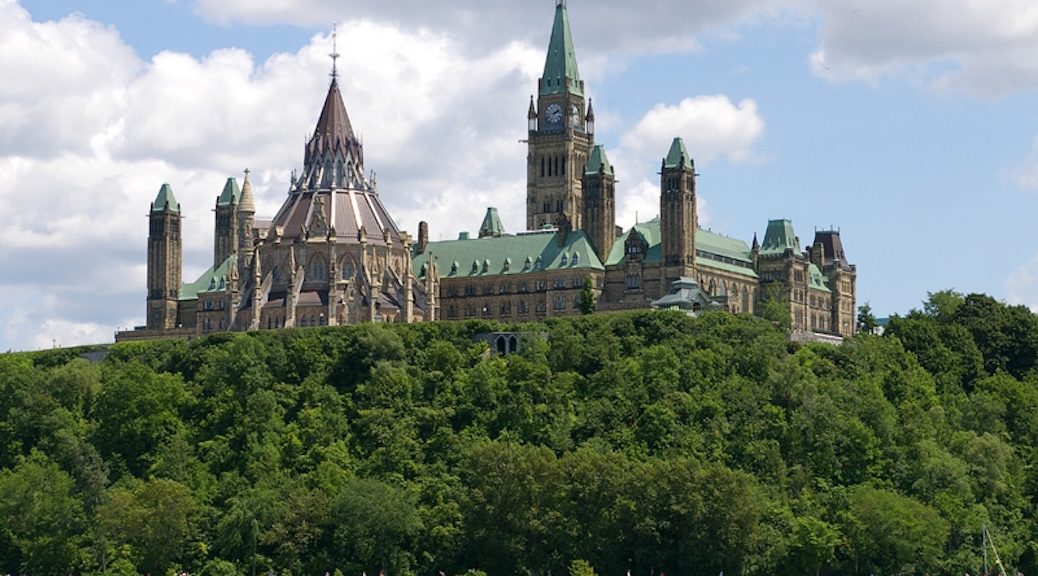
Top image credit: Looking across the Ottawa River to parliament – Photo by Cactus Forest via Flickr (Public Domain)
Sign-up for Cortes Currents email-out:
To receive an emailed catalogue of articles on Cortes Currents, send a (blank) email to subscribe to your desired frequency:
- Daily, (articles posted during the last 24 hours) – [email protected]
- Weekly Digest cortescurrents – [email protected]