

By Sonal Gupta, Canada’s National Observer, Local Journalism Initiative Reporter
A First Nation chief says a major landowner waited too long to challenge the Cowichan Aboriginal title case after a BC court rejected the company’s bid to reopen the trial this week. BC Supreme Court Justice Barbara Young rejected Montrose Properties’ attempt to reopen the case, calling it an “abuse of process” after a 513-day trial over Cowichan title in part of Richmond, a Metro Vancouver city where homes, businesses and public land already exist.
Montrose is the area’s largest landowner, with about 120 hectares of industrial land in the title area, including properties used for distribution centres for Canadian Tire, Wayfair and Coca-Cola. The company went to court after the August 2025 decision, saying it should have been included in the original trial because its land interests were affected.
“We don’t get to muck around with the judicial system because we don’t like the outcome,” Shana Thomas, a hereditary chief of Lyackson First Nation — one of the Cowichan Tribes that stands to benefit from the court decision — told Canada’s National Observer.
Young found Montrose knew about the case despite not receiving formal notice, but waited until after the trial ended to try to join. She said reopening the case could invite other landowners or businesses to take the same “wait-and-see” approach, making the litigation inefficient, disruptive and unfair to parties who participated from the start.
Thomas said Montrose was well aware of Cowichan’s title claim since their application in 2016 but they “chose to sit back and wait and see what would happen.”
Their interests were not ignored, even though the company itself was not at the table. Similar arguments had already been made during the trial by others, including Richmond and the province, she said. The company’s concerns should be handled through the appeal process, not by trying to restart a case that already took years to complete.
“How do you justify 513 days of trial and then suggest, well, no, we need to go back to the beginning?”
Montrose president and CEO Ken Low said the company is reviewing the decision and considering its options. “But we are not done, and private property rights must be protected,” Low told Canada’s National Observer in an email.
Politicians turning First Nations rights into political target
The case has drawn significant attention since the court recognized the Cowichan Aboriginal title in part of Richmond. The ruling has raised questions about property certainty, while Conservatives have called for legislation to protect property rights. Cowichan leaders, including Thomas, have repeatedly said they are not trying to displace individual homeowners.
Thomas said the recent decision shows Aboriginal title cannot be treated as an afterthought and governments, companies and landowners must take it seriously from the start.
“This decision really highlighted the fact that Aboriginal title is real,” Thomas said. “Reconciliation is mandatory, not optional, and we have to get on with the business of implementation.”
In April, Conservative Leader Pierre Poilievre criticized the ruling’s description of Aboriginal title as a “prior and senior right to land” and called for an emergency parliamentary study on property rights. He said Prime Minister Mark Carney should require Crown lawyers to argue that private property rights come before other land titles. “You need property rights protection to have a thriving, property-owning democracy,” he said.
A month later, Andrew Scheer, the party’s House leader, said some homeowners were anxious about mortgage renewals and “can’t get clear answers, because this case is lingering out there.”
Thomas said some politicians are using the ruling to make Aboriginal title look like the source of people’s everyday worries, instead of talking about the decision, the history of the land or the province’s role in resolving it. She said that framing turns First Nations rights into a political target at a time when British Columbians are already frustrated with affordability, health-care access and economic uncertainty.
“Fearmongering is a tactic,” Thomas said. “It’s this idea of distraction to villainize First Nations people, villainize the rights and title of First Nations people and try to make that the cause of the challenge that folks are living with day to day.”
She also pushed back against claims that the ruling is hurting BC’s economy, saying interest rates, global uncertainty and broader market pressures are also shaping buying, selling and investment decisions across BC.
The public debate over property rights has also ignored the history behind the case, Thomas said. The lands at the centre of the ruling were supposed to be set aside for Cowichan people, who left peacefully with the understanding that a reserve would be created. Instead, the land was sold. “This is a gross miscarriage of justice that has been perpetuated generation after generation,” she said.
She said Cowichan people spent generations trying to have the issue addressed, from petitioning the Crown in the early 1900s to treaty talks and court action after First Nations were finally allowed to hire lawyers and pursue land claims.
“This has been a long-standing issue for the Cowichan Nation,” Thomas said. “Generation after generation has pursued this in different ways.”
Cowichan leaders and the province are now negotiating what the ruling will mean on the ground. Thomas said the judge delayed land return after the August 2025 ruling for 18 months, giving Cowichan, federal government and Richmond time to make arrangements. She said she hopes Cowichan and the province will have something to share within that window.
Thomas said Cowichan and the province have agreed not to negotiate through the media because partial details could fuel more fear and confusion.
She hopes the process ends with a public celebration that brings together Cowichan members, Richmond residents, governments and industry around a shared agreement.
“Even when something has been done so horribly, there is a pathway to correct it,” Thomas said. “I really look forward to that opportunity.”
Links of Interest:
- Judges have last word on aboriginal law, not politicians, says former BC official – Northern Beat
- Implications from the Cowichan Tribes decision – Union of BC Municipalities YouTube
- Articles about, or mentioning, the Cowichan decision
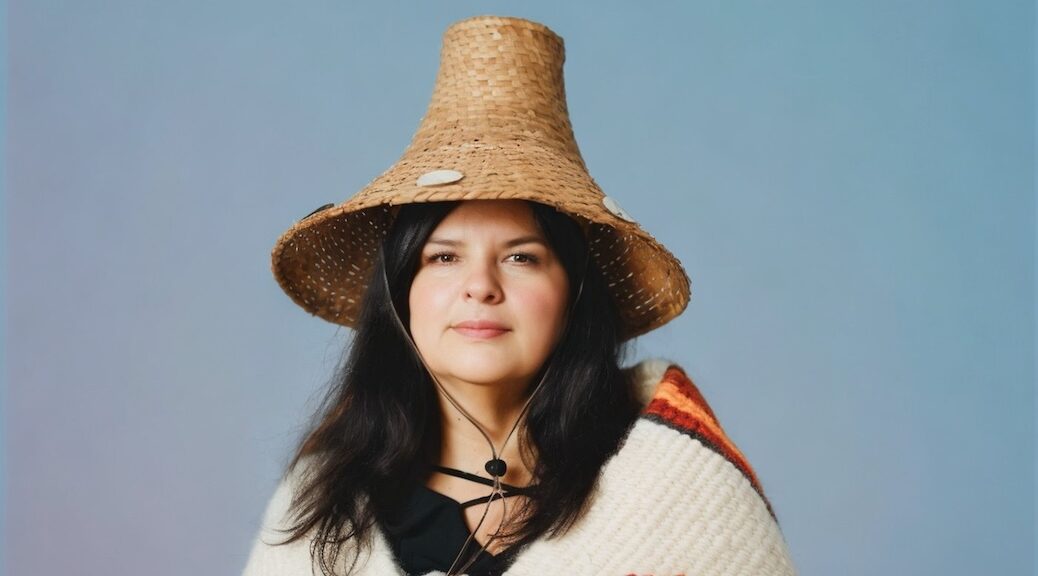
Top image credit: Shana Thomas is the hereditary chief of Lyackson First Nation, part of the Quw’utsun (Cowichan) Nation, which stand to benefit from the 2025 court decision affirming their Aboriginal title and rights. – Photo courtesy: Shana Thomas
Sign-up for Cortes Currents email-out:
To receive an emailed catalogue of articles on Cortes Currents, send a (blank) email to subscribe to your desired frequency:
Weekly Digest cortescurrents – [email protected]
Daily, (articles posted during the last 24 hours) – [email protected]