
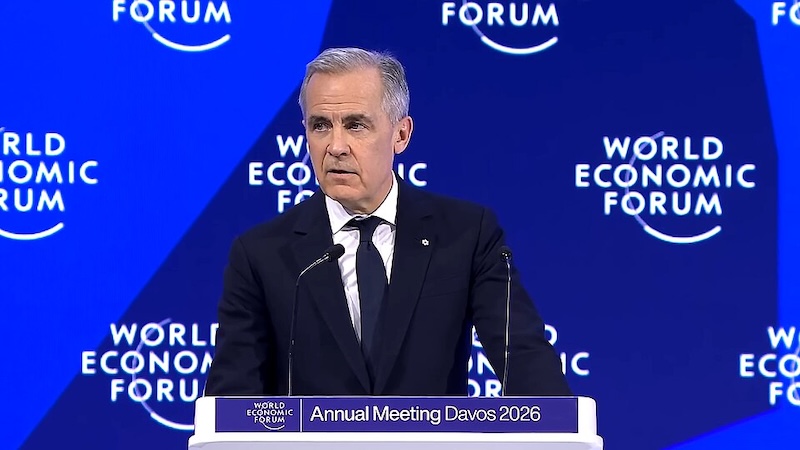
“We’re living through a time of great disruption. The global trading system, in which we’ve long relied as a country, is being dramatically restructured. Global conflicts have sharpely increased gas and food prices around the world and right here at home. The rapid rise of artifical intelligence is beginning to transform how we live and how we work. Climate change is worsening, with bigger storms, heavier flooding, more devastating wildfires. Canadians are feeling the impacts at their kitchen tables, at the pimps and on their factory floors. The good news is that unlike many countries, we can control our future, but that will require doing things differently – movng faster, building bigger and working together. And nowhere is that more the case than energy.” – Mark Carney

The new West Coast Pipeline will closely follow the existing Trans Mountain Pipeline (TMX) route. BC has been promised billions of dollars through a new prosperity agreement, and Prime Minister Mark Carney has stepped back from Canada’s emissions targets because they are too divisive.
In this morning’s broadcast, two experts provide their insights into these matters. Jennifer Lash is a former senior analyst with Environment and Climate Change Canada and ran as a Liberal candidate in the 2025 election. She endorses the Prime Minister’s actions. Ian Sanderson, a senior analyst in the oil and gas division at the Pembina Institute, explains his reservations.
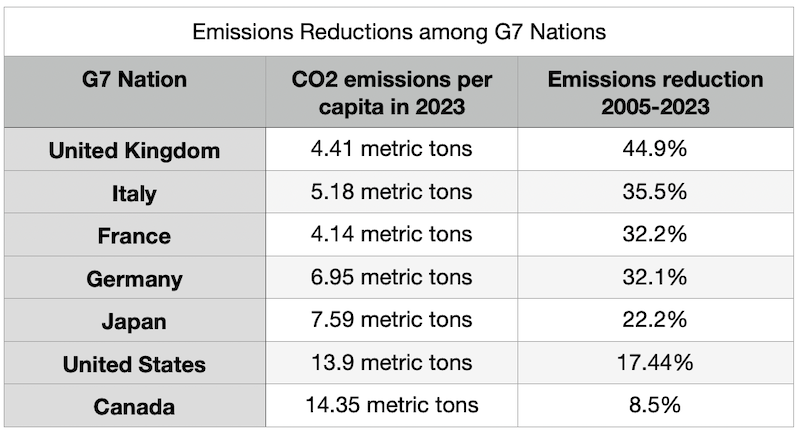
Per capita estimates courtesy The World Bank; Emissions reduction data courtesy Canadian Climate Institute
Are We Taking the Cost of Climate Change Seriously?
My first question is: are we taking the cost of climate change seriously?The number and scale of extreme weather events keep increasing. People are dying because of related health issues, and Canada has not been pulling its weight in the fight against climate change. For example, a recent study shows that while Canada has reduced its emissions by 9% since 2005, the average reduction among G7 nations is 30%. Even the United States has cut its emissions by 18%.

Ian Sanderson: “I studied environmental economics, and in one of the first lectures I had, a professor said, “Well, we could solve climate change today. It’s just going to cost too much, and that’s why we don’t do it.”
“The biggest problem with addressing climate change is that it is always easier, in the moment, to push it off to a later date because it happens slowly.”
“A big question we have now is, are you no longer committed to those targets? If that is the case, then you need to explicitly say that and face whatever the consequences are.”
“Or you need to get serious and look at policies that are actually going to drive emissions reductions, rather than focusing solely on infrastructure development — especially in the fossil fuel sector, where we are only going to be driving up emissions.”
“I find it ironic, in the bad sense of the word, that we are having extreme weather events occurring right now across Canada. We just saw a massive heat wave in Europe as well, and here we are talking about expanding fossil fuel production coming out of Alberta. At the same time, we have been rolling back much of the environmental policy that was previously in place.”
“So I would say no, this is not a serious approach to climate that the government has chosen to take. Instead, they have decided to focus on building infrastructure projects and trying to drive economic growth through those avenues.”

Jennifer Lash: “This is where politics comes in, and politics is the art of decision-making. It is about how you navigate this space.”
“For a long time, I worked on the outside. I was an activist, and I pushed hard. I would have been out there saying, “People are dying: forest fires; flooding; Canada Day was cancelled in Ottawa because of an extreme weather event. These events not only cost lives, but they also cost people their homes. The cost of flooding, the disruption to your life — it is unbelievable, talk about unaffordable. These are very serious issues.”
“That does not mean you put in policies that work against you by creating so much strife in the country that everyone is fighting. Then you lose an election and get a government that does not want to do anything at all.”
“Everybody wants to stop climate change. Nobody wants to pay for it.”
“The hard part is finding out which policies we can put in place to reduce emissions without putting too much expense on people, so they remain politically tenable, while still trying to reduce emissions as quickly as possible.”
“I do not know any Liberal politician who is not trying to do that. If people have ideas on how to do that, they should come forward.”
“Mostly what we hear are people calling for things like shutting down the entire oil and gas industry in Alberta. That is outside federal jurisdiction. Any regulations that try to do that are going to lose in court. We would delay real climate action because it will be before the courts, and it will divide the country. So how does that get us toward reducing emissions?”
“Even though it makes sense mathematically in terms of reducing emissions, politically it is full of so many holes and challenges that it prevents us from actually getting real action happening — real emissions being reduced, not just modelling where emissions might go.”
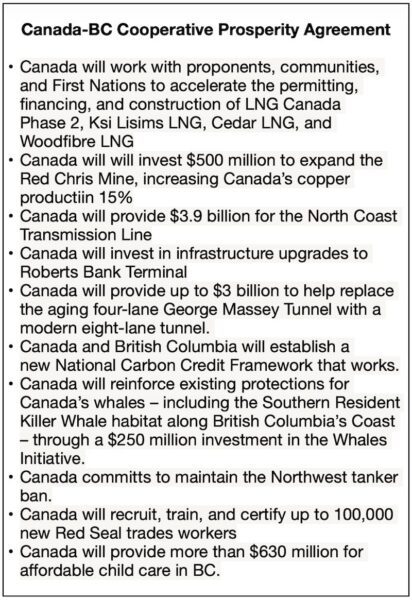
BC’s Prosperity Agreement
Cortes Currents: What do you think of BC’s new deal?
Ian Sanderson: “I was interested in what they were asking for.”
“As an organization, we are happy to see pushes toward electrification. Part of our concern, though, would be financing the North Coast transmission line, which would largely be taken up by LNG terminals if they go ahead. In effect, that is a subsidy for LNG projects to electrify.’
“We would much rather see that transmission line built and used by remote communities.”
“There are also many critical mineral mines in that area looking to access that power. We did a report on that last fall, pointing out the economic benefits provided by sectors such as critical minerals, which outweigh the benefits of LNG terminals.”
“As for the carbon market aspect, if BC is going to be leading some sort of new consumer carbon market, I am not really sure. A lot of details were left out, but that could be really interesting.”
“If it is talking about harmonizing industrial pricing systems, I do not think that is what it was. But if there is any aspect that leads toward that, I think that would be a great outcome for all the pricing systems across Canada.”
“I think BC received got some good funding for projects. As an organization, and personally, I think our biggest concern is that this is a back door to subsidizing LNG terminals.”
“These are risks that the private sector should be taking on, not projects being built with taxpayer dollars.”
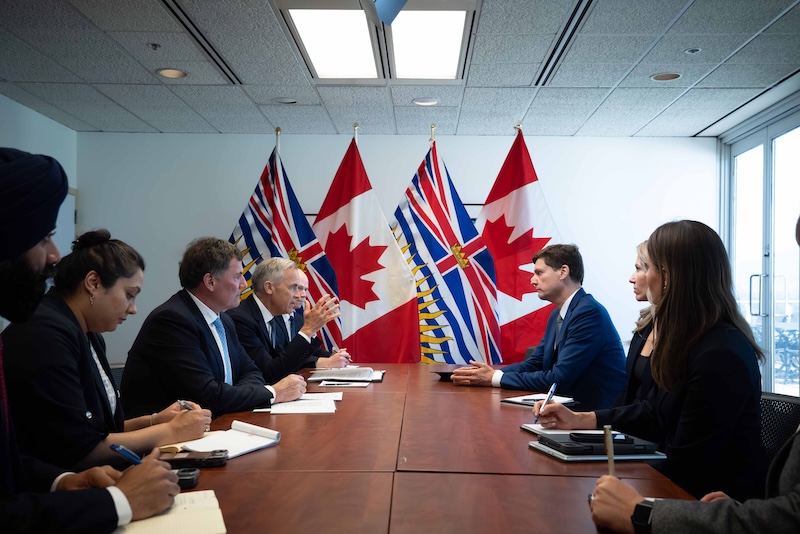
Prime MInister Carney meeting with Premier Eby – Photo by Daniel Pereira /Office of the Prime Minister of Canada
Jennifer Lash: “I think the Premier of British Columbia made some really smart moves.”
“He is very clear that he does not want to see a pipeline here, but that it is federal jurisdiction — and he is 100% correct.”
“I saw the Green Party out today with some material saying that he is failing people in BC because he is not fighting this pipeline.”
“Premier John Horgan tried. He sent a reference case to the court asking, ‘Am I allowed to stop a pipeline?’ And they said, “Absolutely not. It is federal jurisdiction.”
“So we cannot stop it. It is a federal decision.”
Ian Sanderson: “I am certainly not a constitutional lawyer, so I will just take what Premier Eby said at his word yesterday: BC does not have the constitutional power to block a pipeline.”
“I am sure they could do a lot of things to impede the progress, but ultimately, it is federal.”
Jennifer Lash: “Instead of trying to go down that road, what he has negotiated are some really great things for British Columbia.”
“First of all, royalty payments. We need them. When we cut the consumer carbon price in BC, that money did not go back to consumers. BC had a different system. That money went into helping us and our economy, and putting together green actions. Our provincial government lost a lot of revenue. Now we are going to start seeing some royalties from the pipeline.”
“We are also going to see improved environmental practices. We are going to see investments in major projects such as RBT2, which can help with diversification.”
“We are going to see the intertie, the northern transmission line — whatever it is called — move forward.”
“I know people have a lot of concerns about LNG, but there is a real belief that LNG is going to replace things like coal and that it is part of the transition. That is a point of debate.”
“Premier Eby took this moment to negotiate some investment from the federal government in BC that is really going to help our economy. When you help the economy and people feel more secure, the government has more space to do things like take climate action. So it is part of the same equation.”
What Will the West Coast Pipeline Cost?
Cortes Currents: What are your thoughts about the new West Coast Pipeline?
Jennifer Lash: “Let’s dive into the cost of the pipeline first, because I think that is one of the issues your listeners are going to be most concerned about.”
“I, and many other people, would prefer that no pipeline be built at all. But I have written about this before, and I think I have said this before on your show: keeping the country together is critically important.”
“The only way we are going to start seeing real progress on some climate work is if we can work with all the other provinces.”
“The policies that were put together under the Trudeau government were starting to crumble, and chances are we would have lost some of them through legal action if we had continued down that path.”
“So I would prefer not to have a pipeline, but I understand the political rationale around it.”
“In terms of the cost of the pipeline, there are still some details that are not clear. Like everyone else, we are trying to read between the lines.”
“The price we have to go on is the price of TMX, which I think was $35 billion — way up from the estimated $5 billion they expected.”
It is important to remember that during that time there was COVID, which caused serious delays in construction.”
“There is a belief they can do it for less, but really, all we have is that $35 billion as a marker of what we know a pipeline can cost. So let’s use that $35 billion.”
Ian Sanderson: “They estimate it to be about 1,200 kilometres long, so it is longer than TMX. I think that is because it is going all the way to Roberts Bank.Their estimate in the application is that it would cost, on the low end, $35 billion. On the upper end, I think they had $43 billion, but if we look at that on a per-barrel basis, that is almost 50% cheaper than TMX. I struggle to believe that you could build a bigger pipeline, one that is longer, at this point, for less than what it cost to build TMX. I would say that number could be substantially higher.”
Cortes Currents: Environmental Defence says it could cost somewhere between $30 billion and $100 billion.
Ian Sanderson: “I do not think it would be crazy to throw out cost estimates over $50 billion for this pipeline. I certainly would not say that is out of the realm of possibility.”
The Private Partner
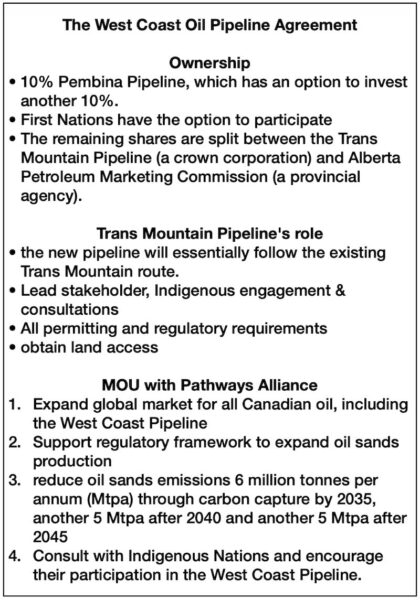
Jennifer Lash: “We know that Pembina Pipeline is purchasing 10%, and they believe they might have another 10% once it is built.”
Ian Sanderson: “We were promised there would be a private proponent building this whole thing. There would be no, or very limited, taxpayer dollars going into it.”
“Of course, we were told there would be strengthened climate policy in exchange for the pipeline. That was the grand bargain as it was initially presented to us. We would make concessions to build a pipeline, but in exchange we would have strengthened environmental policy in the form of industrial pricing and, of course, a commitment toward pathways.”
“We did not get any of that.”
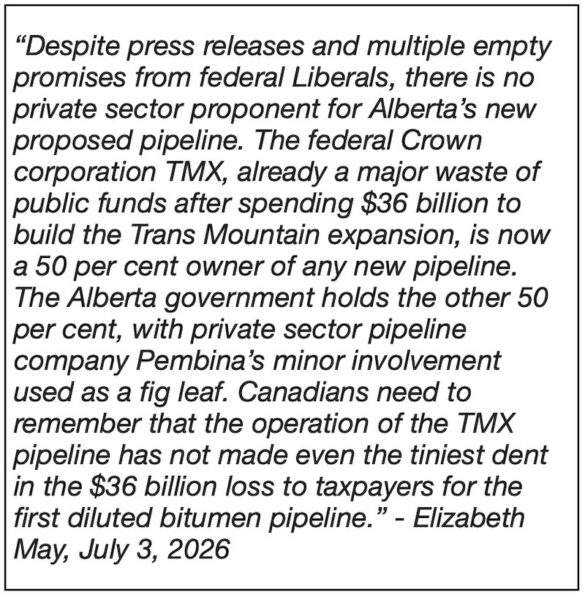
“They are highlighting that it is a public-private partnership, but I think the word ‘partnership’ is doing a lot of heavy lifting when only 10% is actually being funded by Pembina Pipeline, and that commitment is not firm. In their public release yesterday, they put a lot of caveats on that investment amount, saying they would exercise their full discretion over the final investment decision and maintain capital discipline.”
“So there is still a chance you could have no private proponent investment in this thing at the end of the day.”
Jennifer Lash: “We know that the government is going to look for First Nations ownership so that the nations whose territory the pipeline travels through can have an economic benefit from this.”
“That is backed by a federal loan guarantee, which is not federal funding. A loan guarantee means the federal government is saying it will back the loan with a bank or investor because First Nations communities do not have the same ways of guaranteeing loans that non-Indigenous communities have.”
“The First Nations Loan Guarantee Program is a way of helping nations purchase a stake. It does not cost us money. It just ensures the nations can actually start to benefit from the project.”
“That leaves some funding for the federal government and for Alberta. So it is not just the federal government — it is also Alberta.”
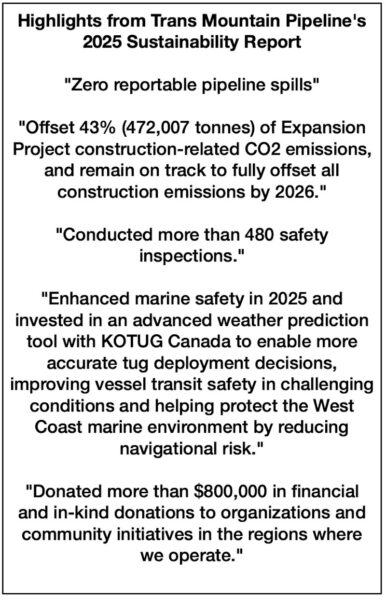
“TMX is there providing a lot of expertise and operational support for building it. That pipeline is a federally owned Crown corporation.”
“It is hard to break down exactly what the percentage is because how much is TMX, versus how much is Alberta putting in specifically?”
“If there are taxpayer dollars going in here, I think Alberta should also be putting money in directly, in addition to Canadian taxpayer dollars. Alberta wants this more than anyone else.”
“There are a few things to look at.”
“One theory is we do not have more private proponents coming forward because they do not believe it is actually going to get built, given our history with pipelines.”
“Once they start to see it being built, they may come in. So the door is open for more private-sector proponents to participate.”


Selling the Pipeline
“Then there is the issue of selling the pipeline. Once it is sold, if you reap a profit, it is not a subsidy because the government has actually made money.”
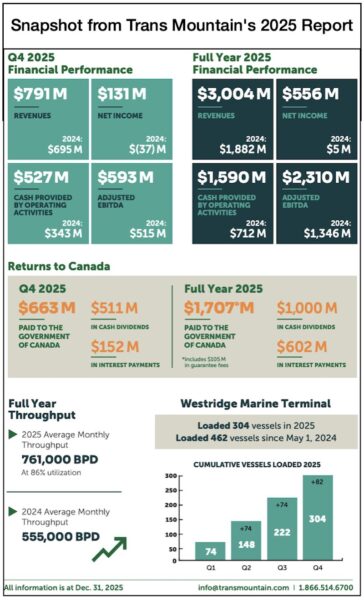
“To understand that better, let’s look at the current TMX pipeline. Canada bought that pipeline. It cost a lot of money, but it is now making money.”
“When it is fully optimized, we will be making more money because they are increasing the amount of oil going through the pipeline.”
“There is a strong belief that when it is sold — and it is my understanding they are still planning on selling it — Canada will see a profit from that.”
“That means it is not a subsidy; it is an investment.”
Ian Sanderson: “My thought would be: who wants to buy these pipelines at this point?”
“If we look at TMX, for example, the cost overruns mean that right now the tolls are too low to recover the costs.”
“That is why they have been going through toll settlement negotiations since 2023. They have been trying to raise the tolls in order to cover all the cost overruns.”
“In the shippers’ defence, they signed on in 2014, I believe, at about $5 or $6 a barrel, when the capital cost was supposed to be less than $10 billion.”
“Now they are having to recover the cost of a $32-billion pipeline.”
“So who wants to buy that now, when they cannot even charge tolls that cover the capital cost, let alone the operating costs?”
“I think that is why you did not see a private proponent step forward. There is uncertainty about how much this thing would cost.”
“I also do not think the industry is in a pattern of growth anymore.”
“We have more than enough forecasts out there — not just from the International Energy Agency (IEA_, but also from supermajors like Shell, BP and Equinor — all pointing to oil demand flatlining, if not starting to decline, in the next 10 years.”
“So to invest the amounts of money we were just talking about in a pipeline that will not be ready until the early 2030s, when you are potentially hitting peak demand for that product, seems like it is not a bet worth taking.”
“That is why, even though the provincial and federal governments did a lot of work to remove hurdles that were in the way of this pipeline, there was still no private proponent willing to take that on.”
Jennifer Lash: “It is all just backroom chatter. I am not saying I have a line to either the Minister of Natural Resources or to the Prime Minister, but the scuttlebutt I have heard is that there are people interested.”
“The idea is that they want to optimize it so they can sell it for the highest possible price.”

The Pipeline Route
Cortes Currents: Do you want to talk a little bit about the route of the new pipeline?
Jennifer Lash: “I have long felt that the southern route is the path of least resistance.”
“Going through the north would have meant going against what the coastal First Nations have remarkably protected, which is the tanker ban.”
“I just want to express my gratitude to those nations for standing firm on their position regarding the North Coast tanker ban.”
“I hate that this always falls back on them as the front line to fight these things, but I think they did a remarkable job holding their ground.”
“If it had not been for that, I think we would have seen a pipeline going to the North Coast, and so I am really grateful for their work.”
“For many reasons, putting the pipeline through the existing right-of-way, where there are already two other pipelines — the original Trans Mountain pipeline and the Trans Mountain Expansion pipeline — is the path of least resistance.”
“This third pipeline will go through the same area. There are Nations that have concerns, and consultations with First Nations are starting right away.”
“There were also nations opposed to TMX, and in the end it was approved. Any efforts to fight that did not withstand a court challenge. So there is a belief that they can get it through there.”
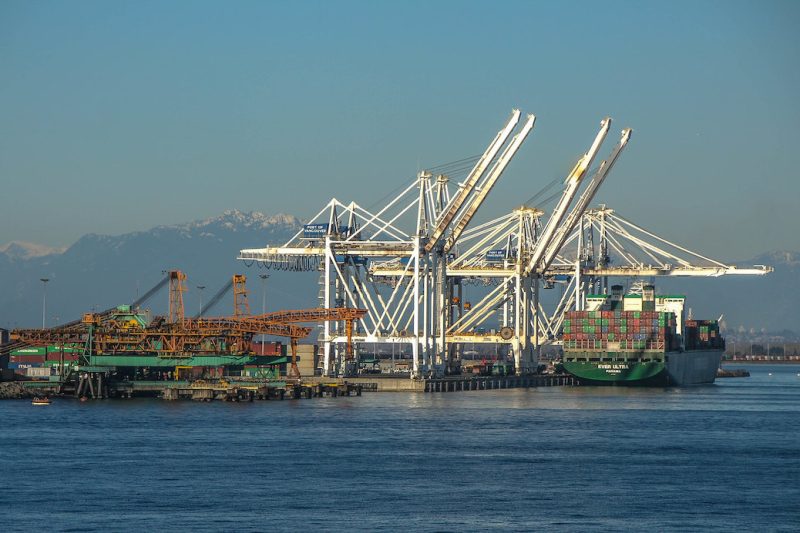
“Interestingly, it is going to Delta and not Vancouver. If it had gone to Vancouver, to the Burnaby terminal, they would have had to dredge Burrard Inlet to get the larger ships through.”
“Instead, it is going over to Delta, to Roberts Bank Terminal 2, or what we call the RBT2 terminal.”
“That project is now going to be accelerated in terms of getting permits and moving forward.”
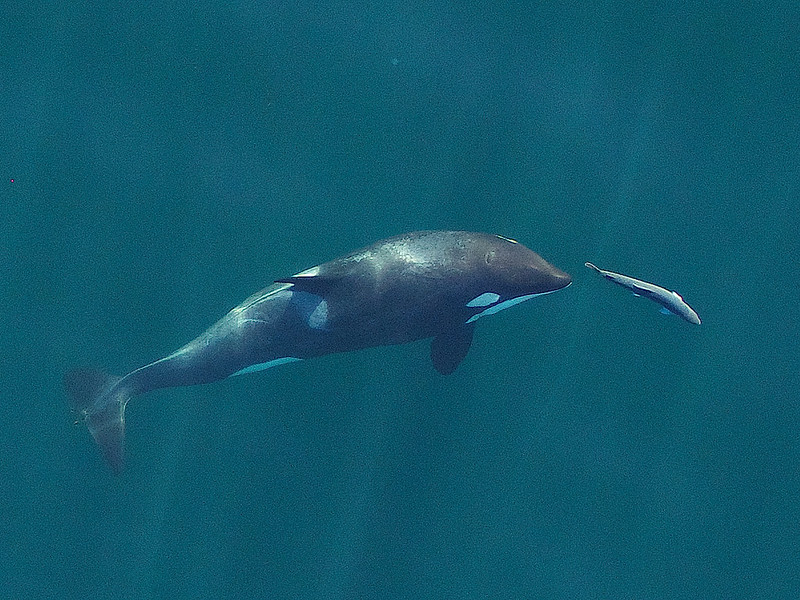
“There are concerns around species at risk, particularly the Southern Resident Killer Whales. I do not know how they are going to deal with that. I think that is still unknown.”
“I understand why they chose that route. If anything, I think it is good that it is not going to the North Coast.”
“These issues all tie together because, as the Prime Minister said, the current terminals we have in British Columbia to export our products — not just oil, but all of our products coming in and going out — are critical to diversifying us away from US markets.”
“So much of that trade goes through BC, and our ports are packed. They are full. We do not have the space to handle it.”
“If we want to increase our trade and reduce our reliance on the United States, we need these terminals.”
“As part of this arrangement with the pipeline, we are going to see RBT2 hopefully move forward faster so we can continue to diversify.”
“Of course, President Trump’s refusal to extend CUSMA is just another reason why we need to continue working on that diversification.”
Canada’s 2030 Emissions Target
Cortes Currents: Have you heard anything about Canada missing its 2030 emissions target? Apparently, Prime Minister Carney was talking about that a few days ago.
Jennifer Lash: “Yes. The Prime Minister said something, and I fully agree with what he is saying. When Trudeau came into power, Canada was in a different place, and the ambition he brought to climate policy was remarkable. A lot of people still complained. I am going to tell you, he did not get a free pass on that, but in hindsight, we now realize just how ambitious he was trying to be in enforcing the adoption of climate policy across the country.”
“If you modelled it, the chances of us ever meeting 40% were quite low. In reality, if you look past the model and look at the politics of the country, what we had was a divided country. We almost lost an election and went to a Conservative government over the carbon price, which would have repealed everything.”
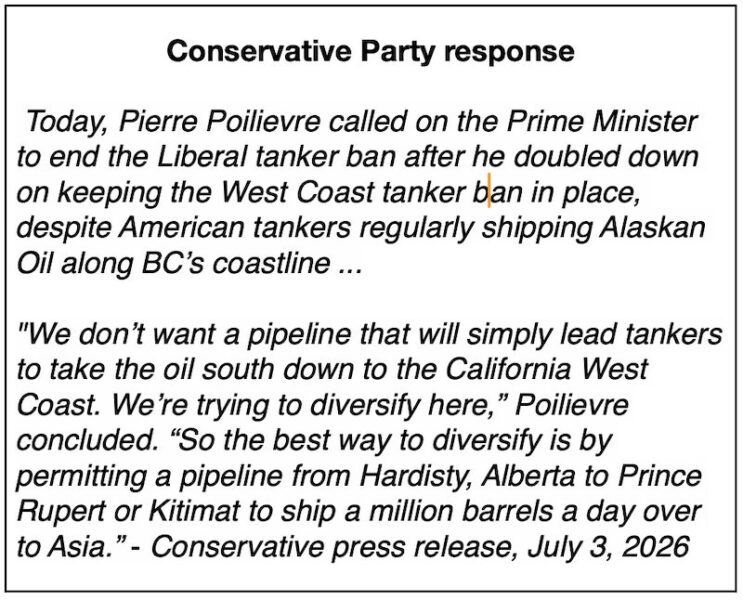
“If we had a Conservative government right now, we would have the tanker ban gone, First Nations would be livid, we would be in court, and we would have a pipeline proposed to the North Coast.”
“We had carbon pricing that was dividing the country. Alberta was going to go to court on the emissions cap. They were going to go to court on the clean electricity regulations.”
“Alberta would not talk to anybody, and any real substantive climate plan goes through Alberta. You have to be working with Alberta on that.”
“The affordability issue was making Canadians care less about climate change because they were worried about the food they needed to buy now, not the climate impacts that are coming.”
“We are seeing those impacts every day here.”
“If you looked at that as a package, you realize that although the ambition behind the Trudeau package was admirable — and I worked on some of those policies; I loved those policies and thought they were very good — the fallout was not making Canada a better or stronger place to continue down that path.”
“During the Trudeau years, we were not trying to diversify our trade enough. We also lost foreign investment in the country, and we lost investment in our industry. The economy was stagnating.”
“Part of that was COVID-related, it was not all because of climate policy. It was because of a myriad of things, but we were in a bit of a pickle.”
“Now Prime Minister Carney is saying, ‘Look, we are still working toward reducing our emissions, but we need to act in the world that exists now.’”
“I think he has astutely recognized that collaboration with all the premiers is critical to climate action.”
“He says we are continuing down the path, but our emissions are not going to continue on the trajectory they were on in 2025, when he took power.”
“Emissions dropped significantly during COVID, then started to recover and were levelling out in 2025.”
“There was a strong belief that if all the emissions policies had been implemented, emissions would go down.”
What Carney is Doing
“He has capped a lot of things. He has industrial carbon pricing. He has improved the methane regulations.”
“We are putting in tailpipe emissions standards instead of having the ZEV mandate, which should get us roughly to the same targets.”
“He is doing a lot of great things.”
“An amazing announcement was made about a program that will help low- and middle-income families insulate their homes, put in new windows and buy heat pumps for free.”
“Things like that are remarkable. So he is still very committed to this, but he is acknowledging that the current politics — both domestically and internationally — mean that we are not going to continue on that same trajectory.
“It is unfortunate, but targets are targets.”
“I set targets for my exercise every day. I set targets for my weight every year. I set targets for my bank account constantly. I do not always meet those targets, but they keep me working toward something that is really important to me.”
“It is not like he said, ‘Forget it, we are not doing anything at all.’”
He is acknowledging that today’s conditions mean it will be harder to meet those targets, but he is continuing to work down that path.
“I think that is really smart.
“I would add one other thing: we have an old fishing boat, and it steers really well. But when you get into a bigger boat, you turn the wheel to port and the boat goes too far. Then you turn the wheel the other way and the boat swings over there. Learning how to drive a boat is learning how to keep it centred, using just a little bit of the helm to keep moving straight.”
“That is what we want to do in politics. We want to go straight. We do not want to go far to one side and then far to the other side, because it will take us longer to get to our destination.”
“I think one thing Canadians can all agree on is that the Prime Minister has developed good working relationships with all the premiers.”
“That does not mean they agree all the time. It does not mean they are getting everything they want, but he has built stronger relationships with all the premiers than was the case under Prime Minister Trudeau, particularly in the later days.”
“In the early days, Trudeau had an excellent relationship with all the premiers, but later in his mandate, that started to fade.”
“I do think we will win, and I do not think Alberta will separate.”
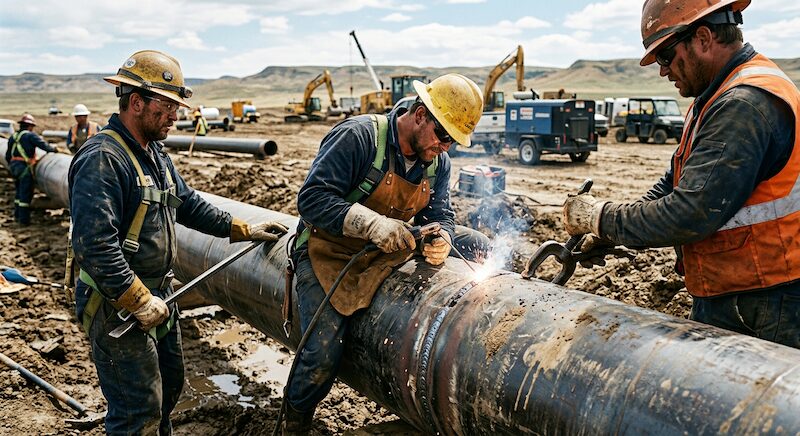
Is this really where we want to be?
Ian Sanderson: “The biggest disappointment from the announcement yesterday was that we were promised this would not be a publicly financed pipeline. There was this idea of a grand bargain, and we did not get any of that.”
“So what are the repercussions?”
“Is this what we want our taxpayer dollars going toward — financing more fossil fuel projects and locking in more emissions for our economy? At a time when we are in an affordability crisis, is that where billions of dollars are best spent?”
“Should that money go toward an industry that appears to be doing quite well, posting record profits and reaching new highs in production?”
“ Today, we’re faced with the types of decisions that come once every few generations but will determine our future for decades. Our independence, sustainability, and prosperity will depend crucially on our ability to supply and control our energy.” – Mark Carney
Links of Interest:
- Canada and British Columbia strike new cooperative prosperity partnership to build a stronger, more sustainable economy – Prime Minister of Canada
- Canada and Alberta advance west coast pipeline project proposal and Pathways Project Carbon Capture Initiative – to build a stronger, more resilient Canadian economy – Prime Minister of Canada
- Pembina Signs Agreement to Participate in a Proposed Nation-Building Energy Corridor – News Release
- Articles about, or mentioning, the proposed West Coast Pipeline
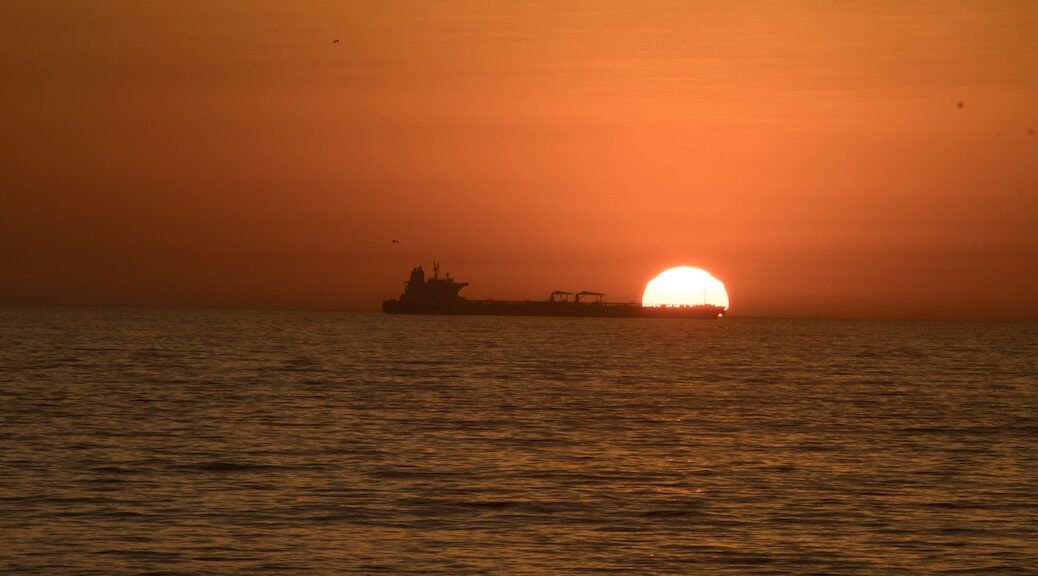
Top image : Oil tanker at sunset – Photo by Don Norris via Flickr (CC By 2.0); undesignated graphs put together by Roy L Hales
Sign-up for Cortes Currents email-out:
To receive an emailed catalogue of articles on Cortes Currents, send a (blank) email to subscribe to your desired frequency:
- Daily, (articles posted during the last 24 hours) – [email protected]
- Weekly Digest cortescurrents – [email protected]