
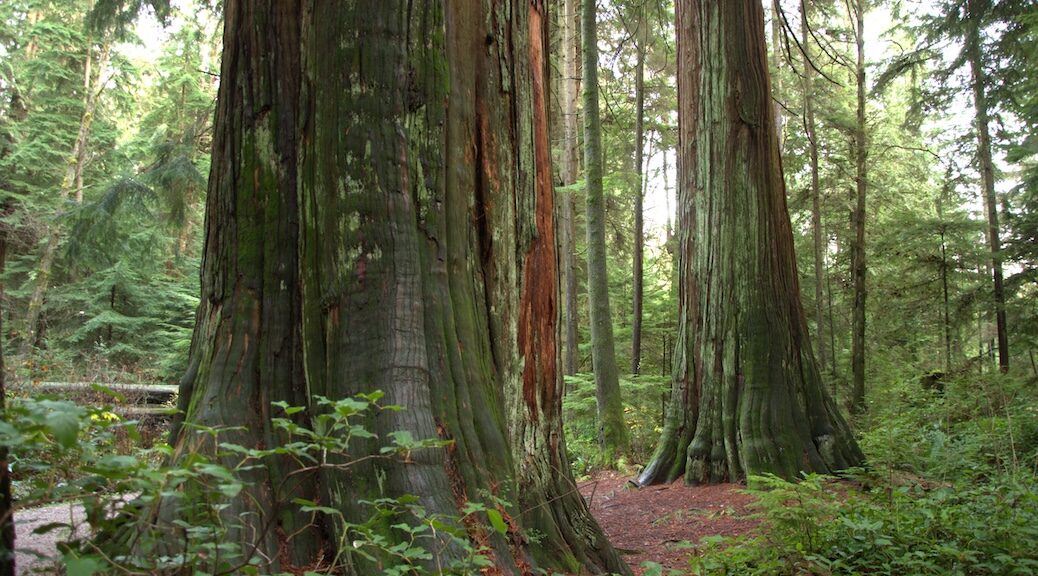

Dr Teresa Ryan is a Tsimshian woman who combines the ancestral knowledge of her people with the cutting edge research coming out of the Mother Tree Project. Her association with Dr Suzanne Simard began when she applied for a postdoctoral fellowship in what is now UBC’s faculty of Forestry and Environmental Stewardship. Simard was one of her four instructors and suggested, “We have to talk. I read your dissertation.”
Ryan responded, “You did what?”
Reflecting back on that today, she added, “Who would do that? It’s 435 pages, but what she found was that I demonstrated how our Indigenous social institutions are connected to our heterogeneous mosaic landscapes.”
Dr Teresa Ryan (above); This podcast opens and closes with the sounds of a Spring breakup by Natureniott @ freesound.org)
Ryan detailed the obligations for stewardship and explained how they were successfully fulfilled through the potlatch system.
“The missionaries, the early anthropologists and the colonial agents missed these connections, they were more interested in other things. They had very objective intentions from each of their perspectives, but that actually overlooked the stewardship that was occurring in the forest and with the fisheries and how those stewardship activities increase productivity.”
The consequences of this oversight have persisted down to this present day.
”Now nobody is taking care of the resources. We’re seeing declining numbers in everything, even in the forest industry. You often hear there’s no fibre left, that’s because it’s all cut. The fibre is what contributes to reaching their annual allowable cut, and those numbers are falling because it’s been harvested. Fisheries are declining, particularly salmon.”
She noted, wryly, that scientists have become so expert at collecting data that “we’re counting the fish to extinction.”
Instead of looking at these issues as a whole: “It’s all these silos. Forestry taken care of here. The salmon are taken care of here, and orcas: we just look at them.”
“That’s not the way these systems work. In order for us to have the balance return, we need to have all of these systems functioning.”
She used the plight of one of BC’s best known Orca pods as an example of the interconnectivity of natural systems.
“The Southern Resident Killer Whales are at risk, but we’re not going to be able to recover the Southern Resident Killer Whales if we don’t recover the Chinook Salmon, and we can’t recover the Chinook Salmon unless we recover the forest.”
“There’s some complex things going on in our forests and there’s some complex things going on in our waters, whether it’s in the rivers, or the snow pack or the ocean. We’re impacting those things as humans, but every little bit of learning is helping us to understand that we’ll have those things in the future if we do a better job of taking care of them now.”
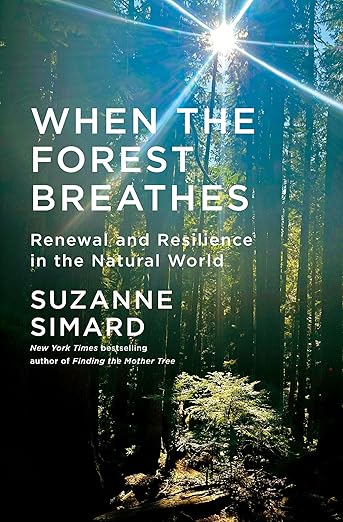
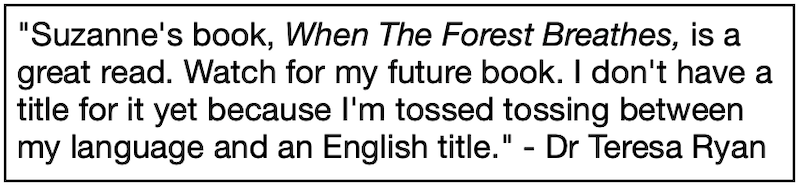
Dr Ryan is one of Dr Simard’s closest colleagues and a key figure in her new book: When the Forest Breathes.
”The ideas that are within the Forest Breaths come from decades of investigation into how forests function. What happens in the forest among the plants, among the trees, and how are these things growing? What is the premise behind their growth, and their cycles of renewal?”
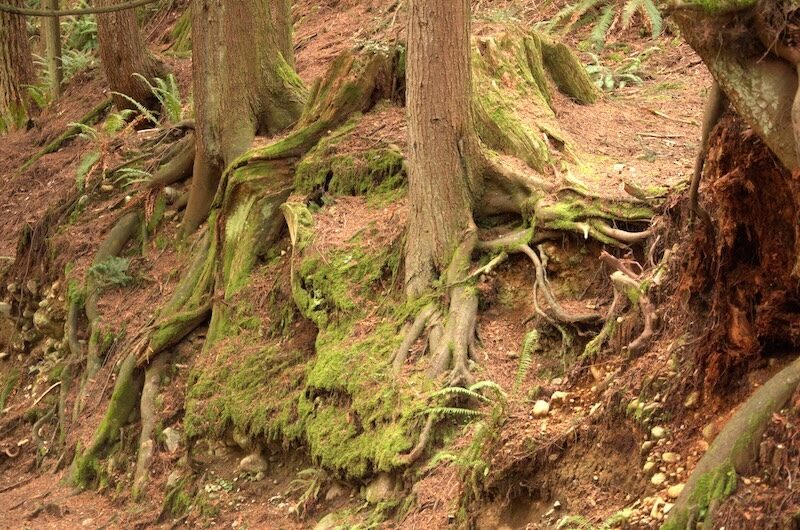
“It’s been amazing to have a look at the forest at this level, particularly through the Mycorrhizal networks below ground. The connections that trees have through their root systems and the whole network below our feet in the forest is what gives us that strength in the forest.”
“I participate with professor Simard in most of our sites. There were originally eight in the interior Douglas Fir forests, and one at Malcolm Knapp, which was our first coastal forest. In the last few years we’ve been adding sites on the coast. Cortes Island is one of those sites that are added into the Mother Tree Project.”
She explained the life of the forest in terms of seasonal cycles.
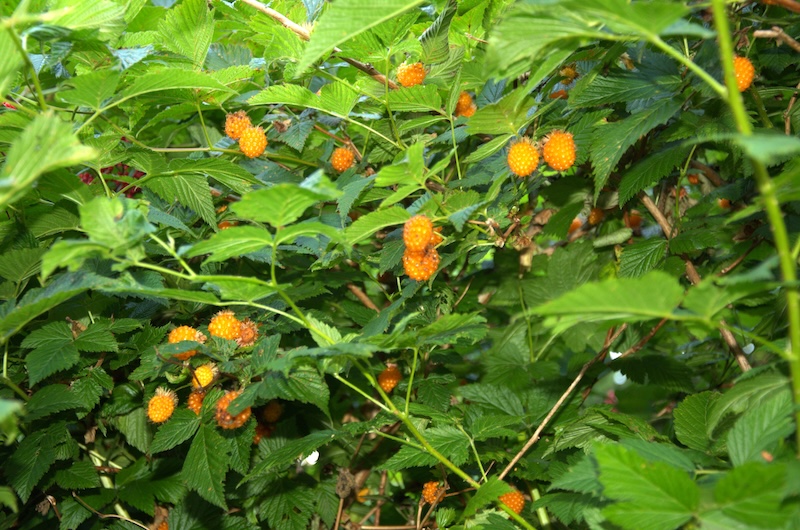
“In the forest there is what we call phenology. We can watch the plants bloom with their flowers at certain times of the year. Salmonberry blossoms are out right now in the Coastal Western Hemlock Forest in the south here, particularly the Douglas fir forest. When we observe one thing, we can anticipate that there is something else that’s going to happen alongside that, because there are many different types of plants and species in the forest. In a good, healthy forest, the biodiversity is high.”
“We see them starting to bloom and of course we all experienced pollen. The pollen has been flying around since the end of February and it’s waxed and waned a bit this year because we’ve had some colder spells than normal. Then it warms up again and the pollen starts flying again.”
“These types of cycles that we are seeing are connected to regeneration. We know that pollen is a part of the reproduction cycle. We have this beautiful symphony of regeneration in the forest, where these plants are regenerating themselves based on their seasonal cycles and based on their interactions.”
“With the seasons, we have changes in precipitation. It’s beautiful to see them all working together, these seasons and cycles.”
“We know that when we go into the forest, we feel cool air. A great treat on a hot day is to take a walk in the forest because it’s nice and cool, but there’s more to the forest in providing the coolness through modulating the water, the precipitation that comes down in the forest.”
“In the Interior Forest, it snows during the Winter.”
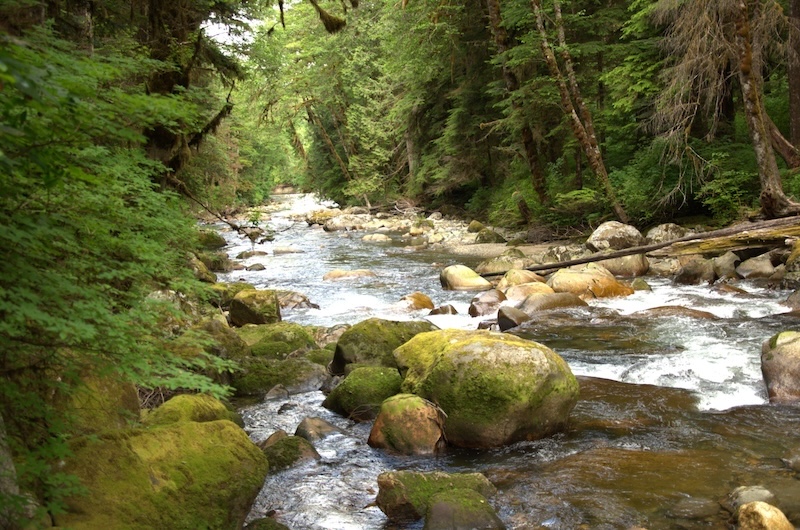
“When that snow is melting, it melts slowly. It’s also being modulated through the forest, through the root systems. They’re infiltrating the tops of the soils and then percolating down and throughout the watershed and into groundwater.
“This is something that’s really important is our groundwater supplies are not getting replenished, and we rely on groundwater for our drinking water and for other purposes. The province has been managing groundwater as well recently.”
“Without having that continual modulation of precipitation in that annual cycle, we lose some of that retention capability in our water tables below the soils. When we have drought conditions like we have now, we’ve entered into a period where we’re going to have to think about limiting our use of our water supply because we did not have adequate snowpack.”
“If there were no trees, that melt would be much faster. Trees modulate hydrology, they are holding moisture themselves and that helps to keep the forest cool. It also helps to keep the waters cool. Trees provide shade over rivers and waterways, and that also helps to keep them cool.”
“ When we have the trees that are functioning with the hydrologic regimes or the precipitation regimes, then they are holding moisture themselves. That provides a resilience against drought.”
“Right now, our snowpack on the coast is lower than anticipated, The trees are responding to this, essentially reducing their water use. It’s just like we would do for ourselves. We’re making it last a little bit longer so that they can withstand a possible heat wave that might come in the spring or in the summer because there wasn’t enough snow pack. This also has an effect on the streams because when we have that reduced snowpack, then we have reduced flows in the water in the spring and in the summer and until we get more fall rain.”
“When the forest is healthy, they have a better resilience to adapt to these types of changes and they can withstand fluctuations that might be extreme.”
“When we have the trees, they help us because they help modulate that precipitation. In the winter, if we don’t have the trees on the slope, when the precipitation comes it will not be retained. Then there’s nothing that’s percolating down into the groundwater and nothing that’s refilling our water tables.”
“We had a heat dome a few years ago that was extraordinary and devastating to many parts of the forest.”
She explained that fires are a natural phenomenon and some species of trees actually require it to reproduce. One of the responses to fire that trees in the Interior have developed, is thicker bark.
However, Dr Ryan insisted, the catastrophic “infernos” we see today are not normal. They are the result of:
- Past Harvest Practices: Specifically massive clear-cuts.
- Pathogens and Pests: Such as the Mountain Pine Beetle.
- Fuel Loading: Decades of woody debris have been left behind by “high grading” (taking only the best logs and leaving the rest).
So far only the Mother Tree research site by Spence’s Bridge has been afflicted by a wildfire (in 2024). They have not yet reached the Mother Tree’s coastal sites, but Dr Ryan says they are coming.
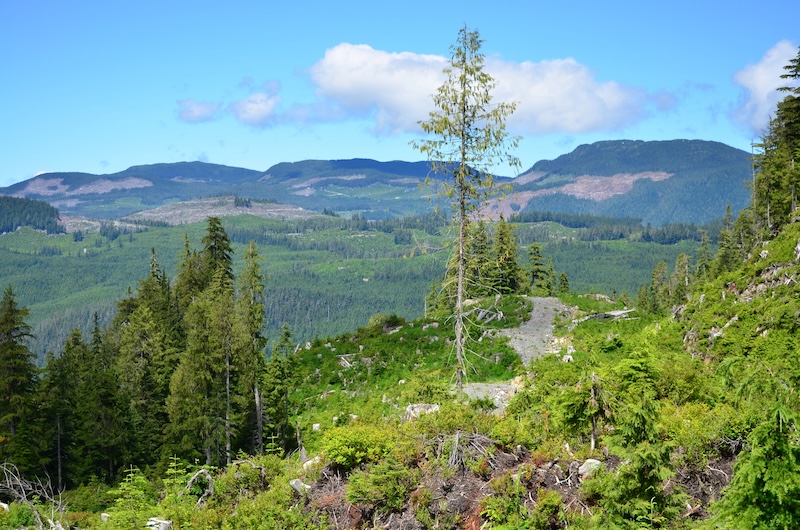
“On Vancouver Island there are massive clear cuts. Theoretically they mimic (the effects of) wildfires and in the early days that may have been true, but now we’ve got these huge machines that go across the landscape.”
She said they are fully automated and mow down forests. Only preferred logs are taken.
“What’s left is debris on the forest floor that contributes to fuel loading. When we no longer have those trees cycling through that hydrologic cycle, there’s no moisture held there either. So when precipitation comes, if it does, it washes things off that hillside, such as sediments and into watersheds, creating sediment islands in many of our coastal streams.”
Dr Ryan noted that the clear cuts in the Mother Tree’s experimental sites are not recovering, which raises questions about the forest’s future productivity.
The woody debris left behind by logging operations “is drying out and becoming a tinderbox for a flash of lightning or a careless match.”
She noted that catastrophic wildfires, like the Elephant Hill wildfire which consumed 474,110 acres near Cache Creek in 2017, burn off the top layers of soil which contains the seed banks meant to regenerate the forest.
“We’re going to see more of those fires. It’s inevitable and I am concerned in the south here with our huge populations in the Vancouver metro area.”
She belives the whole West Coast is at risk for fires similar to those occurring in California because of the way our climate is changing.
“We have, this last year, a lot of the air mass in the southern coastal BC has come from the interior. We call them continental airs, which are drier. So we have less of that ocean moisture coming in, which is a contributing factor to how we keep things so cool. This drier air that dries out our forests as well, that’s a con, a contributing factor to drought.”
“We may not feel it as drought as people. We may not notice it in our everyday lives, but those of us that watch for these things detect it. We have a very large risk for wildfire and there are good recommendations about protecting property and removing vegetation away from structures.”
Dr Ryan insisted that communities need to plan for fires because it’s not a matter of if, but rather when they will happen.
“We’ve had the fuel loading for the last 50 years” and “it’s going to take us probably another 50 years to get this straightened out, so that we can get back to a balanced approach in how we’re using these forests.”
“The most important facet that we have right now that’s at risk is our old growth forests.”
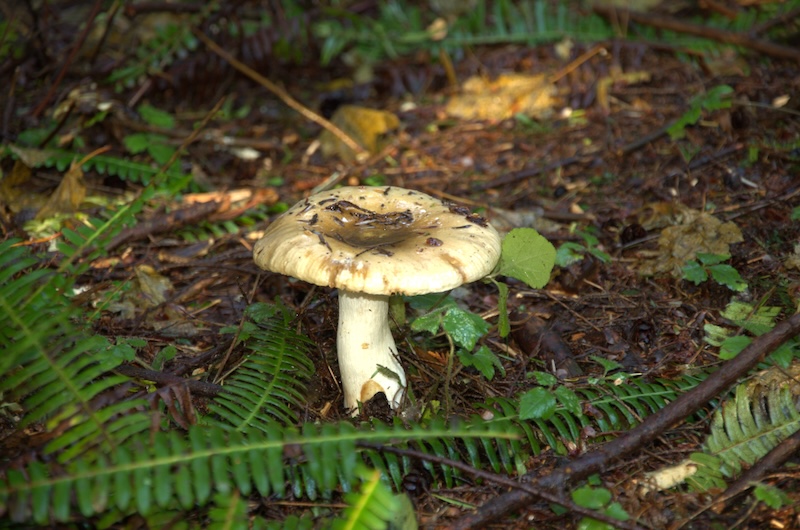
She pointed out that there is a big difference between a solitary “big tree” and a functioning old-growth forest. Old growth forests are filled with biodiversity, store vast amounts of carbon and manage the flow of water through the environment.
“By removing what’s remaining of our old growth, we’re losing the ability to build resilience in the forest. It’s been here since the last ice age, growing and regenerating. It’s going to take a thousand years to get an old growth forest back.”
Links of Interest:
- What on Earth with Teresa Ryan – CBC
- The Trees are Speaking – Yes Magazine
- The Salmon Forest Project with Teresa Ryan – CBC Vancouver Evening News
- Why wood from B.C. forests is burning to fuel U.K. energy needs – The Fifth Estate
- Teresa Ryan – The Mother Tree Project
All photos courtesy Dr Teresa Ryan ©
Sign-up for Cortes Currents email-out:
To receive an emailed catalogue of articles on Cortes Currents, send a (blank) email to subscribe to your desired frequency:
- Daily, (articles posted during the last 24 hours) – [email protected]
- Weekly Digest cortescurrents – [email protected]