
Public letter from Cortes Island resident Chris Dragseth to Premier David Eby
Dear Premier Eby,
I am writing as a full-time resident of Cortes Island for nearly seventeen years. During this time, I have actively participated in community planning processes, including the development of the Official Community Plan under the Strathcona Regional District. Throughout these discussions, the community has consistently emphasized the importance of preserving Cortes Island’s rural character, ecological integrity, and long-term sustainability while seeking balanced economic opportunities appropriate for a small island community.
In recent years, however, Cortes Island has undergone significant change that is placing increasing strain on both the environment and the year-round residents who call this island home. A growing number of wealthy seasonal property owners have purchased and redeveloped properties into large estate-style residences. While property ownership itself is not the issue, the scale and nature of this development have generated disproportionate impacts on local infrastructure, the environment, and community well-being.
Much of the labour associated with these projects has been brought in from off-island, dramatically increasing ferry traffic between Cortes Island and Campbell River. For year-round residents, ferry access is not a convenience — it is a lifeline. Residents rely on these routes for access to medical specialists, health care appointments, employment, education, and essential services. Increasing congestion and transportation pressure have made these necessities more difficult and less reliable for local residents. I will acknowledge that the addition of a new ferry this summer will help, at least in the short term.
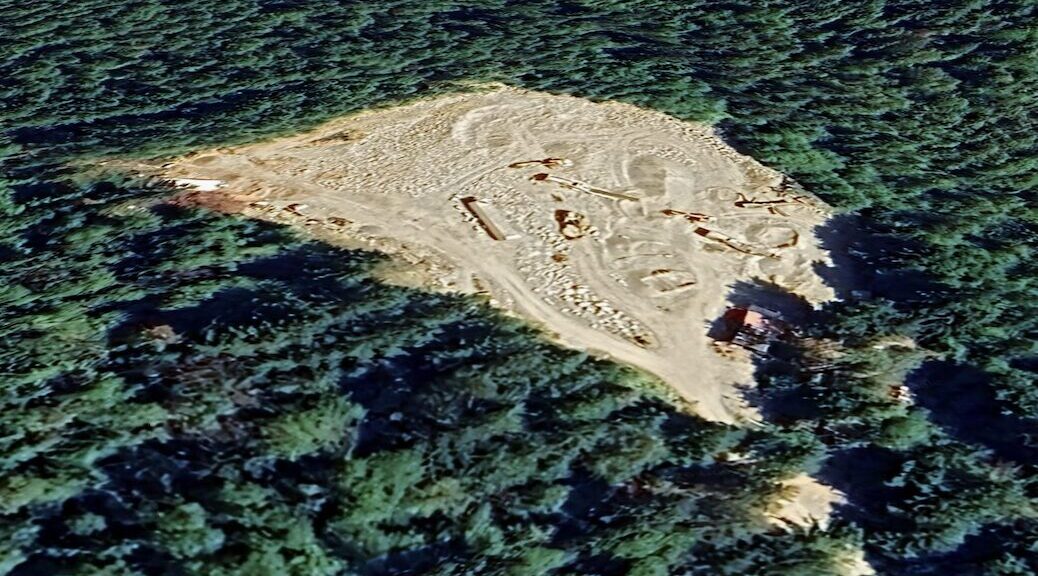
Of particular concern is the proposed expansion of the local gravel pit operation. For decades, the gravel pit has operated at a scale that served the legitimate needs of the Cortes Island community, and historically residents have supported its presence for this reason. However, recent large-scale development projects have altered both the intensity and nature of its use.
One recent project involved the processing and transport of extraordinary quantities of gravel to support the expansion of a private airstrip. The resulting dump truck traffic caused significant deterioration and damage to local roads that were never designed for sustained industrial-scale hauling.The current proposal to increase the Cortes Island quarry by approximately four times its existing size raises serious environmental and socio-economic concerns for many residents.
The gravel pit is located near the headwaters of salmon-bearing streams and marsh ecosystems that are ecologically sensitive and integral to the island’s watershed health. There remains substantial uncertainty within the community regarding whether an expanded operation can adequately protect these water systems from the impacts of excavation, runoff, sedimentation, gravel washing, fuel contamination, and long-term hydrological disruption.
There is also growing concern that the expansion may facilitate the export of gravel off-island rather than serving local community needs. Such a shift would fundamentally alter the nature of the operation from a locally supportive resource into a broader industrial extraction enterprise whose environmental and infrastructure burdens would be borne disproportionately by a small rural island community.
The issue before us is not opposition to reasonable local resource use. Rather, it is whether small island communities such as Cortes should be expected to absorb escalating industrial and environmental impacts generated primarily by short-term seasonal development interests that have limited connection or accountability to the broader community. I respectfully request that the Province of British Columbia consider the following actions before any approval of expanded gravel extraction activities:
- Require a comprehensive independent environmental assessment of watershed, marshland, and salmon-bearing stream impacts.
- Establish robust long-term hydrological and environmental monitoring systems, with publicly accessible reporting requirements.
- Conduct a full cumulative impact assessment examining road infrastructure, ferry traffic, noise, dust, and greenhouse gas implications.
- Require clear limitations and transparency regarding any proposed export of gravel off-island.
- Ensure meaningful consultation with full-time residents and local Indigenous communities prior to any expansion approval.
- Consider whether existing provincial regulatory frameworks adequately protect small rural island communities from the cumulative impacts of luxury-driven seasonal development.
Cortes Island has long been recognized as a community deeply committed to environmental stewardship, sustainability, and responsible rural living. Many residents fear that without stronger oversight and safeguards, the island’s ecological integrity and community resilience may be permanently compromised.
I respectfully ask your government to ensure that any future decisions regarding gravel extraction and associated development activities proceed cautiously, transparently, and in a manner that prioritizes long-term environmental protection and the well-being of permanent residents.
Thank you for your attention to these concerns.
Sincerely,
Chris Dragseth
CC:
- Jagrup Brar – Minister of Mining and Critical Minerals
- Tamara Davidson – Minister of Environment and Parks
- Randene Neill – Minister of Water, Lands and Resource Stewardship
- Mike Farnworth – Minister of Transportation and Transit
- Dr. Anna Kindy – MLA
- Mark Vonesch – Strathcona Regional Director
- David Leitch – Strathcona Regional District
- Editor – Campbell River Mirror
- Roy Hales – Cortes Currents
Top image credit: the Cortes Island Quarry in 2023 – courtesy Google Earth