Cortes Island resident Bruce Ellingsen was both a delegate to the recent NDP Convention in Victoria, and the original author of resolution #42 written for the segment called ‘Building a Sustainable Economy for All and Fighting the Climate Crisis.’ Unfortunately, he didn’t get to read it that afternoon.
“We ended up only getting through 10 of the 69 resolutions, with the presentation to the floor and the debate for pros and cons to any of them,” he told Cortes Currents.
Bruce has a suggestion that would increase the number of resolutions that can be heard, and the delegate’s enthusiasm for citizen democracy, which appears later.
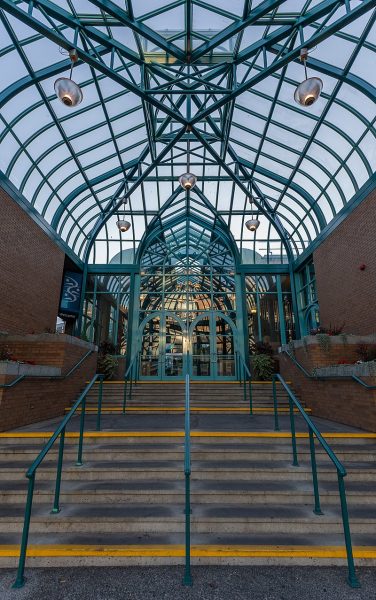
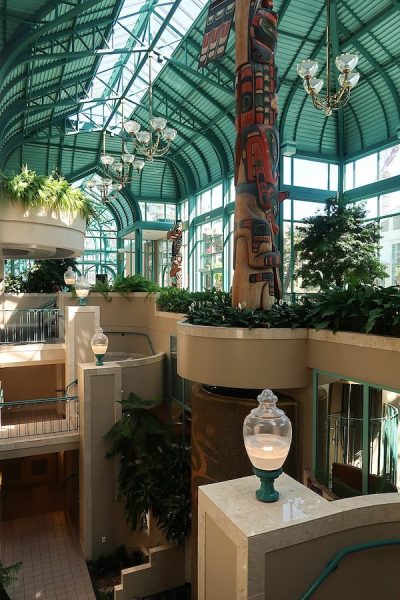
Image credit: Victoria Convention Centre – Photo by Michal Klajban (own work) via Wikimedia CC BY-SA 4.0 DEED
Bruce Ellingsen: “I learned a lot about the realities of a large party, that in this case represents districts from throughout the province, getting together and discussing things as effectively as possible. You go into it with absolutely no experience of what it’s all about and how it functions, but you come out of there with a lot more appreciation for the complexity of it and especially Michele Babchuk’s position. I have a much higher appreciation for her as our representative than I did previously, having a couple of conversations with her during the course of the convention.”
(We were drinking tea in Bruce’s kitchen during this interview. The tinkling sound in the audio above is stirring our cups.)
Cortes Currents: Let’s go back to the beginning of this story. How did you end up going to the convention?
Bruce Ellingsen: “Max Thaysen alerted me to the fact that the NDP party was having a convention. While I’ve been a supporter of the NDP party for most of my life, when the Green Party came along, I’ve occasionally supported them or have been financially involved. This time around I thought since the NDP is in government, the best way to get my ideas to them was to become a member of the NDP party and go to the AGM over in Campbell River on the 19th of July.”
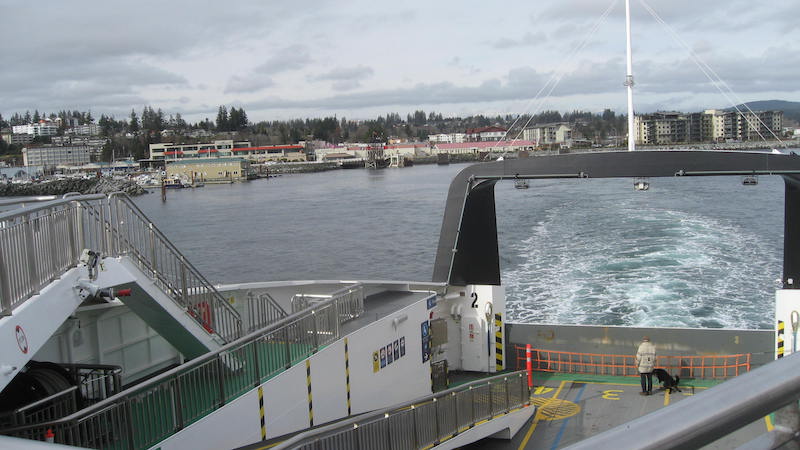
Heading back from Campbell River – Roy L Hales photo
“I was about 15 minutes late because of the ferry, so I wasn’t able to add it to the agenda at that moment, but at the end of the AGM they said that since I had my resolution written out and mentioned in the minutes, they would allow it to be written into the minutes. When I handed around the resolution and talked about the main points, there was sufficient interest in the group that it was moved on up to the next level – presenting it to the electoral district administrations around the province.”
Cortes Currents: Could you read the resolution out to us?
BECAUSE the impacts of climate change – fires, floods, droughts, storms, warming oceans, rising sea level – are increasing and will continue to increase as levels of CO2 rise in the atmosphere due to continued and increasing extraction and burning of fossil fuels, and
BECAUSE the BC Government has committed to a reduction of CO2 emissions amounting to 40% below the 2007 Provincial emissions, and
BECAUSE the majority of the working forests in BC have been harvested or impacted by fires or disease in the short time since 2000; (for a visual impression, please see glad.earthengine.app) and
BECAUSE over harvesting has resulted in our Provincial forests becoming an increasing net emitter of CO2 into the atmosphere, and
BECAUSE intact and maturing forests are the most immediately effective, free and natural terrestrial systems continually (as long as they remain standing); capable of sequestering large volumes of CO2 from our atmosphere, and
BECAUSE each harvest has a cumulative and negative impact as it removes more than 50% of the Carbon-based nutrients from the forest landscape, significantly reducing essential nutrients available for the growth of each successive stand of trees, and
BECAUSE with each harvest the nutrient drawdown in the landscape will leave:
Original old growth forest harvest leaves less than 50% of original nutrients,
Second growth harvest leaves less than 25% of original nutrients
Third growth harvest leaves less than 12.5% of original nutrients
THE BC GOVERNMENT WILL; in order to reduce BC’s CO2 emissions to enhance the chances of achieving our Provincially legislated 2030 target of reducing our emissions by 40% below 2007 levels; and to make our forests much more sustainable while maintaining jobs and economic activity;
Eliminate all taxpayer funded direct and indirect current subsidies to the fossil fuel and forest industries in BC through four equal annual cuts of 25% each year,
Prepare and implement a 7 year transition plan, beginning in 2024 and ending in 2030, for an equal and cumulative annual reduction of 12% of the 2023 Annual Allowable Cut (AAC) throughout our Provincial forests. This will steadily increase the volume of maturing standing timber* and increasingly sequester CO2 from the atmosphere to help meet the 2030 emissions goal,*
Develop and implement regulations to control allforest harvesting activities in the Province, including all Crown Forest tenures and Private Managed Forest Lands, to meet a 2030 goal of a sustainable harvest rate of 15% of the Mean Annual Incremental (MAI) growth of all forests in BC,
Rapidly phase out raw log exports while increasing redistribution of AAC to Community Forest tenures
Over the same period to 2030 prepare and implement a similar annual and incremental plan to provide financial assistance for forest workers impacted by the reduction to the AAC, for retraining to work in our Value-Added timber industry or in other jobs, and
Provide meaningful financial assistance during this transition to the Value-Adding Wood Processing industry.
Cortes Currents: What happened to your resolution after that?
Bruce Ellingsen: “It was sent out to the provincial electoral district groups in the province. Probably a month later, we had about a two hour Zoom meeting to give a good chance for everybody that was interested to have their say about different parts of that original resolution. That led to a massaging, I’ll call it, of the contents that ended up with it being moved up noticeably different from what my original resolution contained, but you’re working towards a consensus. So the consensus was what went to the Provincial NDP party’s resolutions committee for consideration as to whether it would be included in the convention.”
Bruce Ellingsen: “It was watered down. There were no sections that incorporated the figures that I was recommending for achieving a definitely sustainable harvest in the province by 2030. That was gone and other parts of it were, I would say, watered down. It was a bit disappointing to go through that, but also understandable that if you’re going to go to a party convention of all the members from across the province, then you have to be presenting something that is supported broadly from within the party membership.”
Cortes Currents: Three of the resolutions that made it to the convention incorporated parts of your original resolution.
Bruce Ellingsen: “One that came out of Kelowna Centre was at #15 on the list that the resolutions committee presented to the convention. It was more focusing on the carbon dioxide emissions specifically than my original resolution had.”
“#41 also covered the impacts of climate change, but more was focusing on the nutrient reduction in the forest landscape and the ability to grow next generations of trees on the same landscape. That was from Surrey South and Surrey-White Rock Electoral Districts.
Bruce was one of more than 700 NDP delegates that gathered in the Victoria convention center from Friday, November 17th to Sunday, November 19th, 2023.
Bruce Ellingsen: “You went down and preregistered on Friday evening if you arrived there early. Or you could register first thing Saturday morning when you came into the convention and then the main convention was held between Saturday morning and Sunday afternoon, early afternoon about 1:30 or so. That’s s pretty high intensity provincial wide party membership debate process in that very short period of time, for all the things that are being thrown at you. If you go there supporting a resolution and end up not even getting close to the floor to present it and discuss it and decide on by the membership, it’s kind of disappointing.”
“We’d be well advised as a party to move our party membership input and considerations into a much more streaming type of decision making process than the every-two-years-convention format that we’re presently working with.”
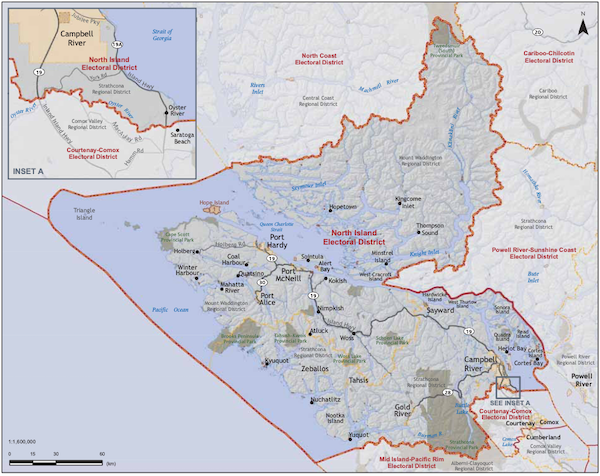
“Cortes had a pretty good representation. Of the 15 delegates we sent from the North Island, we had three of them.”
The other two Cortes delegates were Max Thaysen and Ralph Garrison.
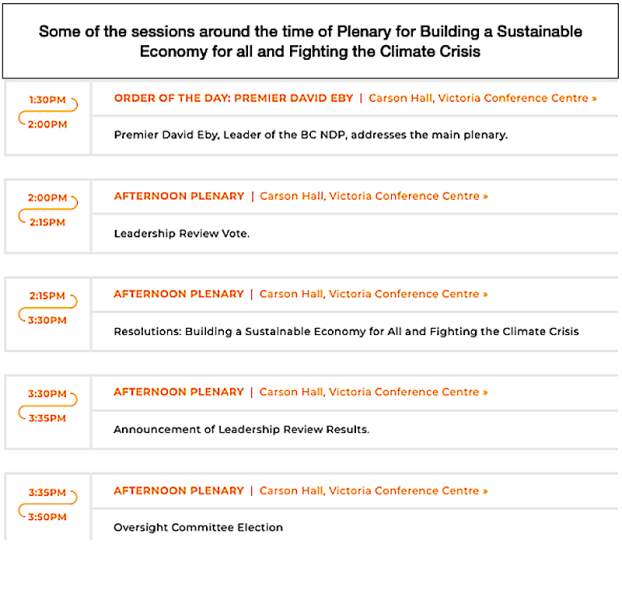
Bruce Ellingsen: “The segment we were included in was referred to as ‘Building A Sustainable Economy For All And Fighting The Climate Crisis.’ All very highfalutin and worthwhile goals. There were 69 resolutions on the list that the resolutions committee had offered to the agenda, and the amount of time that was allocated in the convention agenda was about an hour and 20 minutes. It ran to more like an hour and 30 minutes, but we ended up only getting through 10 of the 69 resolutions. That’s a very, very low rate of success.”
Cortes Currents: Was there any consideration of amalgamating, the three resolutions that incorporated parts of your original.
Bruce Ellingsen: “There was a conversation in our electoral district group of 15 on Saturday morning. It must have been with conversations with supporters of the other resolutions to amalgamate or bundle #15, #41, and #42, and hopefully move them up to #6 on the list of resolutions for consideration. For whatever background reasons, the resolutions committee did not agree to that.”
“The highest numbered resolution came from Kelowna Centre #15 and it never got to the floor. #41 and #42 were miles away from actually getting presented and debated, which is very disappointing for me as, you might say, the original originator of it.”
“I philosophically accept the fact that what I’m presenting for consideration is, first of all, a dramatic change from what we’re doing in British Columbia towards greatly reducing our harvest to achieve a sustainable forest. I’m in favor of doing a lot more of the value adding industry to make use of what we do harvest in the province, create products out of them that can generate a lot more economic benefit to the province before whatever products are shipped out or sent on to wherever they’re going to be marketed.”
“Just about every layer of processing that goes on in using wood products is adding about another 50 percent value to the stream of economic benefit, jobs and other activity that are connected to that.”
Cortes Currents: Do you have any suggestions for the NDP party? How can they improve the resolution process?
Bruce Ellingsen: “I talked with Michelle Babchuk, our local MLA, about extending the convention timeframe. She said the party had considered that, but realized from feedback they got from around the province that the longer the number of days that the convention was slated for, less and less representatives would be able to take the time off their busy lives to attend. So it has remained at a biannual convention and amounting two days of effective consideration. That has been the pattern.”
“What I suggested in feedback to the NDP party was that the resolutions segment of the convention be open throughout the two days, or whatever it effectively ends up being, for presentation and debate and decision.”
“The resolutions committee could be monitoring the progress of the resolutions and alert all the delegates that were registered as to the progress with smartphones and the modern communications abilities that most of us have. If the communication with all of the delegates was say every 15 minutes or so, an individual representative could carry on with attending other segments of the convention that were interesting to them and know that when their number was getting close.”
“They could then go up to the main hall and partake in the discussion around a resolution within a fairly narrow time frame and not have to sit throughout the full hour and a half and see 10 out of 70 resolutions actually get to the floor.”
Cortes Currents: Where does your resolution go from here?
Bruce Ellingsen: “I’m hoping to advance my proposal much earlier than waiting two years for the next convention. I spoke with Michelle Babchuk, and she said there’s probably a more direct way to get a hearing.”
“Once the energy has rebounded slightly, I think I’ll be back in touch with Michelle, who’s the representative for the electoral district area and Gwen Donaldson, who’s the chair of our electoral district executive. I’m sure I’ll be talking to Max Thaysen and Ralph Garrison here on Cortes. I’ll be pushing to contact the other six electoral districts that were party to one or more of the three resolutions that were more or less along the same thrust to see if we want to bundle our presentation and go and talk to the provincial council, or possibly directly to the Forestry Ministry, or a committee of the forest ministry and present what we wanted to present at the floor. Get it moving before too much time goes by.”
Footnote
* Bruce strayed from the written version of his resolution at this point in the broadcast. Cortes Currents followed the written resolution – “and increasingly sequester CO2 from the atmosphere to help meet the 2030 emissions goal” – in the text above.
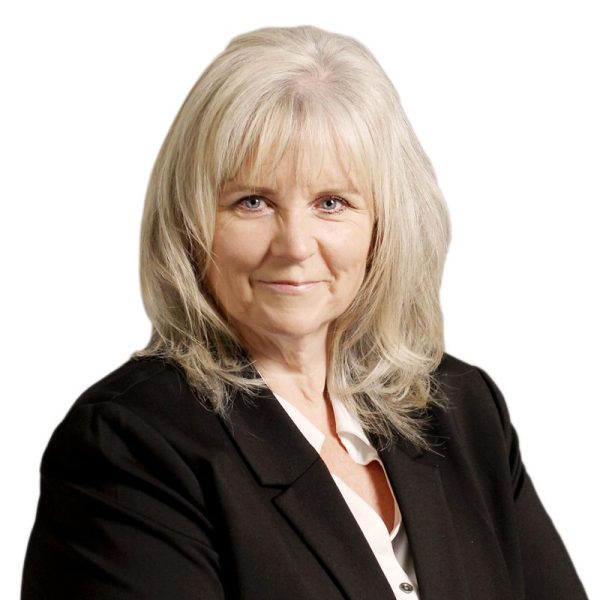
Top image credit: Bruce Ellingsen – Photo by Roy L Hales
Sign-up for Cortes Currents email-out:
To receive an emailed catalogue of articles on Cortes Currents, send a (blank) email to subscribe to your desired frequency:
Daily, (articles posted during the last 24 hours) – [email protected]