


As some of you may have already heard, BC Ferries is going through changes. They range from a total revamp of the way they have been engaging with the public, to expenses that probably won’t effect fares until 2028.
Let’s start with finances. BC Ferries CEO Nicolas Jimenez recently informed the Greater Victoria Chamber of Commerce the cost to build ferries has risen 40% since 2020. Speaking as a customer, my immediate thought was this sounds like there is a fare hike coming.
Jeff Groot, BC Ferries Executive Director in charge of communications, responded “I think that’s a fair reaction. There’s a couple of things that we’re experiencing right now.”
“Every four years we apply to the ferries commissioner, who’s our regulator, for the amount of fare changes that we need to be able to fund the system. We actually put in the application a year before it takes effect, or even more than a year in some cases. For the new performance term that started on April 1st of this year, we actually had to make the submission in 2022. In that submission, looking forward to what the next term would need our expectation was that we would need a 30 percent fare increase in 2028.”
“Now you can imagine between 2022 and now we’ve seen a number of changes in the world that have really driven increases in inflation, increases in costs. One of the things as a company we’re dealing with is that exact example you gave, the cost for building ferries themselves has increased 40 percent since 2020.”
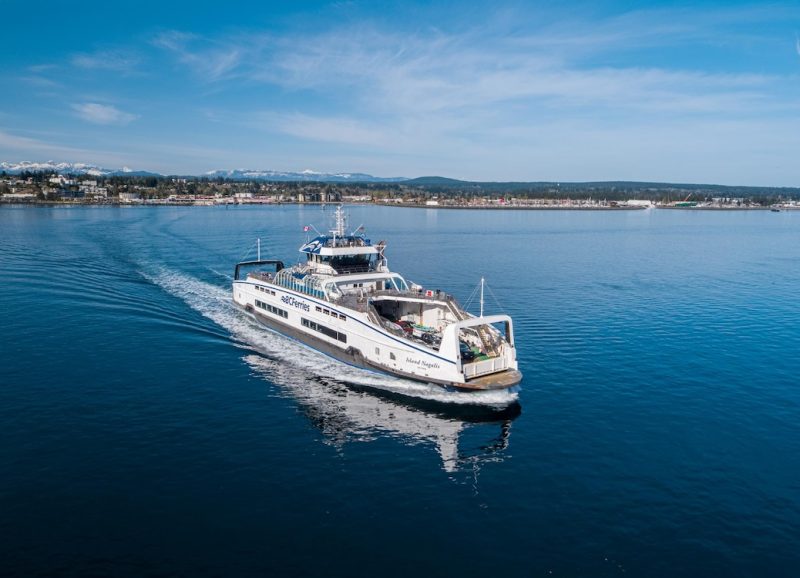
“This doesn’t directly impact the island class ferries that are going to start to be serving your route because they’ve already been procured. We have a contract in place, they’re well underway in their build, the keeling just took place a week and a half ago.”
“The challenge for us is going forward both with regard to the cost that we expect to see when it comes to building the new major vessels for the major routes, but also more holistically for our infrastructure much of which is 50, 60 years old. We have been life extending and we have a governance model and a funding model that doesn’t allow for great flexibility when it comes to being responsive with the revenue that we can bring in when we do see cost increases like this.”
BC Ferries is also changing the way it engages with the public. For more than thirty years, this has primarily been handled through local Ferry Advisory Committees like we have on Cortes and Quadra Islands. The terms they operate will expire at the end of December and instead of renewing them, BC Ferries is moving towards newer channel of communication.
Jeff Groot: “The ferry advisory committees have been in place since 30 years ago and for a number of years, they’ve done pretty great work.. It’s been a really valuable way for ferries to engage the local knowledge that exists from people who live in communities, but lots has changed in the last 30 years.”
“We’re funneling everybody into the Ferry Advisory Committees right now and, no reflection on the work that’s been done by the Ferry Advisory Committees, but by its nature of the process excludes people. What we’re trying to develop here is something that moves it beyond the process that exists so that we can include more people, so that we can hear that breadth of views.”
Cortes Island resident Kate Maddigan responded, “As a former FAC member, I looked at the news release and all I could see was we want this to be more inclusive. They used the word inclusive several times, which is really important because the FAC members for the Cortes side were always retired, white, waterfront property owners. We have all sorts of people, and they just didn’t seem capable of bringing in other voices from the community. We need to hear from younger people. We need to hear from people who rent. We need to hear from people who don’t own a car, don’t drive a car. We need to hear from all sorts of different perspectives.”
The BC Ferries press release quotes Chief Steven Brown, of the Klahoose First Nation, “Replacing this outdated model with a more inclusive process is a welcome step toward building stronger community relationships and enabling better-informed, community-driven decisions.”
Jeff Groot: “Change is hard. I want to acknowledge that these are Ferry Advisory Committees that have served communities for more than 30 years. Hundreds of people that have volunteered their time. These are people who are well respected in the community. They’re people who intimately know the community. They’ve done some exceptional work and this change is certainly meant to build on that. Our hope is that a change can be informed with the expertise that those FAC members have brought to the table. In the future model there’s going to be space for these same people to still be involved, regardless of what the structure is going to be. We won’t have the Ferry Advisory Committee model anymore, but that certainly doesn’t preclude anybody who’s on the Ferry Advisory Committees from taking part or providing feedback or sharing their expertise.
Cortes Currents: Do you see room for any kind of committee or community structure in the new model?
Jeff Groot: “We’re trying not to presume what the outcome is going to be. It’s why we’re building in time to come out and consult and actually understand what communities want and need and think will work. We actually want to hear that from them. I don’t want to presume what the future state looks like from the perspectives of Cortes Island Quadra Island and the other communities we serve, that’s critical. It’s even set out in our legislation that we should be focused on satisfying the public interest and the only way that we’re going to know what the public interest is by having an effective engagement mechanism that gives us that feedback.”
“What we’ve been hearing from customers from local governments, from local nations is that the model that we’ve been using to engage hasn’t been broad enough to really enable that breadth of representation of voices. Some people don’t have the opportunity to provide us with their feedback because they’re unaware of the FAC model, or for other reasons local governments, nations aren’t really coordinated in with the FAC model. What we’ve heard over the last number of years actually, is that we can probably do our engagement better.”
“What we’re looking to do is develop a new model that’s more inclusive that gives people the option to do that, regardless of where they live, where they are, or how they want to engage with us. We announced earlier this week that we’re going to be working over the coming months to build that with input from FACs, local governments and the public. The new model that’ll be ready for May is going to be a hybrid one that includes in person opportunities, but also some more expanded opportunities for people who might not want to come in person. So that, that would be online or other digital means.”
“When this new model takes effect in May, the current FAC model will end.”
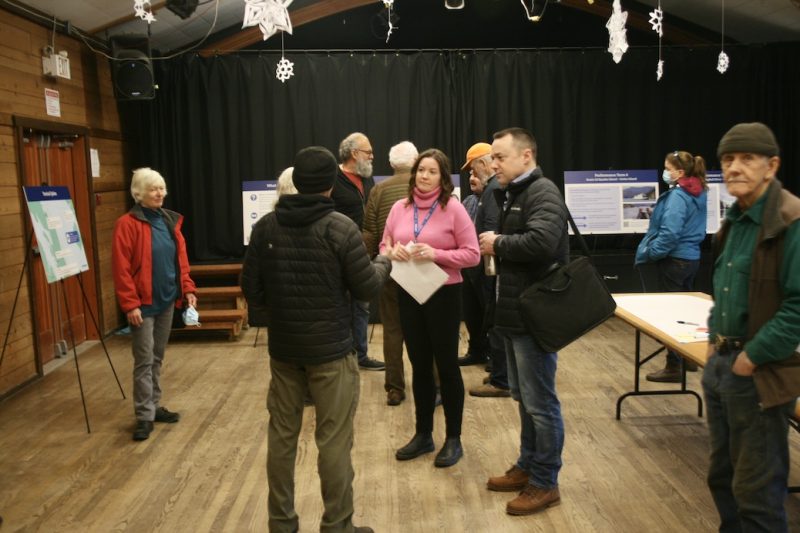
Cortes Currents: You mentioned in-person community engagement, at what level? I imagine you’re going to Campbell River, but what about Cortes or Quadra islands?
Jeff Groot: “This is part of what’s being designed right now. We made the announcement this week for a couple of reasons. One is that the FAC terms are set to expire and so we needed to make a decision on what the future would look like there. We wanted to give appropriate notice while still maintaining that opportunity for community staff feedback. What we need to do right now is plan out what does that engagement process look like? Where can we be in person? What ships? What terminals? What are the online opportunities that people are going to be able to give us feedback? So we’re looking at doing that pretty broadly over the first couple months of 2025 so that we can then have something in place for May.
“Part of the feedback we’ve had about challenges in our engagement process has been not the engagement process itself, but how BC Ferries have responded to what we hear from communities. The critique from a number of FACs is we keep telling you the same thing and nothing’s happening, or we’re not getting any answers.”
“So as part of this process, we’re also saying ‘how do we develop the processes that are required to actually ensure we’re responsive and get back to the public and say ‘yes’ or ‘no’ on the ideas that are coming in? So that we can take that input and help it to inform the company’s decision making.”
Kate Maddigan: “The devil is in the details and we’ll just have to see if this is going to be truly more inclusive or not. They’re going to have to provide a bit more information to see, and then we can make up our own minds if it’s truly inclusive.”
“I’ve always said that the FAC should not be administered by BC Ferries. Profit is basically their bottom line. Public engagement might not be something that they’re super interested in. They’re doing it because it’s part of their service agreement with the BC Ferry Commission. Really, it should be a job with the BC Ferry Commission because they’ve got the right mandate. That’s the way it is in jurisdictions like Washington state, or Scotland. They’ve got a lot of ferries. They do things in a way that doesn’t feel like a conflict of interest, like it’s done by a more disinterested party. That’s really where it should go, but this is a step in the right direction.”
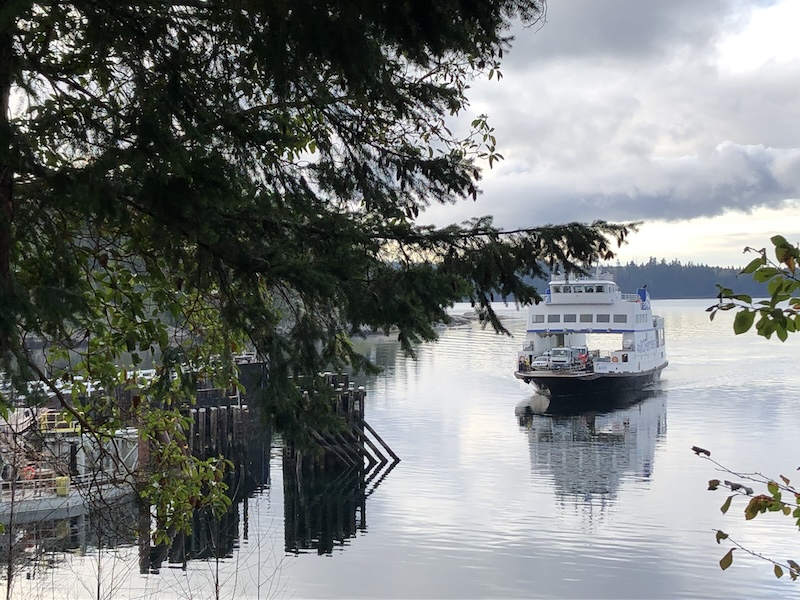
In addition to the new ferries coming to the Campbell River to Quadra route, there is also an island class ferry coming to the Cortes to Quadra route in 2026. Prior to that, the terminals at Herior Bay and Whaletown need to be upgraded. Is there a chance you will no longer be coming out to inform the community because of the new public engagement process?
Jeff Groot: “One of the issues that I know is of particular interest to people who live on Cortes is obviously the work that’s going to have to happen at Heriot Bay Bay and Whaletown, and the impact that’s potentially going to have on their travel.”
“The plan with our evolving engagement process doesn’t impact the times that we’re going to have to come and talk to the community about that project. The commitment we’re making both on that project, but really across our fleet, is that the project specific engagement, where we have to come and talk to communities and make sure people understand what’s going to be happening and hear their feedback, that’s all going to continue as normal.”
“That’s not impacted by any change here, by any new process. People can be assured that we’re going to be coming back to talk to the community in fairly short order to just make sure that there’s still that ongoing dialogue about the future of the berths and how we can minimize those travel impacts.”
Links of Interest:
- Terminal Upgrade Plan: BC Ferries Consults Cortes Residents – (Aug 2024)
- Changes coming to the local ferries in 2027, and directions for the years beyond (Dec 2023)
- Articles about, or mentioning, the Quadra-Cortes Island route
- Articles about the Campbell River-Quadra Island route
- The FAC for Cortes and Quadra Islands
Top image credit: BC Ferries will be more online in the future – Photo by Simon Hattinga Verschure on Unsplash