
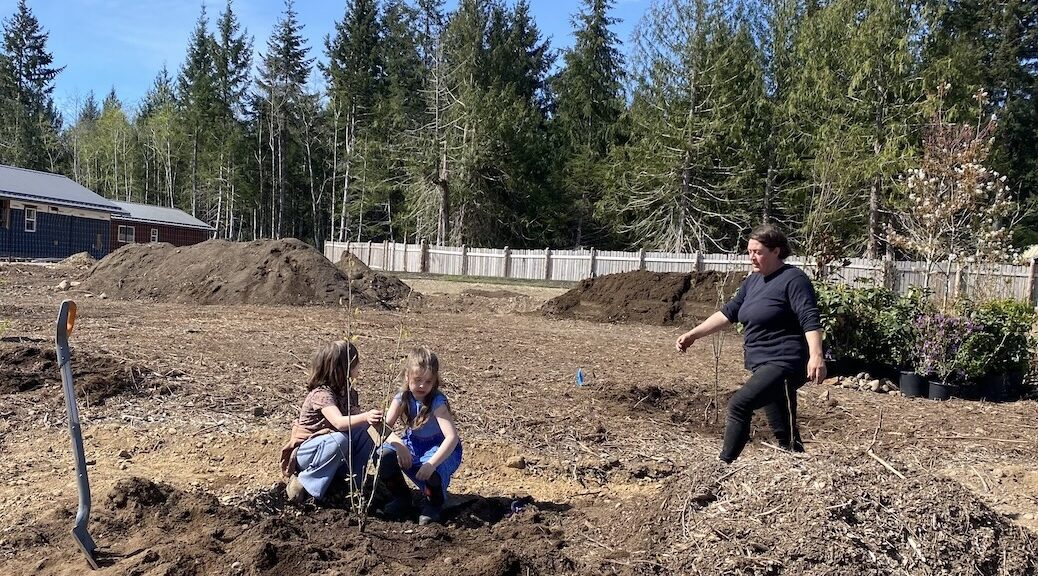

The community orchard at the Rainbow Ridge affordable housing complex officially launched with a tree-planting ceremony on Earth Day. In this morning’s interview, permaculture designer Witney Vanderleest discusses her role in the project, the process of planting the first 35 trees, and what the community can expect to see as the site evolves.
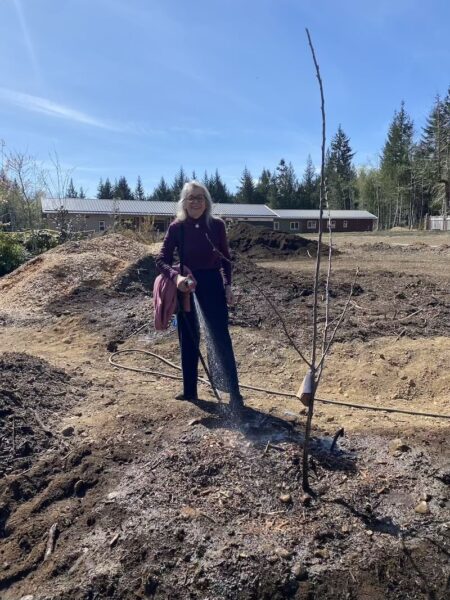
Image credit: Witney Vanderleest with some of the plants waiting to be planted – Roy L Hales photo
The Permaculture Designer
Cortes Currents: How did you get involved in this project?
Witney Vanderleest: “When I first got involved in the project, it was about beginning to think about the overall permaculture design for the site, and right away it shifted into helping write a grant for a canopy project. That permaculture design quickly developed into an overall tree canopy site plan that integrated into our grant proposal. I’ve been working now over a year on the designing aspect of this project. This spring has been the start of the real implementation side of that.”
“We’ve planned a large community orchard and gathering space on the north end of the site. It includes some rain gardens that collect roof water and integrates into a whole native planting area. There’s still lots of work to do on it, but now we have trees in the ground. We have a wildflower meadow planted out, and just yesterday finished planting in the rain garden. Now I’m hoping for some rain so that we can get things seeded out to some grasses and wildflowers within that area as well.”
Earth Day
Cortes Currents: Tell us about the community planting day
Witney Vanderleest: “The community planting day was the first planting day, in which we brought the community into the overall vision. This community orchard is meant for the greater community, not just the tenants. It was a celebratory day of how we can begin interacting with this land.”
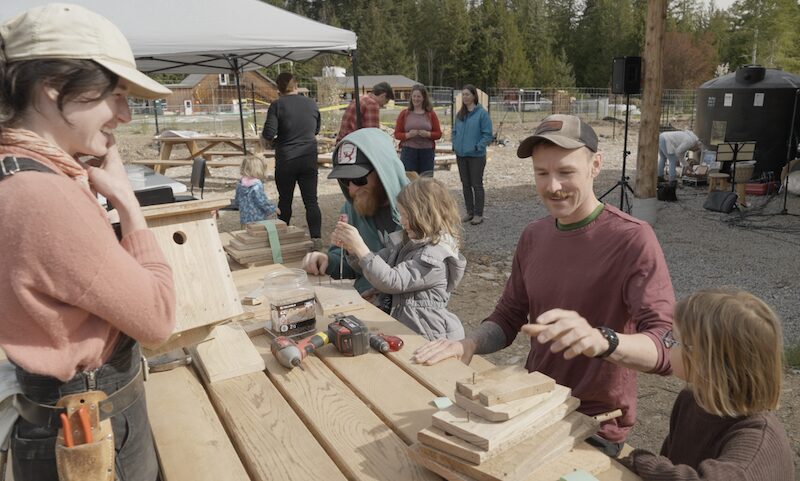
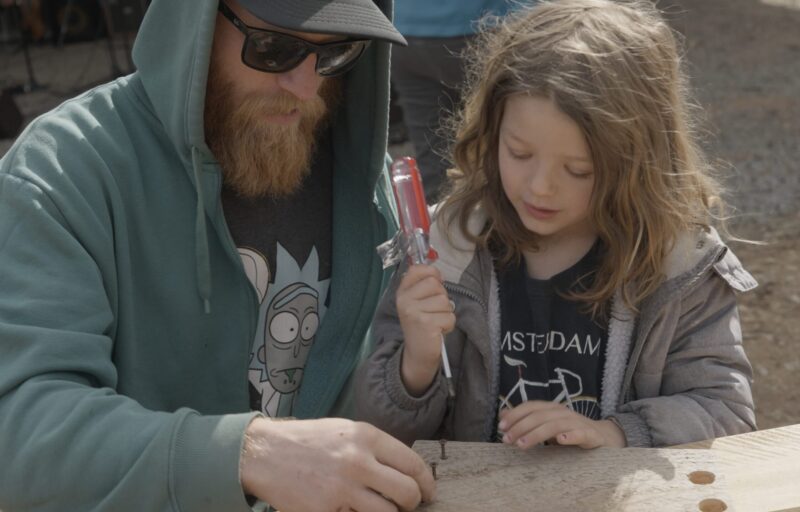
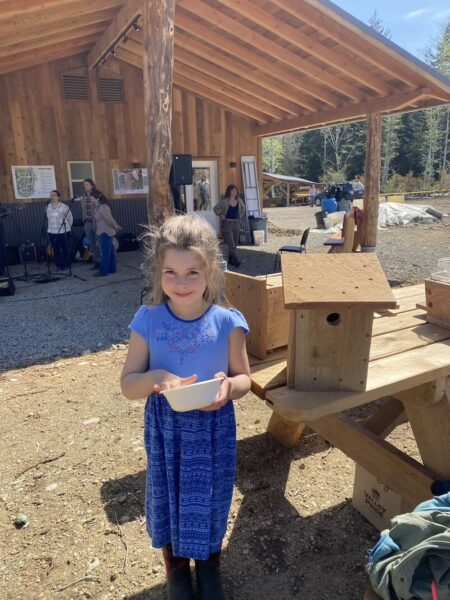
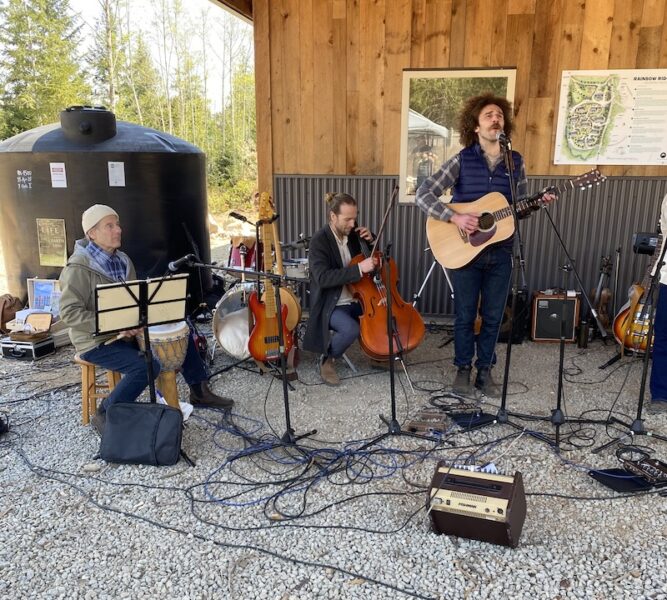
We had live music and food and a real celebration of this community space. We had kids building birdhouses. I think birds are truly the first tenants here because Sparrows moved into the bird boxes that were built on that day. I’ve been seeing them going in and out and building nests.”
“I anticipated that we might have different arrival times. The way we organized the day is that the first two hours of the day were more of a celebration, we’re going to do some planting together.”
“As people arrived, we got kids starting to build birdhouses so that we could have people coming in with something to do.”
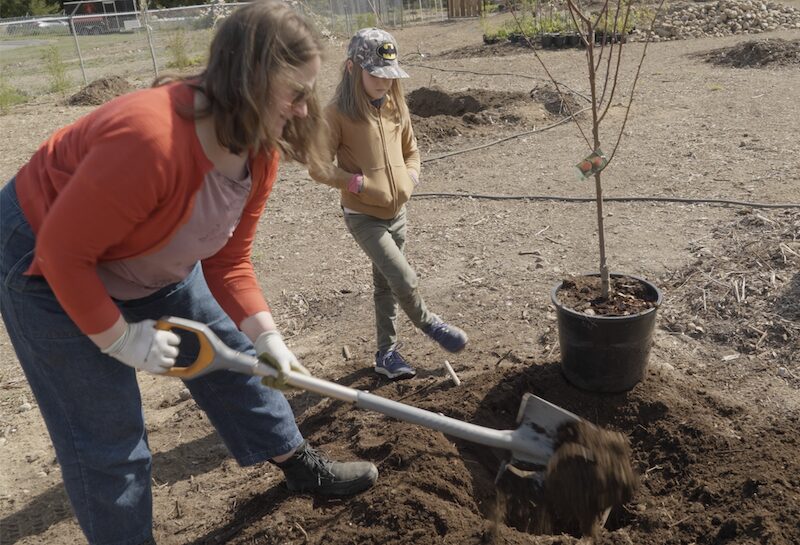
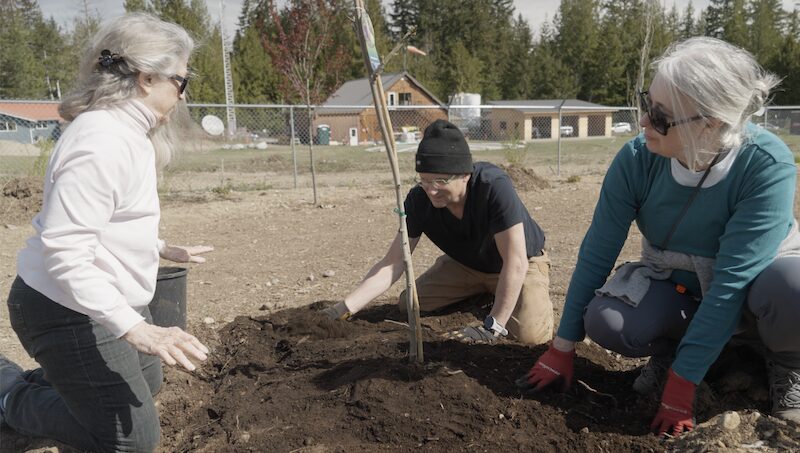
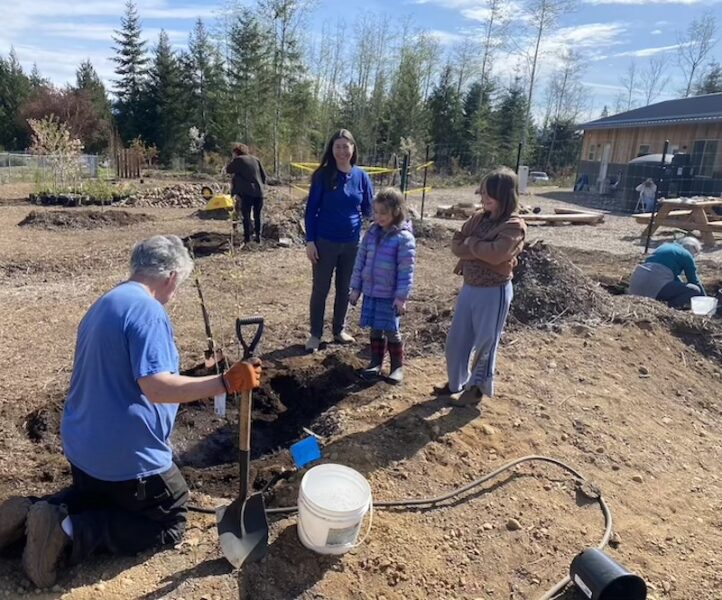
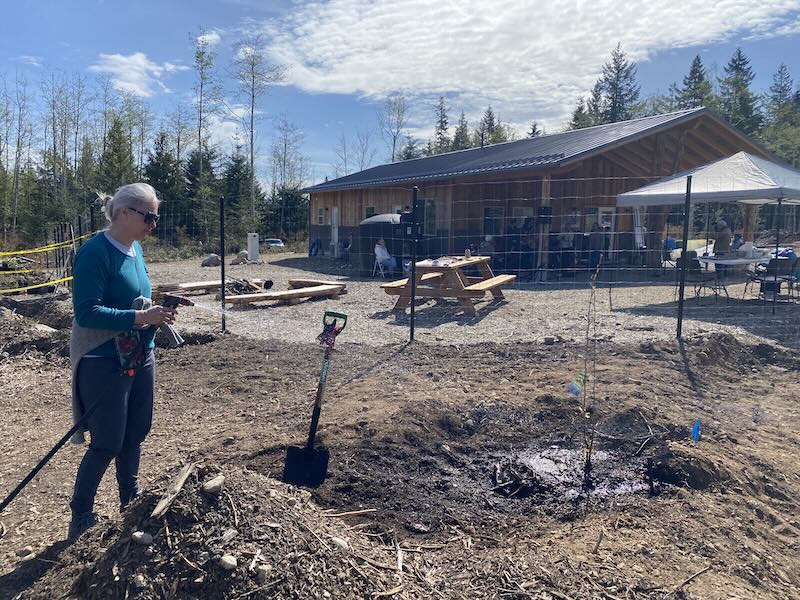
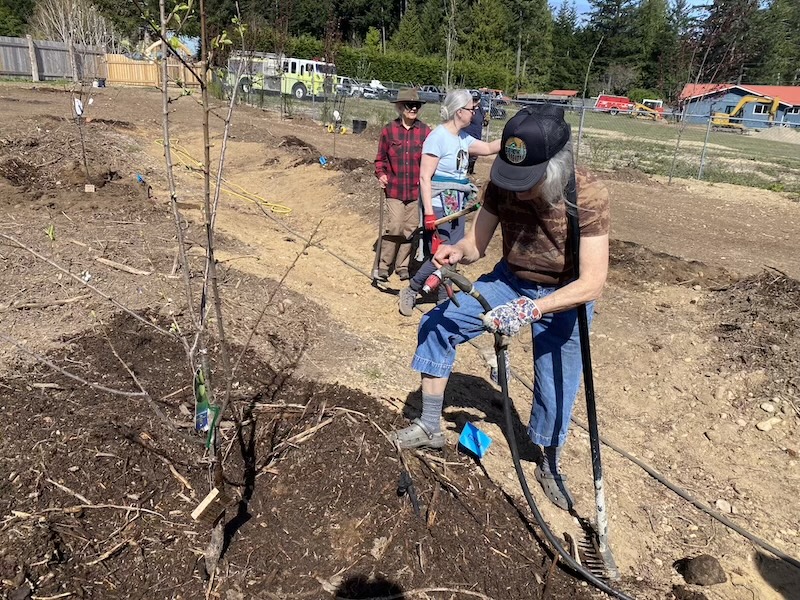
“Once everyone arrived, we sang a song of gratitude and then moved into the orchard. Each family selected a tree that was maybe their favourite fruit, or a tree that they were called to. After they planted their trees, people also had the opportunity to take a little wooden tag and either dedicate their tree to someone or leave a message. There’s been lots of different dedications or messages that have been left with the trees. It’s been beautiful just working in the orchard since then because you walk by the trees and see tags with messages like, “Oh, we love peaches. Grow strong, grow big, grow tall.”
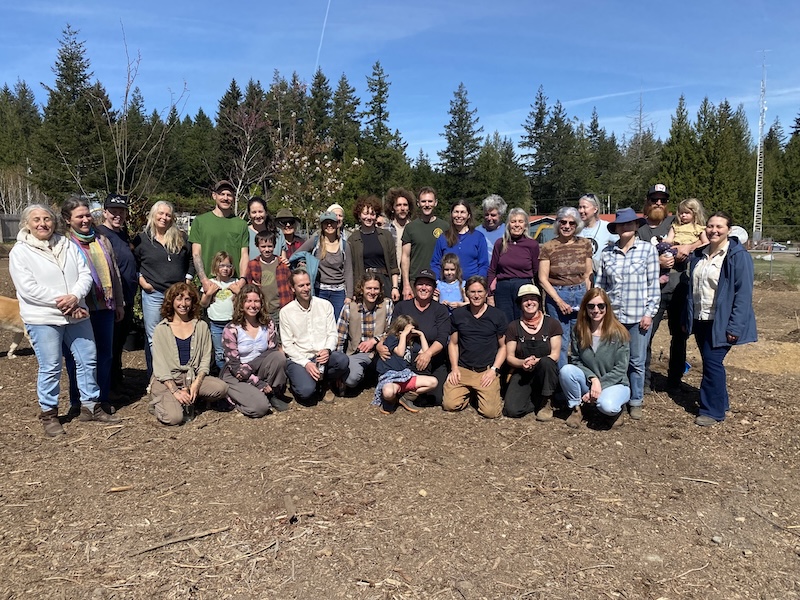
Cortes Currents: How many people came?
Witney Vanderleest: “We do have a picture, we could count them. We also had the Awakeneers playing, so there was like a 10-person band which helped increase the numbers.”
Cortes Currents: I counted 35 in the picture, only 4 of which are Awakeneers.
Witney Vanderleest: “There were maybe six or eight different family groups.”
The Current Design
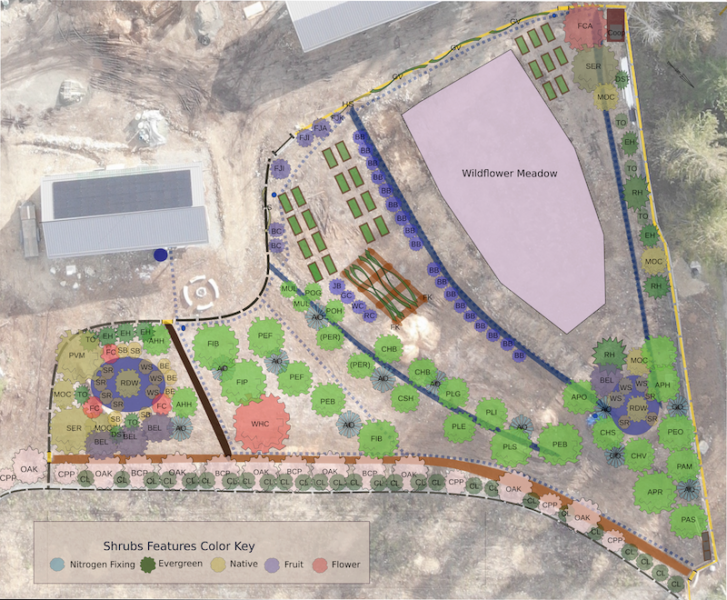
“Most of the families left for that second half, and some new people arrived who wanted to learn more about the overall design and implementation of the orchard. I offered an orchard development with Folk U and walked through the site plan, overall design, tree selection, swale integration and rainwater catchment.”
“Maria McKenty has joined my team. We had a site plan, and Maria put together a drone image showing what trees we planted. We have a more detailed version, although I think there were still some final changes. In the end we’ll make a fully updated map, exactly where everything is, all the irrigation that’s been in, where all the trees ended up , so that people can really see exactly what the trees are.”
Cortes Currents: You mentioned people who weren’t tenants coming. Were they involved in the planning?
Witney Vanderleest: “The first tenants that will be moving in planted the first tree, but there were lots of families from the greater community that came to help, celebrate and plant trees.”
Cortes Currents: Of those 6 to 8 families, how many of them were tenants?
Witney Vanderleest: “I think there were just two families that were tenants that were there. But I don’t know all the future tenants who’ve been selected and who’s moving in.”
The 35 Trees
Cortes Currents: What kind of trees are there?
Witney Vanderleest: “In the orchard there are apples, cherries, plums, peaches, sour cherries, figs. There are even some experimental things, like pawpaws and pomegranates. There are nitrogen fixers, like autumn olives.”
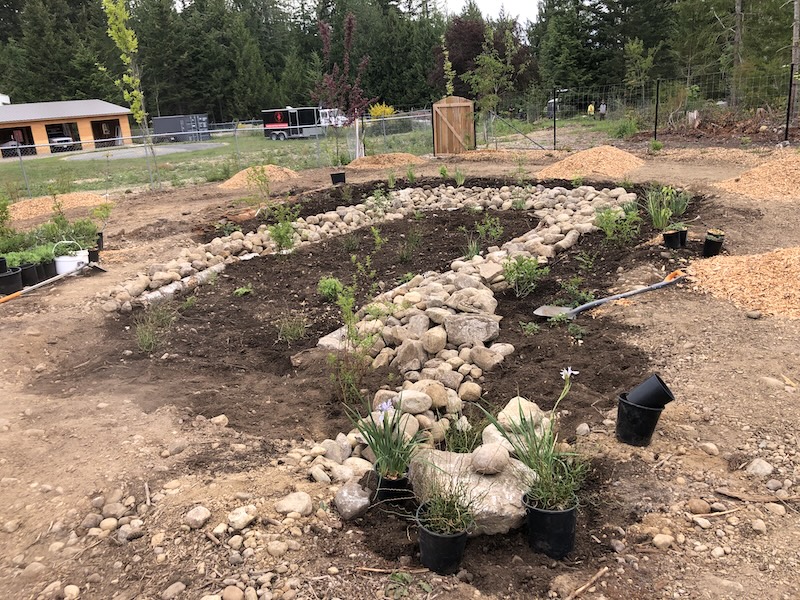
“Throughout the orchard there is also the integration of swales and rain gardens to catch roof water and bring in water infiltration through the site so we have less runoff off the site. We can improve the water table overall.”
“We’re going to build a trellis. We will probably use some of the small cedar poles that were harvested off this site, build a trellis for our kiwis, and have a nice place to sit under, put some picnic tables under there, and enjoy the space.”
(Courtesy Bill Weaver / Weaver Films)
Ideas for the Future Design
Cortes Currents: You mentioned talking with tenants. Have many tenants been chosen?
Witney Vanderleest: I’m not in the loop so much on that side of things, but the first tenants have definitely been chosen and have a move-in date. They’re anticipated to be coming in July. So shortly after we get the orchard area close to completion, we’re going to be really moving ahead trying to get their yard space planted out and I have trees on site already to create some privacy hedging.
There’s talk of building some raised beds, and there’s been some ongoing kind of back and forth with the tenants in terms of what they want to see in their yards. Communicating the overall design strategy to them; how they’d like to see those things evolve. There’s even tenants who have been talking about having chickens, and if we could integrate that into a chicken co-op. As a permaculture designer, I’m all for that integration. I can see us effectively having chickens that can run through the orchard.
We’ll see how the overall design changes over time once tenants are living here and how they want to be a part of the land stewardship and overall influence.
Cortes Currents: Have the tenants changed the overall design?
Witney Vanderleest: I’ve been focused on this north end. The community building is done, and we have an approved design to do the community orchard. I think there’s an opportunity for the tenants to influence the design moving forward, but I’m not 100% sure on how that process will go.
Links of Interest:
- Photos from the Community Planting – Cortes Community Housing Society
- Rainbow Ridge – Cortes Community Housing Society
- Six Units Underway at Rainbow Ridge, Further Updates – Cortes Currents
- Articles about, or mentioning, Rainbow Ridge
All undesignated photos courtesy the Cortes Community Housing Society
Sign-up for Cortes Currents email-out:
To receive an emailed catalogue of articles on Cortes Currents, send a (blank) email to subscribe to your desired frequency:
- Daily, (articles posted during the last 24 hours) – [email protected]
- Weekly Digest cortescurrents – [email protected]