


The lengthy legal battle over salmon farming in British Columbia’s Discovery Islands reached a significant milestone on January 29, 2026, when the Federal Court of Appeal dismissed a challenge by MOWI. This decision follows five years of tension that began when former Fisheries Minister Bernadette Jordan mandated the removal of all salmon farms from the region by mid-2022. While the industry complied with the order, they simultaneously pursued a series of lawsuits to overturn the government’s directives. Following their latest defeat, Mia Parker, MOWI’s director of environmental performance and certification, emailed media “While we are disappointed that the federal court of appeal did not find in our favour, we respect the findings of the court.”
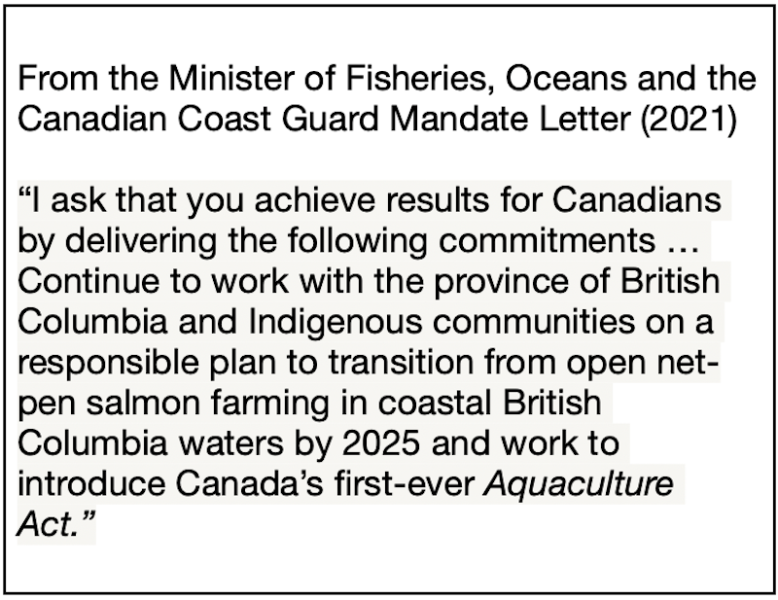
(Click here to access the Minister’s mandate letter)
This appeal was rooted in a 2023 decision by Fisheries Minister Joyce Murray, who declined to reissue aquaculture licenses in the Discovery Islands. This move was challenged not only by the fish farming industry but also by the We Wai Kai and Wei Wai Kum Nations. Their collective efforts were ultimately unsuccessful in Federal Court, when Judge Paul Favel ruled that Murray’s decision did not breach the operator’s rights of procedural fairness. MOWI appealed, which led to their recent defeat.
Stan Proboszcz, a biologist with the Watershed Watch Salmon Society, noted that MOWI no longer possesses an automatic right to appeal. Their remaining legal avenue would be to petition the Supreme Court of Canada, a path that is rarely granted as the highest court only selects a small fraction of cases to hear each year.
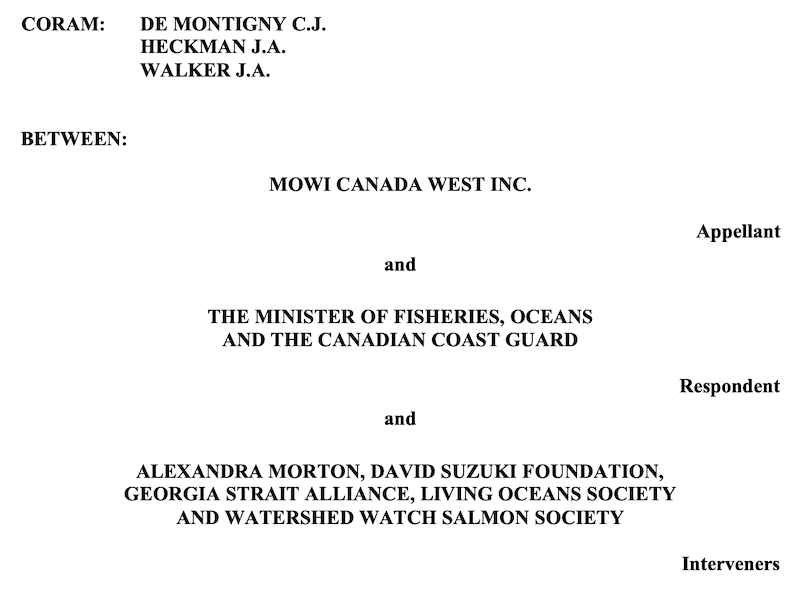
(Click here to access Reasons for Judgement)
Chief Justice Yves de Montigny, writing on behalf of all three judges that heard the appeal, emphasized the validity of the Minister’s ‘highly precautionary approach.’ The court highlighted that Minister Murray had considered conflicting scientific evidence regarding the risks that open net-pen farms pose to migrating Fraser River sockeye salmon. Crucially, the judgement noted that previous assessments failed to account for the cumulative impacts of various pathogens on wild stocks.
The gist of MOWI’s argument ‘is that it was not afforded the information to present its case fully and fairly because it did not know the case it had to meet.’
(Click here to access the letter)
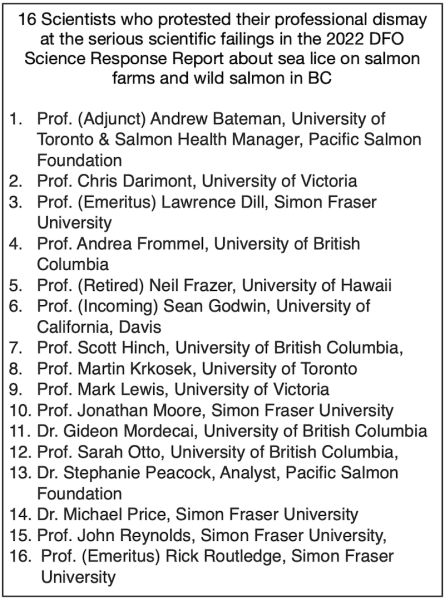
The court disagreed. MOWI and the other operators were aware of the existence of conflicting scientific opinions about the degree of risk salmon farms had for wild salmon. While the DFO’s Canadian Science Advisory Secretariat (CSAS) concluded fish farms posed minimal risk to wild salmon populations, this conclusion was not universally embraced by the academic community. The DFO’s own Molecular Genetics Lab at the Pacific Biological Station in Nanaimo published extensive research expressing significant concerns regarding the impact of salmon farming on wild fish populations. Scientists from many leading universities and environmental groups published their findings in reputable peer reviewed scientific publications. The industry was aware of this and the BC Salmon Farmer’s Association, which advocates for them, wrote the Minister that it ‘fully appreciate[s] your need to review the most recent scientific data.’
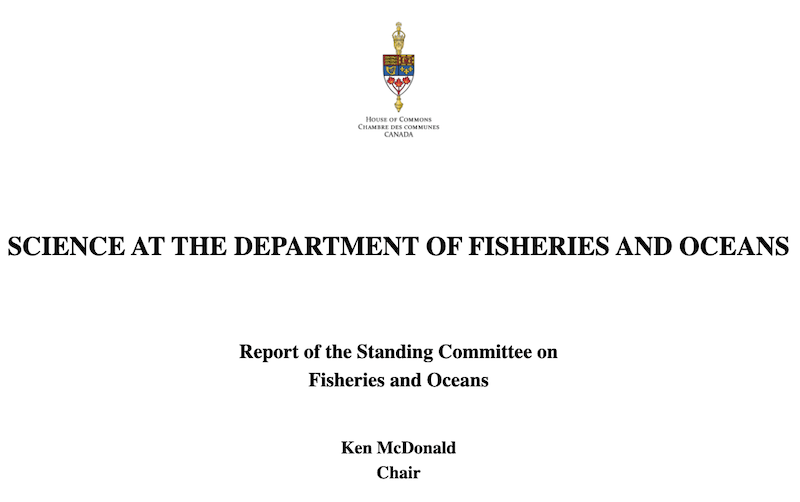
(Click here to access the Report)
Justice de Montigny wrote, “In light of the dire consequences that the declining stock of wild salmon in the Pacific could have for the rights of First Nations and, more broadly, for the economy and social fabric of British Columbia, it was understandable for the Minister to have a low level of tolerance for the risks posed by Atlantic salmon farms in the Discovery Islands. Considering the high level of deference that such an assessment warrants, I am satisfied that the Minister’s decision bears all the hallmarks of reasonableness.”
He concluded, “For all the foregoing reasons, I would dismiss the appeal, with costs.” The two other judges agreed.
MOWI’s representative, Parker maintained, “This appeal was about transparency and fairness in evidence-based decision making. It remains our consistent position that government decisions on salmon farming must be evidence based, sustainable, transparent, and inclusive of rights holder First Nations.”
While the majority of First Nations appear to oppose open net salmon farms, some host them in their territories and declare it is their right to pursue economic self-determination.
Grand Chief Stewart Phillip, President of the Union of BC Indian Chiefs, declared, “This decision is a profound affirmation that the protection of wild salmon, Indigenous rights, and the precautionary principle must come before corporate interests. The courts have now twice confirmed that the Minister was right to reject the advice that would have kept these farms in place. This is exactly what First Nations have been saying for decades.”
Proboszcz wrote, “After years of litigation, the courts have been unequivocal that the Minister is entitled to prioritize conservation. With the federal government committed to banning open-net pen salmon farms in B.C., further lawsuits would only waste public time and resources, and the industry should focus on an orderly transition out.”
One of the best known opponents of fish farms, Independent biologist Alexandra Morton, added, “This provides certainty to the salmon farming industry that the 2029 ban on marine salmon farms is on solid legal ground.”
Links of Interest:
- Reasons for Judgement – MOWI Canada West vs the Minister of Fisheries and Oceans and the Canadian Coast Guard (2026)
- Reasons for Judgement – We Wai Kai Nation v. Canada (Fisheries, Oceans and Coast Guard) (2024)
- Government Response to the Standing Committee of Fisheries and Oceans (June 13, 2023)
- Recommendations of the Standing Committee of Fisheries and Oceans – House of Commons
- Report of the Standing Committee of Fisheries and Oceans – House of Commons (March 2023)
- Government of Canada takes action to protect wild Pacific salmon migrating through the Discovery Islands (Feb 17, 2023) – press release
- List of Witnesses who testified before the Standing Committee of Fisheries and Oceans – House of Commons (between April 17-Oct 7, 2022)
- Academic Scientists’ critique of DFO Science Response Report (Jan 30, 2022)
- Association Between Sea Lice from Atlantic Salmon Farms and Sea Lice infestations on Wild Juvenile Pacific Salmon in British Columbia (DFO Science Response Report) – CSAS 2022/045
- Minister of Fisheries, Oceans and the Canadian Coast Guard Mandate Letter (Dec 16, 2021) – Gov of Canada
- Government of Canada moves to phase out salmon farming licences in Discovery Islands following consultations with First Nations (Dec 17, 2020) – press release.
Top image credits: Wild Salmon – Photo by BLM Oregon via Flickr (CC BY 2.0)
Sign-up for Cortes Currents email-out:
To receive an emailed catalogue of articles on Cortes Currents, send a (blank) email to subscribe to your desired frequency:
- Daily, (articles posted during the last 24 hours) – [email protected]
- Weekly Digest cortescurrents – [email protected]