

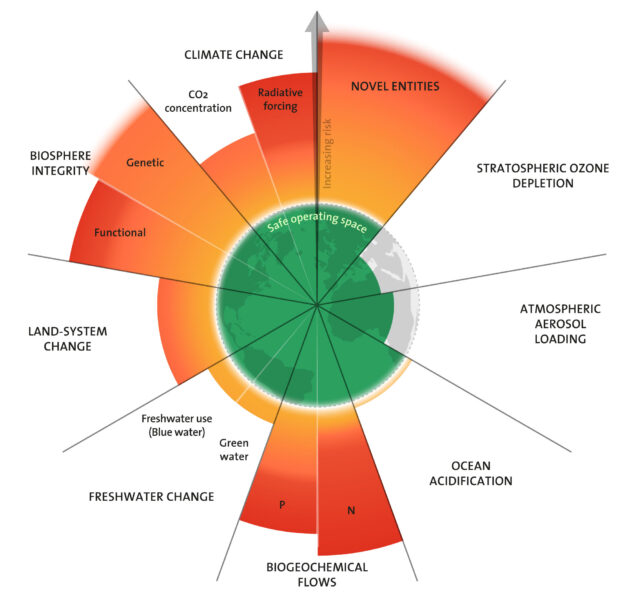
According to the Stockholm Resilience Centre, “Human activities have pushed Earth beyond its Safe Operating Space. The planet’s natural resilience is weakening: Global warming is accelerating, (and) ecosystems are showing clear signs of degradation.” In the second of four programs arising from an interview with Tzeporah Berman, Chair of the Fossil Fuel Non-Proliferation Treaty Initiative, she explains that the problem is multifaceted, but two critical areas must be addressed: fossil fuel use and our rapidly expanding energy consumption.
The Greatest Cause of Premature Death
Tzeporah Berman: “My research makes it very clear to me that fossil fuel use and production is the greatest cause of premature death on the planet and the greatest threat to the majority of the world’s ecosystems.”
Cortes Currents: “Prove it to me.”
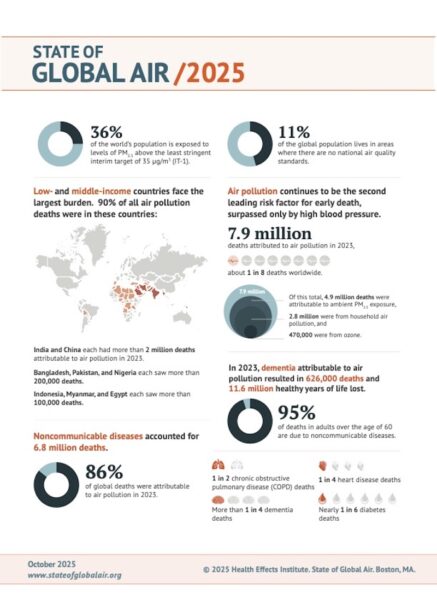
Tzeporah Berman: “Approximately eight million people die every year due to air pollution. Fossil fuels are the majority of that air pollution. Last year, the Lancet Countdown report said that, on average, five million people are dying every year from air pollution due to fossil fuels alone.
“When you start adding climate impacts and deaths, the numbers skyrocket. We know now that one person is dying every minute on this planet due to lethal heat, and the primary cause of the dramatic increase in lethal heat is climate change.
“Eighty-six percent of the carbon emissions currently trapped in our atmosphere — creating almost like a sweltering blanket around the Earth and causing climate change — come from three things: oil, gas, and coal.”
Why Aren’t Renewables Reducing Global Emissions Faster?
Cortes Currents: “Given that renewables are the fastest-growing energy sector, why aren’t we seeing more of an impact in terms of global emissions?”
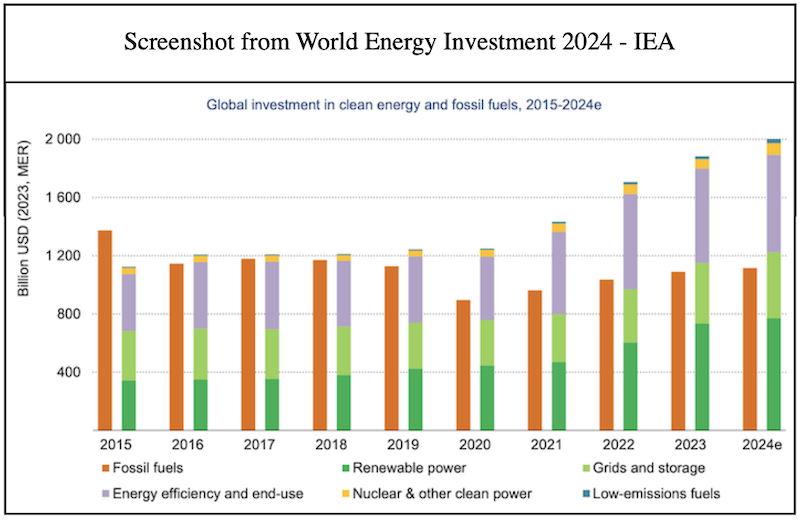
Tzeporah Berman: “We’re not seeing more of an impact in terms of global emissions even though investment in renewable energy today is double the investment in fossil fuels. Last year, there was $2 trillion invested in renewables and $1 trillion invested in fossil fuels.
“We’re seeing dramatic growth in renewable energy, but we are also seeing continued growth in carbon pollution, emissions, and fossil fuel infrastructure. We can’t solve this just by building the good stuff. We have to stop building the bad stuff too.
“What we often see is, for example, Mark Carney, our prime minister, saying, ‘We’re still going to move toward electrification. We’re going to eventually have a low-carbon economy by building more renewable energy and electrification.’
“You hear that a lot. That’s good — we need that infrastructure — but no one ever phased something out by building more of it, and that’s what we’re doing today.
“Our country has committed internationally. In Dubai, at the climate change negotiations, 190 countries said, ‘Yes, we know we need to phase out fossil fuels, and that’s a priority.’ Now we’re saying we’re going to build more of them.”
(Baku, Azerbaijan, Nov 20, 2024 – Fossil Fuel Treaty’s COP29 Party Press Conference hosted by the Government of Colombia)
Energy Consumption Is Still Rising
Cortes Currents: “Is the growth of renewables equal to our growth in consumption around the world?”
Tzeporah Berman: “No, because we are using more and more energy every day, especially because of the growth we’re seeing in AI and technology. We have a voracious appetite for energy. As long as that continues to increase, we have to continue producing more and more of it.
“We have to address consumption, not just production. It’s not just what we produce and how much we produce; it’s also how much we consume and who consumes it.
“I think the development of renewable energy is a huge part of the answer. Our biggest task today is to reduce our fossil fuel use and production. A big component of that is shifting to renewable energy instead of fossil fuels, and we know that today it is viable.
“When I first started this work 30 years ago, it wasn’t. We didn’t have the battery storage technology that we do today. We didn’t have the technology for large-scale renewable energy that we have today.
“There are many countries in the world that now run on 90% to 100% renewable electricity. Norway, Uruguay, Paraguay — the list goes on.
“We also didn’t have the technology for electric vehicles that we have today. This year, one in five cars sold on the planet will be electric. We know there are many countries now where the majority of new cars sold are electric, and where public transportation systems — from trains to buses — are electric. We can do that now. We couldn’t do that before. So that is a huge piece of the solution.”
Critical Minerals and Renewable Energy
Tzeporah Berman: “When people talk about renewable energy, you often hear today, ‘Well, it has a worse footprint than fossil fuels. Critical mineral mining has a massive footprint, and that threatens the planet as well.’
“There is no question that any mining has an impact, and we need better rules for critical mineral mining. Where is it done? How is it done? Is it in key areas of biodiversity? Is it affecting human rights? I think that’s absolutely true. We also need closed-loop legislation, which some countries are now looking at. We can use the critical minerals that are already on the surface of the planet. Many of the minerals that are used today can be recycled. Eighty to ninety percent can be reused, and that’s a piece of the puzzle.
“But to equate renewable energy and its footprint with the footprint of the fossil fuel industry is totally absurd. The fossil fuel economy uses 565 times more mining than the renewable energy economy.
“That’s because when you build a piece of renewable energy infrastructure, you build it, and then it’s fed every day by the sun or the wind. When you build a piece of fossil fuel infrastructure, it needs to be fed every day with more mining. The fossil fuel economy has a tremendously bigger and more destructive impact than the renewable energy economy.
“What I think is really disgusting is that a lot of the online memes claiming critical mineral mining is worse than tar sands mining are actually funded by the fossil fuel industry. They’re creating concern about the solutions because they want to keep producing fossil fuels, which is the most profitable industry on the planet.”

Do We Have Enough Lithium?
Cortes Currents: “That brings me to one of the arguments I’ve heard against EVs: that we don’t have enough lithium. Do you believe that’s true?”
Tzeporah Berman: “Lithium is 90% recyclable, and there are already systems on the planet to recycle it. I do think critical mining, and the current race for critical minerals without closed-loop legislation, is a problem. We should be using the lithium that is already on the surface of the planet. But to say we don’t have enough is not true. The math doesn’t add up.
The Answer is Not Just Renewable Energy
“We can do this. We can shift and phase out fossil fuels and move toward electric transportation and renewable energy. There have been many studies around the world on our capacity to produce enough renewable energy and electric vehicles.
“It’s not a one-size-fits-all solution, and it can’t be done without better efficiency. So the answer to the crisis is not just Renewable energy, it also includes energy-efficiency programs and reduced consumption. It’s not just a technological problem; it’s also an equity problem. It’s about who benefits, who uses how much, and how resources are distributed. Those are complex issues. We can’t just replace one widget with another widget.”
A Consumption Crisis, Not a Population Crisis
Cortes Currents: “Do we have enough resources for 8.3 billion people, all of whom want to have a decent life?”
Tzeporah Berman: “It really depends on how we use those resources, how much gets used, and by whom. I don’t think we have a population crisis; we have a consumption crisis.
“The reason I’m saying that is because we are not using the planet’s resources equally. We are not having the same impact through what we use. The wealthiest 10% on the planet produce well over 50% of global carbon pollution. That same wealthiest 10% uses about 67% of our non-renewable resources. So it’s not 90% of the population that is necessarily the problem in terms of how many resources we have and how much is being used up.
(Professor Johan Rockström, Stockholm Resilience Centre)
The Nine Planetary Boundaries
“We know that right now we have exceeded seven out of the nine planetary boundaries that have been defined by scientists through the Potsdam research of Johan Rockström and others. The planetary boundaries research looks at the Earth’s critical system processes that keep our planet stable and resilient. These are our life-support systems, and we know from research released this year that we are outside the safe zone on seven planetary boundaries.”
Cortes Currents: “What are they?”
Tzeporah Berman: “The nine planetary boundaries are climate change, biosphere integrity, land-system change, freshwater change, biogeochemical flows, ocean acidification, stratospheric ozone depletion, atmospheric aerosol loading, and what are called novel entities, which refers to human-made substances such as plastics, pesticides, chemicals, and radioactive materials.
“Seven of the planetary boundaries have already been transgressed, and scientists refer to this as a red alert — an emergency. They have said that human activity is no longer within the Earth’s acceptable boundaries to support human well-being, and that has massive ramifications for years to come.
“So, to your question, we do not currently have the planetary well-being and functioning systems to support the population of the Earth. But is that because there are 8.6 billion people? I don’t think it is. I think it’s because a very small number of people — the wealthiest people on Earth, the top 10% — are using the majority of our resources and creating over 50% of the pollution that threatens our well-being.”
Links of Interest:
- The 2025 Lancet Countdown report
- State of the Global Air Report 2025
- Planetary Boundaries – Stockholm Resilience Centre/University of Stockholm
- Tzeporach Berman: Then and Now – Cortes Currents
- (Coming) Tzeporah Berman: The West Coast Pipeline – $40 Billion that Could Do More Elsewhere – Cortes Currents
- (Coming) Tzeporah Berman: The Fossil Fuel Treaty Initiative – Cortes Currents
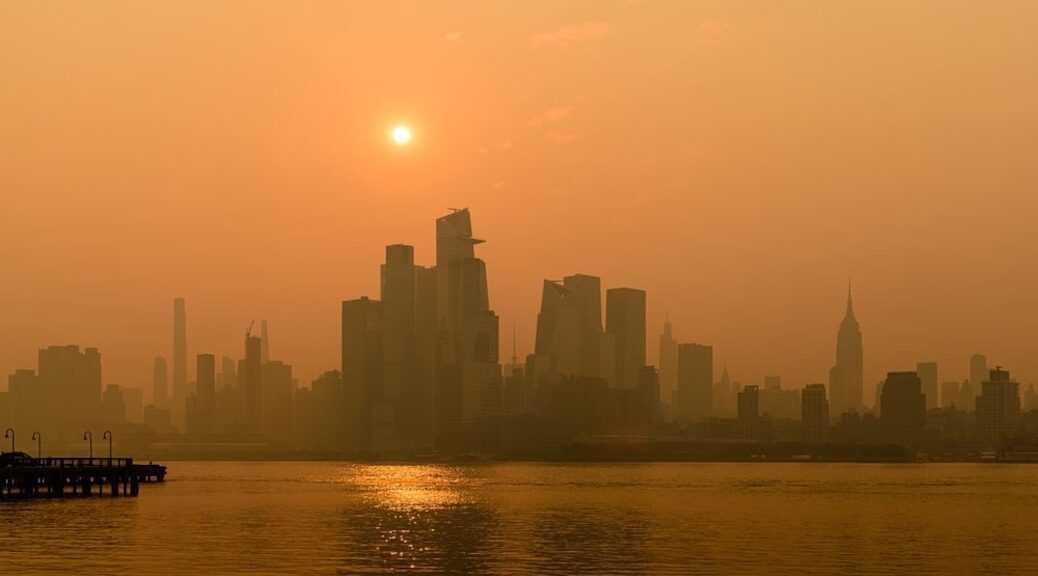
Top image credit: Air pollution in New York (2025) – Photo by Felton Davis via Flickr (CC BY 2.0)
Sign-up for Cortes Currents email-out:
To receive an emailed catalogue of articles on Cortes Currents, send a (blank) email to subscribe to your desired frequency:
- Daily, (articles posted during the last 24 hours) – [email protected]
- Weekly Digest cortescurrents – [email protected]