
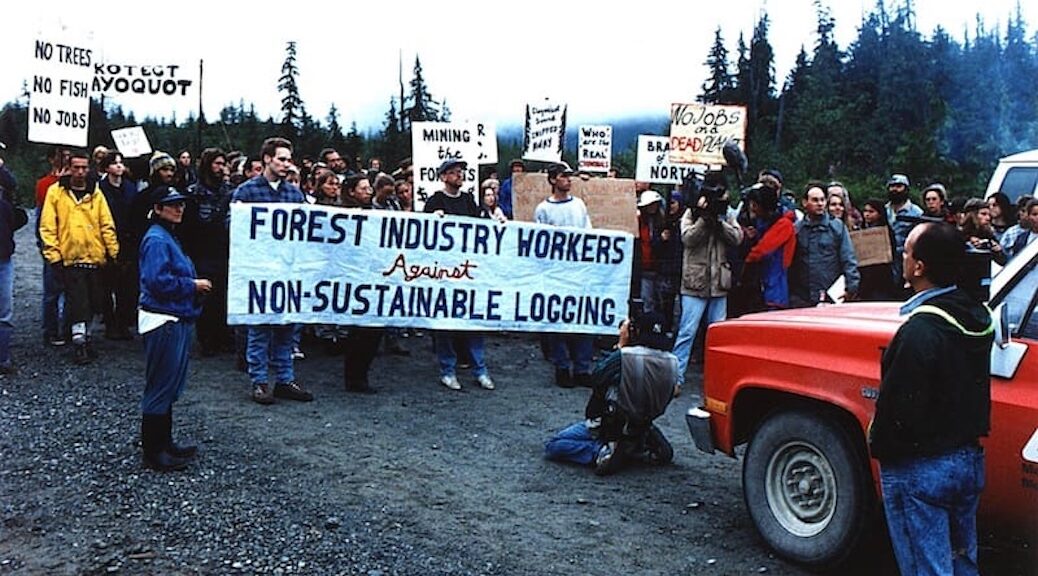

More than thirty years have passed since Tzeporah Berman catapulted into public view as an organizer of the Clayoquot Sound logging blockade. She is the Co-founder and International Program Director at Stand.earth, the Founder and Steering Committee Chair of the Fossil Fuel Non-Proliferation Treaty Initiative, and serves as a member of the Advisory Group for InfluenceMap. She is also an author, former adjunct professor, and has sat on committees advising the governments of B.C. and Alberta. When she’s not away speaking at conferences, or in the midst of negotiations, Tzeporah Berman is back in her home overlooking Gunflint Lake on Cortes Island. In the first of a series of broadcasts recorded there, she talks about then – and now.
(Looking across to Cortes and the surrounding area – Roy L Hales photo)
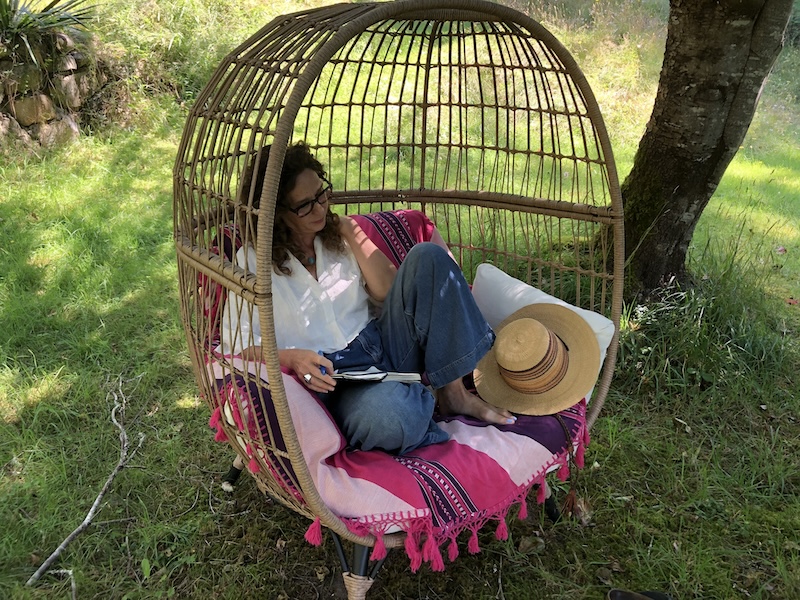
Tzeporah Berman: “I love this community. For me, it’s the place of my heart. It’s where I come home when I get overwhelmed by the work in the world. It’s where I feel part of a community again. It’s such a huge disconnect for me to be working in so many places around the world and not working here at home. It’s nice to be on your show, talking to Cortesians about this work and having things come full circle for me.”
Tzeporah’s Vision: Then and Now
Cortes Currents: How has your vision changed since Clayoquot, and where are you going now?
Tzeporah Berman: “When I started in Clayoquot Sound, I was very young, and the issues seemed very black and white to me. We shouldn’t be logging old-growth trees – trees that were a thousand years old and 300 feet tall – to make telephone poles and phone books. Anyone who considered doing that was wrong and a bad person.”
“The issues seemed very simple to me at 23. At 57, I can tell you that I think there are a lot more shades of grey than I ever realized. While the issue itself sometimes seems simple, the solutions, of course, are very, very complex.”
“Some things have remained the same for me over the past 30 years. I still believe we should be prioritizing the health of ecosystems. When we look at development, we should ask what kind of long-term ramifications it has for the health of our planet and, therefore, our own health. I believe – and I know – that we are dependent on healthy ecosystems, that humans are part of nature. That is definitely still part of what I believe.”
“At the same time, I now understand that these issues – whether old-growth logging, climate change, or fossil fuel development – are also intimately connected to justice and equity, economics, reconciliation, and Indigenous rights. Those are complexities I didn’t understand at 23.”
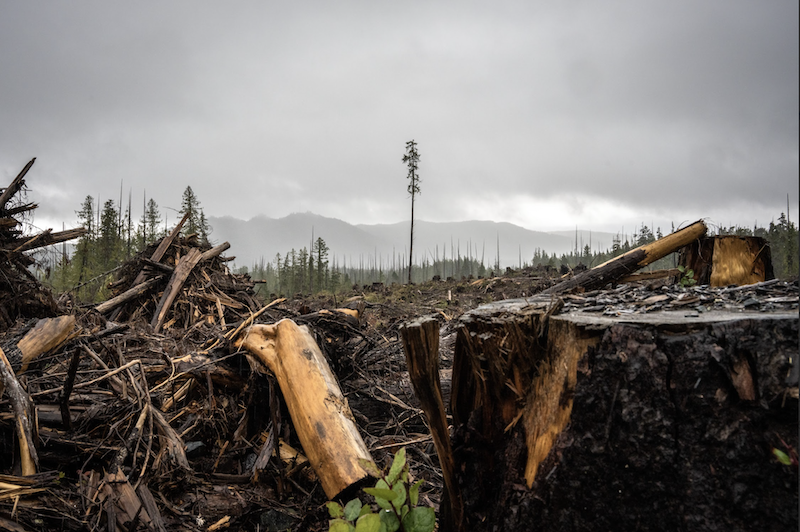
“It just seemed very clear to me: I’m going to stand in front of this bulldozer, and they need to stop this logging, no matter what. I hadn’t thought about – or even consulted with – Indigenous Nations about what they thought should be happening. I hadn’t really thought about the labour implications. I hadn’t thought about a lot of things.”
“That naiveté of youth is useful in some ways. It’s useful to crack open a door. But a blockade or a protest is not a solution; it’s a tactic. So the work of my life for the past 30 years has been trying to figure out how to build solutions while maintaining that sense of needing to crack open the door on issues.”
Good People on All Sides of Issues
Cortes Currents: Has your perception of the people on the other side of this argument changed?
Tzeporah Berman: “When I started out, I really thought there were good people and bad people, and I knew which side of the fence I was on.”
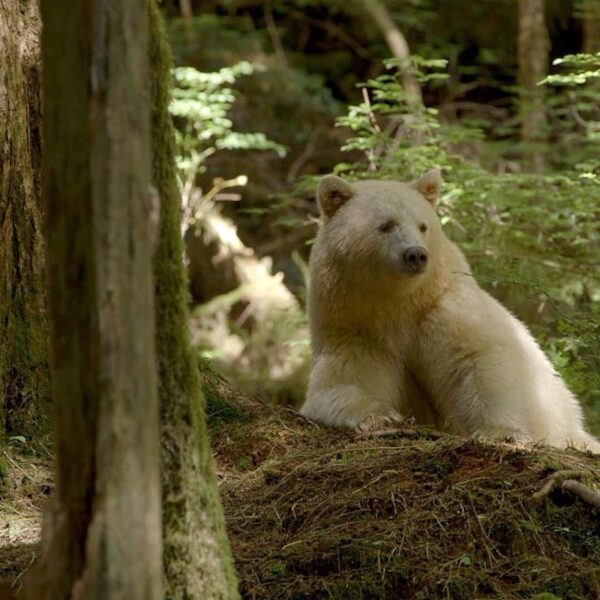
“What I realized through six years of deep discussions with the logging industry over the future of Clayoquot Sound, and then through the Great Bear Rainforest Agreement, and later through negotiations and discussions with the oil industry when I worked in Alberta, is that there are good people everywhere. There are good people who are stuck in bad systems.”
“So the question becomes: how do we change those systems? How do we find common ground with those people, use and build on their knowledge base, while also figuring out how to hold a line in the sand about the impacts those industries can have on communities and on the earth?”
“That’s the hard work. I think I now have a better and deeper understanding of people on all sides of an issue, and that the sides of issues are often drawn with imaginary lines.”
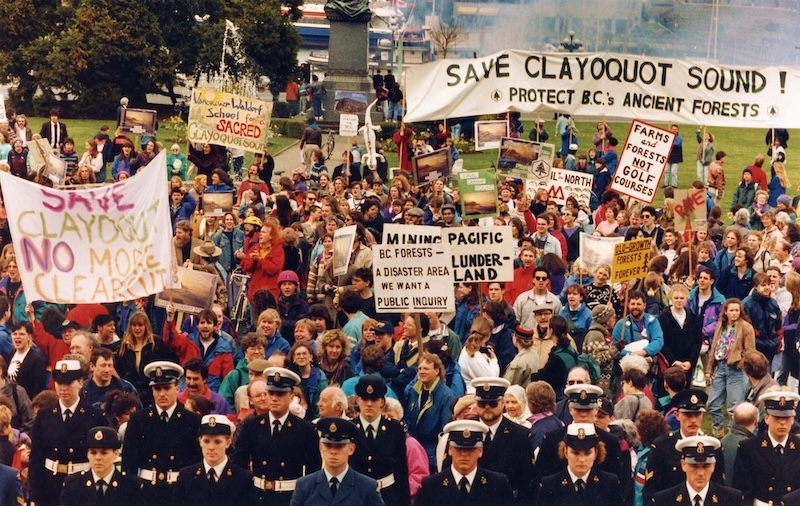
Cortes Currents: Can you give me an example of a time when you worked with someone whose perception of the issue seemed vastly different from yours, but in the end you were able to work together and achieve something?
Tzeporah Berman: “Probably my first awareness of this came during discussions with logging companies over the future of old-growth logging on the coast – specifically at Clayoquot Sound and eventually in the Great Bear Rainforest.”
“I ended up meeting with senior management from the logging companies, and there was a real moment for me. It may have been Bill Caferata from MacMillan Bloedel. I have this memory of sitting across the table from him and him saying to me, ‘Do you think I get up every morning and say, ‘How can I destroy more forests? I came into this work as a forester because I love forests.’ It was a shift for me. So I took a deep breath, and I remember saying to him, ‘Well, do you think I get up every morning and say, how can I destroy some of these jobs?’”
“I have family who have worked in the forest industry. I have family who work in the oil industry. It was an interesting conversation because we started from there, and then we began exploring our shared values.”
“We both wanted to create more jobs in our community. We both actually wanted to protect forests. As I got to know some of those chief foresters better, I realized they really did prioritize the health of the forest. So what was standing in our way? They were supporting massive clear-cutting of old growth at scale. I was saying, “No old growth should be logged.”
“How do we both hold those values? It’s that messy complexity of trying to figure out those decisions. There were moments where I thought, ‘Oh, I like this person, that’s weird.’ But that created a different conversation – a conversation about the messy middle. I think a lot of people avoid those conversations because they’re hard.”
“When you make a compromise, especially in what I believe – and know – is an age of ecological and ecosystem collapse, the agreement you come to is never quite enough. But it can also be historic. Those two things are a contradiction, but that’s what life looks like.”

Stand.earth
Cortes Currents: What led you to start Stand.earth?
Tzeporah Berman: “We started creating Stand in the late 1990s as a coalition. Then it became a formal organization called ForestEthics in the early 2000s, and we changed the name to Stand.earth around 2015.”
“We started Stand.earth because it was so clear to us that, if we wanted to solve the issues we cared about, we needed to follow the supply chain.”
“That ‘aha’ moment actually came on Vancouver Island, in Clayoquot Sound, in the early 1990s. Here we were, blockading and trying to stop the logging. At the time, 1,000 people had been arrested. I was arrested and charged with 857 criminal offences. I was 23 years old, and I was charged with aiding and abetting all the people who had been arrested so far.”
“Despite all that, and despite being at the top of the news, the logging continued. That forced me into this analysis: wait a minute, if the government isn’t going to listen to the people, and they’re not going to listen to all of this, what do they listen to?”
“I started following the money and realized that governments listen to companies, and companies listen to their customers and shareholders. That, for me, was the beginning of finance campaigning and supply-chain campaigning.”
‘Stand.earth was created as a research-based organization. We would follow the money and the supply chain, and figure out where the vulnerability in that chain was in order to build power to change an issue. That has shown up in different ways.”
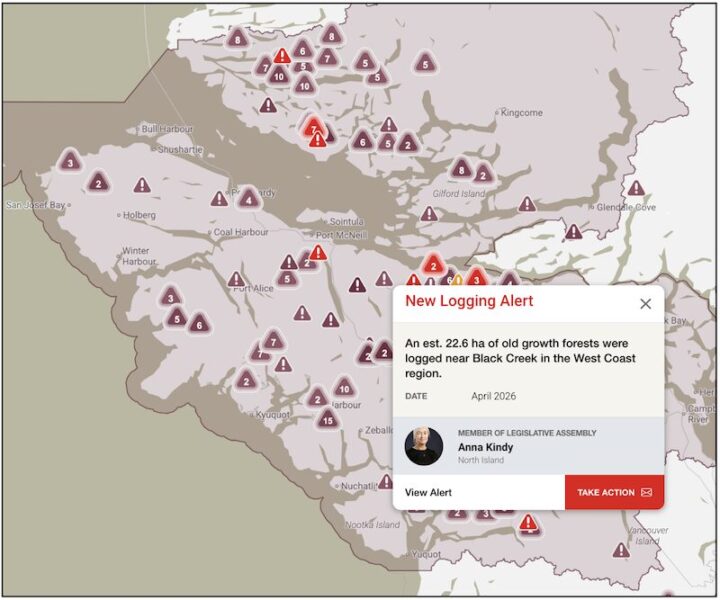
“Today, it shows up through our Forest Eye program, which is one of my favourite programs. For years, we would go to the government and say, ‘You promised to protect old growth, but old-growth trees are still falling.”
“They would say, ‘Oh no, they’re not. ‘We’re protecting old growth.’”
“And we would say, “I don’t think that’s true.”
“So we created an eye in the sky. It’s a satellite-mapping project that uses satellite data and research to show exactly which old-growth trees are falling. We can actually receive an alert on our phones when new old-growth logging starts happening anywhere in B.C. The satellite-mapping program sends out an alert, and we can zoom in and show exactly what is happening in B.C.’s forests.”
“They can’t lie to us anymore.”
The fascinating thing is that when we started showing this to some cabinet ministers, they were horrified. They said, ‘Oh, I was told we solved that issue. What do you mean we’re still logging old growth? Thousand-year-old trees are falling?’”
“They had no idea – the ministers themselves. That’s one of the programs.”
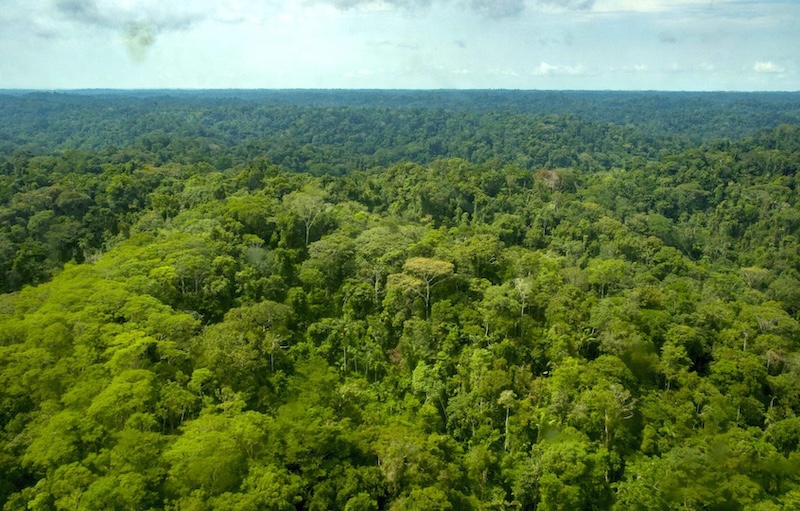
“When we started following the money in the Amazon, that was also fascinating. Some big banks in Europe had made statements like, “We protect the Amazon rainforest. We support Indigenous rights.”
“And I was like, ‘Do you? Well then, who is financing all this new oil drilling?’”
“So we started following the money and doing deep research at Stand.earth. We found out that while some banks said they didn’t fund oil drilling, they were funding the funds that were funding oil drilling. We were able to go back to some of these companies and say, “No, I’m sorry. You’re funding the oil trade, which is funding the oil drilling, so you’re lying.”
“Several of those banks then decided they would have to clean up their act. BNP Paribas was one of them. At the end of a two-year process, they moved £9 billion out of oil financing in the Amazon as a result of Stand.earth’s campaign.
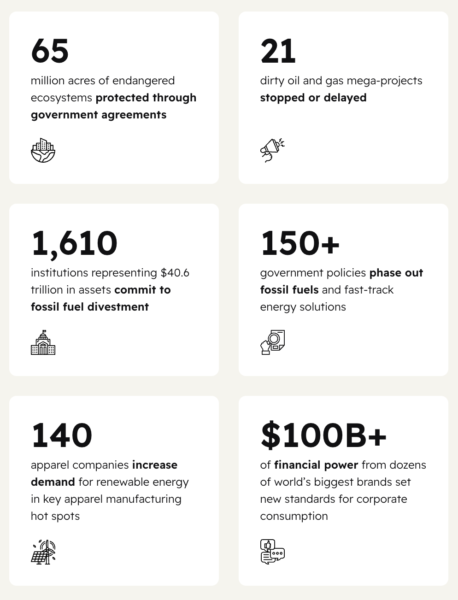
“It’s a tremendous organization. We work on fracking. We work on cleaning up the trade in wood and paper products. We work on old-growth protection. We work on cargo and shipping. There’s a Last Mile campaign that is trying to force Amazon to clean up its act in terms of the emissions associated with transporting goods.”
“It’s a really great group of people – scientists, researchers, and evidence-based campaigners – and they also include ways for the public to get involved in campaigns.”

“The fashion campaign last year researched how companies like Lululemon are using fracked gas to produce their leggings. It’s just so interesting, right? Who would have put that together?”
“It turns out Lululemon had one of the worst climate policies in the world, even though its whole brand is based on progressive ideals and frameworks around protecting community, the earth, and so on.”
“It was a two-year campaign. We held protests in front of Lululemon stores all over the place and used some really inventive tactics. Now Lululemon has entirely shifted its climate policy, and the company is investing in renewable energy.”
“It’s about building financial and citizen power to actually shift issues and make real change.”

Flying – And Developing Personal Relationships
Cortes Currents: There isn’t enough room to discuss Tzeporah’s latest project, the Fossil Fuel Treaty Initiative within the remainder of this broadcast, so I’m going to treat it separately – except to say that it requires Tzeporah to spend an incredible amount of time in airports and airplanes. When I mentioned this to her, I was thinking of the tedium and she brought up the airplane emissions.
Tzeporah Berman: “It’s such a huge contradiction, but what I discovered when I started working on the Fossil Fuel Treaty is that so much of this work is about personal relationships.”
“Colombia joined the Fossil Fuel Treaty several years ago. Whether they remain in it now, after their recent election, is another question. But they joined the Fossil Fuel Treaty, and it was a big shock to the world because they are the sixth-largest coal producer in the world.”
“President Gustavo Petro said, “We’re joining this because we know that every day we make the problem worse, and we can’t stop unless we have more international cooperation on this issue.”
“It was really exciting. That didn’t happen without personal relationships – meeting ministers face to face, talking them through the issues, and working with them. That is essential to building the trust needed for countries to stick their necks out and talk about this issue, especially when it is so hard to talk about.”
(New York, Sep 23, 2024 – Media Briefing on the need for a Fossil Fuel Non-Proliferation Treaty)
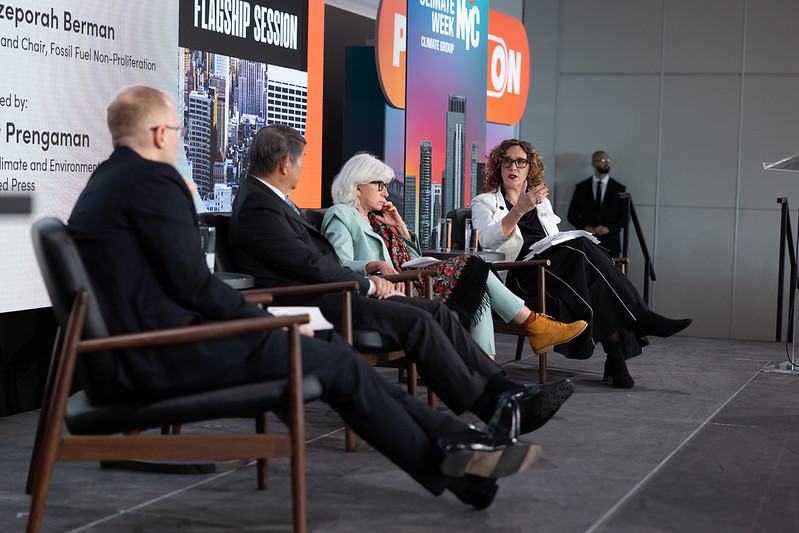
“Doing that virtually is almost impossible. I do a lot more work virtually now. I mean, I’m here for four months this year, working every day on Zoom from Cortes Island. But then I will go to the climate change negotiations in Turkey this year. I will speak from the main stage at New York Climate Week. I will probably go to the Pacific Island Forum in the South Pacific.”
“So I have a huge climate impact. Is it offset by my work in the world? I hope it is, but everybody has to make hard choices.”

Coming Home to Cortes Last May
Cortes Currents: Eight months of travelling, meetings, and conferences. Wow.
Tzeporah Berman: “I was so burnt out when I got back to Cortes in May. I was barely functional. I feel much better now. I probably had six hours of Zoom meetings today, but at the end of the day I get to run across the road and jump in the lake. So it’s a different life here on Cortes.”
Making a Difference
Cortes Currents: Is there anything else you would like to say?
Tzeporah Berman: “These issues are big, and they can be overwhelming. I feel very lucky that I get to be out there in the world doing this work, but not everyone does this to make a difference. I think this is a moment in our history that requires all hands on deck.”
“What we do today will affect how our children live in the future. Are they going to spend the majority of their time battling wildfires and extreme weather? Or are they going to be able to do whatever they want?”
“You and I got to go to school and decide to become a journalist or an environmental policy expert. I could have become a musician. That would have been fine. Can you do that now? Can you spend your time studying the arts and just focus on that when you know what your life is going to look like?”
“My kids worry about it. One of my kids is a firefighter here on Cortes because they worry about fires.”
“I think what’s really important is that people recognize that how we live our lives today, and what we engage in, will affect the future – and that you can make a difference.”
“I’m not just talking about what you buy. We think of ourselves now as consumers, not as citizens. It’s more important that you write a letter to your MLA and your MP, and that you dust off your placard and march, than whether you’ve saved up to buy an electric car.”
“This isn’t just about your personal consumption. It’s about using our voices as citizens to demand that our elected politicians act. You don’t have to be a rocket scientist. Tell them to stop building the bad stuff that’s hurting us and start investing in the good stuff.”
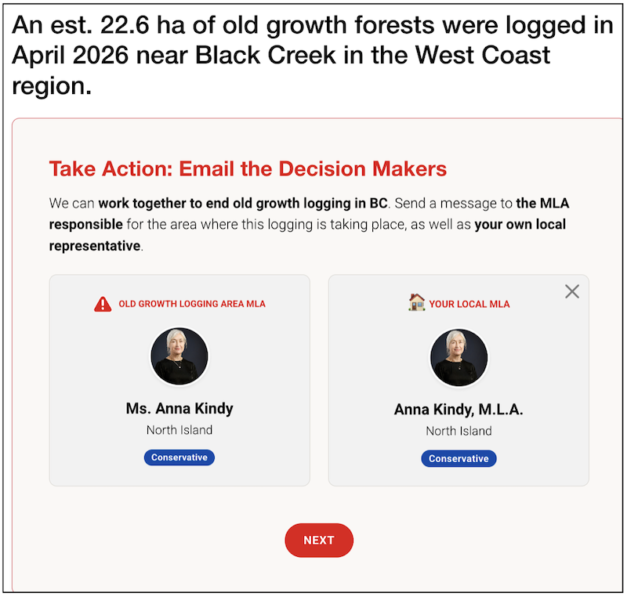
“Just tell them that you prioritize climate change. Tell them that you prioritize protecting our clean water and clean air. When they hear that, they understand that they are going to have to address these issues.”
“What I hear most of the time when I meet with cabinet ministers is, ‘Canadians are just worried about affordability and unity, so that’s what I’m working on.’”
“Well, if that’s all they hear from us, then that’s what they will work on. So let’s make sure they hear from you.”
“I also want to say, in closing, that people talk to me a lot about hope. They ask, “How can you work all day in climate science and still have hope, given what you’re seeing?”
“I don’t think hope is something we just get to have. I think it is something we create with our actions.”
“I love this work. I get excited by it every day. I think that if I didn’t have this work, if I wasn’t focusing on these issues, I would be so depressed. If you just doomscroll all day, it’s terrifying out there.”
“Start working with people you believe in, whether at a local, regional, national, or even online level. Don’t just worry – do something. Doing something brings us hope.”
“This is a moment in history when we need all hands on deck, and we need to create our own hope.”
Finding Common Purpose
Cortes Currents: Aaron Gunn, the MP for our riding, and Anna Kindy, the MLA, both believe in climate change, but it’s not a priority for them. I happen to agree with some of their issues, such as improving medical services and balancing the budget, but they are both Conservatives and have expressed support for building more pipelines.
Tzeporah Berman: “One of the ways I approach this with people who are ideologically on a very different end of the spectrum from me is to try to find common purpose.”
“I don’t need to convince Aaron Gunn – or anyone else – about climate change, because the solutions to climate change today are also some of the same things that will make our air cleaner, make our water cleaner, be renewable in the long term, be safer, be cheaper, and make our lives more affordable.”
“There’s this great comic I love. It has a picture of the planet on fire, with someone giving a lecture, and someone in the audience says, “But what if we make a cleaner, safer world and we didn’t need to?”
“I don’t need to convince you or anyone else that the climate is warming. I know it is. The data is there, and we are now living it every day.”
“Our country is literally on fire, and every scientific report in the last five years has told us that those fires are increasing because of climate change – and because of fossil fuels.”
“I’ve been looking steadily at the science for 30 years. I don’t actually care if you believe me. Just look at the price of renewable energy now compared to fossil fuels and ask why your country isn’t doing more.”
“Renewable energy at scale, along with electrification, is cheaper. We know that once those systems are in place, people’s bills are lower. Our lives could be more affordable, and our air could be cleaner, if we were using renewable energy and electrification. That should be available for everyone.”
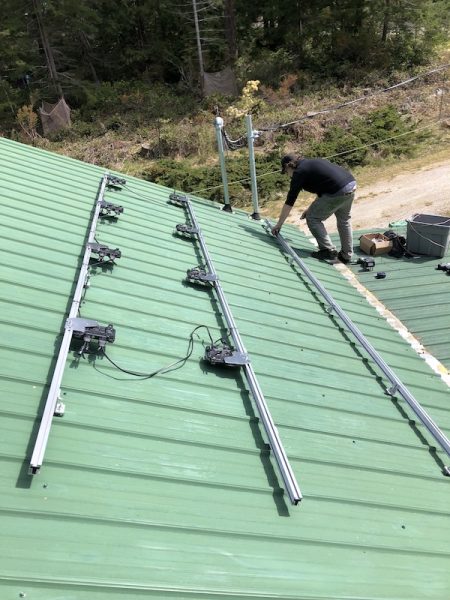
“Right now, it’s not cheaper for me. I can’t afford to put a solar panel on my roof. I don’t have a battery wall here on Cortes. I wish I did, given how much the power has been going out this summer, but I can’t afford it.”
“But it shouldn’t be left to individuals. It should be part of the system. Imagine if our government invested in diversified renewable energy and energy efficiency in the same way it invests in fossil fuels.”
“What would happen if they put $40 billion (the guestimated cost of the West Coast Pipeline) into energy efficiency, helping us retrofit our homes and ensuring diversified renewable energy? We would have lower bills to pay every month because you know what’s amazing about renewable energy? The sun doesn’t send you a bill at the end of the month like FortisBC does.”
“So it’s a different system. I think it’s important to focus on the benefits of the world we want to create, not just the problems we are addressing – especially if we can’t agree on the problems.”
“I bet we can all agree on affordability, and we can all agree on clean air. We don’t have either right now. Electrification and renewable energy – the solutions to climate change – are also the solutions to those two issues.”
Links of Interest:
- Fossil Fuel Treaty (website)
- Stand.earth (website)
- Forest Eye
- (Coming soon) Tzeporah Berman: Two Critical Areas That Must Be Addressed – Cortes Currents
- (Coming soon) Tzeporah Berman: On the West Coast Pipeline – $40 Billion Could Do A Lot More Elsewhere – Cortes Currents
- (Coming soon) Tzeporah Berman: The Fossil Fuel Treaty Initiative – Cortes Currents
Top image credit: The 1993 Clayquot Sound Logging Blockade – courtesy Stand.earth
Sign-up for Cortes Currents email-out:
To receive an emailed catalogue of articles on Cortes Currents, send a (blank) email to subscribe to your desired frequency:
- Daily, (articles posted during the last 24 hours) – [email protected]
- Weekly Digest cortescurrents – [email protected]