

The radio version of this story opens with a short clip from the documentary NameSake in which Dr Evan Adams welcomes viewers to Tla-amin territory. Then he adds, ”A lot of people who live here now don’t know us. They forget that all of this used to be ours, and that this city is still in our territory.”
NameSake will be playing in the House of the Klahoose People, on Cortes Island, at 2 PM on Tuesday, June 30. It is about the Tla’amin People’s connection to the ancestral village site that was taken away from them and renamed Powell River. Then they asked the city to change its name back to Tiskʷat. The film was screened at Hot Docs in Toronto, the DOXA Festival in Vancouver and will be shown at the Victoria Film Festival this coming July. In this morning’s interview we talk to Dr Evan Adams, who just welcomed you to Tla’amin territory, and Executive Producer Claudia Medina.
Audio clips from NameSake open, close and are partway through the podcast.
Claudia joined us during the second half of the interview. She is a qathat based filmmaker and editor, who works through her production company EnMedia. She has directed and edited for APTN and has been involved in this project from the onset.
Dr Evan Adams is a physician, currently serving with the First Nations Health Authority and National Circle for Indigenous Medical. He’s also an actor and one of the two Directors of NameSake. In the film, he guides viewers through history, memory and present conversation.
Trailer for NameSake
Naysayers and NameSake
Cortes Currents: Tell me how NameSake came into being?
Dr Evan Adams: “The conversation between the city of Powell River and the Tla’amin Nation has been growing for a few decades. In fact, we thought we had quite an exemplary relationship. But then, when we started talking about our objections to the name Powell—would the city consider changing their name?—that started a series of meetings that were quite acrimonious.”
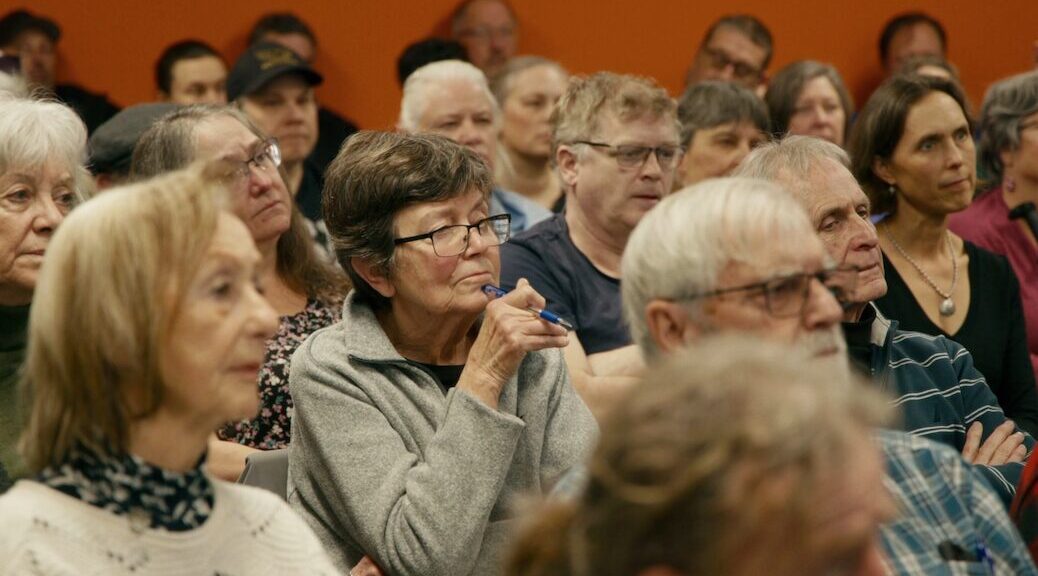
“We were not ready for that kind of reaction, and we were not ready for that kind of negativity. People were yelling at us. We thought we were talking about a name change, but they were saying things like: ‘There’s no such thing as Indigenous knowledge. Those residential school graves are empty. Survivors are exaggerating.’ And lots of other really racist generalizations—racist rhetoric—that we didn’t know were going to be part of every single meeting. So we just started recording it.”
“After a while, we thought: instead of this just being a record of what seemed to be endless ignorances—after you answer the first 20 questions, and you have to answer them again, and then you have to answer them again—when yet another person is saying those graves are empty—you start to think, ‘Well, this really isn’t a process. It’s something else.’”
“It’s probably happening in lots of other towns and cities across the country. The city of Vancouver is changing street names, and in Haida Gwaii they’re going back to traditional name places. Yeah—lots of other instances of reconciliation, and Indigenous people—particularly First Nations people—doing what they want within their own territories. We were trying to capture it and make sense of it, for sure.”
Cortes Currents: Was it just a few individuals who were quite loud, or was it more of a spectrum across the community?
Dr. Evan Adams: “At the beginning, we had no idea. It felt like this wave of anti-Indigenous racism might be the majority of people. After a few years of shooting, we realized we were seeing the same faces, hearing the same things over and over again.”
“I went to Hawaii, and there I was an ally supporting Native Hawaiians in their issues around land, investment, and marginalization and the like. I really wanted to be a good ally and I started to see allies in qathat.”
“Whereas before I was more focused on the naysayers, eventually we saw that there are lots of really beautiful people who are hearing us, seeing us, and who can hold dual realities at once.”
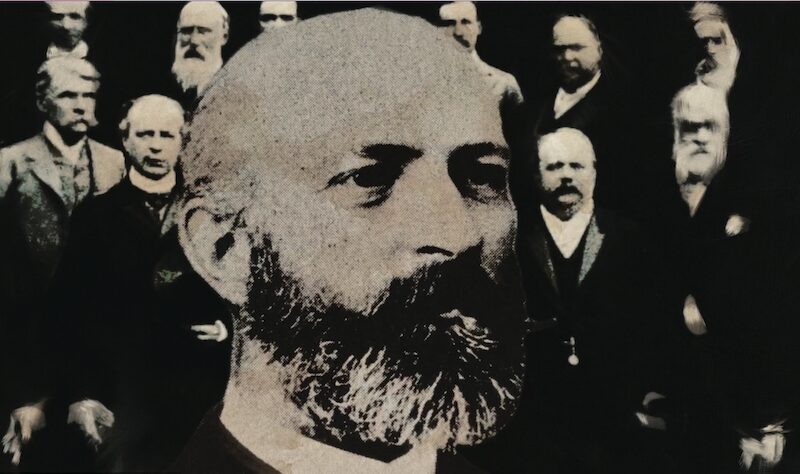
video clip: Tla’amin worldview does not name places after people.
Two Realities: Tiskʷat and Powell River
“It really is a plurality of realities. We look at a river—we see Tiskʷat. We see an old salmon run. We see our old village site. We see the beautiful waterfalls that used to be there.”
“For the townspeople, they see Powell River. They see their grandfathers working there, and that they made money, and that it was a nice town for them to prosper in. We see literally two different scenarios when we look at that river—and so they should.”
“I’m not sure why they’re not okay with that plurality of realities coexisting. They feel like they need to yell at us over and over again—like talking over us will help only their vision win over everything else.”
Historic clip from the film: “Powell River, a city of homes, well-kept gardens, relaxation after a hard day’s work.”
Woman’s voice: “Some people who are very invested in the idea that the community they built was a good thing—everybody worked really hard, and they love their community—and it was done the proper way. They are worried about the idea that it was unjust and it hurt people. It’s not an easy thing to acknowledge or accept. So they rely on histories that eliminated Tla’amin from the picture.”
Why make a Film?
Cortes Currents:Tell me a little about the mechanics. How did it go from being an idea to being a film?
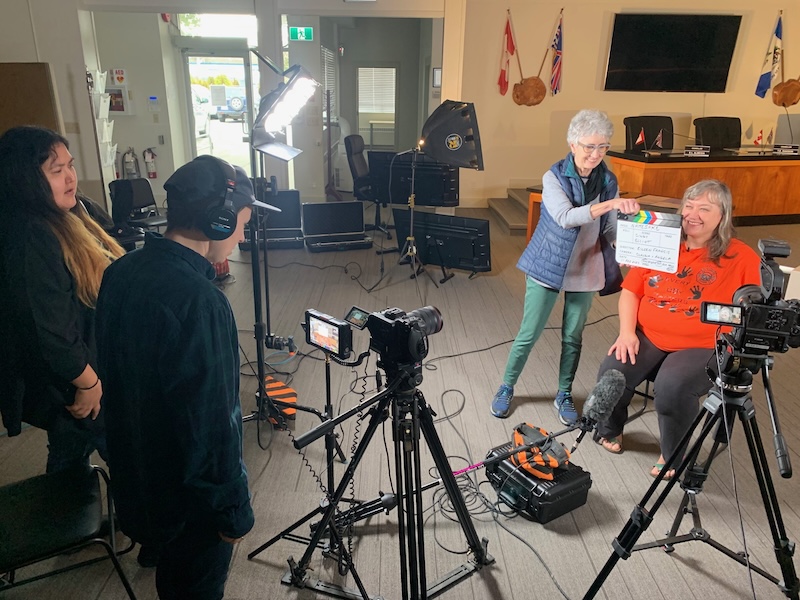
Dr. Evan Adams: “Well, I had done a film about 30 years ago about the treaty process. And partly, it was just functional—the treaty process forces us to document who lived here, who lived there. Who was your mom and dad? Who were your mom’s mom and dad? Where did they live? What did they do? When were they born? When did they die?”
“We had to log those basic things, and photo logging them was fine.”
Cortes Currents: Now they need a vehicle to communicate with the wider community.
Dr. Evan Adams: “People didn’t understand basic things like what’s a treaty. ‘Are you coming for our land? We won a war against you, and you guys are defeated.’ We had to say, ‘There was no war, and we are not defeated.’ These were very basic ideas we needed to explain in 1990.”
“So having done that, I thought: some of these ideas are quite complex. How can we try to explain them really, really quickly? So the idea of the film was born.”
The Tla’amin People’s Connection to Tiskʷat
Cortes Currents:Tell me about the Tla’amin People’s connection to Tiskʷat.
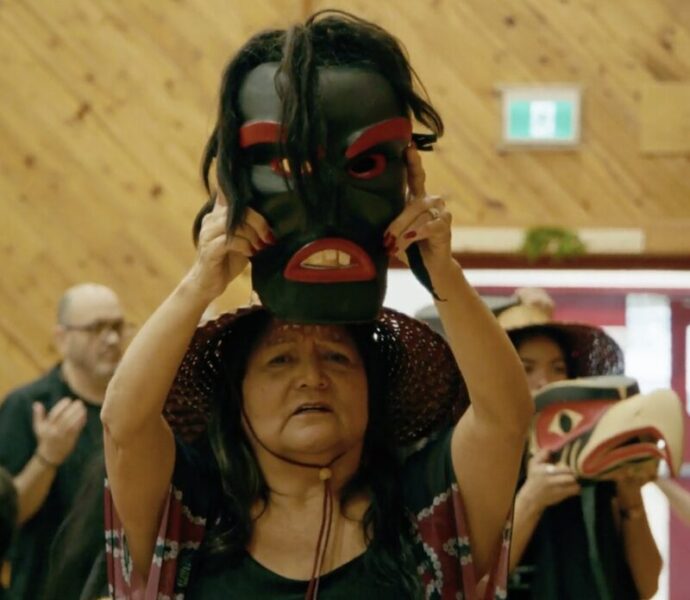
Dr. Evan Adams: “As a little boy, I would hear that our village site used to be where the mill is now. We were moved, and the town was set up in 1910. The process of moving us started maybe 15 or 20 years before that.”
“We knew the dam was making electricity. We knew that’s why it had been put there. And we were told there used to be a beautiful waterfall, and our village was there. It’s all gone now. It used to be a salmon river. It was just common knowledge for us that we had been moved to a site about six kilometres north of there.”
“My dad was very insistent that I be on the land with him. I think partly because my parents met in residential school, and my mother didn’t know our territories very well. My dad said: ‘You’re good at school, Evan. You’ll do fine if I take you out of school a day here and a day there—and we go on the land.’”
“He really didn’t want me to be useless. He really thought that if I didn’t know how to find a fish, how to cut a fish, or how to cook a fish, then what the hell are you going to do? You can’t read a book for a living. You have to be able to know this place.”
“He really felt like only stupid people wouldn’t prosper in our territory, because it’s so wealthy and full of resources.”
“So I was on the lands and waters all the time in all these beautiful places, and being told stories about who was there and what happened here and what happened there.”
“It felt kind of strange—because my dad was talking at me a lot—but it was also very fortunate, because not everyone got that kind of education.”
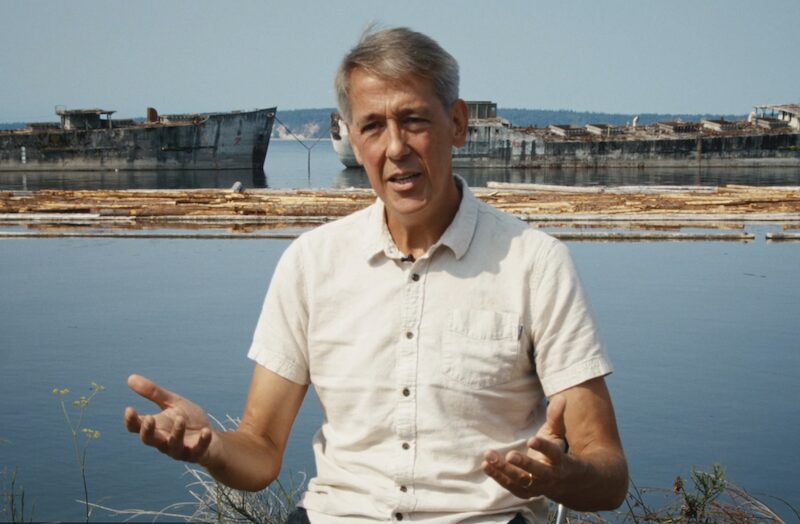
Cortes Currents: In the film, an archaeologist mentions evidence that Tiskʷat has been occupied for 12,000 years. Tell me about your people’s antiquity.
Dr. Evan Adams: “Well, talking to the archaeologists was part of the film—because we wanted to say: what does the record say about our presence here, in our territories?”
“Within our own village, we have an archaeological site that’s thousands of years old—among the top five oldest archaeological sites in the province. It’s just beside my cousin’s house, but that didn’t surprise us.”
“Everywhere you go in our territory, there are middens, arrowheads, and spear points—just lying on the ground.”
“It’s just not uncommon to see evidence of our presence in so many places. We tell that story in the film, and I wish I knew it better.”
“We have five old village sites within our territory. We don’t talk about them a lot, because we don’t want people going there and saying, ‘Oh, let’s go collect arrowheads. Let’s dig here or there.’ But we’re very interested in our past, and that’s very much tied to our inherent rights and title. We have rights and title to occupied lands—culturally modified lands.”
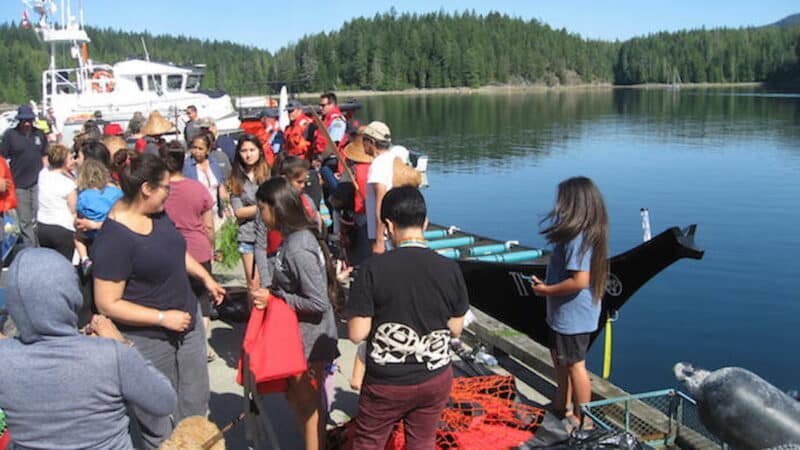
Tla’amin’s Sister Nations
Cortes Currents: I’m told that the Tla’amin, Klahoose, Comox, and Homalco were one people. Do you know when they separated and became the different First Nations we know today?
Dr. Evan Adams: “We know that Comox, Klahoose, Homalco, and Tla’amin were once united, because they speak the same dialect.”
“Those villages are several kilometres apart, and we know from how we used to live that traveling by boat between each other was really common.”
“It’s way less common now. It’s almost like modernity— even though we have modern boats—keeps us from one another, because we’re time-poor. We don’t have the time to go and see each other, but back then we did. We were always told, ‘Oh, we used to travel up and down.’”
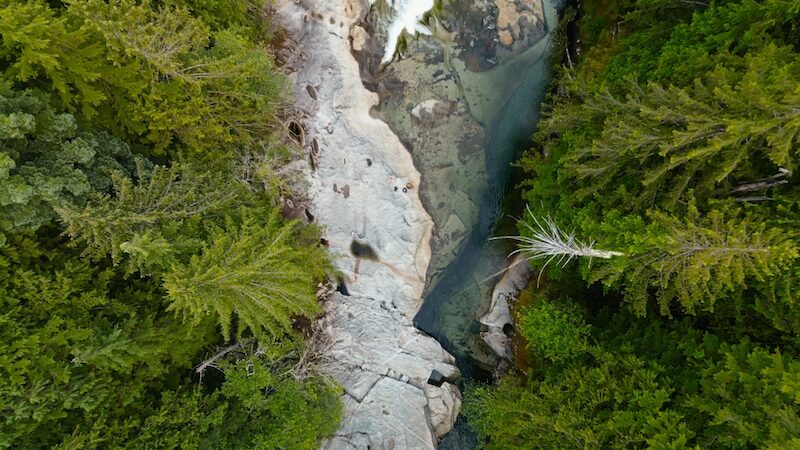
The Reservation System
“The reservation system came into existence with the Indian Act in the 1870s and ’80s. They started a system of cataloging—documenting people’s lands, and where they could put Indigenous people on reserves.”
“We’re always asked: ‘Why are you living on reserves?’ Well, we didn’t put ourselves there. You put us there. We were put on reserves to open up the land for Canada and British Columbia—so settlers would have access to our lands.”
“The Indian Act also restricted our movement, restricted our employment, and restricted us culturally and linguistically. All of that meant the natural connections we had between our villages were starting to break down.”
“In fact, it used to be illegal for us to leave our reserves, and illegal for non-Indigenous people to come onto the reserves. That’s how restrictive the Indian Act was.”
“We don’t talk about the Indian Act a lot in the film. But certainly, those structures and policies were meant to open up the land—and, at a great cost to us—not just with the loss of our lands, but with the loss of a lot of other things as well.”
“We have a reserve site close to where I live in Lund. It’s tiny, and so remote that I’ve never been there. Even though it’s on the mainland, you can only get there by boat. I think it’s reserve number two or number three—but the main reserve site is Tla’amin proper, where I grew up, and where my mother still lives.”

The Screening at Klahoose
Cortes Currents: What does it mean to have a screening here on Klahoose—being as it’s a sister nation?
Dr. Evan Adams: “We know that Klahoose is facing very similar issues to what we are.”
“We’re concerned about our sister villages, because they’re literally our cousins just over there. We want them to know what’s happening with us.”
“A film is a really good way to tell the story of what’s happening right now in Tla’amin—and it does it in a very compact way. For us, it’s 85 minutes, describing an incredible story we’ve been living for many years.”
“Just because we’re telling a good and interesting story doesn’t mean it’s not serious. And we want our cousins to know what’s happening—because we know they’re going to learn from it.”
“We know they care about us too, because they’re our cousins. They want good things for us. And this story of Tla’amin may be coming their way—if it isn’t already there.”
“Some of the residential-school denialism and the anti-Indigenous racism that’s so commonplace in social media is already affecting them, for sure.”
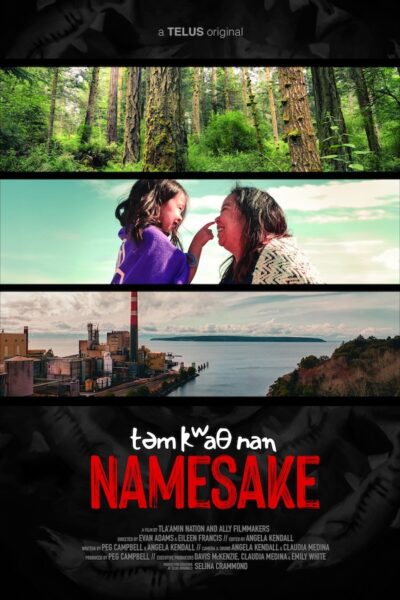
Screenings
Cortes Currents: Tell me about some of the other screenings.
Dr. Evan Adams: “Sure. Hot Docs—where we premiered the film—is one of the largest documentary film festivals in the world. It’s in the top ten. They viewed over 2,800 films to choose the 100 or so that would show at the festival.”
“We felt so lucky to have our premiere there. They had a red carpet, and lots of extraordinary documentary filmmakers who were screening.”
“We were excited and nervous to show the film to the public.”
“Before that, we had community screenings. We showed it, of course, to the people of Tla’amin a couple of times, and we had a couple of screenings in town—because lots of townspeople are in the film.”
“It was heady, but also nerve-wracking. I didn’t think—until our fourth screening, after Toronto and after Vancouver—that I started to feel a little more confident and less nervous about what audiences were going to say. Because I thought we were kind of harsh.”
“The Victoria Film Festival has an Indigenous portion, so we’ll be screening there. Oddly enough, another of my older films—where I’m an actor—has just been remastered, and it will also be showing. It’s a dramatic film called The Business of Fancy Dancing, and it’s been remastered, and it will also be showing.”
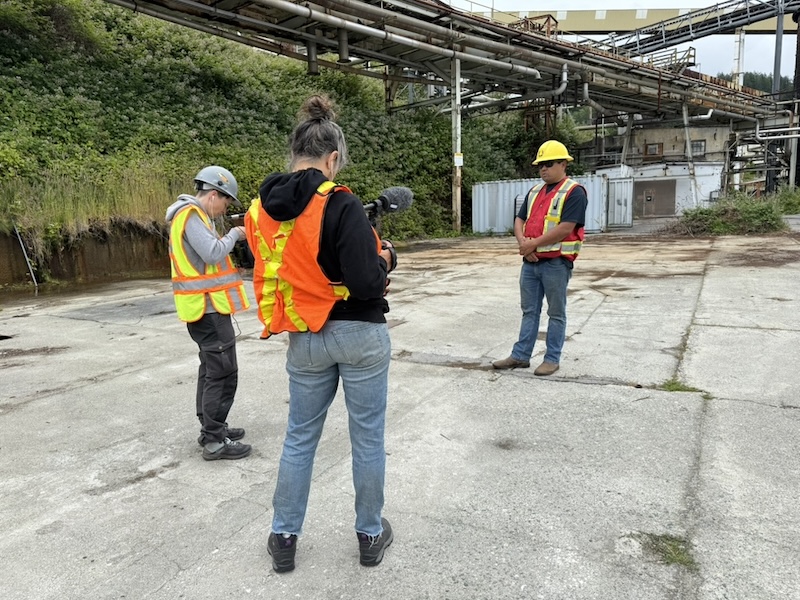
The Situation in Powell River
(Claudia Medina arrived at this point.)
Cortes Currents: Will there be a referendum about changing Powell River’s name during the Oct 17 2026 election?
Claudia Medina: “There won’t be a referendum. They had wanted an opinion poll—one advocated for by some of the concerned citizens—but that’s no longer happening.”
Dr. Evan Adams: “We’re happy about that. We felt like an opinion poll wasn’t a process. We’d rather have the other parts of the community agreement fulfilled before any kind of voting happens.”
Claudia Medina: “The very last recommendation was that if none of the other aspects had been addressed, then that would be the last-case scenario.”
Cortes Currents: How is the healing process going now? And is the film helping?
Claudia Medina: “I would say that, at this point, there really is no process. The current council is gearing up for the next election, but there hasn’t been any initiative taken—particularly around leadership—to go forward.”
“However, the film has been screened by a lot of community groups. We just had a screening with 150 people, and there have been a number of different groups in the community that have voluntarily decided to do their own screenings.”
“The feedback we’ve gotten has been generally really, really positive. There seems to be a lot of interest—and renewed interest—in wanting to engage, understand why the request came, and deepen their understanding.”
“So it feels like the film, in my opinion, has contributed to a lot of positive outcomes—outcomes we’re hoping to build into whatever the next election outcome will be. Unfortunately, there are people running in the election who are at the forefront of being against the name change and against reconciliation in general, I would say.”
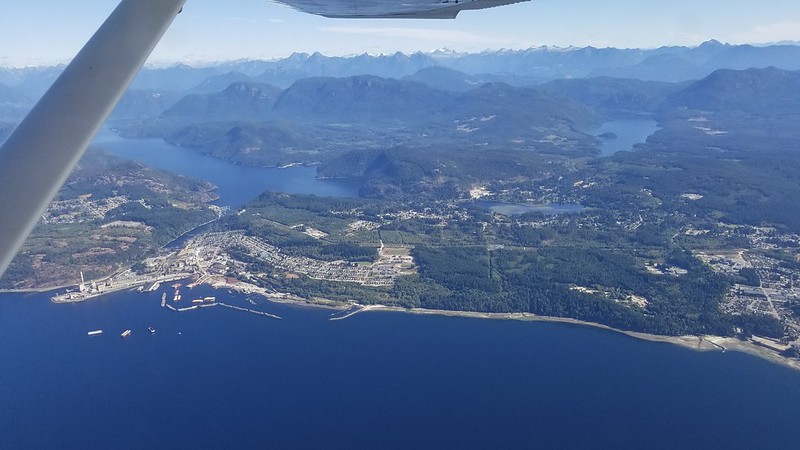
Cortes Currents: Evan, you mentioned people making a lot of ignorant comments during some of your earlier meetings. Is that still happening?
Dr. Evan Adams: “I feel like recently—just in the last month or so—people online are being more careful about what they’re saying. I think it’s partly because there’s an election coming up, and some people are running for city council, so now they can’t just say anything they want.”
“They have to appear to be at least somewhat sophisticated—to show some understanding of what it means to be in a relationship with us. I get the sense that it’s become a bit more decorous.”
“We expected that, because it’s one thing to lead, but it’s another thing to govern. I always thought that if you’re a leader, you’re looking after people—but you can look south of us and see leaders who aren’t.”
“So when we went to city council meetings, and city council made room for naysayers—people making openly racist generalizations about Indigenous people and bringing in openly racist speakers—that didn’t feel like a real process.”
“Recently, city council hasn’t been doing much in terms of its relationship with Tla’amin, but at least they’re not hosting racist forums anymore. Hopefully that continues. Hopefully the new mayor and council will understand that we are in a relationship.”
“Sure, we can disagree—but we’re pretty evenly matched. Tla’amin has a vast territory and lots of natural resources—like water and forest—which are helpful to the citizens of Powell River.”
“So why be a jerk to us? It’s incompatible with life. To me, it’s like men who are sexist. If you treat women like that, do you really think women in your family will stick around? They won’t. So anywy, we’re trying to remind people: don’t be a jerk.”
“We expect, definitely Tla’amin expects, a relationship. We expect their governance—the mayor and councillors—to be decorous and sophisticated, and to speak to us with an agenda, so we can get to things—rather than this… I don’t even know what to call the last couple of years of the process, but it’s been less than productive.”
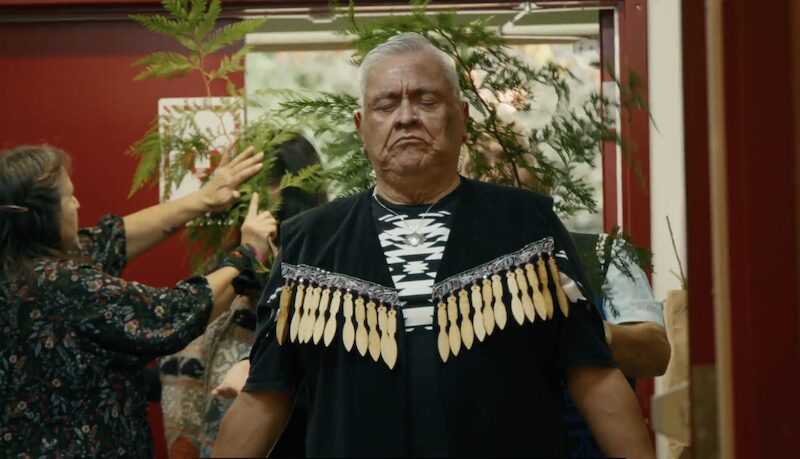
What Do You Want To See?
Cortes Currents: You mentioned 11 points you want to happen before there is a decision made. What are those? What do you want to see?
Dr. Evan Adams: “Those are part of the community accord. They’ve been written down for quite a while—you can go back and see them. There’s an expectation in there of having a relationship and a process.”
“So we will meet a certain number of times. We will have a nation-to-nation relationship. We will have a ceremony, to help us get over hurt feelings—because there has been a lot of muck thrown around, including undermining residential school survivors.”
“There are many residential school survivors in Tla’amin. Having them disbelieved is an effrontery—and ceremony can help us all get past it. That’s the gist of what the other points are, before an opinion poll: education, a process, a formal relationship, and ceremony.”
Claudia Medina: “And that the municipal government gives directives that take the DRIPA into account as well. That’s one of the recommendations.”
Cortes Currents: Do you have anything you want to add?
Claudia Medina: “One thing is how positive the response has been. Even within the very beginning of this process—before we even started formally making the film, which was an opportunity for people in the community to learn the story of this community, this region, from a Tla’amin point of view—I think it opened up so much possibility.”
“There were a lot of people who were really engaging and wanting to know more. It did get derailed by some people, but it’s a process that’s ongoing. I don’t think the film itself—or even the name change—is the end of the story. It’s a continual story. It’s a bigger part of who we are and what we’re trying to become. That’s why it resonates with other communities as well.”
NameSake will be shown in the House of the Klahoose People, 1740 Tork Road (just past the Klahoose Multipurpose Building) at 2 PM on Tuesday, June 30.
- Door opens: 1:45 pm
- Film starts: 2:00 pm
- Snacks available
- Discussion period starts: 3:30 pm
- Cash donations accepted at the door — suggested donation: $10
Links of Interest:
- NameSake (website)
- Hots Docs to screen film documenting endeavour to change “horrific” city name– Windspeaker
- Tla’amin Nation set to reclaim village of tiskʷat 151 years after it was taken: ‘It’s like a long lost relative’ – IndigiNews
Top image credit: Gathering at the library for a talk titled: Who was Israel Wood Powell – All images Courtesy Namesake
Sign-up for Cortes Currents email-out:
To receive an emailed catalogue of articles on Cortes Currents, send a (blank) email to subscribe to your desired frequency:
- Daily, (articles posted during the last 24 hours) – [email protected]
- Weekly Digest cortescurrents – [email protected]