

By Sam Laskaris, Windspeaker, Local Journalism Initiative Reporter
A documentary about a First Nation’s request to have the name of Powell River, B.C. changed will have its world debut at Toronto’s Hot Docs Festival this month.
The film, titled təm kʷaθ nan – Namesake, features interviews with members of the Tla’amin Nation, who have spent years attempting to get the name of its neighbouring city altered. According to Tla’amin belief, as stated in the film’s trailer, names carry history, teachings and responsibilities. Powell River gets its name from Israel Wood Powell, who served as B.C.’s superintendent of Indian Affairs for 17 years from 1872 to 1889.
Powell played a key role in the establishment of Indian residential schools. He also had a role in banning the potlach and in the theft of portions of Tla’amin Nation lands.
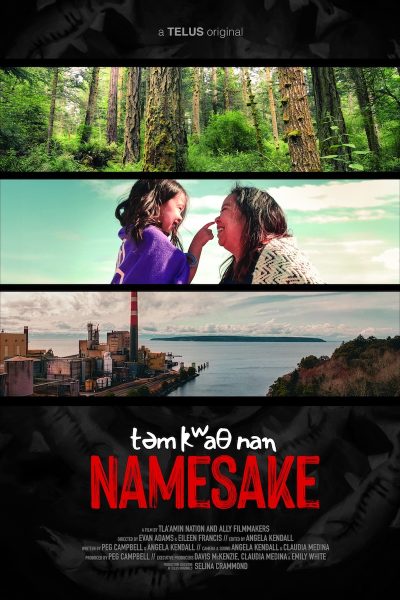
təm kʷaθ nan – Namesake has been in production since 2022. The film will screen April 29 and April 30 at the TIFF Lightbox.
Tla’amin Nation members say they have been getting the runaround from Powell River city council, which keeps kicking action on their request down the road.
The film’s co-director Eileen Francis said when the name change issue first arose four years ago, city council members said they would defer a decision because the next municipal election was approaching. Then, during the term of that next council, a referendum among Powell River residents was proposed but eventually nixed.
Powell River council voted this past February to postpone further action on the name change until a new council is elected this October.
“It’s just been going from city council to city council,” Francis said. And she’s not hopeful of getting an immediate result this fall after the 2026 municipal election is staged.
“I’m not entirely sure of the process,” Francis said. “But the new city council will have to be briefed on what has been going on. And once they’re up to speed, then they hopefully get the ball rolling.”
The film’s other co-director, Dr. Evan Adams, is not surprised this issue has been dragging on for years.
“I think this is really a generational change,” he said. “I think some of the questions we’re examining have been around for a really long time. And we’re not going to solve them very quickly.”
Adams said it took quite some time for Powell River representatives to simply get into the same room and talk to Tla’amin officials.
“We had solved one problem with just having a relationship with the town, which meant that we could speak freely,” he said. “And then came the question of ‘By the way, the name of your town is horrific to us’.”
Adams said when work commenced on təm kʷaθ nan – Namesake, he wasn’t encouraged the film would have a different ending with an announcement that Powell River would agree to a new name.
“I wasn’t really invested in the outcome so much as the process,” he said. “We’ve had so many other precedents across the country. I just knew it was a very normal process but not a fast one.”
Adams is confident, however, that Powell River officials will one day agree to a name change.
“I feel like it is an eventuality,” he said. “I feel like we’ve been very clear.” Adams said Tla’amin Nation members have been adamant they don’t want Powell’s name used in their territory.
“He’s never been to our territories,” Adams said. “He’s so horrific to us… So, yeah, I feel like change is inevitable.”
Both Francis and Adams hope the film will sway opinions.
“We had a screening for the (Powell River) school district,” Francis said, adding teachers approached her afterwards. “And one of the questions was, ‘what was your wish for the film?’ And I said that I wish people just learned something from it. There’s a takeaway from it.”
Adams said he believes the film will be educational.
“I work in medical education,” he said. “I help train doctors and we talk about unlearning and relearning. And I never understood what that meant until this film.”
Adams said the documentary aspires to change perceptions of First Nations people.
“I’m certain that we will teach and we will help people unlearn their baloney because, my gosh, those racist tropes and generalizations about us are alive and well in Canada,” he said.
“The unbelievable privilege and ignorance of Canadians and their lack of knowledge about us is stunning. So, I feel like we’re trying to do our part and we’re doing it with as clear and passionate a voice as we can.”
Adams also believes that the majority of Powell River residents would not mind if their city name was changed.
“I think they are the majority,” he said. “I really think this very vocal, very dissonant group who are, I hate saying this but they seem kind of ignorant and dated with their protesting. They really seem to rely on some very simple beliefs and perceptions,” including the belief residential school survivors are exaggerating or outright lying about their experiences in that system.
“This vocal minority to me are very different than the majority of people that we encountered in our territories who would seem to be knowledgeable and sympathetic,” Adams said.
Adams said Tla’amin Nation members have encountered an increase of anti-Indigenous racism since they started filming the doc.
“We thought we were doing a film about a name change,” he said. “But it turned very dark and I think there is this underbelly. We look just south of us (to the United States) and you see this dark, racist underbelly. It surfaces here. So, I hope Canadians learn from the tale of our town and our territory.”
The Hot Docs Festival begins April 23 and continues to May 3. More festival information is available at https://hotdocs.ca/festivals/hot-docs-festival
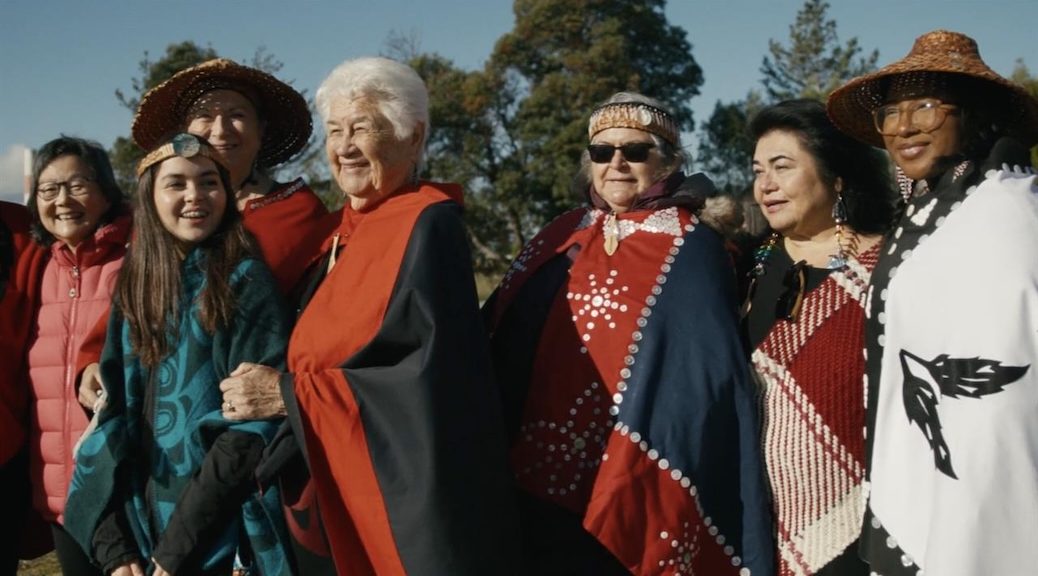
Top image credit: Group of Tla’amin women celebrate the return of tiskʷat – təm kʷaθ nan – Namesake press lit

Sign-up for Cortes Currents email-out:
To receive an emailed catalogue of articles on Cortes Currents, send a (blank) email to subscribe to your desired frequency:
- Daily, (articles posted during the last 24 hours) – [email protected]
- Weekly Digest cortescurrents – [email protected]