

Canada’s National Observer, Local Journalism Initiative Reporter
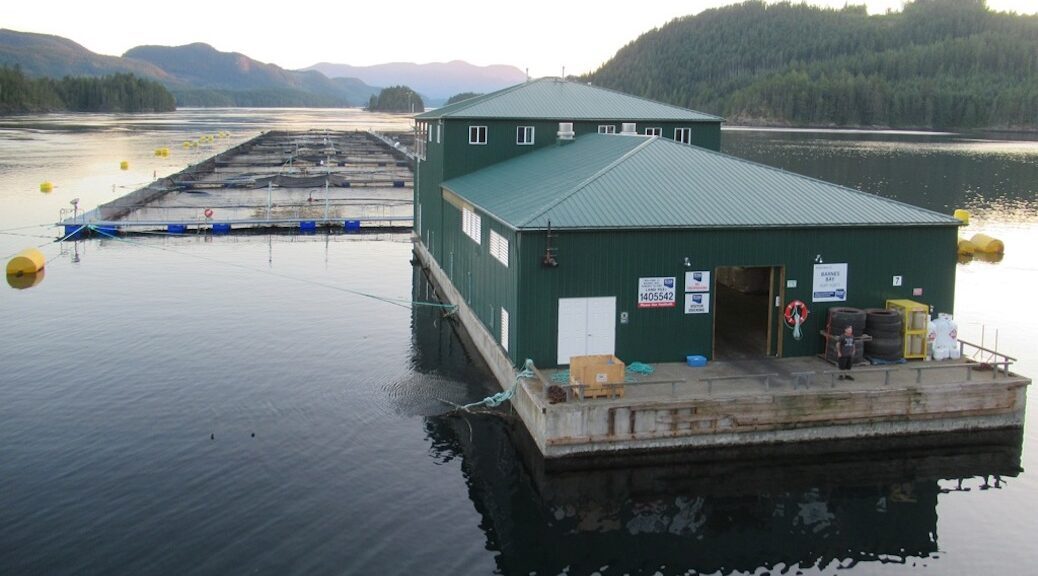
Conservationists and many First Nations are celebrating a Federal Court of Appeal decision that upholds the closure of salmon farms in BC’s Discovery Islands.
A battle over the ultimate fate of open-net pen salmon farms in the region’s waters, between the mainland and northeastern Vancouver Island, has spanned close to five years.
After consulting with area First Nations, former fisheries minister Bernadette Jordan announced the phase-out of open-net pen fish farms in the region — a critical migration route for plummeting Fraser River salmon stocks.
The appeal court’s ruling echoes an earlier decision by the Federal Court in June 2024 that found the Fisheries and Oceans (DFO) minister had a right to refuse aquaculture licenses in the region because of conservation concerns.
It’s a big win for wild salmon, said Stan Proboszcz, senior science and policy analyst at Watershed Watch Salmon Society.
“I’m pretty thrilled,” Proboszcz said. “I’m no lawyer, but I do feel this is kind of the final decision on these matters with regards to the Discovery Islands.”
The decision is also a strong signal to the multinational fish farm companies operating elsewhere on the West Coast to stop taking the federal government to court and start preparing to comply with the federal government’s promise to phase out ocean open-net pen salmon farms by June of 2029, Proboszcz said. Fish farming in the province can continue after that date but must use closed containment technology.
“I just think they should stop stalling, wasting Canadians time and money and start focusing on winding up their operations,” Proboszcz said.
As well as affirming the DFO’s minister’s broad discretion to take a “precautionary” approach, the court noted the dire impacts declining wild salmon stocks could have on First Nations rights, the economy, and the social fabric of British Columbia, said Imalka Nilmalgoda, lawyer at Ecojustice.
The environmental law charity represented conservation groups David Suzuki Foundation, Georgia Strait Alliance, Living Oceans Society, Watershed Watch Salmon Society, and independent biologist Alexandra Morton in the case.
The only remaining legal avenue that the aquaculture company MOWI Canada West may have to challenge the Discovery Islands decision is appealing to the Supreme Court of Canada, Nilmalgoda said.
However, the Supreme Court doesn’t automatically accept all cases and tends to focus on issues of national importance or that clarify unsettled areas of law, she said.
“If the Supreme Court of Canada didn’t agree to hear the case, then the Federal Court of Appeal judgment stands, and that’s kind of the end of the legal line,” she said.
MOWI Canada West, which brought the court appeal, and the BC Salmon Farmers association did not reply to questions or requests for comment from Canada’s National Observer.
The Coalition of First Nations for Finfish Stewardship was also unavailable for comment before publication deadline.
The coalition is an alliance of First Nations that have agreements with fish farm companies operating in their territories and oppose Ottawa’s plan to phase out open net-pen salmon operations.
The group asserts that First Nations have the right to decide on aquaculture operations in their territories. The alternative, they say, endangers their communities’ social and economic development and ability to manage resources in their traditional waters.
Bob Chamberlin, chair of the First Nation Wild Salmon Alliance, said reaction to the case from nations opposed to fish farms has been positive and immediate.
“It’s very significant,” Chamberlin said of the ruling. “I’ve talked to chiefs across the province yesterday, and everybody is very pleased.”
Since the farms were shut down in 2022, sockeye salmon runs on the Fraser River have improved, Chamberlin said.
The aquaculture industry disputes that improved runs are tied to fish farm closures.
Chamberlin expressed concern about the federal government’s silence on the plan to phase out salmon farms since Prime Minister Mark Carney was elected. Aquaculture corporations operate on three to four year cycles and, without clarity from Ottawa, companies may continue to hatch eggs and raise juvenile fish that can’t be grown to maturity before the deadline, he said.
Failure to reaffirm commitment to phasing out open net-pen farms could make the government vulnerable to legal claims from companies about procedural fairness later on, Chamberlin said.
“I think everyone is wondering, where is the response from this new government if they’re going to uphold that policy announcement and that timeline?”
Links of Interest:
- Federal Court of Appeal Dismisses Mowi’s Challenge – Cortes Currents
- Articles about, or mentioning, fish farms in the Discovery Islands
- Articles about, or mentioning, pathogens in salmon
- Articles about, or mentioning, sea lice
Sign-up for Cortes Currents email-out:
To receive an emailed catalogue of articles on Cortes Currents, send a (blank) email to subscribe to your desired frequency:
- Daily, (articles posted during the last 24 hours) – [email protected]
- Weekly Digest cortescurrents – [email protected]