
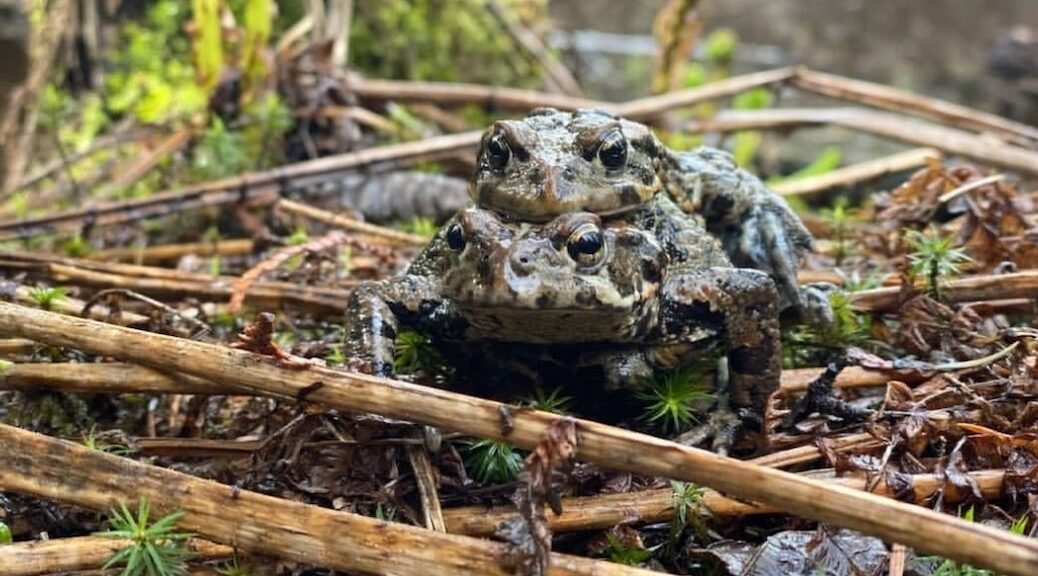
The study finds that frogs and salamanders are moved by the millions, along with smaller numbers of snakes and other reptiles, to clear the way for pipelines, culverts and other development.

By Lou Bosshart, UBC News
New research shows that more than five million amphibians and reptiles were relocated to make way for development in B.C. between 2019 and 2022, yet there is no requirement to determine whether they survived.
Moving millions, tracking few
The practice, called mitigation translocation, has been standard in B.C. for over a decade: before breaking ground, proponents obtain a provincial permit and move amphibians and reptiles off-site. What they’re not required to do: determine if those animals survive.
“With no legal requirement to monitor outcomes, we have limited evidence whether these efforts work,” said Megan Winand, lead author and recent UBC master of science graduate.
The study finds that frogs and salamanders are moved by the millions, along with smaller numbers of snakes and other reptiles, to clear the way for pipelines, culverts and other development. Researchers found that 227 permits documented the relocation of 5.1 million amphibians and reptiles from 28 species.
Calls for reform
Amphibians are among the most threatened vertebrate groups globally, and both amphibians and reptiles play critical roles in ecosystems—helping control insect populations, serving as prey for birds, mammals and fish, and acting as sensitive indicators of ecosystem health.
The authors call for habitat avoidance as the first line of protection—prioritizing early project decisions such as rerouting infrastructure or redesigning crossings to prevent impacts altogether—supported by mandatory monitoring and standardized reporting when relocation cannot be avoided.
“Translocation should be a last resort—something you do when avoidance isn’t possible,” said senior author Dr. Tara Martin, a professor and Liber Ero Chair in UBC’s faculty of forestry and environmental stewardship. “Instead, it’s become routine. We are making consequential choices for millions of animals without knowing whether they survive.”
Top image credit: Western Toads (breeding pair). Photo credit: Zac Wulf Gillrie
Sign-up for Cortes Currents email-out:
To receive an emailed catalogue of articles on Cortes Currents, send a (blank) email to subscribe to your desired frequency:
- Daily, (articles posted during the last 24 hours) – [email protected]
- Weekly Digest cortescurrents – [email protected]