
(Interview by Manda Aufochs Gillespie; written version by Roy L Hales)

On Friday, June 5, host Manda Aufochs Gillespie welcomed three women from neighbouring islands to Folk U Radio. Renate Harvey and Renée Desautels from Sonora Island and Sheila Hollanders from Read Island talked about their lives, families, communities and hopes for years to come. This is the first part of a highly edited and abridged version of that interview.
Manda (Host of Folk U): Today, we’re getting closer in community with our neighbour islands—many who are even more remote than Cortes. What do we have to learn and share with our neighbours from across the waters?
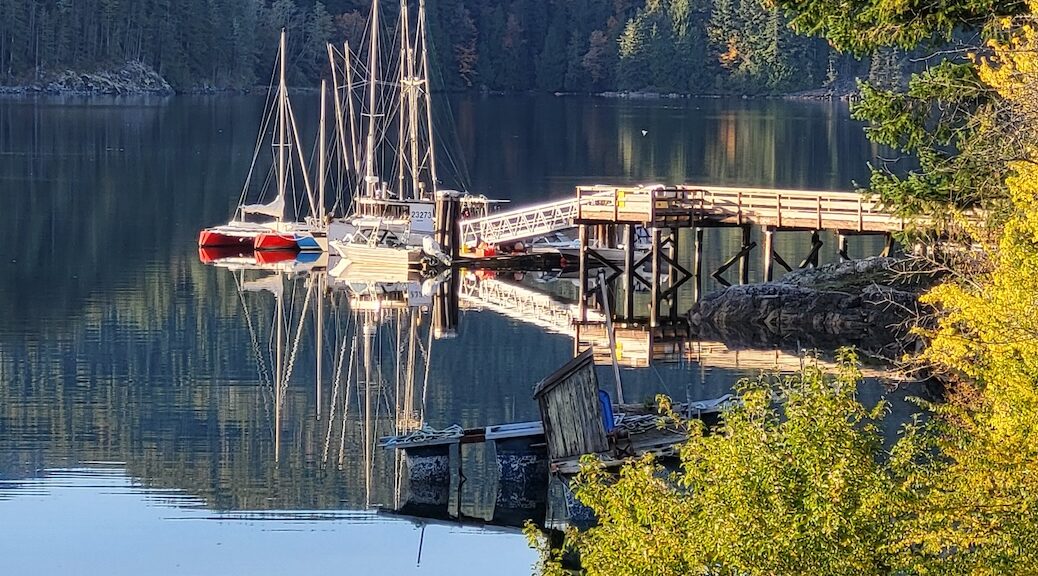
(Renate’s kids about to come back home to Owen Bay after another day at the Surge Narrows School – Renate Harvey photo)
How Renate and Renée Came to Sonora Island
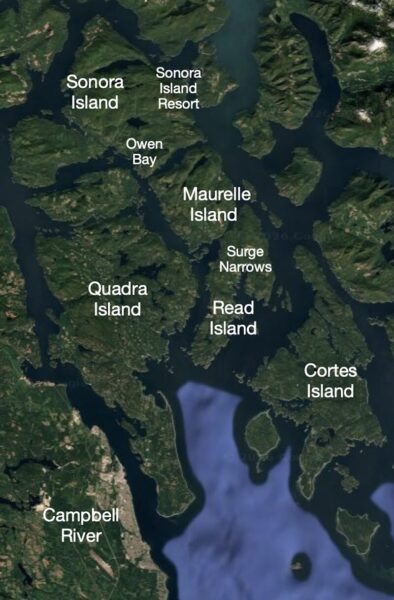
Two of these women live in Owen Bay, on Sonora Island.
Renate Harvey and her husband were in their twenties when they came to the Discovery Islands. They loved Cortes and Quadra Islands, but properties were too expensive.
Renate: “So we started looking a little further and found Owen Bay. We were able to buy property here.”
Renée Desautel and her husband were originally from the Cowichan Valley.
Renée: “We had a business there, and we would take long weekends and stay at cabins. We spent a lot of money, and then decided we should buy a cabin of our own. After searching around Port Alberni and Quadra, I found this lovely cabin online. We came to look at it, fell in love, and purchased it 10 years ago. Then, eight years ago, we moved here full time.”
How Sheila Hollanders Came to Read Island
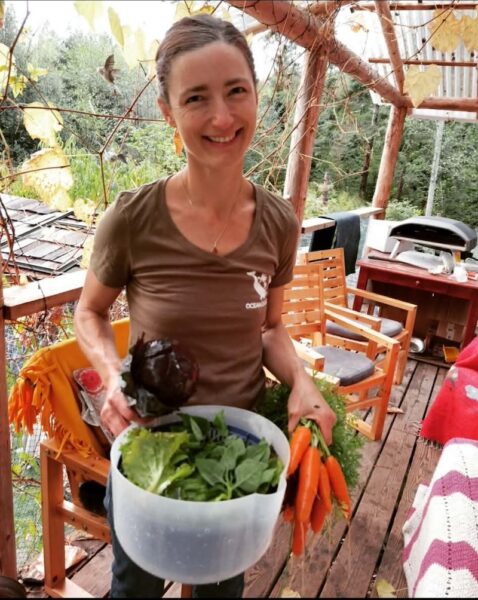
Sheila: “My parents are immigrants from the Netherlands. I was born in Campbell River, and I was 10 days old when we came to Read Island. I grew up speaking Dutch at home, working on our family oyster farm, and going to school at Surge Narrows.
“I went to high school in Campbell River. I lived with another family—actually a family from Cortes, the Bevingtons. Off to university, and then I went tree planting and did some traveling. At the tree planting camp, I met a guy who also really loved it out on the islands.
“When I graduated university, there was no longer a reason to leave. We just started homesteading—that was 17 years ago. And now we’re building a homestead of our own, and we also have kids in the school.”
What Is Life Like on Read Island?
Manda: Sheila, maybe starting with you—can you give us a little tour of Read, and what your daily life looks like?
Sheila: “Daily life for people out here varies a lot. Some people—like myself—are quite social. We get out and about, attend all the meetings, and do all the things. But there are also a lot of people who really value their privacy.
“In terms of a little tour, there are two public docks where people land. We don’t have a ferry, so you really need to come by private boat. Some people kayak or canoe over. The roads are gravel roads, and most people do come in to Surge Narrows, on the Quadra side.
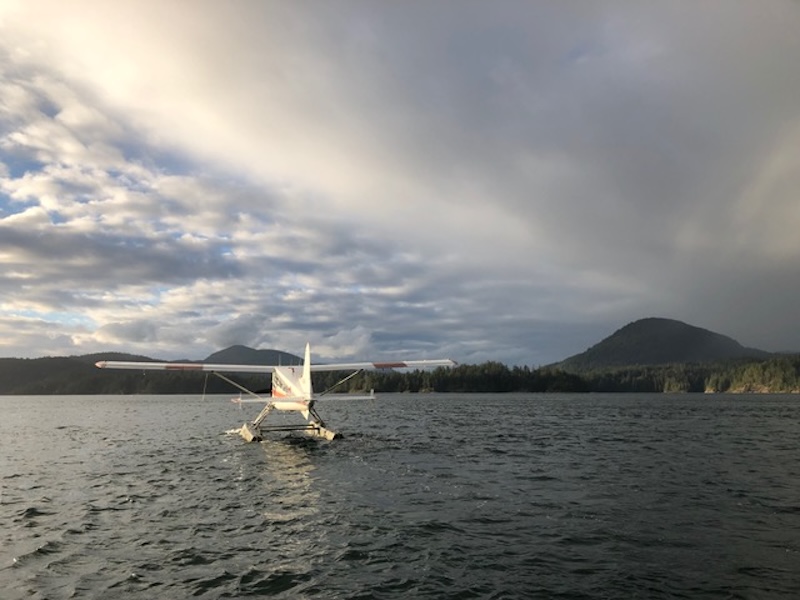
“That’s where we have our post office, right on the dock—which is pretty special. And the mail comes in with the float plane. Renate can speak more to that, since she’s one of the postmasters. That’s also the location of the old store.
“Just up the hill is where the school is, located on the school board property. Also on those properties are several community-owned buildings through our community association. There’s lots of beautiful forest, salmon-bearing creeks, and just a lot of beautiful nature out here.”
Manda: Are there stores? I’m going to assume there are no restaurants.
Sheila: “In the summer, actually, we do have a little café down at the Surge Narrows dock. It’s every Wednesday at 12:00. It’s usually locals visiting family and friends, and it’s always local cooks cooking up a really nice meal.
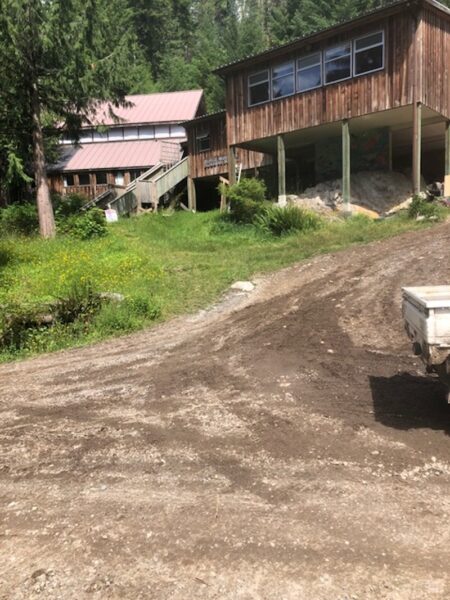
“Up top, on the school board property, we’ve got several buildings. Maybe I’ll start with the oldest one. The Quonset Hut was the original school. I can’t remember the exact date it opened, but I think it was in the ’40s, or so. When the new school opened in 1992, I was in grade one. The Quonset Hut was retired, and the school moved up to the new school—kind of exciting—because there were flush toilets and electric lights, which we didn’t have at the Quonset Hut. It was just outhouses and a wood stove.
“The other older buildings include the bunkhouse, where kids used to bunk during the week. Back in the ’70s, the roads were really bad, and boat motors weren’t that great—so it made more sense for people to spend the week at the school with their kids. The bunkhouse has been repurposed and is now our main community gathering area. We’ve got a really nice kitchen in there, and that’s where we have all our meetings.
“It’s really important for people to have opportunities to gather, because a lot of people live pretty far out and don’t really see many people day to day. We have live events there all winter. Not as much in the summer because of the café on the dock—but we do have music and live music events as well.
“It’s also used sometimes for different groups to come in. We had the Cortes Island Academy class come stay with us last year for the week. We also have an outdoor education class from Timberline that comes every year for a week. And we’ve also got a group of scientists in there right now.
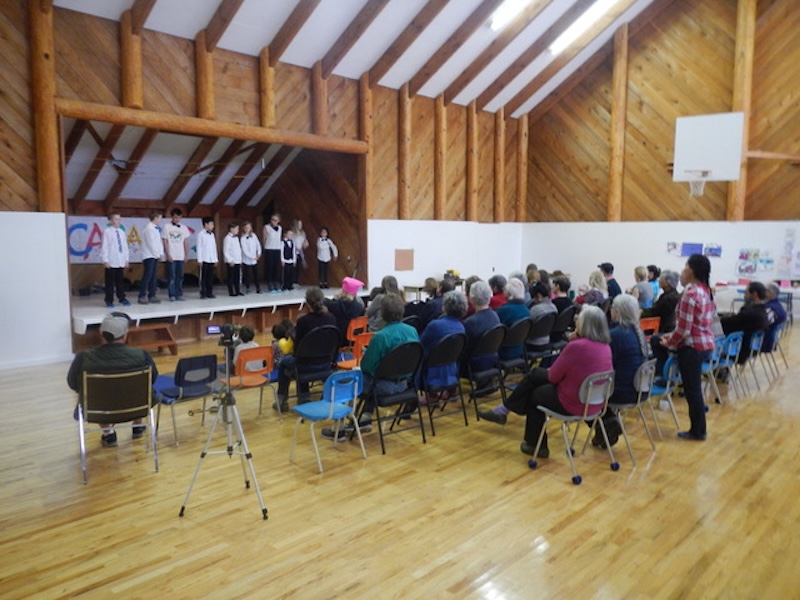
“There are two other buildings I should mention on the school property. One is a gymnasium—it’s quite large, with big beautiful long beams. It was built with grant money and a huge community effort in the ’80s. It opened in 1985—and it was built before the school. The school is attached to it, and the kids use it as their gymnasium, but it’s also a larger space for community gatherings and dances.
“Downstairs, there’s a little medical clinic, where we have a doctor that comes from Quadra once a month. That’s been really great—having that service available.
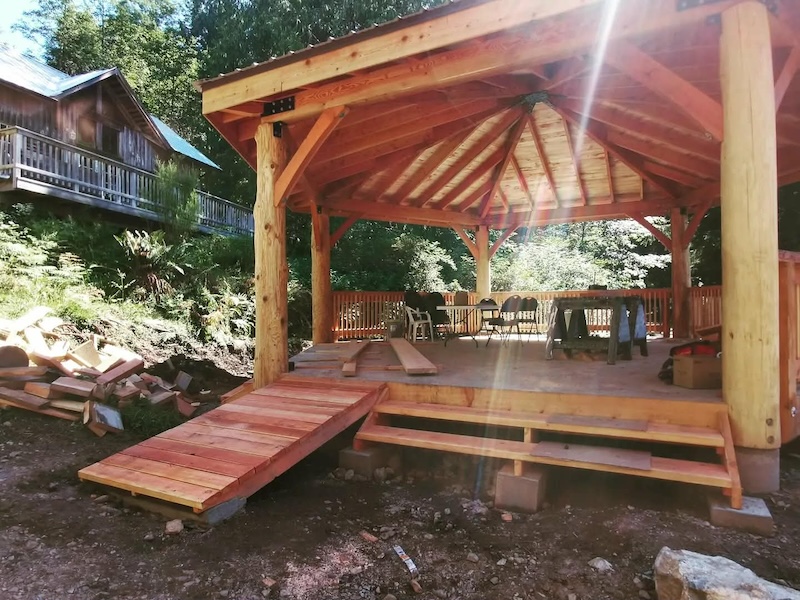
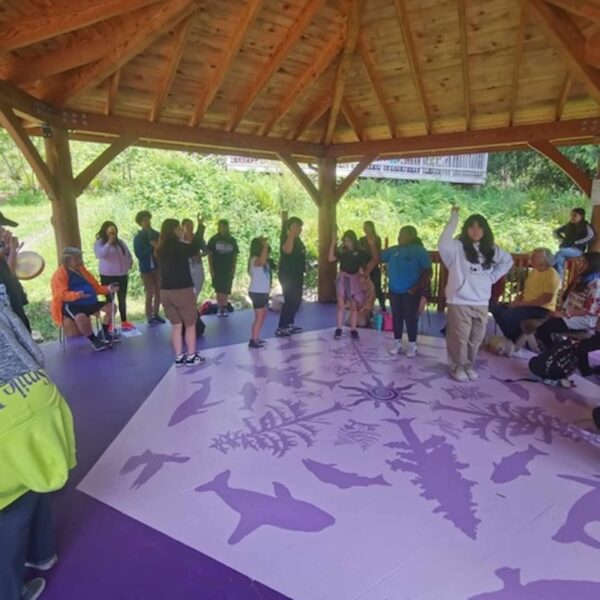
School kids at the zone – courtesy Renate Harvey
“Our last building—the newest one—we call ‘the Zone.’ The Surge Narrows Community Association got quite a big grant during COVID to build this building, and again, it was a huge community effort: lots of volunteers, and a lot of local wood was donated too. It was a really nice project to get us through the tail end of COVID and bring everybody back together. It’s a hexagon, so we can all sit in a circle and face each other. The acoustics are great, and we’re really proud of that one.”
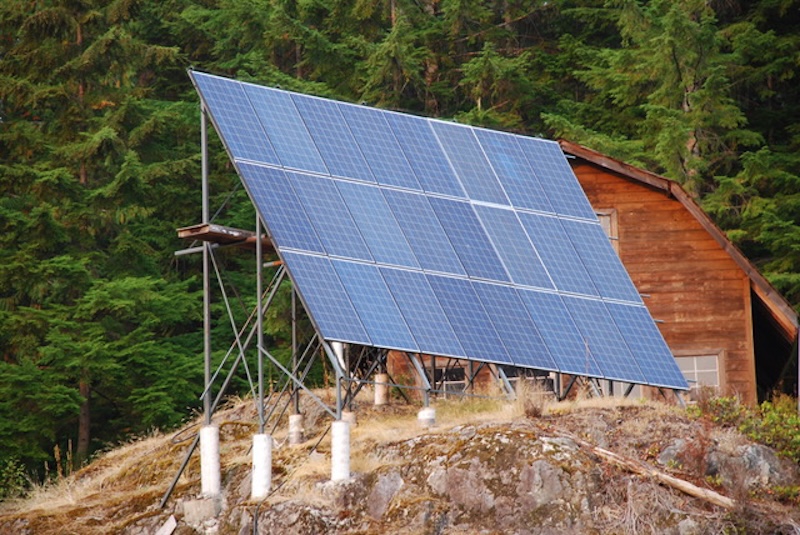
Manda: Is the power from BC Hydro, or are people generating their own power?
Sheila: “We’re totally off grid. Everybody makes their own power out here. At the community hall, we have our own power now too—which is awesome. The school still runs off a big diesel generator. It’s a pretty efficient one, but it still does use a lot of diesel.”
What Is Life Like on Sonora Island?
Manda: What does the rhythm of daily life look like on Sonora Island?
Renate: “We just got a new, beautiful dock in Owen Bay, so now we have a lot more space for people to tie up. Thanks to the SRD for doing that. We don’t have any community buildings, because there isn’t really any community land out here. We boat our kids to school at Surge Narrows.
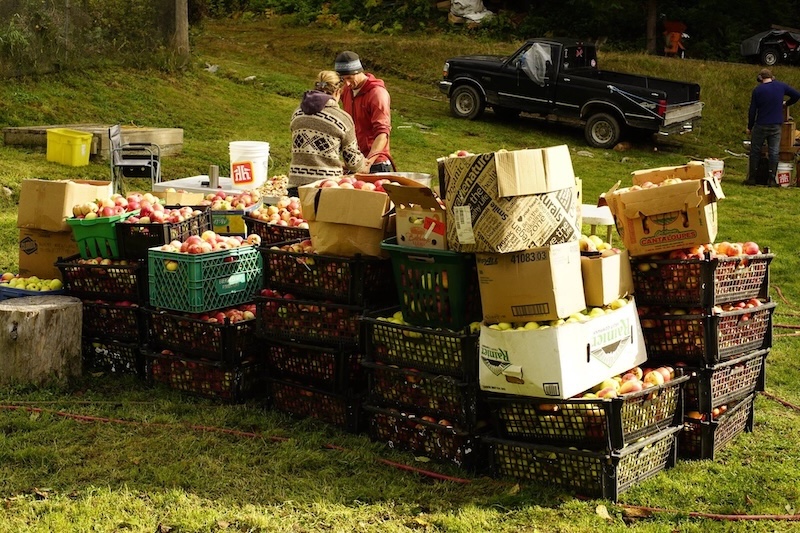
“If you walk up the road, there’s a beautiful big orchard—that’s about 100 years old. It used to be a big homestead from a logging camp. We harvest those apple trees, and we have cider-pressing parties at the end of the year.
“The properties are much smaller than on Read Island, so you can just walk to people’s places. They’re all between two and eight acres, and sometimes 10—but they’re smaller parcels. Sometimes during Halloween, we can visit every neighbour’s house just by walking.”
Renee: “One thing I would like to say about our community is that when we moved here, the feeling was really welcoming and comforting. When we have an event or a reason to get together—whether it’s a birthday party or Easter—we all get together. We always do potlucks, and everybody’s welcome.”
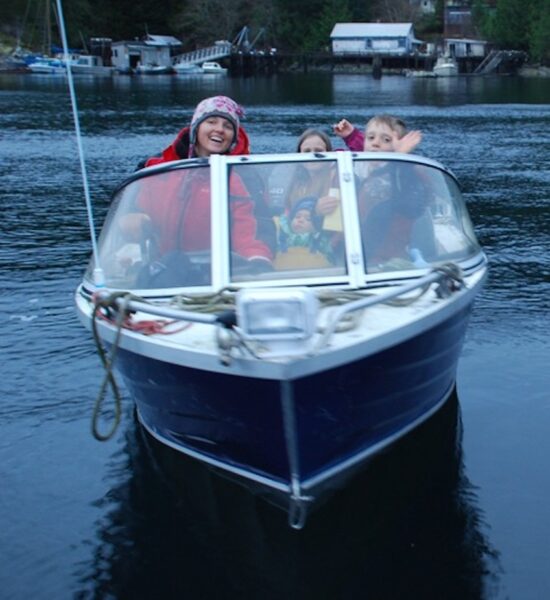
School commuting by boat with Surge Narrows Post Office in the background
– courtesy Renate Harvey
Manda: What does a day look like with kids? And what do the seasons look like?
Renate: “I have three kids. Two are teenagers attending Cortes Island Academy, and an 11-year-old who we take to school on Read Island from Tuesday to Friday.
“We skip an occasional day because it’s a little bit of a ways. We leave—like a quarter after eight—in the morning to get to school and head up the channel. Sometimes it’s beautiful and calm. Sometimes it’s rough. Sometimes we see dolphins or orcas. We saw grizzly bears swimming across once. You never really know what you’re going to see. The sunrises are beautiful later in the season, when the days get longer.
“Then we get to the dock, and we tie up. I walk her up—about 10 minutes to the school—and then I do that all over again. We’re back by 3:00, and then it’s a 3:30 pickup, so we do a lot of back and forth.
“We’re probably the only crazy people who keep doing that back-and-forth constantly like we do. A few other families have done it in the past, but not quite as consistently. There are also a few homeschoolers. We don’t have a ton of younger families out here, but they’re homeschooling more often.
“We love the school—the socialization and all the different events going on there. So we believe in taking the kids to school there and having them be part of a bigger community.”
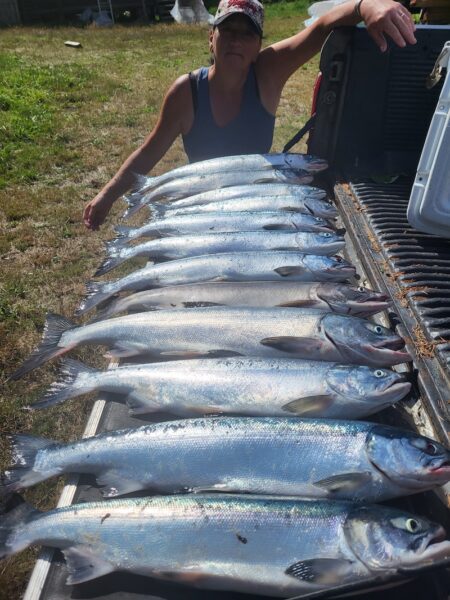
Work on Sonora Island
Manda: What do people do for work?
Renee: “There are a variety of ways of having money to keep living here. I do bookkeeping—all online—and I have 12 clients, so I feel like I’m part-time. My husband retired as a photographer, and he had his pension. He has passed on.
“A lot of neighbours do bits and pieces of work. Like one man will do construction, and somebody else does electrical, and somebody else is a marine mechanic—which is really useful here.”
Renate: “My partner works away in camps, so every month he goes to work. I had to watch the homestead, but I work the post office occasionally and do the odd job here and there. Most people find some jobs here and there—it’s just about how flexible you can be with what you’re able to do.
“I know Starlink is not everybody’s favourite, but we really like it out here because it’s really fast internet, and it has given us a lot of opportunities for younger people to make a living.
“We’ve actually seen an influx of younger people over the last four years. Now, ‘younger’ is relative. My kids say, ‘You’re not young—you’re old.’ But between the ages of 35 and 50, we’ve seen a bunch of people coming in. That’s really exciting—some are starting families, and we’ve seen some new babies happen.
“People are also a lot more self-sufficient here. Growing their own vegetables, fishing, hunting—that sort of thing. The amount of money you need to live here is a lot less than living in town. Our property taxes are less. We’re not paying hydro. We’re not paying for garbage pickup and those kinds of things.”
Work on Read Island
Manda: Tell me a little bit more about what you and people on Read Island do for work.
Sheila: “Yeah, so having grown up here, I’ve really seen it change quite a bit. When I was a kid, there was a lot more oyster farming, logging, and fish farming—more resource jobs happening. That’s shifted, like Renate was saying, with the internet and everything.
“For myself, I used to do a lot of tree planting. When we had kids, we shifted over to cooking with the kids, because we could have them in the camp while we were cooking. Then it just got to be not so fun leaving every spring—because it’s so beautiful here—and I really wanted to learn how to garden.
“Also, as the kids got older, we felt it was important that they be able to attend the full year of school. So we ended up staying.
“And yeah—my husband does construction. I was lucky enough to get a job at the school. I do custodial work, groundskeeping, and maintenance. It’s pretty much part-time—four days a week, a couple hours a day. Then I was also lucky to get a job with the community association—hosting events at the bunkhouse: organizing events and meetings, and booking the community hall. I can’t think of any other jobs right now.”
The Seasons on Read Island
Manda: Sheila, do you want to get us started on how things change seasonally? You talked a little bit about how beautiful it is in spring—what else changes seasonally in the community?
Sheila: “There’s lots more happening in the summer—bigger events, just really busy in the gardens, friends and family coming to visit.
“The fall is kind of a time to turn inward and focus on art and music. Bringing in firewood is a pretty big deal out here, because we don’t have the power to make heat. Winter is just keeping the fires going and hunkering down. Then spring is just super busy gardening and starting on the firewood.
“I find I’m always busy. My mother-in-law is always saying, ‘How can you be so busy on an off-grid remote island?’ But somehow there’s just a lot going on. And in recent years, maybe there’s more going on than usual because we’ve got different community planning processes—and with all the grant money we’ve gotten—there’s been more projects and more things happening. It’s really exciting and awesome.”
Manda: I bet your mother-in-law doesn’t live on Read, or she wouldn’t ask that.
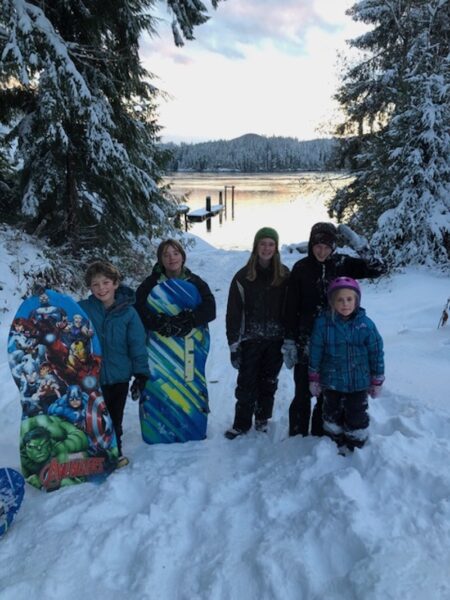
Tobogganing in the snow in Owen Bay – courtesy Renate Harvey
The Seasons on Sonora Island
Renee: “I see a rush in the springtime to get your firewood in so it can dry over the summer. Spring also means getting fresh prawns and crabs, and then we switch to fishing—which is obviously a lovely thing—and gardening, lots of gardening.
“Then as fall comes around, people are shutting down their gardens. Some people, like myself, will travel south to where it’s warmer, but everyone still gets together. There’s apple pressing and Thanksgiving and different things. We all just kind of settle into our more indoor winter routines.”
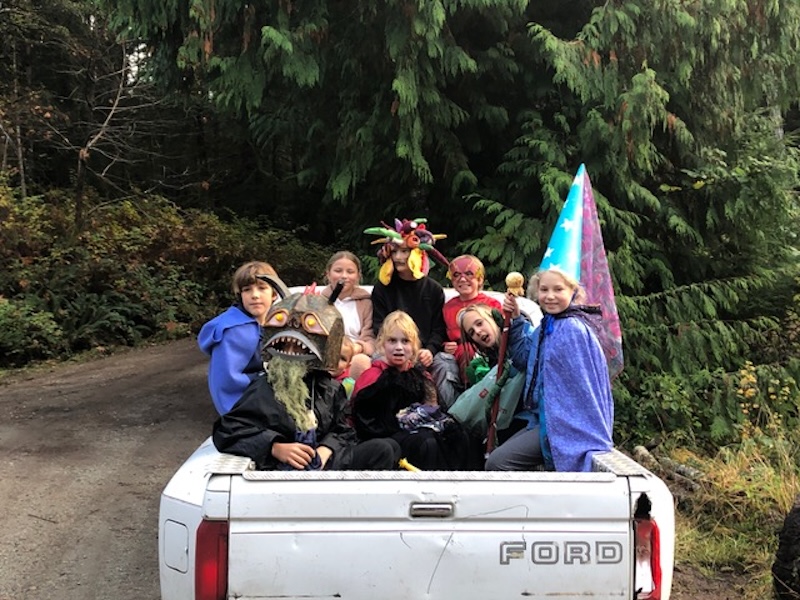
Halloween island style – courtesy Renate Harvey
Renate: “During Christmastime, for example, we all get together a lot. We always joke it’s like the same people, but a different house every second or third day—from halfway through December to halfway through January. We do Halloween too. You know, there’s lots of events happening here. There’s no shortage of social time if you want it. If you don’t want it, that’s fine too.”
Manda: Do you find there’s a nice mix of people being able to bow out—or are they ostracized because they never come out?
Renate: “I feel like it’s pretty balanced. People can choose if they want to go to the events, yes or no. They’re not going to not get invited just because they didn’t go one time.
“There are some challenging things out here, just because of boating. There’s boating in the dark—not everyone does that. There is also going through the rapids. We’re right beside some tidal rapids, and to get to the school we have to go through two sets of tidal rapids that sometimes can go up to 12 knots. That’s not for the faint of heart, and you need a working engine that you know is not going to break down in the middle of the channel somewhere.”
“In the wintertime, for example, there can be times when it’s frosty and the ropes are frozen. It’s really hard to get them off the dock, and your engine won’t turn because there’s water in between the steering cables. So you have to heat up some water on the stove to get it defrosted.
“There was a time when we went for a Christmas dinner, and we actually had a really hard time getting back up our ramp. It was a really low tide, and the snow was so slippery that we could hardly get back up to our house.”
“There are always challenges out here, but you just have to laugh about it. Sometimes it can be stressful when it’s happening—like trying to push your kids up a ramp while they’re sliding down—but there are lots of beautiful moments. I wouldn’t want it any other way.”

Meetings & Events on Read Island
Manda: I read the Surge Narrows newsletter and I was quite impressed by how much there is going on. Maybe starting with you, Sheila, because you’re so involved—could you tell me some of the things that have happened recently, or that are about to happen?
Sheila: “One of the big things that we’ve been going through—and waiting for— is that we’re finally undergoing our official community planning process (OCP). We’ve had lots of meetings, and they’ve been quite well-attended. We’ve had lots of diverse input into it, and we’re curious to see what the planners from the regional district come back to us with.
“One of the big things that we’re pretty excited about is updating the bylaws that are going to go along with the community plan.
“We’ve had lots of casual coffeehouses at the bunkhouse that I host. It’s really nice for people—especially seniors—to have opportunities to come and hang out, because not everybody wants to come to meetings. They’d rather just catch up on the news over coffee and a goodie.”
Meetings & Events on Sonora Island
Manda: I also noticed that there was a wedding and a 90th birthday party—things that were basically like, ‘Come community.’ Is it typical that people will have these major life events and put them in the newsletter?
Sheila: “The wedding you’re referring to was a private event. But mostly, the meetings are open to anybody, and the events are open to everybody as well.”
Manda: Renate and Renee—do you go to some events as well?
Renate: “We go to a lot of the events. It just depends on how social you are sometimes. Sometimes it’s like, ‘I need a day at home.’ But you can pick and choose. So certain things you’d want to go to that are very important—like that wedding coming up—we’ll definitely go.
“Certain things, you’re volunteering for, so you can’t really bow out. You’re the one organizing it. You’re the one who has to make sure the coffee’s made or whatever needs doing.”
Tourism
Manda: Do you guys have what you consider tourism, and what does that look like in your communities?
Renee: “The Sonora Island Resort is on the east side of our island—very high-end tourism. If you Google Sonora Island, that’s what you see.
“Owen Bay, from what I understand, was listed in a yachting magazine as having a road and then a trail access where you can go view what’s called Hole in the Wall—a water passage between Sonora and Maurelle. We do get people that come in.
“Across on Quadra are the Octopus Islands. People sometimes anchor their large boats there and then come over in little Zodiacs. You can always spot the tourists—they’re the ones with white running shoes. There’s not a lot of infrastructure for tourism here. There are a few little Airbnbs around, but not a ton. We can see the water taxis and the fishing boats coming by, but they don’t really come to this side—so it’s usually fairly quiet.
“The Surge Narrows dock does get a lot of traffic from the CorilAir float plane—that’s how our mail comes as well. They come and go a lot over the summer, with tourists from Campbell River. They walk around, have a look at the school, often, or walk up the road a bit. They stop at the post office on Stuart Island, Refuge Cove, Blind Channel—there are a few other stops along the way. And apparently it’s a really nice ride. I think they frame it as a historical mail flight.”
Sheila: “We’ve got the float planes, and we do have one kayaking company that takes their guests on expeditions around the area—but I wouldn’t say we have a big tourism industry over here.”
In part two of this interview, Manda and her guests discuss community support and future sustainability—the Surge Narrows Community Association and funding, land access/emergency preparedness, relationships with Homalco First Nation, youth and schooling challenges, and hopes for the next decade.