
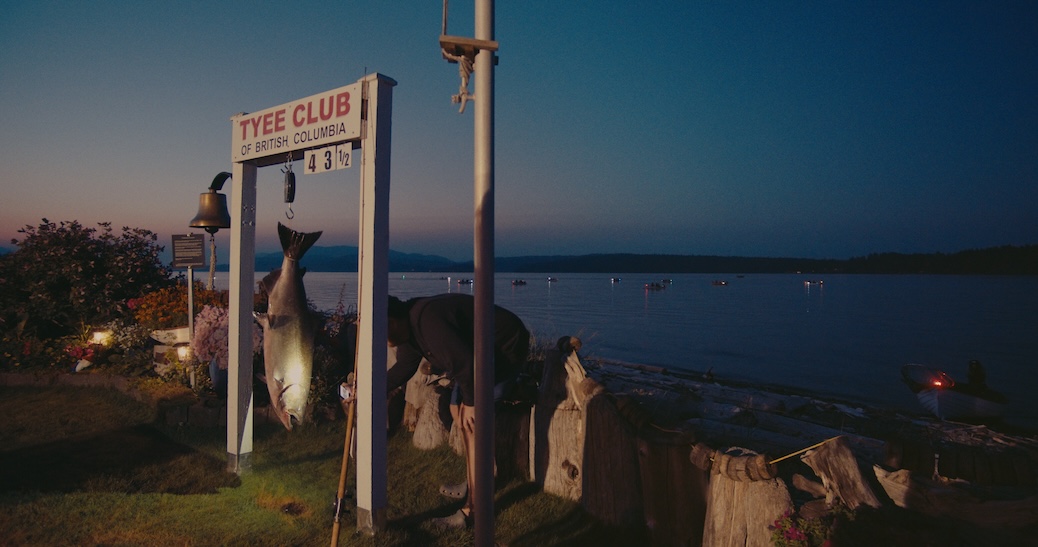

A documentary about Campbell River’s historic Tyee fishing culture will be screened at Vancouver’s DOXA Film Festival on Thursday, May 7. In this morning’s interview filmmakers Jevan Crittenden and Nate Slaco talk a little about ‘In Tyee Country,’ and how it came into being.
Jevan: “When we started this project we expected certain things and a lot of those assumptions were accurate, but there were some surprising things that came up. To me the community aspect is the surprising thing. Peter Wipper talks about having a greater sense of community and home in Campbell River than he does in his own hometown, and he credits that to the community that’s come up around the Tyee Club. It really is a tight-knit group.”
(The podcast opens and closes with excerpts from the film’s trailer, below)
Cortes Currents: Where is he from?
Jevan: He’s from Nanaimo.
(Note: Peter Wipper was hired by the city of Campbell River in 1989 and went on to hold several high level administrative positions before retiring in 2021.)
Nate: “Making this film, we really tried to make Campbell River a character in itself and showcase the beauty of that area. I’m hoping that when people watch it, that really comes through. Even if you’re not into fishing, being out on the water at that time of year is a beautiful thing.”
Cortes Currents: “Where are you both right now?”
Jevan: “We’re both in Vancouver.”
Nate: “I was actually born in Campbell River. My dad was in forestry, so I lived there until I was five before he was transferred to just outside Vancouver. So, there is a personal connection there as well.”
Jevan: “Nate and I met when we were 13 years old. We grew up making videos together; it became a passion for both of us. Fast-forward many years, and we got interested in fishing during the pandemic. Nate’s dad had some contacts at the Tyee Club and mentioned it to us as we were getting into the sport. We very quickly realized there was an interesting film to be made about this community.”
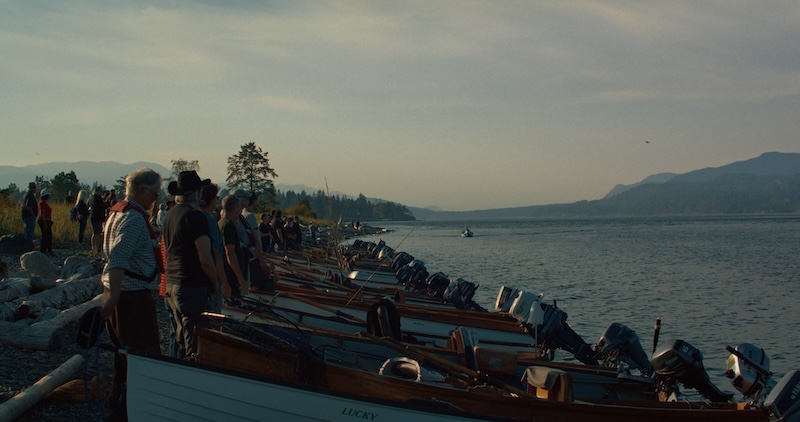
Nate: “The whole premise behind the club—using these traditional fishing techniques—is visually intriguing. When we started meeting members, we realized there are a lot of personalities and a lot of passion there. It also branches off into other hobbies, like collecting tackle or woodworking projects. Beyond that, there is a deeper level of understanding regarding what has changed in the last hundred years with fish populations.”
Cortes Currents: “Tell me about the moment you decided you were going to make a movie.”
Jevan: “A friend of ours moved to Campbell River in 2022, and I helped her move. Through Nate’s dad’s contacts, we set up meetings with club members Jeremy Maynard and Norm Lee over coffee. Those meetings confirmed what we suspected: there was a story to be told here with compelling characters and a complex world involving ecological questions.”
Nate: “We shot for three years and took probably a year to edit. It was also a good excuse to ‘write off’ fishing! Jevan and I went there every summer for three years to fish on the Quinsam River for Pinks and other species. Combining our passions for filmmaking and fishing was a great motivator.”
Cortes Currents: “Tell me some of the stories you discovered.”
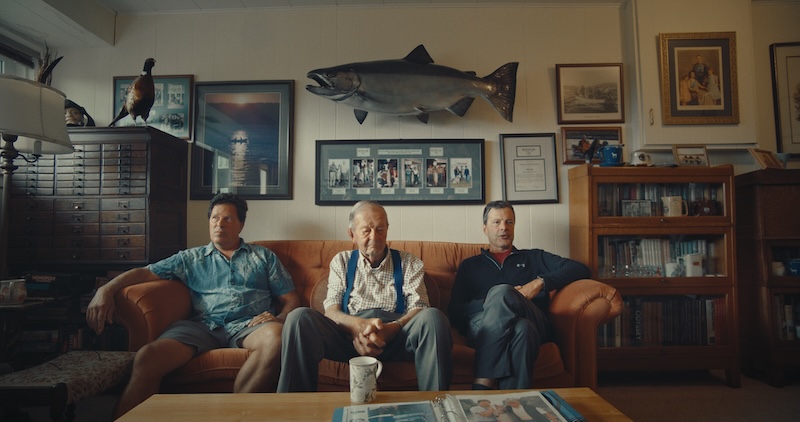
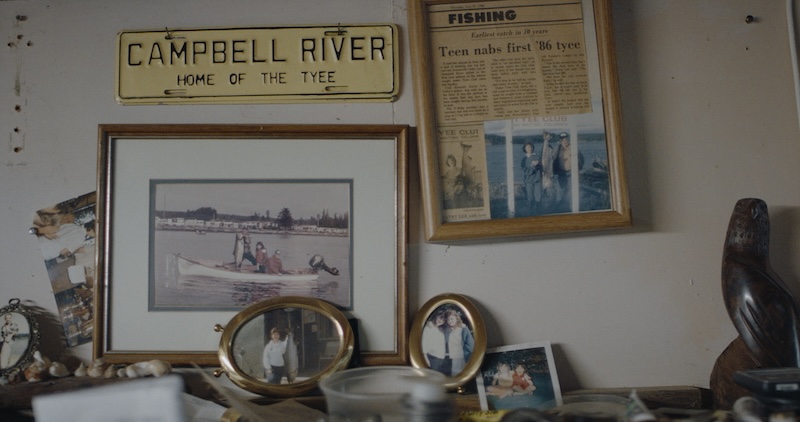
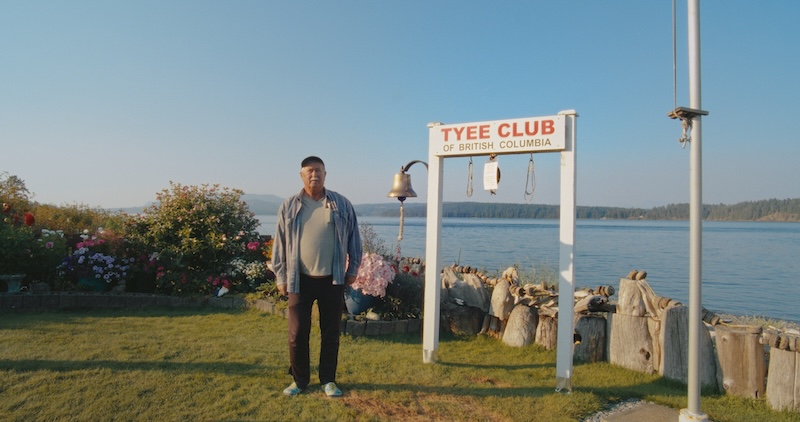
Nate: “Peter Wipper had taken it upon himself to photograph the club’s old catch records dating back to 1932. They lost some of the earlier records from 1924, but he was in the process of digitizing what remained. He’s now sharing that information with researchers at UVic to better understand trends happening with these fish over the years.”
Jevan: “Early on, we connected with Dave Hadden, who narrates the film. He lives right on the Tyee Spit, a stone’s throw from the clubhouse. Each season, he creates an unofficial record of the Tyee Pool in a forum post on sportfishingbc.com called ‘Tales from Tyee Pool.’ Dave’s posts ended up becoming the narrative arc for the club’s centennial season.”
Cortes Currents: “Were the fish bigger a century ago? Were there more of them? Did people fish differently back then?”
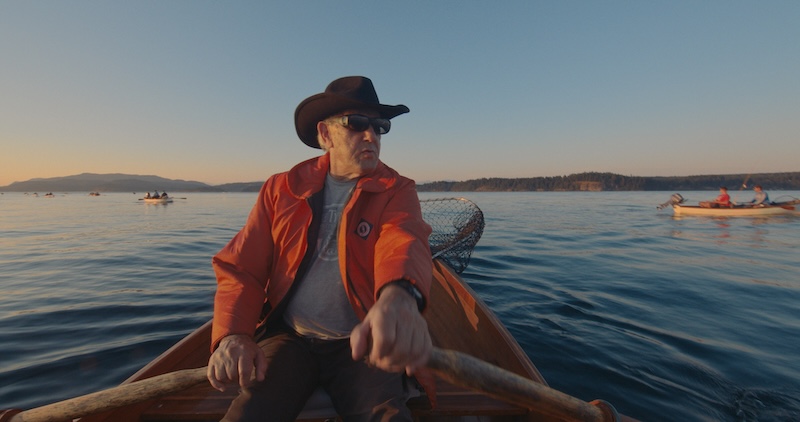
Jevan: “From what we learned, the way the club fishes now is very similar to how they have always fished. The gear is traditional in its operation. They have stringent rules regarding tackle, boat power, and regulations. While the methods are the same, the health of the fish population has changed. Members have observed a trend of fish becoming both smaller and fewer in number.”
Cortes Currents: “What exactly is a ‘Tyee’?”
Nate: “According to the Tyee Club of British Columbia, a Tyee is a Chinook salmon that weighs over 30 pounds.”
Cortes Currents: “Are they still catching them?”
Jevan: “Yes, they are still catching Tyee each year, but the number being caught is a fraction of what it used to be.”
Cortes Currents: “What about the social life as a club?”
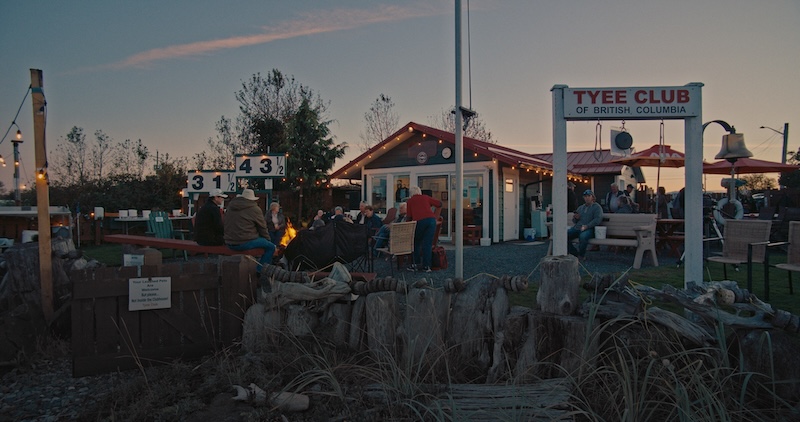
Nate: “That has changed. Back in the day, it was more competitive and less of a community. At some point, someone decided to bring a coffee pot, and that started the tradition of people hanging out at the clubhouse. Now, they share stories and strategies. If you go down there during the season, you’ll see people sitting around a campfire (assuming your allowed to have a fire at that time of years) and watching the water.”
Cortes Currents: “Do they have legends? Like someone catching a 64-pounder?”
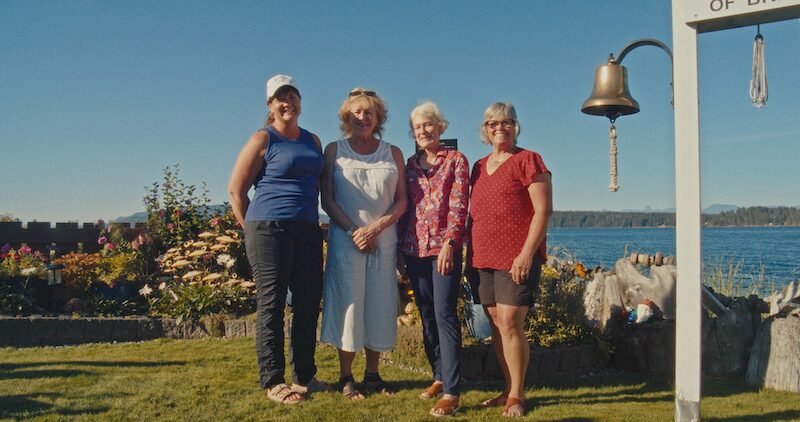
Nate: “Absolutely. There’s a family in Campbell River—the Gages. The father, Mike Gage, was a past president. He and his three sons have all caught a Tyee over 60 pounds, which is extremely rare. The mother, Betty, is also a very accomplished Tyee fisherwoman.”
Cortes Currents: Has the fishing culture changed in Campbell River?
Jevan: “I don’t know that we can answer that because our focus was limited to the club. There is definitely a fishing culture in Campbell River. It’s everywhere, from commercial fishing to recreational fishing, from powerboats to the Tyee Club, to anglers on the river.”
Cortes Currents: “What are the guidelines regarding power and boats?”
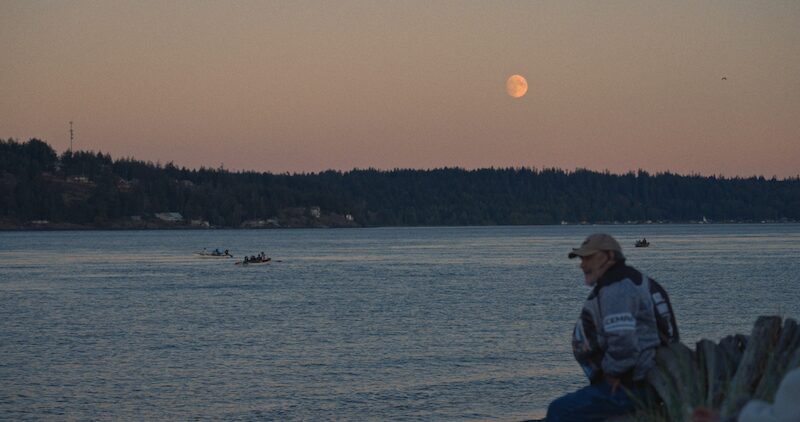
Jevan: “In the Tyee Pool, the angler must be under their own power. No motors are allowed; it’s typically rowboats. Usually, there is a ‘guide’ on the oars—an experienced person who knows the contours of the pool—and the ‘angler’ who catches the fish. Interestingly, the guide is often more revered than the angler because they are in charge of where to fish and what lures to use.”
Cortes Currents: “When is the season?”
Jevan: “The season opens July 15th and closes September 15th. However, we discovered that no one really fishes on July 15th because the fish haven’t arrived yet. It really kicks off in August.”
Nate: “I believe there’s also a DFO regulation issue. Prior to August 1st, you can only retain Chinook under 80 centimeters (about 31.5 inches). A fish that size will never be a Tyee, so the real pursuit begins once those regulations shift.
Cortes Currents: Was there a time when you could go fishing on July 15th and expect to catch Chinook?
Jevan: “I don’t think so. It’s really dictated by when the fish arrive and it seems, from my understanding, that’s after July. They fish very close to the mouth of the Campbell River, where Campbell River enters Discovery Passage. When the fish come back to spawn, they stage at the mouth of the river waiting for the river level to rise high enough for them to enter.”
Links of Interest:
- The Tyee Club of B.C.
- Campbell River’s Tyee Club Turns 100 – Campbell River Mirror
- Fishing BC Presents: The Historic Tyee Club in Campbell River (YouTube)
Sign-up for Cortes Currents email-out:
To receive an emailed catalogue of articles on Cortes Currents, send a (blank) email to subscribe to your desired frequency:
- Daily, (articles posted during the last 24 hours) – [email protected]
- Weekly Digest cortescurrents – [email protected]