

By Sonal Gupta, Canada’s National Observer, Local Journalism Initiative Reporter
Nearly a decade after a tug spilled diesel into the territorial waters of a BC First Nation and shut down key harvesting grounds, the Heiltsuk Nation says a new settlement is only one step toward recovery.
The Heiltsuk have reached a settlement with Kirby Corporation, the Texas-based marine transportation company that owns the Nathan E. Stewart tug. The tug hit a reef near Bella Bella, BC in 2016 and spilled 110,000 litres of diesel and lubricants, fouling more than 350 kilometres of shoreline and shutting down a key clam harvesting area.
But Heiltsuk leaders say the federal government — and Canada’s compensation fund for ship spills — are still “nowhere to be found.”
Chief Marilyn Slett said the settlement matters, but does not come close to covering the Nation’s losses.
“While we understand the financial settlement is twice the limitation amount under the Western legal system, it is still a small portion of our total losses,” Slett said in a statement.
Lawyers acting for Heiltsuk told Canada’s National Observer since the Nathan E. Stewart ran aground, a surge in invasive European green crabs has been reported. The crabs prey on juvenile clams and have made recovery of the rich local clam gardens harder. The nation says it needs money for a multi-year program to trap and control the crabs before damaged clam beds can be reseeded.
In April, Slett said the nation had yet to receive compensation or see recovery work begin, despite estimated recovery costs of more than $23 million.

Under the recent settlement, Heiltsuk will receive $12.2 million: about $6.09 million from Kirby and about $6.1 million from a Federal Court limitation fund set up for the case.
As part of the settlement, Kirby has agreed to take part in a traditional Heiltsuk washing ceremony in Bella Bella and a healing ceremony at the spill site. The company must also give Heiltsuk 90 days’ notice before its vessels travel through waters in Heiltsuk territory, while the two sides work on a longer-term vessel traffic agreement.
The agreement settles Heiltsuk’s claims against Kirby, vessel interests and some individuals tied to the spill, but allows the Nation to keep pursuing claims against the federal government, BC and the federal Ship-source Oil Pollution Fund.
Those remaining claims include not only environmental recovery, but losses tied to harvesting, food, ceremony and Heiltsuk’s relationship with its territory.
The remaining claims against Canada and the Ship-source Oil Pollution Fund are still before the federal court. The case has been put on hold several times while parties tried to reach a settlement. Heiltsuk has spent more than two years trying to bring Canada and the fund into those discussions, but the government has not confirmed it will participate. The next court update is expected around September, the lawyers confirmed.
Kirby still has to ask the court to approve steps needed to release the court-held limitation fund. The Ship-source Oil Pollution Fund will have to respond to that application, but the Nation does not yet know what position it will take.
According to Ship and Rail Compensation Canada, which administers the fund, the Ship-source Oil Pollution Fund can cover cleanup, property damage, lost income, environmental recovery and some cultural losses after a ship oil spill. Its largest claims ever paid include $4.3 million to two claimants after the 2014 sinking of the tug Chaulk Determination in Trois-Rivières, Que. and $2.5 million to three claimants after the 2015 Marathassa spill in Vancouver.
Ship and Rail Compensation Canada says people affected by a ship-source oil spill usually make claims directly to the fund, but they also have the right to sue the owner of the polluting ship. In this case, the Heiltsuk did both.
Lawyers acting for Heiltsuk said that once the shipowner’s liability “caps out” the federal fund may be responsible for the remaining losses, damages or cleanup costs under Canada’s Marine Liability Act.
Cameron Grant, director and general counsel for Ship and Rail Compensation Canada, told Canada’s National Observer the Heiltsuk Nation chose to pursue litigation against the vessel owner and “achieved an impressive result.”
Ship and Rail Compensation Canada understands Heiltsuk shared documents with the ship owner before the settlement was reached. He said their team looks forward to reviewing Heiltsuk’s documents when the Nation is ready to share them, Grant added.
Heiltsuk’s lawyers said they have asked Ship and Rail Compensation Canada for years to come to settlement talks but it has not agreed and Heiltsuk cannot share its reports or documents until those talks are set up.
Canada’s National Observer reached out to the federal government for comment, but did not receive a response before publication.

Paul Blomerus, CEO of Clear Seas, an independent non-profit marine shipping research centre, said Canada’s spill compensation rules were created at a time when pollution from ships was treated as a recurring risk of marine traffic. The program was meant to keep taxpayers from covering spill cleanup and that polluters paid through direct cleanup or funds set aside for spills.
But Blomerus said the model is outdated and narrow in what it compensates. It has struggled to compensate affected communities for losses that are harder to fit into its rules, such as damage to harvesting grounds, coastal foods, cultural practices and long-term harm to a marine ecosystem.
“The principal was to try and make sure that the polluter paid, not that the polluter was punished,” he said.
As Canada debates new pipelines and tanker traffic, Blomerus said public expectations have shifted toward preventing spills in the first place, because “you can’t put the genie back in the bottle once the spill has taken place.”
Slett said the federal government’s absence is glaring as it prepares to consider Alberta’s pipeline and oil tanker proposal, which she said would affect the coastal waters and marine resources Indigenous peoples rely on in BC.
Alberta is preparing to send Ottawa its proposal for a new oil pipeline to the West Coast by July 1. The federal government will then consider whether to treat it as a project in the national interest, which could fast-track its approvals. Alberta has been studying three routes through northern BC, including port options in areas covered by the federal oil tanker moratorium.
The Nathan E. Stewart spill is central to Heiltsuk’s opposition to new tanker traffic and its call to uphold the tanker ban, which prohibits large oil tankers from loading, unloading or transporting crude oil and heavy oils along much of BC’s north coast. “An oil tanker project is not something we can ever provide consent to,” Slett said in July.
A Marine Environmental Research study found clam beds were still slow to recover 5.5 years after the spill and clams from affected sites were still not being harvested. Heiltsuk knowledge holders also reported fewer juvenile clams and changes in the clams’ taste, smell and appearance after the spill.
Heiltsuk leaders say they will keep pushing Canada and the oil spill fund for compensation and help restore the damaged ecosystem.
“We will never give up and we will always protect our territorial coastal waters,” Slett said.
Links of Interest:
- 2016 Marine transportation safety investigation report for the Nathan E Stewart Grounding and subsequent sinking
- Heiltsuk Nation calls upon United Nations agency to ensure laws address Indigenous cultural losses from marine oil spills
- Articles about, or mentioning, oil spills in BC
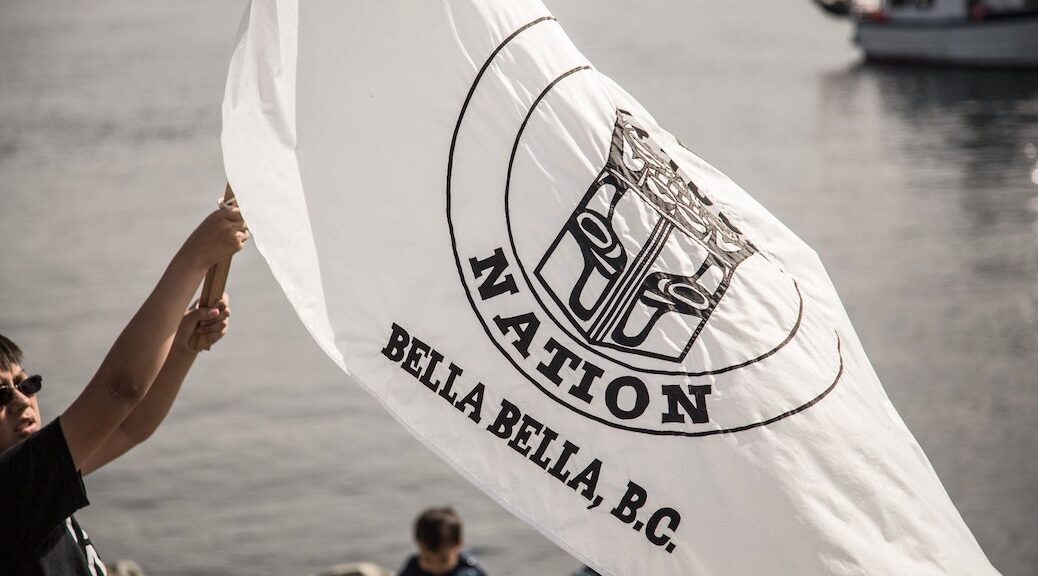
Top image credit: The Heiltsuk Nation has stewarded the waters around Bella Bella for thousands of years, where marine harvesting, including clams, remains central to food, culture and livelihoods. – Photo by: Kris Krüg / Flickr (CC BY-NC-ND 2.0)

Sign-up for Cortes Currents email-out:
To receive an emailed catalogue of articles on Cortes Currents, send a (blank) email to subscribe to your desired frequency:
- Daily, (articles posted during the last 24 hours) – [email protected]
- Weekly Digest cortescurrents – [email protected]