
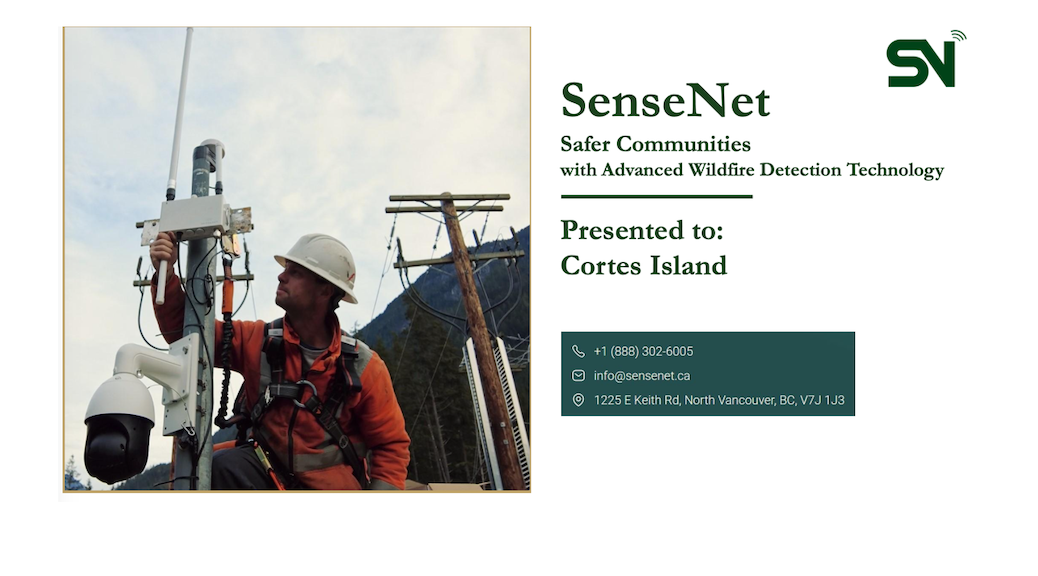

Cortes Island is close to raising the funds for a wildfire detection system that identifies fires within minutes of their inception. In today’s interview Claudia van der Vorm explains what SenseNet is and Cortes Island Fire Chief Eli McKenty says why he thinks we need it.
Claudia van der Vorm: “SenseNet is a Canadian company based out of Vancouver. They work on very early wildfire detection, in most cases under the minute, they can detect a fire when it’s still in smouldering stages. So when we don’t smell it, we don’t see it, in areas hard to access. They have a combination of sensors, camera, satellite, and a platform that allows that early detection, prevention and mitigation.”
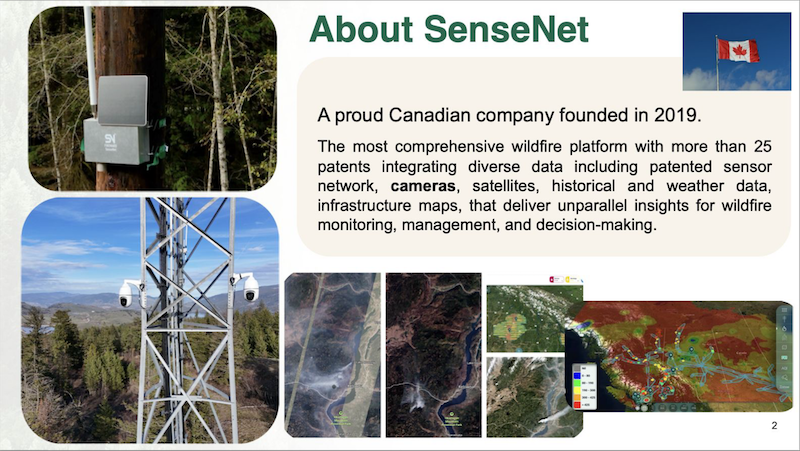

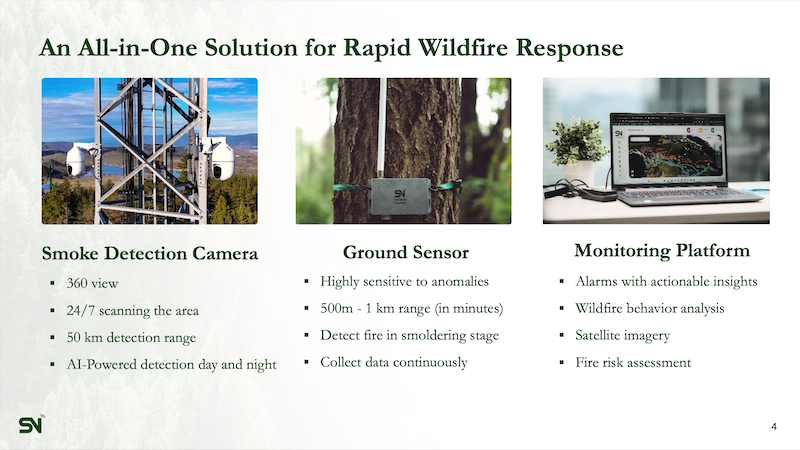
“Sensors basically are placed in the areas that are at most risk or difficult to access. A camera can basically oversee the whole island and monitor 24/7 for any smoke. The satellite is really for if it is getting bigger.”
“The moment some activity is happening, the sensors will detect, they will start to analyze. The camera zooms in, a camera that oversees over 75 kilometres, but it also zooms into the areas. It can detect if it’s a campfire. The fire department gets a notification and it also gets the cause. What is the spread location, spread and that incorporates the vegetation, the weather, the wind patterns, and things like that.”
“It also allows a little bit of prevention, so if it’s dry, or the weather combination is such that it’s already high risk.”
Cortes Currents: Where is SenseNet in use right now?
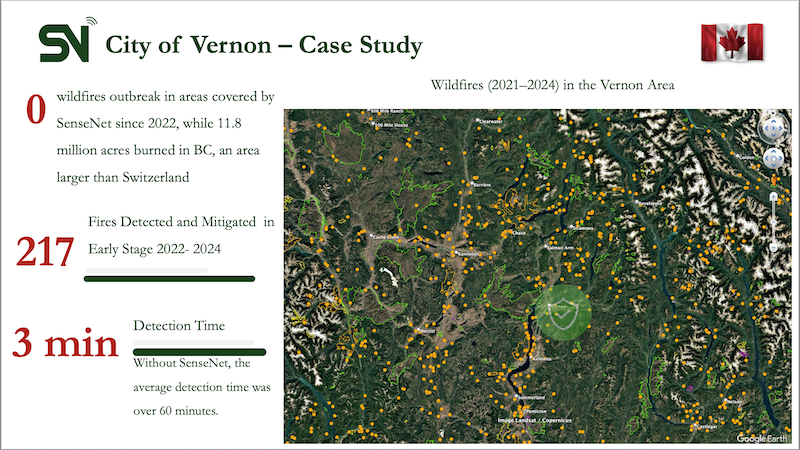
Claudia van der Vorm: “It’s on the Sunshine Coast. The city of Vernon actually has it already for three years, and even with the recent Vernon fire they knew exactly where it was, the wind direction, they knew the fire spread, and they managed the fire very quickly. In the three years that Vernon has the system, they haven’t had a fire outbreak, but they averted over 200 fires.”
“Vernon was sponsored by the Canadian government and that area really has the most data, but SenseNet is active in Australia and the U.S. They’re in the works for Latin America right now. So, it is implemented in many areas as we speak.”
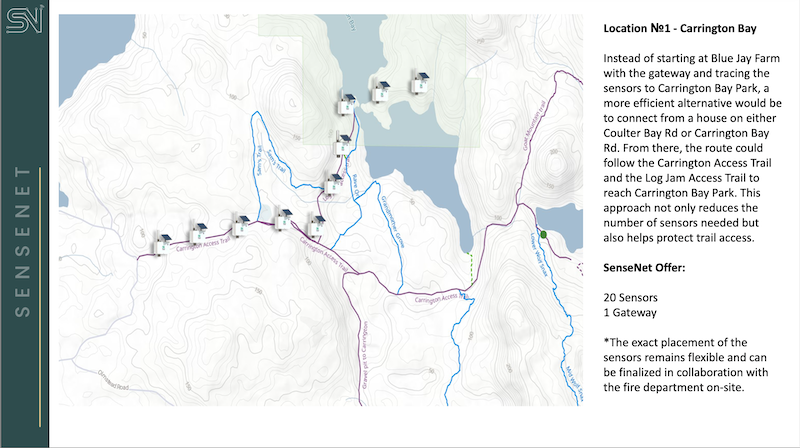
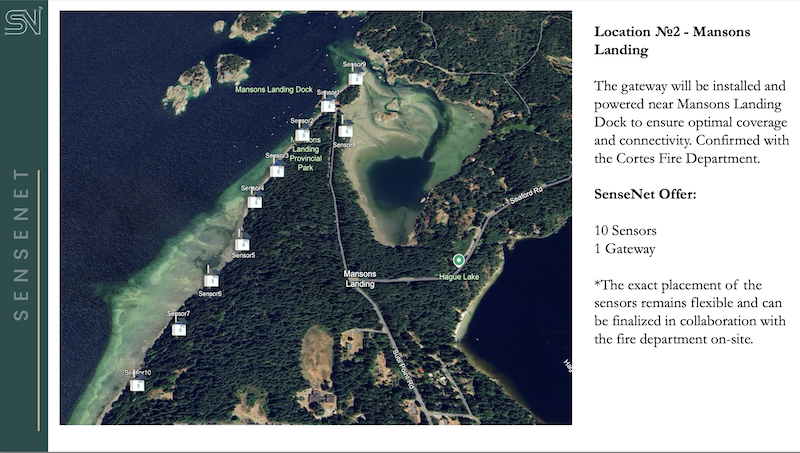
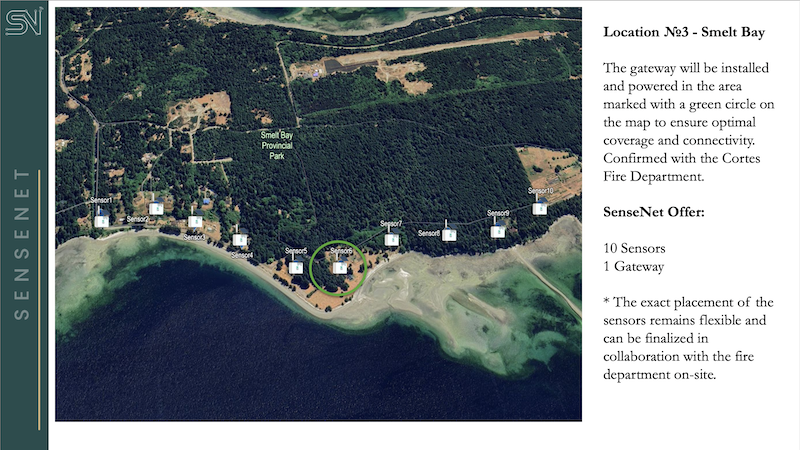
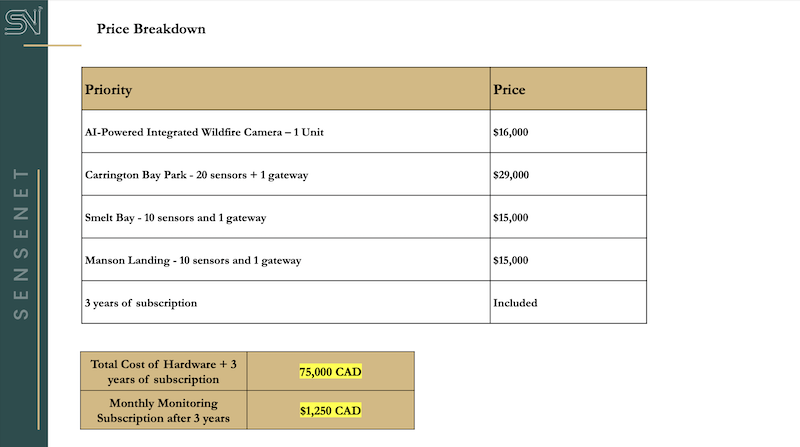
The current proposal for Cortes Island involves a network of 40 sensors in Carrington Bay, Mansons Landing and Smelt Bay.
Cortes Currents: Eli, why are you in favour of using SenseNet on Cortes Island?
Eli McKenty: “Claudia actually reached out and proposed this to myself and the fire department board a number of months ago. We looked into the system and I’m quite excited about the capabilities. I think we’re the first coastal community that’s implementing it, and we think it’s important to get out ahead of changing conditions as far as the expected fire behaviour in the Coastal Fire Centre.”
“Typically in the past we haven’t seen the kinds of fires in the Coastal Fire Centre that we see in the interior, but the fires out near Bamfield in Port Alberni are a perfect example of fires that are not typical for this area and the kind of thing that we’re concerned about.”
“Given that we are in a remote and isolated area, we have to be quite self-reliant. We have a very modest crew as far as being able to respond to a major fire prior to the arrival of BC wildfire and outside resources, and that makes it really critical that we get on scene as fast as we can. So we’re quite excited about the detection capabilities because it could potentially make the difference between being able to catch a fire at the early stages, where it’s within our capability, and something getting to the point where it’s too big for us to handle locally.”
“It’s also really valuable being able to locate a fire or incident ahead of our arrival, because often in the summer we’ll get a report of smoke or something like that and it can take a while to figure out where that’s actually coming from. So having the remote sensing capabilities to know where we’re going ahead of time is super valuable.”
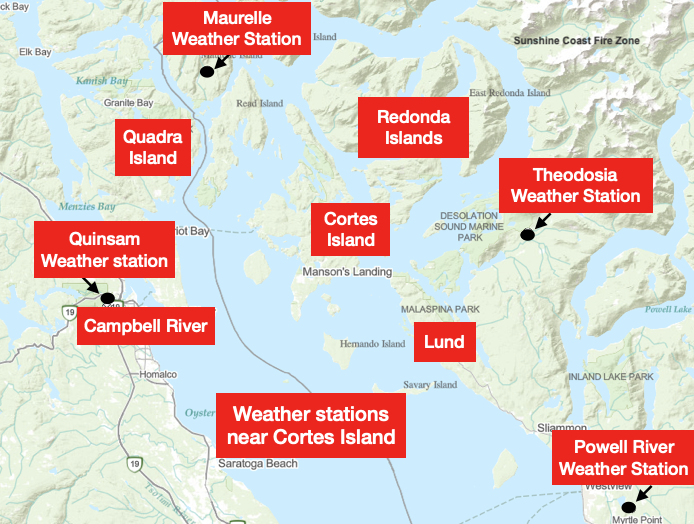
“The weather piece is also of great interest. Right now our fire weather indices are generated from weather stations on Maurelle Island, in Theodosia Inlet and the Quinsam fire base, and none of them are specific to Cortes and our local weather patterns. We’re quite excited to have better local weather data coming from the system that we can use for our own forecasting and heightened awareness levels when it’s in really dangerous territory.”
“I would like to be able to provide more local weather data to industrial operators on the island because the weather data as far as forest shutdowns for industrial activity and stuff like that’s driven from weather stations which at this point are not actually on Cortes. Having more local weather data would allow us to better calibrate when it’s safe to have activity in the forest, and when it isn’t.”
Cortes Currents: I understand this is a fundraiser, what’s the system cost? How much have we raised? And how much do we have to raise?
Claudia van der Vorm: “So the total system, which comprises of about say 40-45 sensors, a camera, and then obviously the whole platform with three years subscription – is $75,000. I don’t have the latest balance showing where we are. We are almost there. I think we need the last $15,000 to $20,000.”
Eli McKenty: “As far as I know, that’s where we’re currently sitting. Essentially what we’re doing is we are fundraising for a three year pilot project. At the end of that, we’ll be able to determine the value to the taxpayers. From there we can propose covering the operating costs as part of our normal budget, assuming that it’s demonstrated its usefulness to the area.”
“This morning I was out for a burning complaint on the island, and we’ve actually had several of those recently, as well as a hydro line fire a couple of nights ago. So there should be lots of data that we can collect during the trial period to demonstrate its effectiveness at early detection and notification of fires on the island.”
“Another piece of the proposed project is that we are looking for landowners on island, businesses and individuals who would like to add additional sensors on their property or in their neighborhoods to fill out our overall sensor network. It would both enhance protection specifically around their area and then it would add to our general protection for the island by increasing the sensor network. Once we’ve got the pilot up and running, our focus then will be on adding additional coverage areas. This would help reduce the cost being carried on the fire department budget and offer a further opportunity for people to be involved in the project.”
Claudia van der Vrom: “We already hear a lot of interest from different communities. Tiber Bay, Cortes Bay and others that are interested in the idea of paying for some additional sensors in their own areas. We see now Savary, and Hernando Islands as well.”
Cortes Currents: Where would someone go to make a donation?
Eli McKenty: “There are several donation options through the Cortes Fire Department website, so that’s Cortes fire.org, and there’s a donate page there. We partner with several organizations that accept donations, both from Canada and from the U.S. We also can accept donations directly by cheque or by e-transfer. The fire department is managed by a charitable society, so we’re also able to give tax receipts for donations for the system.”
Cortes Currents: Is there anything that either of you would like to add?
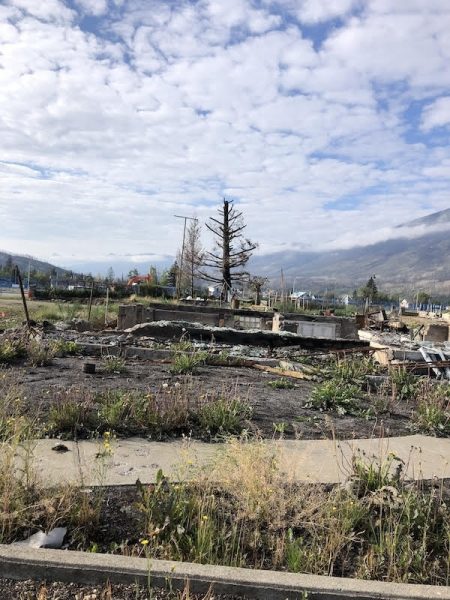
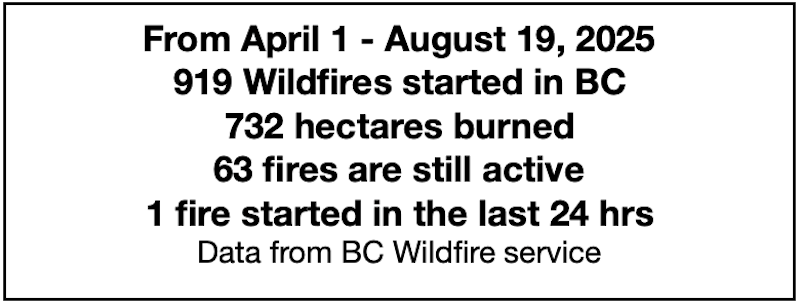
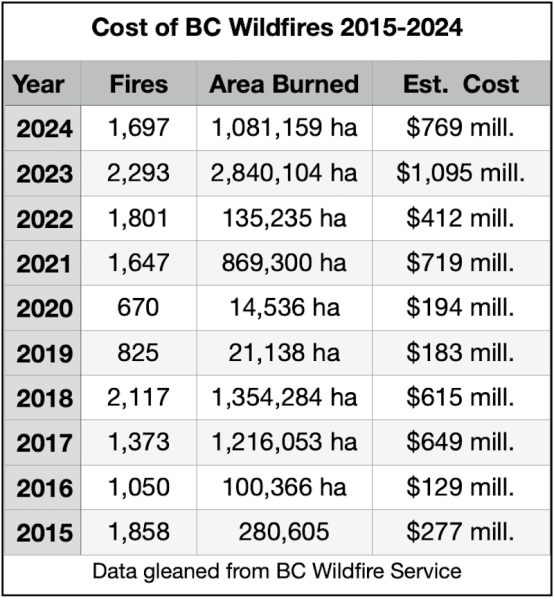
Claudia van der Vrom: “I just want to reemphasize the importance of early detection. We have seen the damages wildfires have made in so many different areas. We have seen Pasadena in Los Angeles. We have seen Hawaii. Everywhere it becomes an increasing problem. If we focus on the early detection, we can really make impact on our island.”
Eli McKenty: “I think early detection is super key for us in our remote location here, and I think the whole project has been a great example of the Cortes community coming together to make our island a better and safer place.”
Links of Interest:
- SenseNet website
- Donation page on the Cortes Fire Department website
- Articles about, or mentioning, the Cortes Island Fire Department
- Cortes Island Fire Department (Facebook)
- Cortes Island Fire Department (Website)
All undesignated photos and charts by Roy L Hales
Sign-up for Cortes Currents email-out:
To receive an emailed catalogue of articles on Cortes Currents, send a (blank) email to subscribe to your desired frequency:
- Daily, (articles posted during the last 24 hours) – [email protected]
- Weekly Digest cortescurrents – [email protected]