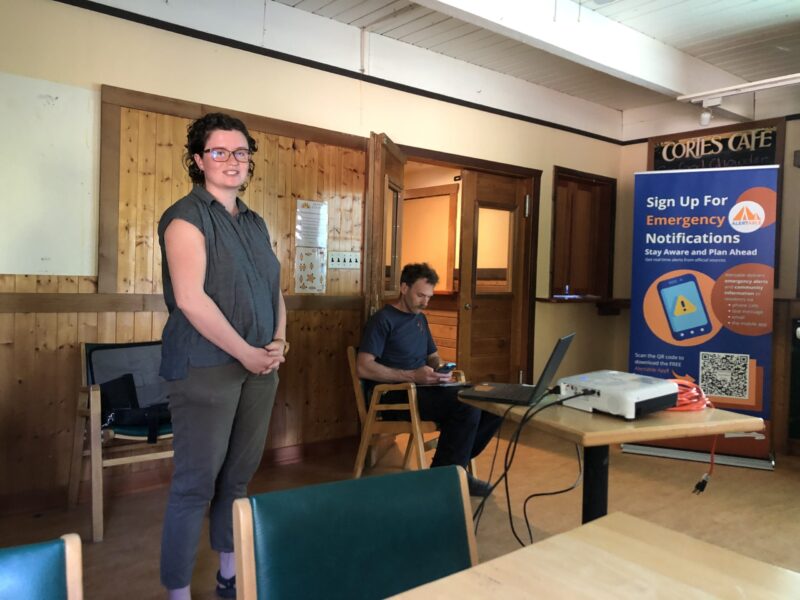
On May 3rd, Sarah Rosen from the Strathcona Regional District came to the Pioneer Room at Mansons Hall to talk about emergency preparedness… and there were about eight people in the room. As Sarah herself said, the biggest emergency preparedness risk on the island might just be that so few of us are thinking about it.
[I’ll admit that I’ve been procrastinating — not getting around to producing this story — and it might be because the subject is a little uncomfortable when you know that you yourself are not prepared. But avoidance and procrastination are exactly the problems that Sarah came to address, and she says being prepared might not be as daunting as you think.]
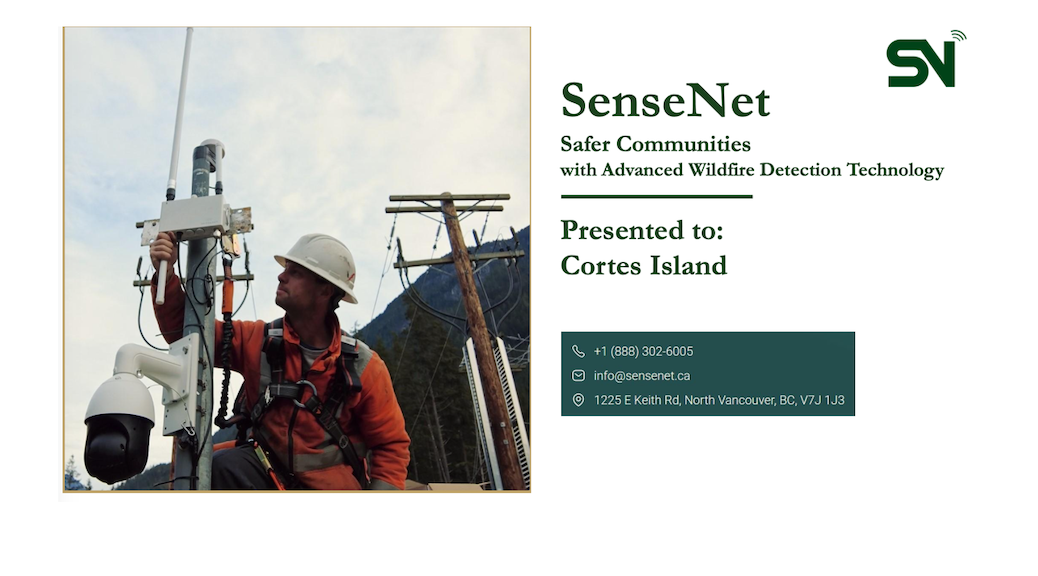
Cortes Island is close to raising the funds for a wildfire detection system that identifies fires within minutes of their inception. In today’s interview Claudia van der Vorm explains what SenseNet is and Cortes Island Fire Chief Eli McKenty says why he thinks we need it.
Claudia van der Vorm: “SenseNet is a Canadian company based out of Vancouver. They work on very early wildfire detection, in most cases under the minute, they can detect a fire when it’s still in smouldering stages. So when we don’t smell it, we don’t see it, in areas hard to access. They have a combination of sensors, camera, satellite, and a platform that allows that early detection, prevention and mitigation.”
There hasn’t been a major wildfire on Cortes Island for decades, but this could change as our summer’s grow hotter and drier. The Rainbow Ridge Affordable Housing project is being designed with this in mind.
“The main idea is to try to have more of a FireSmart community and get rid of the conifers that are much more prone to embers catching fire and then catching the neighbor’s houses and vehicles on fire, like we saw in the California fires this winter,” explained Mark Lombard, speaking on behalf of the Cortes Housing Society.
Together with Klahoose Forestry, they make up the Cortes Forestry General Partnership. Mark Lombard, General Manager for the Partnership gave Cortes Currents an overview of their operations this year and plans for the future:
Mark Lombard: “We have pretty good support from the community. Our emphasis is building value for the community, training workers and providing firewood for seniors and logs for local mills. We’re the lightest touch logging operation in the province by a mile and a half.”
“Log prices are really low right now. There’s potential concerns about a recession in the US, or globally, for whatever reasons and because prices are low, we’re not planning to do any logging right now.”
Cortes Currents: So where were you working this year?