


While the Canadian government likes to think of itself as a leader in environmental stewardship, there have been a number of concerns:
- A lack of urgency in addressing climate change
- While the number of extreme weather events continues to increase in both size and magnitude, so does Canada’s production of the fossil fuel products that are the leading contributor to our emissions. In 2024, Canada’s oil production reached a record 5.7 million barrels per day, with the oil sands accounting for approximately 57% of this output.
- Weak enforcement and monitoring of environmental laws and regulations
- According to COSEWIC, there are now 850 Canadian wildlife species at risk, but the government is very slow to respond to this growing crisis.
Cortes Currents emailed the Conservative, Green, Liberal, and NDP campaign headquarters in North Island Powell River (NIPR) a list of questions designed to get to the heart of this matter. So far only Mark de Bruijn, Campaign Manager for the Greens and a former Green candidate in 2019, has answered.

“Here are my responses, on behalf of Jessica’s campaign. Mine may be a bit more wordy than hers would be, but we are of one mind — as are all Greens. All of these questions are thoroughly addressed in Green policy. “
Q #1/ What should the primary goal of Canada’s environmental institutions be?
Mark de Bruijn: Greens have proposed for several years now that all government business and legislation should be viewed through the lens of impacts on climate change. Nothing should be done or considered without this being the basis. The institutions responsible for environmental protection should be empowered and required to take their role much more proactively, whether its DFO or Environment & Climate Change Canada, or any other group. Their role and responsibilities for safeguarding the environment should be science based, and influence by industry should be prohibited. Lobbyists should be limited in the number of representations they can make, and these should be recorded in a publicly available registry.

Q #2/ Is there a potential conflict, for example, within the Canada Energy Regulator’s mandate to ‘keep energy moving through our country’s pipelines and powerlines’ while protecting the surrounding communities and environment?
Mark de Bruijn: The potential conflict exists and has occurred in numerous instances. Regulators are under constant pressure from industry to act in ways favourable to industry. In some instances there’s been a revolving door, where politicians and bureaucrats leave their public office to take up high paying positions in the industries they were charge with regulating, and vice-versa. The focus tends to be on keeping the energy moving and the profits flowing, while the environmental and social impacts are given less importance. This is especially the case with many First Nations communities and territories. “Get ‘er built” is the mantra, and in some cases a militarized RCMP is brought in to make this happen. Promoting resource development and maximizing their economic benefits to Canada are incompatible with environmental protection. To avoid conflicts of interest these two interests need to be separated and housed in separate agencies.

Q #3/ A recent report from the Alberta Government argued against an emissions cap on the gas and oil sector because industry is bringing its emissions down by itself. While it will not meet Canada’s 2030 targets, the gas and oil sector may be able to meet the 2040 target. Do you think Canada needs an emissions cap?
Mark de Bruijn: Absolutely we do! Industry is superb at greenwashing, making glowing promises, policies, etc. that sound very green and sustainable, but almost never meet any target they promise to reach. It is exactly the proverbial fox guarding the henhouse. Industry’s mandate is to maximize profits to the benefit of owners and shareholders. Doing anything that negatively affects their bottom line is contradictory to this mandate. Only rigorous regulation by outside bodies can ensure targets get met — but this only works if such regulators are completely out of industry’s reach. A science-based emissions cap set by government is essential if Canada is to have even a small chance to reach its 2040 target.

Q #4/ What about Fisheries and Oceans Canada’s (DFO) mandate to promote salmon farms while also regulating them?
Mark de Bruijn: A perfect case in point for questions #2 & 3. Economic promotion and science-based regulation are mutually incompatible. DFO’s double mandate should be split up, with marketing and promotion carried out by Agriculture Canada, and regulation and environmental protection as the sole mandate of DFO (which it was decades ago). The fish farm industry requires drastic changes if we are going to continue having a healthy wild ocean. These feedlots should be removed from the ocean as soon as possible onto land-based closed containment systems. Industry will resist this costly transition, and DFO as it currently exists finds its two roles deeply compromised and in conflict with each other. So far, money and profit have always won out at the expense of proper regulation and environmental protection.
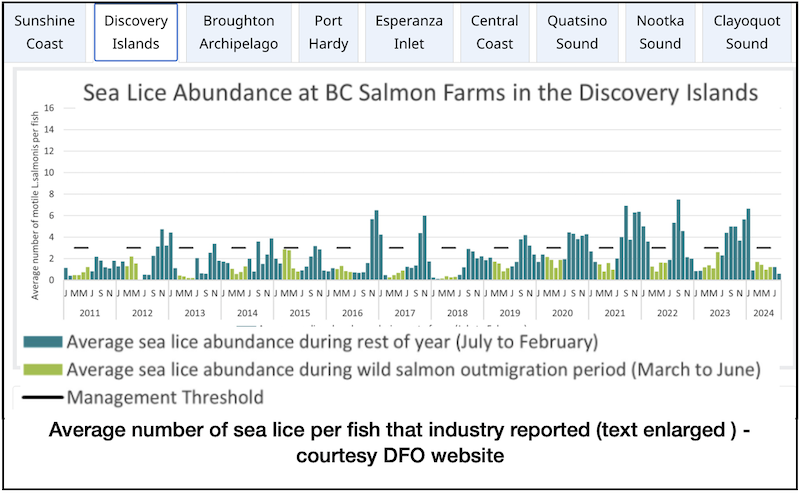
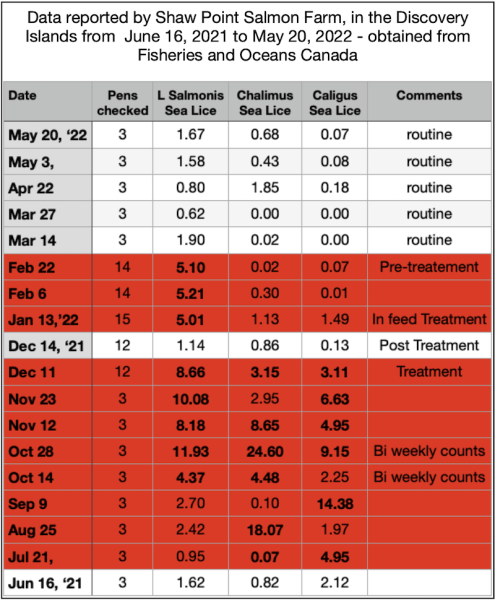
Q #4/ Most of the data DFO uses in regard to sea lice counts on fish farms comes from industry reports. Should Canada be building up DFO and providing it with more resources to carry out independent assessments and analysis? Or should they continue to largely rely on data from industry?
Mark de Bruijn: Industry has shown over and over that it is very open to manipulation of its data so that it reflects favourably on itself. Furthermore, industry’s reach into DFO has been so deep that it has successfully muzzled DFO scientists who have develop novel and world-class research tools that have shown how damaging these farms are, and some of their data has been manipulated to favour industry. Not only should Canada beef up resources to DFO, but as mentioned above DFO should be broken up into separate agencies: one responsible for marketing and promoting Canadian seafoods (or given to Agriculture Canada), and the other for regulation and protection of our oceans (the original DFO, then known as the Fisheries Research Board).
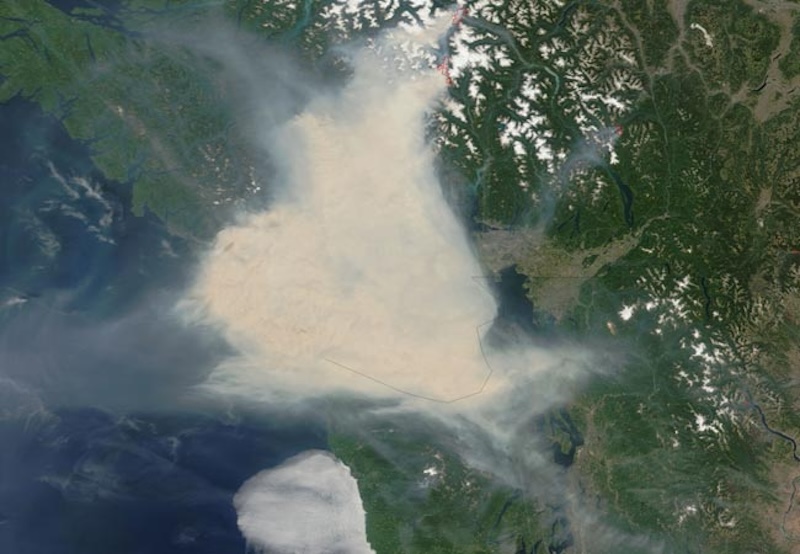
Q/ Going forward into an era of increasing global warming, extreme weather events and economic uncertainties, do we need stronger well financed environmental institutions with a clear mandate to make protecting the environment their #1 concern? Or are there already too many regulations?
Mark de Bruijn: Many more conservative-minded Canadians want to reduce or even eliminate regulation of industry. But given the severity of the effects of global warming, government needs to find the political will to make a priority what the scientific community has been telling us for years is not only a problem, but a global emergency. There is clearly a dearth of proper regulation to make rapid and meaningful change to our unsustainable way of living that is threatening not only ourselves but the entire living ecosystem of the planet. Stating the obvious, we cann’t live without it. Yet we continue to act as though it’s an externality to our civilization. Canada needs to take the 2019 Parliamentary declaration of there being a climate emergency seriously. So far we’ve acted as thought there’s not an emergency, just a big inconvenience that we can manage and mitigate our way through. Environmental protection, which includes dealing with the climate and with biodiversity, must be the #1 priority of government, and strong, robust, well-funded institutions are essential if we are going to come close to our climate targets, and hopefully continue to have a livable world.
Links of Interest:
- Climate Action – Green Party of Canada
- Our Plan for Building a Better future for Canada – Green Party of Canada
- Articles about, or mentioning, the 2025 election
Top image credit: Canada’s Prime Minister Justin Trudeau surveys the damage left behind from the flood waters in Abbotsford, B.C., Friday, November 26, 2021. THE CANADIAN PRESS/Jonathan Hayward via Flickr (Public Domain)
Sign-up for Cortes Currents email-out:
To receive an emailed catalogue of articles on Cortes Currents, send a (blank) email to subscribe to your desired frequency:
- Daily, (articles posted during the last 24 hours) – [email protected]
- Weekly Digest cortescurrents – [email protected]