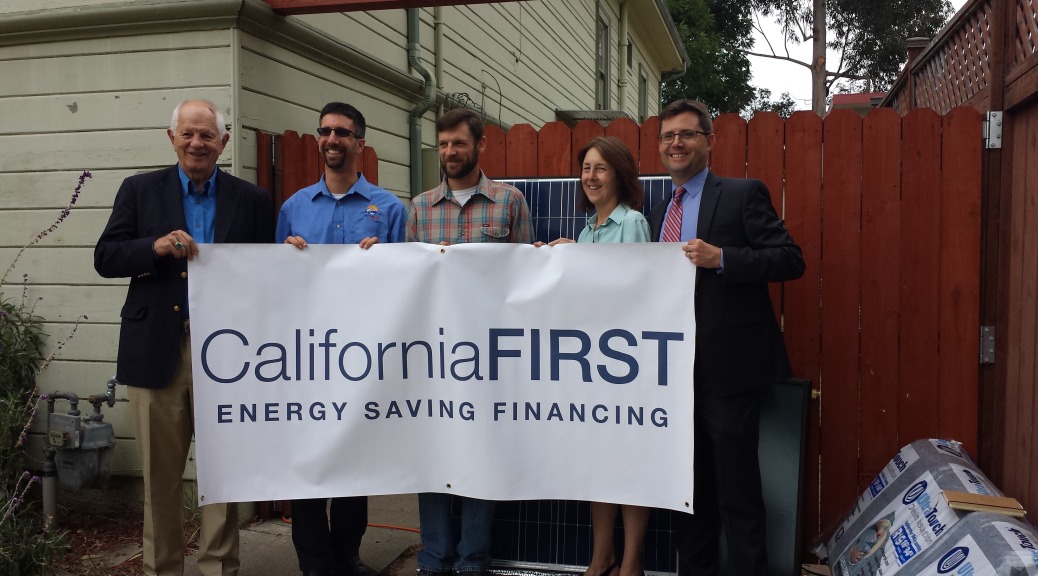
In 2008, the city of Berkely had a problem. They wanted to hasten the adoption of solar technology, but the $20,000 to $30,000 bill was too steep for a lot of homeowners. Cisco DeVries, the Mayor’s Chief of Staff, came up with what Scientific American would later call one of the top 20 “world-changing” ideas of the year. The capital would come from private investors, but homeowners could finance energy upgrades through their property taxes. Since then, Property Assessed Clean Energy (PACE) programs have provided more than $13 billion for solar installations and energy saving improvements for homes and businesses in the United States. Cortes Island resident Brian Scott would like to see PACE made available to British Columbians.
“I represent two things, an idea and an organization. The idea is the PACE financing tool, which will not be ‘the magic bullet’ but is very close when it comes to our need to address climate change quickly. PACE specifically addresses the fact that roughly a third of our greenhouse gas emissions come from residential and commercial buildings. I’m representing the concept and promoting it. I also represent PACE Alberta and PACE Canada,” he explained.
It has been eight years since Cisco DeVries invented Property Assessed Clean Energy (PACE) loans. They were meant to spur the mass adoption of residential solar, but have also proven to be an effective means of financing other energy and water saving devices. If PACE weren’t classified as a tax, it would have been offered through-out America years ago. Instead, five years ago Fannie Mae and Freddie Mac urged local governments to put their PACE programs on hold and the vast majority of PACE projects have been in California. That is about to change. Cisco DeVries explains how PACE is changing.
It has been seven years since Cisco DeVries came up with what Scientific American would later call one of the top 20 “world-changing” ideas of the year. He was the Mayor of Berkeley’s Chief of staff. They were thinking about ways to hasten the adoption of solar technology. DeVries realized the breakthrough they needed was financial rather than technological. The $20,000 or $30,000 people needed to install a solar system was a hefty bill. He was looking for a way the city could help when a northern Berkeley neighbourhood asked to have their utility lines put underground. This improvement was to be financed through their property taxes. DeVries realized this was the vehicle that could finance the adoption of solar and other energy improvements. The Property Assessed Clean Energy (P.A.C.E.) program was born. There are many questions remaining about the events ahead. One of them is how did California First help bring PACE home?