
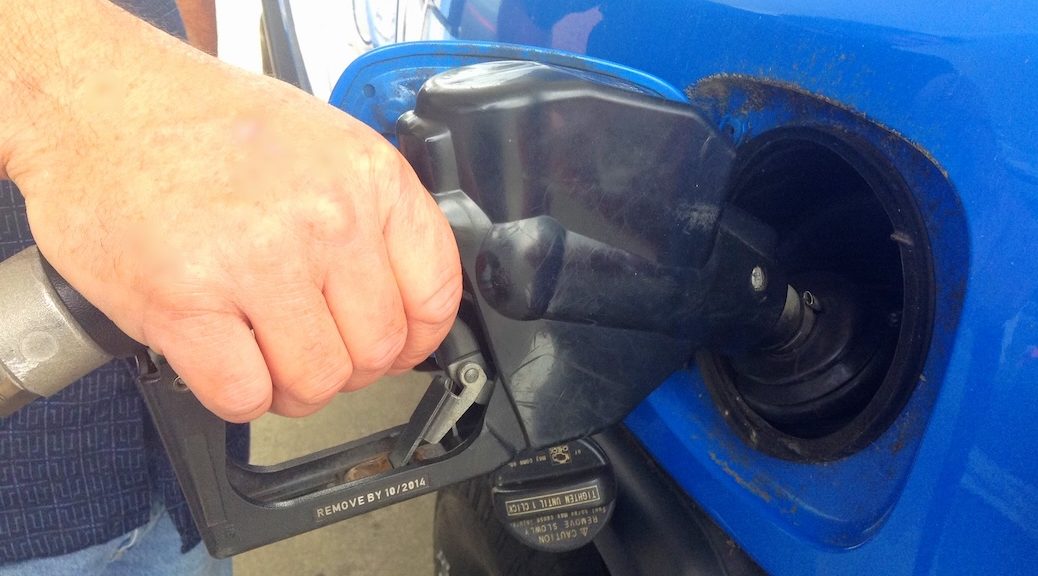
Driving a gasoline powered car is getting more expensive these days as a consequence of the war with Iran and the closure to most oil tankers of the Strait of Hormuz. Our industrial and consumer world is still largely energized and sustained by oil, and about 20% of the global consumption of about 100 million barrels per day must pass unimpeded through that narrow gap in the Persian Gulf. Limit supplies and the price goes up. So, while the subject of oil is current and the price of gasoline has our attention, this is an opportunity to consider the environmental implications of what we are doing as consumers of these fossil fuels.
To produce a barrel of conventional oil results in the emission of about 60 kilograms of carbon dioxide equivalent (CO2e)—the oil from the tar sands in Alberta has been as high as 85 kg CO2e per barrel but the province now contends efficiency has brought it down to 65.2 of CO2e. Globally, about 6 million tonnes per day of CO2e is emitted just to extract the oil. Then it has to be refined and distributed to markets. Not all this oil, however, is burned as fuel in vehicles. About 14% is used in the petrochemical industry to make such products as plastics. Although about 8% goes to make jet fuel and 7% for marine shipping, this form of oil is still burned and enters the atmosphere as CO2.
The barrel of oil to be burned as gasoline or diesel in motor vehicles contains 159 litres, and each combusted litre produces 2.7 kg of carbon dioxide. (Some statistics say 2.31 kg, but 2.7 would take into account the larger emissions for burning diesel rather than gasoline. Others suggest a realistic total of carbon dioxide emissions for all oil production and burning should be the tonnage times 3.664.) Using 2.7 kg/litre means that if the fuel consumption of a gasoline powered car is as low as 6 litres per 100 kilometres for a subcompact, 8 for most others, and more than 10 for large pickups, then the carbon dioxide emitted into the atmosphere for driving 100 kilometres is 16.2 kg, 21.6 kg, and 27 kg respectively. Assuming that the average vehicle travels about 15,000 km per year, this equals about 3240 kg or 3.240 tonnes per year per vehicle, assuming a median fuel consumption of 8 litres per 100 km. The estimated motor vehicle population in the world in 2025 was about 1.65 billion. While about 20% of new cars sold globally in 2025 were electric, their numbers still represent only a small percentage of the total vehicles in use.
These statistics will vary from place to place and from time to time, but one statistic remains fairly constant. If global oil consumption is about 100 million barrels per day, and 71 million barrels per day are used for vehicular transportation (100,000,000 minus the 14% used in the petrochemical industry, minus the 15% for jet fuel and marine shipping), then each barrel burned will produce about 430 kg of carbon dioxide (2.7 x 159 litres per barrel). We can assume that the supply of gasoline and diesel meets the demand, otherwise surplus gasoline and diesel stocks would accumulate, which they do not. This totals 30,530,000 tonnes of carbon dioxide emitted daily, or about 11 billion tonnes of CO2 per year that is added into the atmosphere just from driving vehicles.
With such numbers, Earth feels like a small place in our modern world of instantaneous communication, global travel and international politics. And the layer of air that keeps us warm and safe and alive is very thin and fragile. Given these circumstances, it should be easy to understand how the millions and billions of tonnes of our carbon dioxide emissions could have a disruptive effect on the balanced stability of an atmospheric miracle that is continually interceding between us and death.
We can’t all have electric cars instantly, and they are still expensive, in part because they are larger and more complicated than they need to be. Eventually, a less venal market may provide an electric “people’s car” that is small, efficient, simple, practical and reliable. This would be an immense benefit to consumers, but also to the environment.
Meanwhile, should you be driving a gasoline vehicle, consider how much you drive and for what purposes. Remember the 2.7 kilograms of carbon dioxide produced for each litre of gasoline burned. This is your contribution to an unfolding climate crisis. Regardless of the cost at the pump, the environmental price is debilitating heat, increased storm intensities, droughts, heavier rainfalls, floods and deranged seasonal weather. Each unnecessary kilometre that we thoughtlessly drive is moving us closer to a looming climate Armageddon.
Ray Grigg for Sierra Quadra