


Over the past decade, a quiet but deeply dedicated group of islanders has transformed the health and future of Cortes Island’s salmon-bearing streams. At the heart of this story are Christine and Cec Robinson, whose leadership helped launch the Cortes Streamkeepers into a community-wide conservation effort that today is rebuilding fish populations, improving habitat, and inspiring a new generation of salmon stewards.
Origins: From Volunteers to a Coordinated Force
The roots of streamkeeping on Cortes date back to the 1980s, when Heather Mathers first began recording spawner counts. From 1993 to 2008, Flavian Harry of the Klahoose First Nation maintained salmon stocking records. But it wasn’t until 2013 that Cec and Christine Robinson, already active volunteers, asked the Friends of Cortes Island (FOCI) to formalize the work.
In response, FOCI launched the Stream Stewardship Program in 2014, bringing structure and visibility to the monitoring of salmon habitat. Volunteers were trained in habitat assessment, data collection, and restoration, focusing on creeks like Basil, Hansen, James, Manson’s Lagoon, Frabjous Day, and Whaletown.
Feast and Famine: Salmon Returns in a Changing Climate
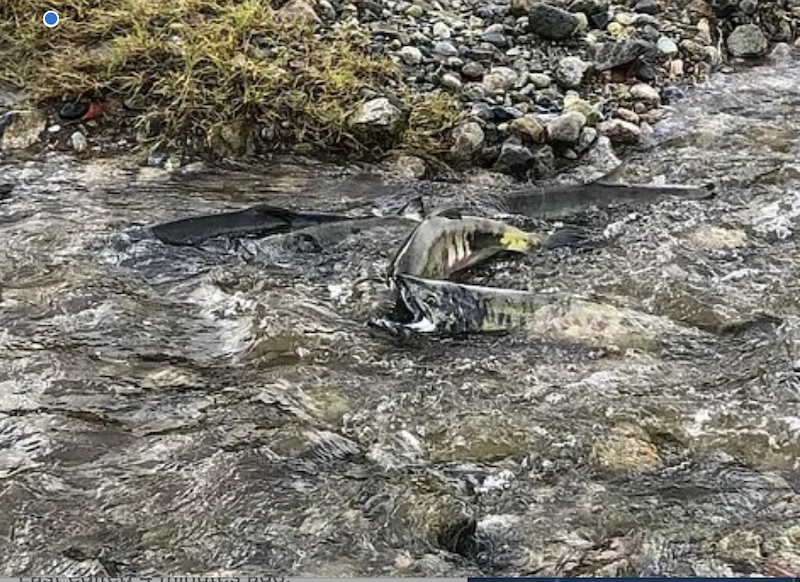
The past decade has seen dramatic fluctuations in salmon numbers — with years of both near-collapse and extraordinary abundance. In 2016, Basil Creek saw nearly 2,000 Chum return. Four years later, in 2020, over 1,000 were counted again, part of the species’ typical four-year cycle. But then the island experienced two consecutive years of drought and ecological distress: in 2022 and 2023, salmon returns plummeted. In 2023, there were no Chum recorded in Whaletown or James Creeks at all — a stark warning of what climate change might mean for future survival. Cec Robinson noted that in 2022, a few fish gathered at the mouth of Basil Creek and a few came into the creek and the mystery is why didn’t more chum show up in the bay.
“There were almost no spawners. If the fish can’t get into the stream, they can’t reproduce,” he explained. Meanwhile, streams like Hansen Creek, which once hosted hundreds of spawners, fell to single digits in poor years.
Then came the astonishing rebound in 2024. Basil Creek saw over 2,500 Chum — the largest run in recorded local history. Squirrel Cove Creek, which often sees no fish at all, had 350 Chum. Hansen hosted 300; James Creek 220; and even Whaletown Creek saw 100 fish — thanks in part to a new culvert that removed long-standing barriers to fish passage.
“We couldn’t count them all,” said Christine Robinson. “At some point we had to stop. There were too many.”
The Shift from Coho to Chum
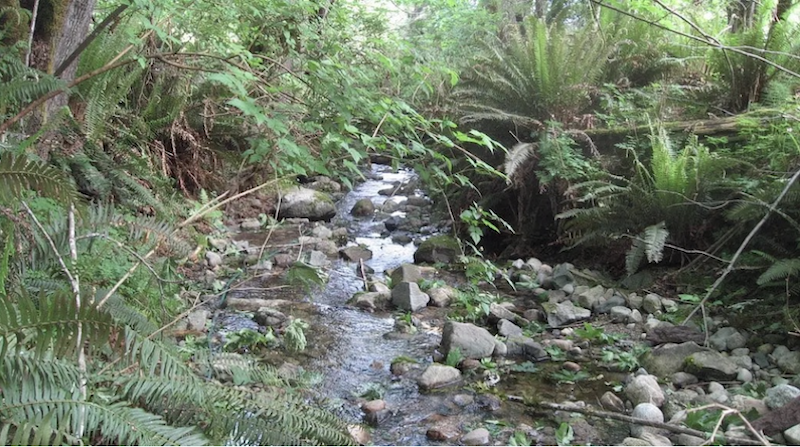
Climate change forced a major strategic pivot in 2016. Coho salmon, which remain in freshwater streams for a year or more, were increasingly vulnerable to spring droughts and rising water temperatures. “There just wasn’t enough water,” recalled biologist Dave Ewert. That year, the decision was made to focus on Chum salmon, which leave streams for the ocean within days of hatching — better suited for Cortes’s increasingly erratic conditions.
The change was stark but necessary. “It probably means that Coho are no longer a viable salmon species on Cortes Island,” Ewert wrote. “Chums are now the only species that can adequately survive.”
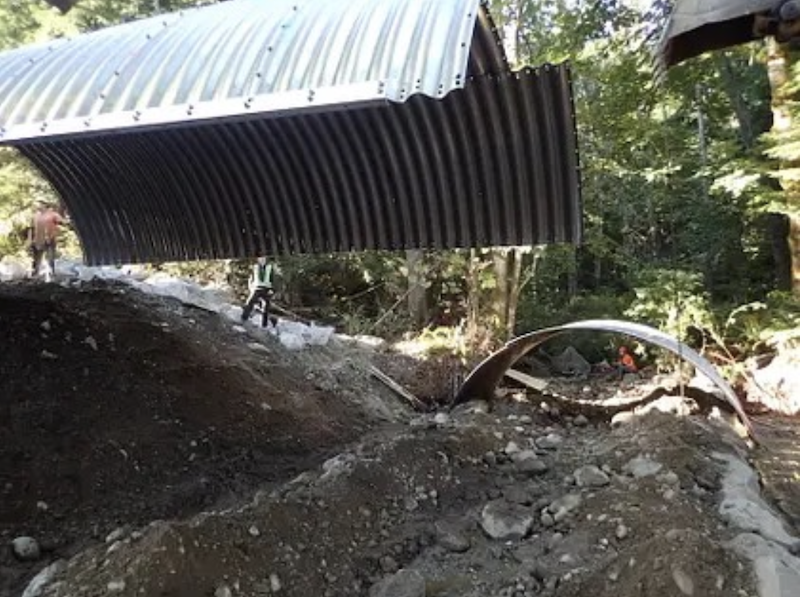
The ‘new’ culvert being installed in Basil Creek – Photo by Sean Wong, Senior biologist with the Ministry of Transportation
Restoration and Innovation
With FOCI’s backing and support from the Klahoose First Nation and DFO, the streamkeepers embarked on a series of bold habitat restoration projects. Notable among them was the Basil Creek culvert replacement, completed in the Fall of 2017. The old culvert had blocked early-spawning fish during dry autumns. The new open-bottom arch culvert, part of a larger stream remediation project, reconnected vital upstream spawning habitat. Woody debris was reintroduced to create hiding spots, spawning gravel was added, and deep pools were excavated to help fish avoid predators.
Another critical effort was the James Creek gravel project, which spanned 2 heroic volunteer projects in 2020 & 2021, adding spawning gravel to James Creek, bucket by bucket, and even by zipline. Streamkeepers installed five artificial redds in 2024 and stocked them with 10,000 Chum eggs. This marked the first time that wild brood stock eggs were deposited in James Creek, leveraging habitat restoration that had been years in the making.
Egg Collection and Hatchery Work
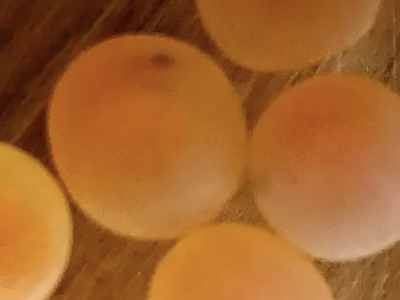
The record 2024 run also allowed for a successful wild egg take — only the second ever conducted on Cortes. With the Klahoose hatchery team, the streamkeepers harvested over 60,000 eggs from robust, healthy Chum — some of which were placed in an incubation box in Whaletown Creek, others in James Creek, and the remainder raised at the hatchery.
This safety net ensures that if floods or droughts wipe out natural spawning in one year, future generations will still have a chance. “We’re just trying to undo some of the damage that we’ve done in the past,” said Cec Robinson.
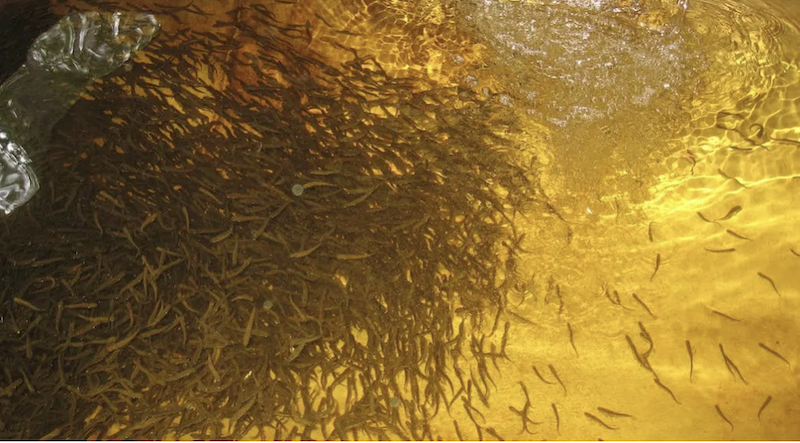
Fry at the Klahoose hatchery on Cortes Island
A Community Effort, Looking to the Future
This work is collaborative by design. Alongside the Robinsons and FOCI are partners like Klahoose Fisheries (including Byron Harry, Darrian Hachez and Brian Pielle), DFO staff like Stacey Larson and Dave Ewert, and volunteers young and old. “FOCI gives us the umbrella we need to work with agencies,” said Cec. “Otherwise, we’re just an informal bunch with no structure.”
Younger Streamkeepers are also stepping in: names like Jordan Trebett, Evelyn Underhill, Josh Bannister, Jasmine Hillier, August King, and Mira Andrews represent the next wave of salmon stewards.
Conclusion
What began as a handful of volunteers is now a vibrant movement revitalizing Cortes Island’s streams. Through monitoring, habitat restoration, egg collection, and community education, the Streamkeepers — guided by Christine and Cec Robinson and supported by FOCI — have helped turn the tide for salmon on the island. With ocean conditions uncertain and climate pressures mounting, their work is more important than ever. Anyone with an interest in fish, streams and nature are always welcome to participate and can contact the FOCI office.
The Cortes Island Resonance Series:
- Restoring Life to Dillon Creek
- Friends of Cortes Island at Mansons Landing Provincial Park
- 30 Years of Foreshore Monitoring on Cortes Island
- European Green Crabs Reach Cortes Island
- Sabina Leader Mense & the Wolves of Cortes: A Story of Coexistence
- Vanishing Voices: The Global At Risk Species Crisis and Cortes Island
- The Call That Changed Everything: Western Screech Owls Return to Cortes Island
- The Story of the Island’s Streamkeepers
All undesignated photos by Roy I Hales
The Cortes Island Resonance series is produced with financial assistance provided by the Strathcona Regional District ‘s Grant In Aid Program and the Cortes Island Community Foundation.