


The algae blooms that began appearing in Hague and Gunflint Lakes in 2014 signaled a looming ecological crisis on Cortes Island. Fueled by excessive nutrient runoff—particularly phosphorus from septic systems, runoff from gardens, farms, and soils and sediments from eroding ditches—these blooms posed a serious threat to water quality and lake life. Recognizing the urgency, the Friends of Cortes Island (FOCI) launched a lake-monitoring program and, through years of data collection and expert analysis, identified wetland restoration as a key solution. That’s where the Dillon Creek Wetland Restoration Project began.
Diagnosing the Problem
Miranda Cross, the project manager, credits a 2018 report by limnologist Dr. Maggie Squires for clarifying the cause: phosphorus loading was driving eutrophication in the lakes. The best remedy, Squires concluded, would be restoring wetlands—nature’s filters—along the waterways feeding into the lakes. Wetlands are often described as the “kidneys of the landscape” for their ability to trap nutrients and sediments before they reach open water.
FOCI approached Linnaea Farm, the island’s oldest farm site and a central feature in the Gunflint watershed. A natural partner with a deep commitment to environmental stewardship, Linnaea agreed to collaborate. FOCI brought in renowned wetland restoration expert Tom Biebighauser, whose design helped secure funding through Environment and Climate Change Canada’s Eco Action Community Funding Program.
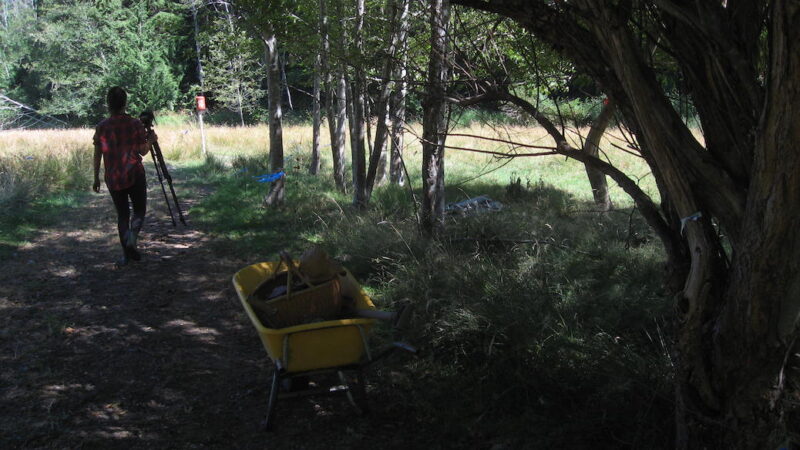
Fimmaker Beatrix Baxter before the restoration begins – Photo by Roy L Hales
A Three-Year Transformation
In year one (2021), the focus was on planning and permitting. Heavy machinery arrived in year two to dig new wetlands and recontour the land. Volunteers and staff planted hundreds of native species—cottonwoods, willows, red osier dogwood, elderberry, and more—collected from Cortes wetlands. These plants stabilize the soil, filter runoff, and provide vital wildlife habitat.
By the end of the third year in 2023, a thriving wetland had taken shape, transforming a drained pasture into a mosaic of open water, sedge meadows, and rehydrated floodplain. Volunteers, work bees, and local donations were crucial to the project’s success.
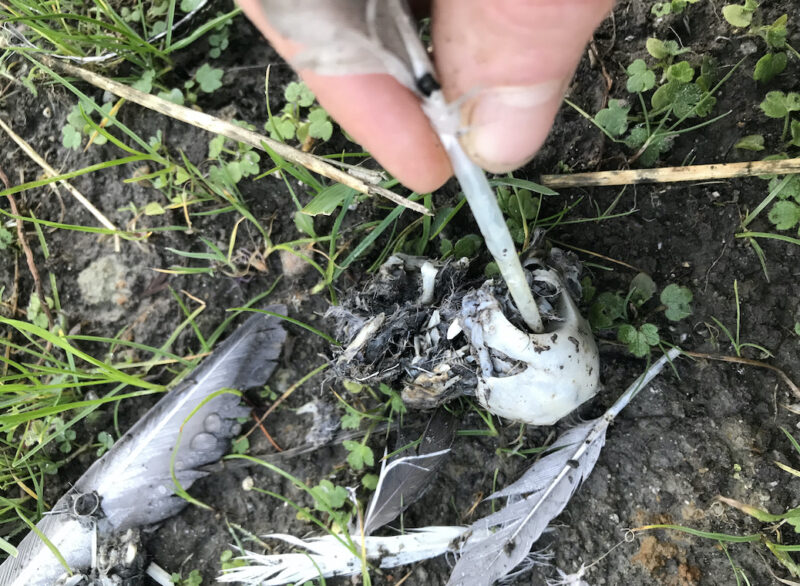
Physical evidences of wildlife returning – Autumn Barrett-Morgan photo
Wildlife Returns
Biological Monitoring Technician Autumn Barrett-Morgan played a pivotal role in documenting the return of wildlife. Formerly an acoustic ecologist, Barrett-Morgan used soundscape recorders and direct observation to track a stunning resurgence of biodiversity. Amphibians like Pacific Treefrogs and Red-legged Frogs (a species at risk) are now breeding in the wetland. Great Blue Herons and Kingfishers have returned to hunt fish, and once-absent birds like Snow Geese, Wilson’s Snipe, and Trumpeter Swans now visit the area. Even beavers, bats, and a lone wolf have left signs of their presence.
“We’re starting to see species that likely lived here before the area was converted to pasture,” she said. “It’s become a beacon for biodiversity.”
Measurable Impacts
While the water sampling data is still being analyzed, the physical evidence is clear: over 560 cubic yards of sediment—equivalent to 37 dump trucks—have been intercepted and deposited in the wetland rather than flowing into Gunflint Lake. Much of this is silt, rich in phosphorus, the very nutrient driving lake eutrophication. A sediment island is now forming at the wetland’s mouth, a visible marker of the filtering power of wetlands.
“This is a huge success for the project,” said Cross. “It shows that some of the sediment, and the nutrients it carries, from Dillon Creek, can be trapped before reaching the lakes. Unfortunately this also demonstrates there is a hemorrhaging of sediment upstream, that if left unaddressed will continue to deposit nutrient rich sediment into Gunflint Lake”
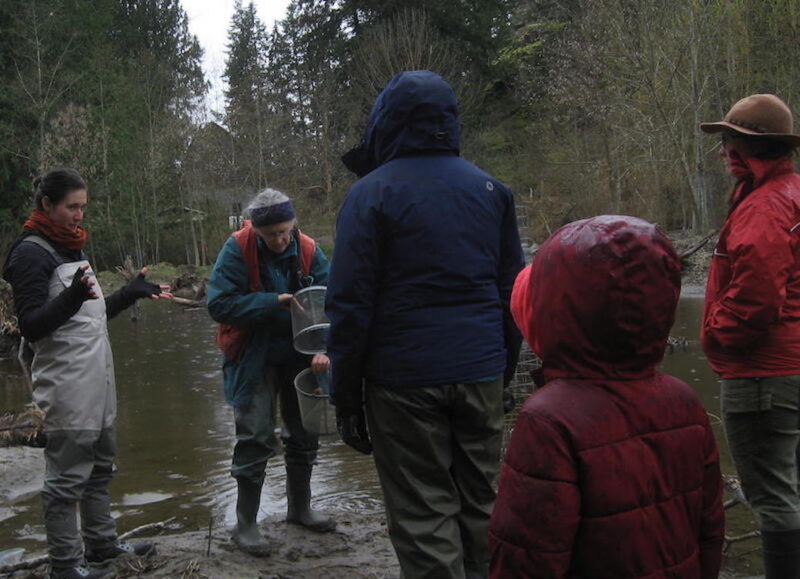
Education and Community Engagement
FOCI and Linnaea have turned the restoration site into a living classroom. Volunteers of all ages help with planting and monitoring. Educational tours and events—like the fish monitoring day led by Cec and Christine Robinson, alongside Barrett-Morgan—offer hands-on experiences with aquatic insect sampling, fish traps, and wetland ecology.
Helen Hall, FOCI’s Executive Director, noted: “It’s really starting to naturalize beautifully. But it needs ongoing maintenance. So we’ve been doing monitoring work, running work bees with the community, and leading educational tours.”
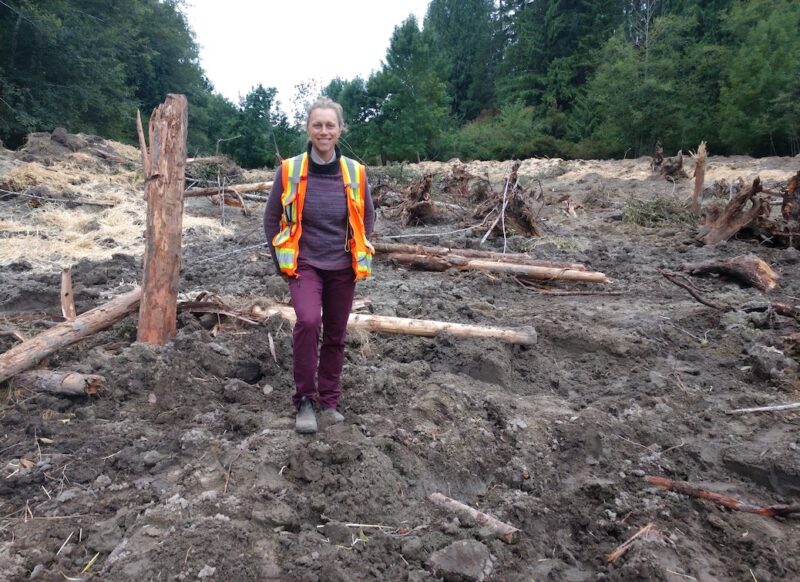
A Catalyst for Broader Change
The Dillon Creek Wetlands Restoration Project has proven that local action can make a real difference. Cross, now a professional wetland restorer, sees it as a model for the province. “We’ve lost 80 to 90% of wetlands in many parts of B.C. Restoring them isn’t just good for biodiversity and water quality—it’s essential for climate resilience.”
The restored wetland also stores carbon, recharges groundwater, and makes surrounding forests more resilient to drought and wildfires. These ecological benefits are especially urgent as climate change accelerates.
What’s Next?
Monitoring, wetland enhancement, and stewardship will continue through 2026. To address the upstream sources of sediment, historic meanders and wetlands of Dillon Creek, which was straightened and ditched decades ago, could be restored. Reconnecting the creek with its floodplain would allow more natural sediment and water filtration.
For now, the project stands as a remarkable example of community-driven ecological repair. “This isn’t about undoing all farming,” said Cross. “It’s about balancing local food production with landscape restoration and climate resilience.”
This Series
The Cortes Island Resonance Series is a publication of the Cortes Community Radio Society (https://cortesradio.ca/), located in downtown Mansons Landing on beautiful Cortes Island.
“Amplifying local voices and environmental themes through eight original reports promoted and distributed at Cortes Island’s Village Commons Summer Concert Series 2025.”
Special Thanks To:
- Friends of Cortes Island
- Get involved in keeping Cortes wild, beautiful and sustainable!
- Visit our website: www.friendsofcortes.org
- 983 Beasley Road, Mansons Landing BC V0P 1K0
- Linnaea Farm Society
- www.linnaeafarm.org/
- 1255 Seaford Rd, Mansons Landing, BC, V0P 1K0
- Miranda Cross, RPBio
- Wetland Restoration Specialist
- Rewilding Water and Earth Inc.
- [email protected]
The Cortes Island Resonance Series:
- Restoring Life to Dillon Creek
- Friends of Cortes Island at Mansons Landing Provincial Park
- 30 Years of Foreshore Monitoring on Cortes Island
- European Green Crabs Reach Cortes Island
- Sabina Leader Mense & the Wolves of Cortes: A Story of Coexistence
- Vanishing Voices: The Global At Risk Species Crisis and Cortes Island
- The Call That Changed Everything: Western Screech Owls Return to Cortes Island
- The Story of the Island’s Streamkeepers
Top image Credit: Revegetating around the ‘Fish Pond’ in the wetlands. A willow (in the foreground) and other plants are caged to protect from deer browse – Photo courtesy Miranda Cross
The Cortes Island Resonance series is produced with financial assistance provided by the Strathcona Regional District ‘s Grant In Aid Program and the Cortes Island Community Foundation.
Roy, it’s time for Wild Cortes to showcase this amazing accomplishment. We will need photographs, footage and speakers. Right now we have a whale exhibit up. I’d like the wetland restoration to be next. I’ve noticed quite a few visitors wandering in that direction. I was wondering if WC could stage a presentation of the wetland one of these days.