
All posts by Rochelle Baker

Rochelle Baker is a staff reporter with Canada’s National Observer, thanks thanks to a grant from the Local Journalism Initiative of the Government of Canada. She previously worked as a newspaper reporter and photographer in BC’s Lower Mainland for over 7 years.

‘Writing on the wall’ for West Coast fish farms, conservationists say

Canada’s National Observer, Local Journalism Initiative Reporter

Open net-pen fish farming on the Pacific coast took a one-two punch after operations closures were announced in both B.C. and Washington state this week. 

The shíshálh Nation said Wednesday that aquaculture giant Grieg Seafood is removing salmon farms from the nation’s waters along B.C.’s Sunshine Coast by February 2023. Meanwhile, on Monday, Washington state’s Department of Natural Resources (DNR) said it’s not renewing Atlantic Canada’s Cooke Seafood’s last two open-net pen leases in Puget Sound and farm operations will end by Dec. 14. 

Continue reading ‘Writing on the wall’ for West Coast fish farms, conservationists say
Saving B.C.’s at-risk species is pivotal to Canada’s biodiversity promises at COP15

Canada’s National Observer, Local Journalism Initiative Reporter

British Columbia represents the country’s greatest opportunity to be a world leader when Canada hosts the landmark global UN Biodiversity Conference in Montreal next month. 

Prime Minister Justin Trudeau has committed to the 30×30 pledge — to protect 30 per cent of Canada’s land and waters by 2030 — and is urging other world leaders to follow suit. The goal won’t be met without gains in B.C., which boasts the greatest biological diversity of any province or territory in the country but also has the greatest number of species at risk.

Continue reading Saving B.C.’s at-risk species is pivotal to Canada’s biodiversity promises at COP15

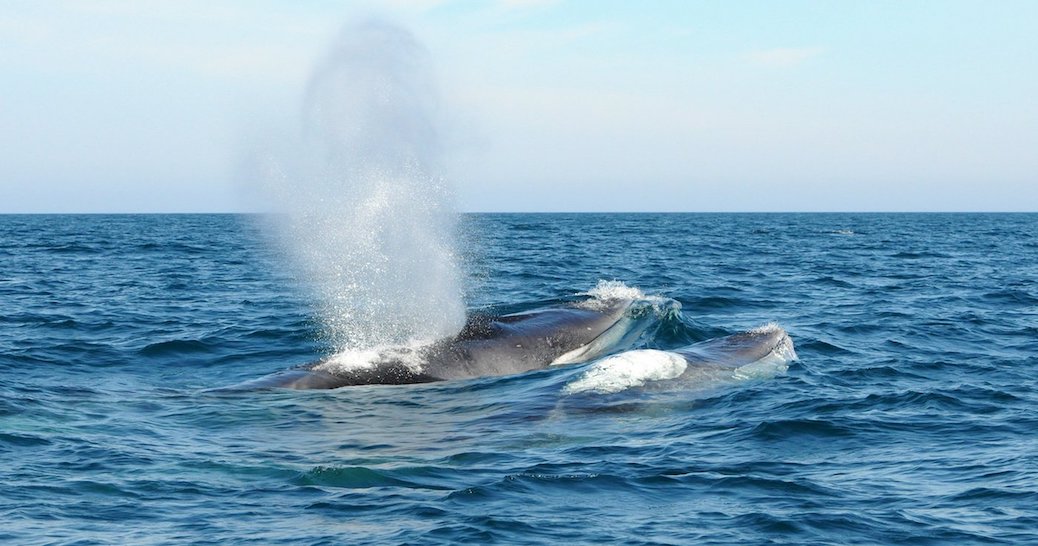
At-risk fin whales are in hot water with protection downgrade, LNG, and climate change

Canada’s National Observer, Local Journalism Initiative Reporter

Conservation groups are alarmed that the status of fin whales as a threatened species on Canada’s West Coast is about to be downgraded just as the dangers of LNG shipping and climate change are on the rise. 

The global population of the sleek, fast moving whale — dubbed the greyhound of the sea and named for the dorsal fin near its tail — was decimated by industrial whaling, which lasted until the1980s. Canada’s Pacific fin whale population was listed as threatened in May 2005 and was legally protected under the Species at Risk Act (SARA) the following year. 

That protection may now be weakened after the Committee on the Status of Endangered Wildlife in Canada (COSEWIC) concluded fin whales numbers are increasing and  reclassified it as a species of special concern in 2019.

Continue reading At-risk fin whales are in hot water with protection downgrade, LNG, and climate change

A deeper dive into the marine protected network plan on Canada’s West Coast

Canada’s National Observer, Local Journalism Initiative Reporter

There’s much to celebrate in the proposed plan to create a string of marine protected areas stretching Canada’s West Coast from northern Vancouver Island to Alaska, experts say. 

But the lack of information on specific protection measures for the BC Northern Shelf MPA Network means the blueprint to preserve sensitive ocean ecosystems risks becoming a string of “paper parks” — legally designated areas that don’t actually have effective conservation or stewardship measures. 

Continue reading A deeper dive into the marine protected network plan on Canada’s West Coast

Rewilding a school wetland is a lesson in climate resilience

Editor’s note: the Miranda Cross mentioned in this article is a Cortes Island resident and Project Manager for the Dillon Creek Wetlands Restoration project.

Canada’s National Observer, Local Journalism Initiative Reporter

Quadra Elementary’s kindergarten students tried their best to follow instructions and stay seated on tarps that were spread out on the school field in an attempt to keep them clean.

But the lucky kids near the edges of the blue plastic matting already had their hands in the dirt. 

The 60-plus children recently gathered with members of the We Wai Kai Nation, Quadra Island school and community leaders and the B.C. Wildlife Federation to celebrate their new wetland restoration project by planting a selection of native trees and shrubs. 

Continue reading Rewilding a school wetland is a lesson in climate resilience