
Tag Archives: LNG Canada

Camera footage of Canada’s first LNG terminal raises questions about invisible pollution

By Sonal Gupta, Canada’s National Observer, Local Journalism Initiative Reporter

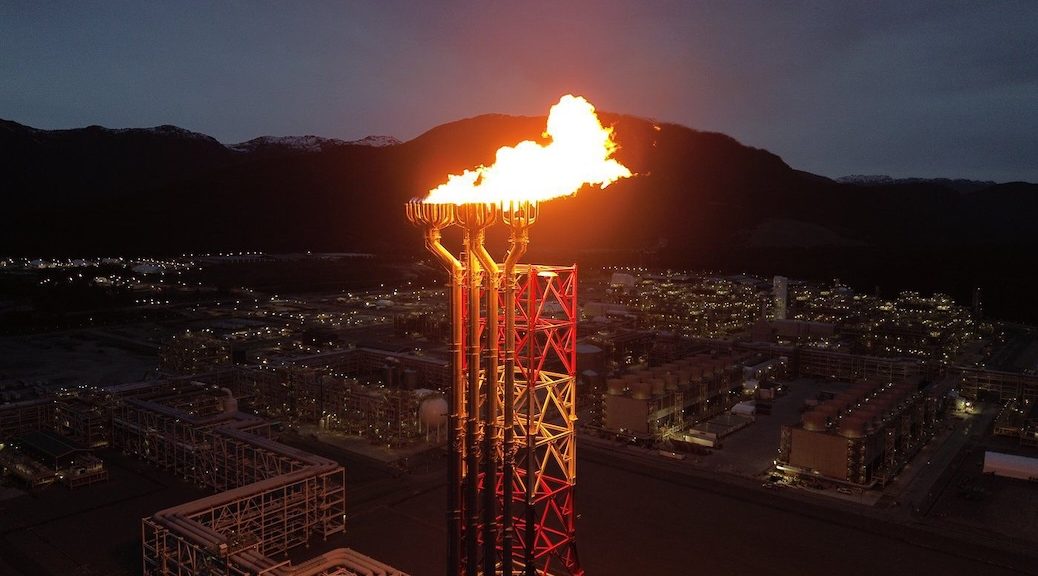
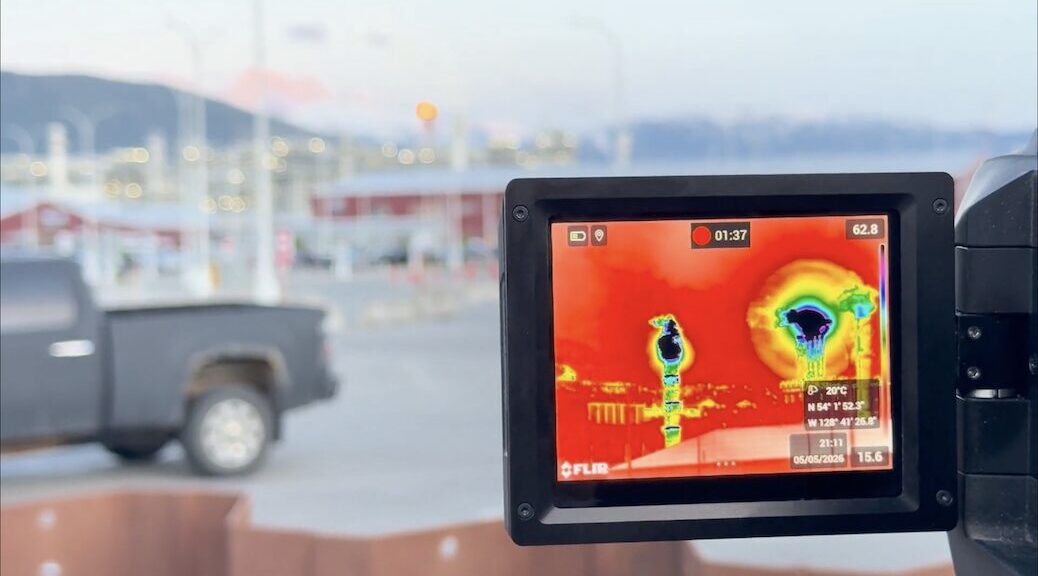
New camera footage from Canada’s first LNG export terminal is raising concerns about invisible pollution and whether current monitoring adequately detects what reaches nearby communities.

To the naked eye, the sky looks mostly clear above LNG Canada’s Kitimat facility on the northern coast of BC. But footage taken with a specialized infrared camera and presented at a media briefing Wednesday showed dark plumes around flares, stacks and processing equipment.

Continue reading Camera footage of Canada’s first LNG terminal raises questions about invisible pollution

Who really pays for BC’s power?

By Matt Simmons, The Narwhal, Local Journalism Initiative reporter

The average home in British Columbia uses around 10,000 kilowatt hours of electricity per year.

There are approximately 2.2 million homes in B.C. This means the province needs to make sure the grid has enough energy to supply about 22 billion kilowatt hours every year to keep those homes warm and the lights on.

And that’s just for homes. It doesn’t include all the electricity needed for industry, businesses and a rapidly expanding electric-vehicle market.

In B.C., the average resident pays around $100 a month for electricity, roughly $1,200 per year for those 10,000 kilowatt hours.

Residential rates just went up on April 1, when BC Hydro increased its rates by 3.75 per cent. That’s partly to start paying off some of the sunk costs the government has already invested in building new power infrastructure.

Continue reading Who really pays for BC’s power?

Malfunctioning Canadian LNG terminal burned more gas than estimated 2024 global record

By Matt Simmons, The Narwhal, Local Journalism Initiative reporter, Wil Crisp

This investigation is a collaboration between The Narwhal and Point Source, a U.K.-based investigative journalism organization.

An LNG facility in Western Canada burned more gas in 2025 than any other liquefied natural gas (LNG) export facility on record in 2024, raising concerns about Canada’s claim it’s producing the cleanest LNG in the world. 

Continue reading Malfunctioning Canadian LNG terminal burned more gas than estimated 2024 global record

BC comes under fire after cutting fees on LNG, pipeline projects

By Sonal Gupta, Canada’s National Observer, Local Journalism Initiative Reporter

BC’s energy regulator is weakening oversight at a time when it should be making it stronger, according to environmentalists, Indigenous leaders and public‑health experts in the province.

The BC Energy Regulator (BCER), a Crown corporation funded largely by the companies it oversees, recently lowered levies for LNG Canada, Woodfibre LNG and the Coastal GasLink pipeline. The fees are collected “to meet [BCER’s] regulatory obligations and recover expenses,” the regulator says on its website.

LNG Canada’s annual levy fell from $900,000 to $600,000, Woodfibre’s from $2.5 million to $1.4 million and Coastal GasLink’s per‑kilometre charge dropped from $1,700 to $420.

Continue reading BC comes under fire after cutting fees on LNG, pipeline projects

In the Midst of a Global Energy Transition: Canada’s New Pipeline

Someone sent me a Facebook post in which North Island-Powell River MP Aaron Gunn points to a Petro Canada sign advertising gas for $2.09.9 a litre. 

Gunn wrote, “Ridiculous. 4th-largest oil reserves on the planet. $2.09 per litre at the pumps. It’s time to build pipelines, refineries and an energy policy that puts Canada, and Canadians, first!” 

My first response, when I calmed down enough to have a polite response, was ‘does he think a fully operational pipeline is going to drop out of the sky?’ 

So far, no proponents have stepped forward to build the proposed pipeline. Premier Danielle Smith of Alberta recently said there are some Middle Eastern and Asian investors who expressed interest in a minority stake. IF a proponent steps forward and clears all the necessary preliminary steps, it is still going to take years before oil flows through the proposed pipeline. 

Continue reading In the Midst of a Global Energy Transition: Canada’s New Pipeline