


More than a month has passed since Prime Minister Mark Carney took centre stage at the World Economic Forum with a speech calling for middle powers to forge strategic partnerships across energy, food, critical minerals, finance, and supply chains – standing up to lawless superpowers pursuing their own interests. Days have elapsed since Conservative Leader Pierre Poilievre addressed the Economic Club of Canada, outlining his vision for a stronger Canada. In this morning’s interview, Jennifer Lash, a former senior policy advisor for Environment Canada, compares their visions for the nation’s future.
(Cropped image of a freighter coming into Burrard inlet – Photo by Kristina D C Hoeppner vua FLickr (CC BY SA, 2.0)
Jennifer Lash: “Pierre Poilievre’s speech to the Economic Club was a long-awaited address. I believe Canadians were waiting for him to move past his leadership review—where he primarily spoke to his base—to understand his stance on the global situation regarding trade, tariffs, and the Canadian economy. This was the first time we saw him address these issues for a broader audience, moving away from his previous strategy of avoiding topics like Donald Trump. Consequently, there was a significant amount of anticipation surrounding it.”
“It is interesting to contrast that address with the speech Mark Carney delivered in Davos, where he outlined his vision for the world. These are very different speeches tailored to very different target audiences, and we must take that into account when comparing them. Carney was addressing global leaders at an international meeting regarding the state of the global economy, whereas Poilievre was in Ontario speaking directly to Canadians. While this difference in context is important to acknowledge, there are similar themes we can examine to highlight the distinctions between the two men.”

Two Visions of the Global Shift
“The first area to examine is their understanding of the global shift. Carney focused on the ‘rupture’ or the disintegration of the rule of law currently unfolding. He called on the middle powers to work together to counter the larger superpowers merging together. So to counter the US-Russia collaboration, the lack of rule of law and the way they’re taking advantage of smaller countries. The middle powers can counter that by creating trade and economic partnerships that protect key values like sovereignty and human rights.”
“Poilievre offered a starkly different take on this. While he acknowledged we are in a different era, he argued that we already have trade agreements with most of these middle powers, which is true – we do. He suggested we simply need to build on existing frameworks rather than ‘rupturing’ our relationship with the United States. Whereas Carney used the word ‘rupture’ to describe the global world order, Poilievre used it in the context of North American relations.”
“To me, his suggestion that we simply increase existing efforts sounded somewhat naive, as if he did not fully grasp the current global trajectory. I felt it revealed a lack of experience and depth regarding global security and the economy, which was quite surprising.”
Canada’s Relationship with the United States
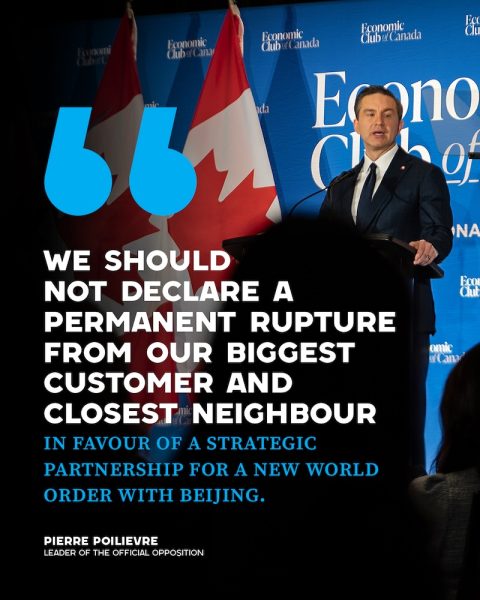
“Poilievre leaned heavily into the necessity of a trade relationship with the United States. In doing so, he implied that Carney was not working on a trade relationship with the United States, which is completely untrue. Carney’s playing two tracks. He’s saying we will do everything we can to have a trade relationship with the United States to redo CUSMA, to do what we need to do, but we are not gonna be reliant on that. We are also gonna diversify trade and become stronger and more resilient and independent. It’s important to know that Carney is doing that.”
“ They were very similar in their call for a more resilient Canadian economy and the need to increase trade. Poilievre did really talk about the fact that we have to build and make Canada more powerful.”
“Carney talked a lot about tariff free trade. I haven’t seen any other pundit saying this, so maybe I’m reading into it too much, but I feel like that’s his next rallying cry. Everybody wants tariff free trade. This is not new. We had tariff free trade with the United States. We still have a lot of tariff free trade under the existing Cosmo agreement, so it’s not exactly a new thing but the United States has told us that we’re not going to get that.”
“In many ways it is setting this current government up for failure if you normalize that we should have tariff free trade. Anything the current government does is now a failure. That to me is a standard Conservative campaigning tactic. You create division, you create fear, and you create this call for something that is impossible to get.”
“I worry about this slogan gaining traction because I don’t think many Canadians realize how difficult it is to achieve right now. When discussing US trade, Poilievre cited an interesting proposal: he suggested banning Chinese electric vehicles in exchange for a tariff-free auto pact. This is exactly what we had before Trump attacked our auto industry. We had already banned EVs, in agreement with the United States. That did not prevent Trump from coming in and slapping tariffs on our auto industry. To think that we can just go back to that is rather naive.”
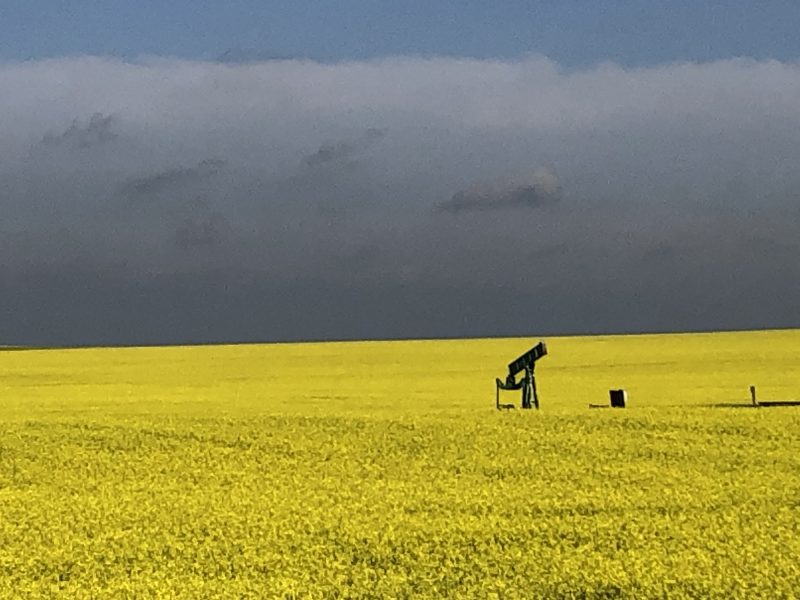
“Moreover, trade is not binary; You counter a tariff by tariffing something else. When we banned those EVs, China retaliated by placing tariffs on our canola industry in Saskatchewan and our seafood industry on both the East and West coasts. Our farmers struggled because of the dispute over EVs. When Poilievre says he would ban Chinese EVs, you can tell he is talking to a Toronto crowd and he is not in Saskatchewan.”
“I think he hasn’t thought out his tariff strategy, whereas Carney is really understanding that you need to develop strategic partnerships with different countries in order to ensure that we can have as much free trade as possible.”
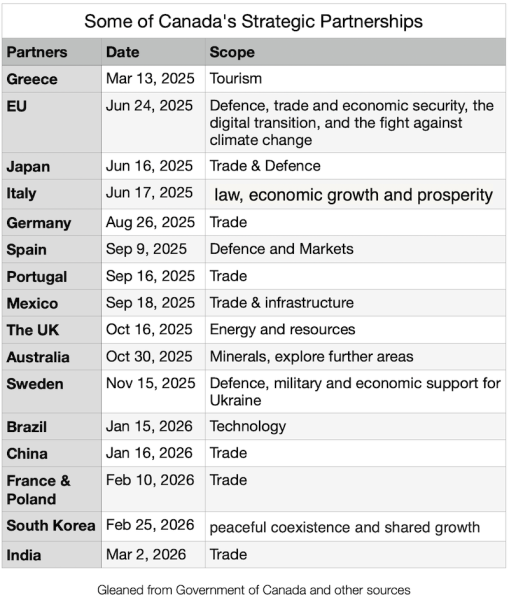
Canada’s Relationship with China
“I do worry about that slogan starting to fill the airwaves and creating conditions that are very difficult to meet, which leads to my third point: China. A classic Conservative tactic is to use fear to whip up anger and create polarization and division. You could hear it when he mentioned the need to distance ourselves from China; he got cheers from the crowd. The room he was speaking to clearly liked that.”
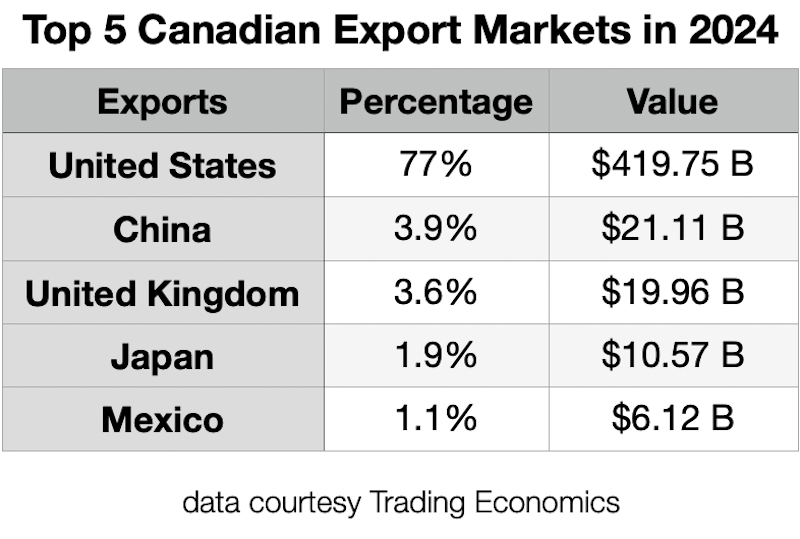
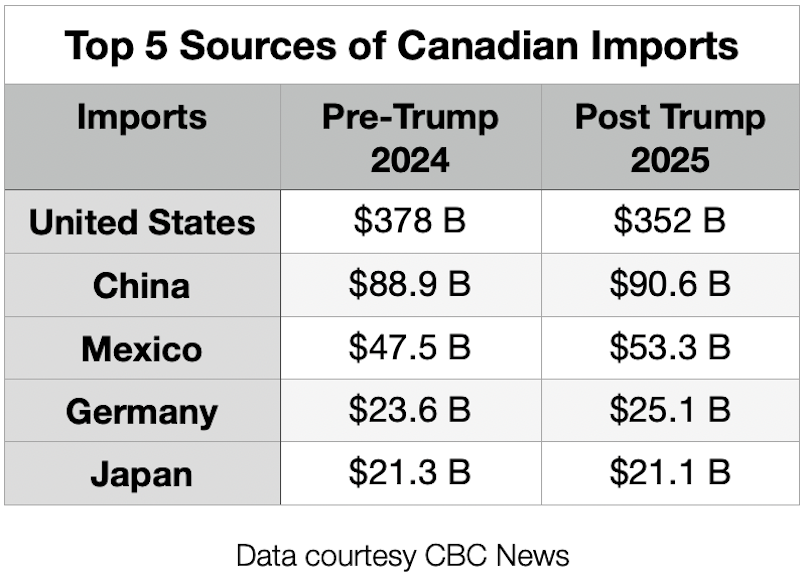
“We already have a massive trade relationship with China. We export $30 billion worth of products, while $88.9 billion are imported. Some of the exports most critical to the riding of North Island-Powell River are part of that trade. Forestry and seafood products are among the most significant goods traded with China. So, when he raises concerns about replacing the complex trading relationship we have with the United States with a country like China, it tells me he doesn’t understand our existing relationship. He is using that topic, once again, for polarization.”
“I’m not saying everything with China is rosy and perfect. It never is, and that is true of every country we trade with. However, I think making it sound as though trade with China is inherently bad is naive; it doesn’t account for ridings like ours or the general health of the Canadian economy.”
“Having said that, there are certainly security issues we must take seriously. I have confidence that Carney recognizes these and is putting measures in place to address them.”

Will A Conservative Government Solve Everything?
“The fourth point he raised is this ‘magical’ idea that, under a Conservative government, projects will be built, it’s gonna be super, super fast and this will solve all our problems. MP Aaron Gunn mentioned this when he spoke at the Conservative convention in Calgary a couple of weeks ago. They cite the way John A. MacDonald built Canada’s national railway (promised in as a sign that Conservatives know how to get things done.”
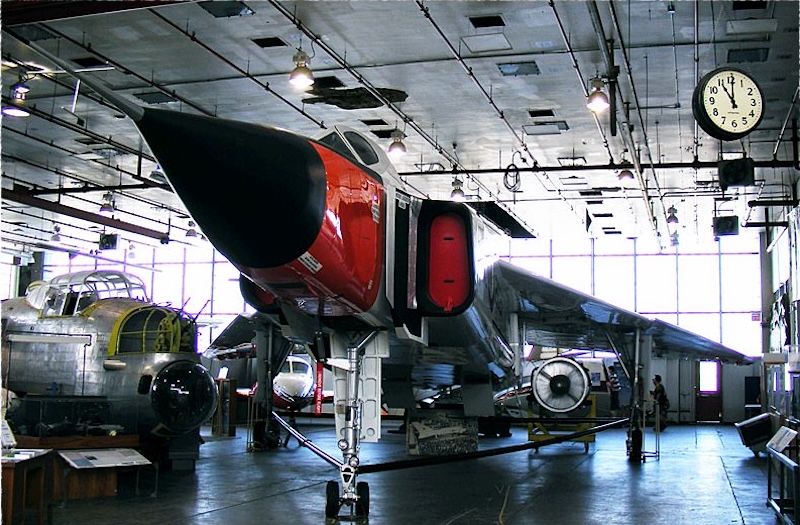
“What they fail to mention is that it was also under a Conservative government that the Avro Arrow—which would have been the best military plane in the world leading up to the Cold War—was cancelled. In an amazing turn of events, John Diefenbaker not only scrapped it – he destroyed every blueprint, plan, and model of that plane, completely destroying that industry. He set Canada back from being a world leader in military technology. That happened under a Conservative government.” (1957-63)

“They also never mention that during the Harper years (2008-15) they never got a pipeline built. The more Harper tried to take a top-down, ‘I will tell you that you’ll get a pipeline’ approach, the greater the public opposition became. More situations were sent to the courts rather than being decided by the government itself.”
“The claim that they can build projects ‘really fast’ shows they don’t understand the complexity involved. Quite often, when a project—be it a mine or a pipeline—is slowed down, it is because the company needs to secure investment, conduct more research, or acquire new technology. Companies often slow these plans down; it isn’t always the government.”
“They are also ignoring the risks of pushing projects without considering reconciliation or environmental protection. They want to barrel ahead, but when those factors are ignored, we end up in court, which delays projects even further.”
“Poilievre is creating an illusion of something that isn’t possible. In that respect, he is setting himself up for failure because, if he ever became Prime Minister, he would never be able to follow through on building things that quickly.”
“He is also failing to acknowledge the work Carney has brought in, which is different from the approach under Trudeau. Carney has actually accelerated the building of these projects. Because they aren’t built in a single year, Poilievre claims Carney has failed, but it is completely unrealistic to think a major project would be completed in a year.”
“The Carney government is taking a much more balanced approach. They recognize reconciliation and understand they cannot create liabilities by building projects that continually pollute the environment.”
“Carney did not talk about these specific domestic issues in his Davos speech. These are things I am gathering from his work here in Canada, but there was no reason for him to discuss them in Davos. It was simply a different target audience.”
What Poilievre Didn’t Talk About: Climate Change
“The final point I would highlight as a major difference between their speeches—and their work more generally—is what Poilievre didn’t talk about. He did not mention climate change, except to state he would get rid of the industrial carbon tax. He is failing to acknowledge that every summer is increasingly the hottest on record and that droughts are devastating our farmers, from potato growers in P.E.I. to producers in Saskatchewan and Alberta. These conditions cause wildfires where lives, homes, and entire communities are lost. We only have to look at Lytton in B.C., which is still struggling to rebuild. These changes also result in atmospheric rivers, such as the floods we saw in the Black Creek and Courtenay areas.”
“We are increasingly seeing more extreme weather, and this is a direct result of climate change. The science is established; that is a given; there is no longer a need to debate that. We must be thinking about what we are doing on the climate front.”
“I will be the first to admit that Carney has reined back his ambition slightly. He is still moving forward, though perhaps not as aggressively as before, but he is still pushing ahead. The key piece of that strategy is the industrial carbon price. If we were to lose that, our emissions would likely start rising again. Currently, they are still trending downward. We will know more in April when the next report is released, but our emissions have been moving in the right direction to date.”
“Carney has done significant work on climate, specifically regarding climate competitiveness. In his auto strategy, he views EVs as the cars of the future. We are approving wind farms on the East Coast and striving to build more clean energy. This is being done in a way that ensures we can reduce our emissions without placing an unfair burden or cost on Canadians; we know that under Trudeau, many felt they were carrying the weight of these policies, which became untenable during times of high inflation.”
“Poilievre’s refusal to even admit that this is a global and domestic problem is completely amoral. It is simply the wrong path to take, and that is deeply problematic.”
Reconciliation
“I would say the same regarding reconciliation. There was no mention of the subject, except for a slight ‘dog whistle’ regarding John A. MacDonald. The Conservatives use this tactic every time, and it has become a cultural symbol for disregarding reconciliation efforts and past harms.”
“Carney hasn’t taken that route. In December 2025, he released a statement promising that Canada will continue to work on implementing the calls to action from the Truth and Reconciliation Commission and UNDRIP; he remains committed to the process of reconciliation.”
Where Poilievre and Carney Agree
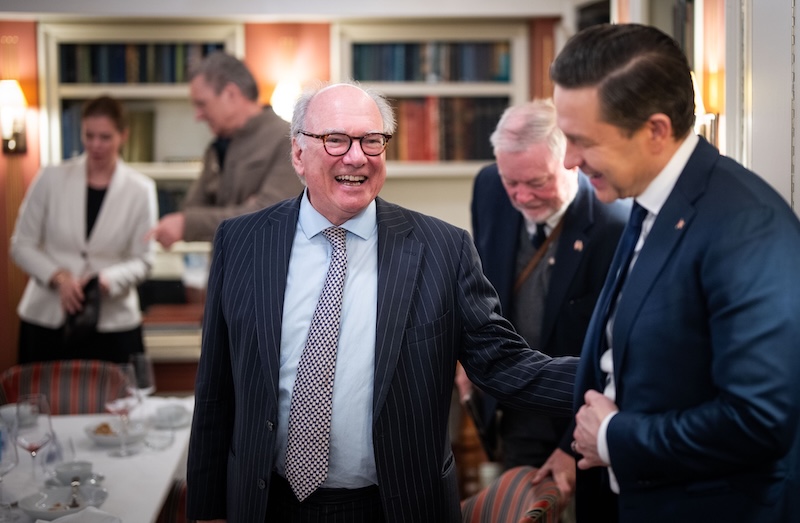
“When I look at these five principles and compare the two leaders closely, the differences become quite stark. However, it was very interesting that Poilievre started his speech by framing the problem exactly the way Carney does. He stated that we cannot control what the President of the United States does; we can only control what we do at home. On that specific point, I see the two leaders on the same page.”
“That is a positive sign because we are living in very complex times. We need to be solving problems rather than creating fights. The more we can focus on finding solutions, the better off we will be.”
An All-Party Committee to Negotiate CUSMA?
“The final point I’d like to add is that Poilievre raised the idea of an all-party committee to advise on the CUSMA negotiations. I was annoyed by that suggestion because I watch the committees, and I watch our MP, Aaron Gunn and his Conservative partners in committee. They are often argumentative; they block almost everything and ask questions designed to set others up for failure. Their focus often seems to be on creating conflict for social media clips rather than finding actual solutions.”
“That is my impression of how Conservative MPs conduct themselves on committees, which makes me hesitant to include them on a committee dealing with something as vital as CUSMA. These issues are too important for that behaviour. I believe you must have a level of gravity, seriousness, and a depth of knowledge that I simply do not see from those Conservative MPs. Our local MP is known as one of the most combative members in these settings. While Poilievre’s call for an all-party committee sounds idealistic and good in theory, in practice, I do not have faith that the Conservatives would show up willing to work in good faith with the Liberal government.”
Cortes Currents: I have a bunch of questions.
Jennifer Lash: Okay. Fire away.
Q#1: Poilievre Singling out China
Cortes Currents: The singling out of China—do you think that accurately depicts our exports? Do you feel like it was unfair when you look at our total export situation and the connections we are trying to build?
Jennifer Lash: “It was unfair. I saw a headline in the paper where Poilievre is welcoming trade with India, yet we have also had security issues with India as well. I think he singled out China because there is a gut fear around the country, and he is playing to that fear to generate anger. I don’t think his stance is based on logic, the actual value to our economy, or what is in the best interests of Canada.”
“I am not justifying everything that China does, nor am I justifying what India does. There are many injustices committed by those countries, but I believe he has singled out China specifically as a rallying cry because of the political benefits. I don’t think that approach has Canada’s best interests at heart.”
Q#2: Conservative Emphasis on Resource Extraction
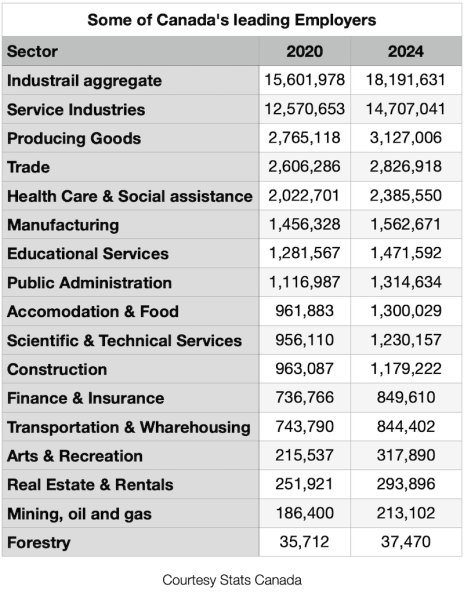
Cortes Currents: I am wondering about the emphasis on resource extraction—whether it be forestry, oil, or otherwise—coming from Poilievre and other Conservatives. Is this appropriate for our current situation, or is this a throwback to the seventies and sixties?
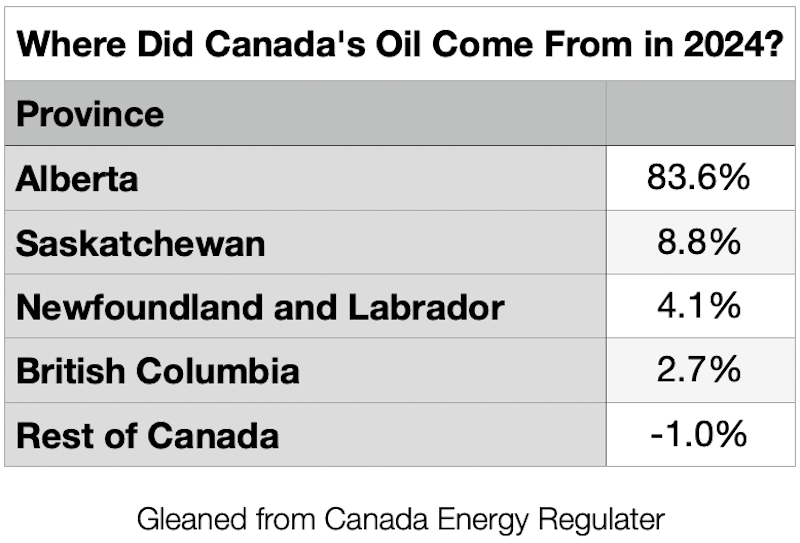
Jennifer Lash: “The resource that really stood out to me—one we extract and export as a raw product—was oil. It is one of our biggest exports, particularly to the United States. Everything he said was coded. He wants a pipeline to the West Coast very badly so they can diversify the market. Prime Minister Carney is already working on that; he has the Memorandum of Understanding (MOU) with Alberta.”
“What Poilievre didn’t talk about was building our energy at home and the clean energy we can develop here. He only discussed the oil energy that we export. He spoke about the product, but he didn’t talk about meeting the actual energy demands of Canadians.”
“In contrast, with Carney, you usually hear him talk about both conventional and clean energy. He discusses the full package and how they fit together. Poilievre did mention taking all the resources, exporting them, and having them turned into final products in other countries.”
“The issue that hits home most for me is forestry, which is a massive issue in BC. Why can we not add more value to our products in British Columbia and use them more domestically so we aren’t just exporting raw logs? Tackling that is essential; that is where we need to go in the future.”
“You see this under the current government, where they discuss building new homes using Canadian timber. I don’t think that is currently enough to replace the demand from the U.S. and China, but we need to ask: how do we start to get more out of every tree we cut, as opposed to cutting more trees for less money? Those are the questions we need to wrestle with. Much of that is provincial jurisdiction, but the federal government can play a role in interprovincial and foreign markets, and we need more help with that.”
Q#3: Does Canada Need to Diversify?
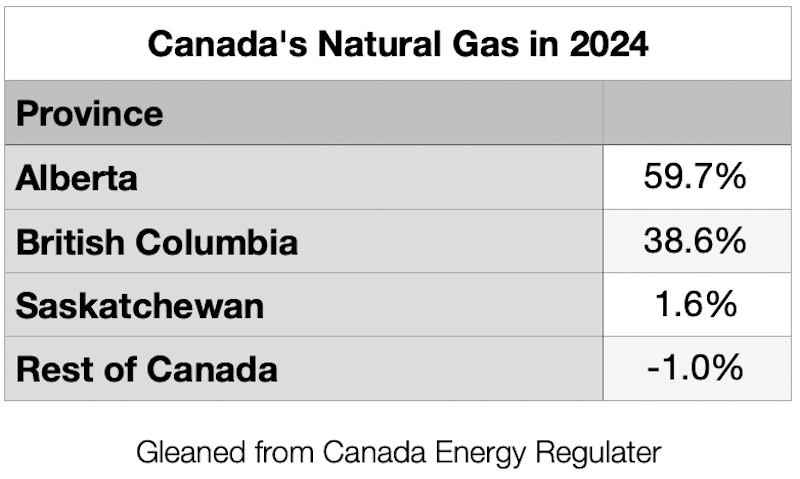
Cortes Currents: Canada is often called a ‘petrostate’ because we are so reliant on oil products. Do you want to talk about the need to diversify our industry?
Jennifer Lash: “Canada already has a very diverse economy. Oil is an important part of our economy, but every sector is important. People like to say that Atlantic Canada’s seafood industry is much more important than British Columbia’s, but that isn’t true for my community. We have a diverse market, and every segment of that market is vital to the communities that depend on it. While oil is a huge part of Canada—critical to Alberta and, to some extent, BC and Saskatchewan—dramatic changes in the oil and gas industry would impact those provinces far more than, say, New Brunswick.”
“Data indicates the world is moving away from oil and gas. Global demand for internal combustion engines peaked in 2017. Even in Canada and the U.S., where we still sell many of these vehicles, we are going to see a decline in demand. This is being projected by experts everywhere.”
“When that happens, the price of oil will likely settle. The figures I have heard are around $50 a barrel. At that price, it isn’t enough to sustain new ‘greenfield’ projects in Alberta. While existing mines will continue to extract oil, we won’t necessarily see new ones. As demand drops, the industry will downsize. That is the global trend. Simultaneously, we are seeing a dramatic increase in wind, solar, and battery capacity that exceeds all expectations. While it isn’t happening as fast in Canada yet, it is moving rapidly in parts of the world where it is more widely accepted.”
“Oil and gas may become a smaller industry in Canada simply due to global demand. If it drops from 20% of our exports, we need to consider: what does Alberta look like then? What does Northern BC look like if LNG demand falls? How can we help communities and workers thrive during this transition?”
“I worry that the term ‘just transition’ has become such a loaded phrase. People in the industry often think it’s code for shutting them down, but it isn’t. It is actually a way of planning for where the economy is going to ensure people have good-paying jobs. This will become more real as global demand continues to decline.”
“I saw some interesting numbers recently regarding China. People point out that they are building more coal-fired plants, but building them doesn’t mean they are using them at full capacity. While they are building infrastructure, they are actually expanding wind, solar, and battery capacity even faster. Consequently, their emissions are starting to level off. As solar and wind become cheaper, we will see more of them and a corresponding decline in fossil fuels. We can either plan for that change or simply react when it arrives. I am a planner, so I think it is better to be ready.”
Q#4: Seafood
Cortes Currents: “One more thing I want to touch on—and I’m asking you specifically because Cortes Island’s primary industry happens to be oysters—could you expand on the shellfish market in China? How does this trade relationship affect the local growers here?”
Jennifer Lash: “It’s a vital question. To be perfectly honest, I can’t say for certain right now whether there are specific new tariffs on oysters; the trade lists I’ve been reviewing tend to stay at a very high level, and those smaller, niche details are often buried. However, just because it isn’t front-page news doesn’t mean the industry isn’t vulnerable. The shellfish industry in British Columbia is really an unsung hero of our provincial economy. It is an extraordinary industry, and I’ve had the distinct honour of enjoying many incredible oysters during my time on Cortes Island. It’s part of the fabric of the community.”
“What makes this industry so unique and valuable is its scale and its relationship with nature. We’re talking about small-scale, often family-run operations that provide sustainable livelihoods. But there is a catch: you cannot have a successful shellfish industry without pristine, clean water. This industry essentially mandates that we protect our environment; it isn’t a toxic or extractive process, but a restorative one. It requires us to be stewards of the coast.”
“I’ve always been a firm believer in maintaining public beach access—everyone should have the right to get to the water because the beach is one of the most restorative places on earth—but we also have to balance that with fierce advocacy for these smaller maritime industries. They are the backbone of coastal BC, yet they are often the first to be overlooked in Ottawa.”
“If you look at BC shellfish aquaculture within the massive scope of total Canadian seafood exports, it might look small on a spreadsheet in a government office. My concern is that these industries don’t get the seat at the table they deserve when Canada enters trade negotiations with countries like China. When diplomatic tensions rise and tariffs are slapped on our exports, we see it hit the geoduck industry and the Dungeness crab industry here in BC almost immediately.”
“ Are we getting the attention in British Columbia on our fisheries than Atlantic Canada, which is much louder in terms of fisheries? If I was elected I would be pushing very hard for this.”
“I’ve been an ocean conservationist for my most of my life, but my kids also fish commercially. My ex-husband was a commercial fisherman and my favourite thing to do in the summer is go fishing. So. I am both a user of the resource, a supporter of the commercial industry and someone who believes that the health of the ocean is what keeps that industry viable for generations to come.”
“I would be an advocate for making sure that the seafood industry in British Columbia gets the attention it needs to both have access to the markets, to do value added and to be able to stay viable.”
Links of Interest:
- Pierre Poilievre: ‘Stronger At Home – Leverage Abroad’
- Mark Carney: ‘Principled and pragmatic, Canada’s path forward‘
- Politics Untangled (Jennifer Lash’s political posts)
Top image credit: Prime Minister Carney negotiating a strategic partnership with India – courtesy Prime MInister of Canada Facebook page
Sign-up for Cortes Currents email-out:
To receive an emailed catalogue of articles on Cortes Currents, send a (blank) email to subscribe to your desired frequency:
- Daily, (articles posted during the last 24 hours) – [email protected]
- Weekly Digest cortescurrents – [email protected]