Tag Archives: John A MacDonald

On The Threshold of a Liberal Majority

Between the opposition MPs who crossed the floor and three by-elections coming up on April 13, Mark Carney’s Liberal government is on the threshold of forming a majority government.

Neither Tanille Johnston, who is currently running for leadership of the NDP, nor Aaron Gunn, the Member of Parliament for North Island–Powell River, were available for comment.

Jessica Wegg, the Green Party candidate during the last two elections, observed, “We’re two votes away from the Liberals having a majority. I don’t know that it matters that much to Carney. His policies skew so far toward what Conservatives would want anyway, he is getting lots and lots of support. I think it would be risky for him to call a general election because it’s not necessary. As he gets closer and closer to having a majority without a general election, it would be harder and harder to sell to Canadians that it would be necessary to call everybody to the polls again, spend all this money again on a general election when he’s doing everything he wants and just ramming through bills without even having a majority.”

Continue reading On The Threshold of a Liberal Majority

Canada’s Path Forward: Two Visions for a Stronger Nation

More than a month has passed since Prime Minister Mark Carney took centre stage at the World Economic Forum with a speech calling for middle powers to forge strategic partnerships across energy, food, critical minerals, finance, and supply chains – standing up to lawless superpowers pursuing their own interests. Days have elapsed since Conservative Leader Pierre Poilievre addressed the Economic Club of Canada, outlining his vision for a stronger Canada. In this morning’s interview, Jennifer Lash, a former senior policy advisor for Environment Canada, compares their visions for the nation’s future.

Continue reading Canada’s Path Forward: Two Visions for a Stronger Nation

Pierre Poilievre: Stronger At Home – Leverage Abroad (Full text)

To some extent the speech that Conservative Leader Pierre Poilievre gave at the Economic Club of Canada, in Toronto, on Thursday February 26, 2026, seems like a response to what Prime Minister Mark Carney said at the World Economic Forum a month before. Here is the full text, obtained through MP Aaron Gunn’s constituency office in Ottawa.

Toronto, ON – Merci beaucoup. Thank you very much to Michael and Shelby, two critical members of our Conservative team, to deliver a stronger Canada at home so we have unbreakable leverage abroad. Nearly two thousand years ago, Marcus Aurelius delivered a timeless truth:

You have power over your mind – not outside events. Realize this, and you will find strength.

That idea is not only true for people, but also for countries. Canada cannot control decisions made by foreign leaders or words by foreign presidents. We cannot control what global shocks and volatility might happen, but we do control what we do in our own country.

Continue reading Pierre Poilievre: Stronger At Home – Leverage Abroad (Full text)

Aaron Gunn, Residential Schools and the Meanings of Genocide

In a series of tweets between 2019 and 2021, the Conservative candidate for North Island Powell River, Aaron Gunn, argued against the the idea that residential schools were a form of genocide.  In the first of these he agreed that they were ‘truly horrific events,’ but added that people should not refer to them with a loaded word like ‘genocide’ that does not remotely reflect the reality of what happened.” He was wrong, residential schools are a perfect example of genocide.

Mr Gunn’s understanding of the term appears to be limited to ‘killing of a large number of people,’ but when Raphael Lemkin coined the term he stated it wasn’t necessary to kill people. There were also genocides of political and social institutions, culture, language, national feelings, religion, and the economic existence of national groups.

Continue reading Aaron Gunn, Residential Schools and the Meanings of Genocide

The History of Residential and Day Schools

By Chadd Cawson, The Columbia Valley Pioneer, Local Journalism Initiative Reporter

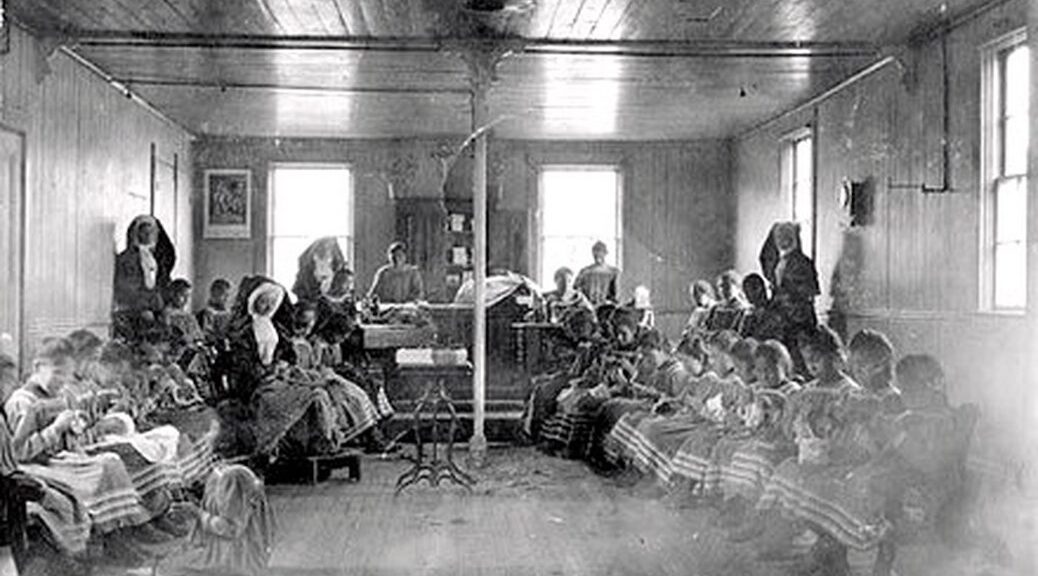
Many people have heard about residential schools but are uneducated about them. And too many have known about the horrors and injustices that happened within the walls of them, but for too long their voices were never heard. First Nations, Inuit, and Métis children were taken from their families, communities, and culture for over 150 years. During this period, over 150,000 children attended what were then called Indian Residential Schools. Many never returned home to their families.

Continue reading The History of Residential and Day Schools