
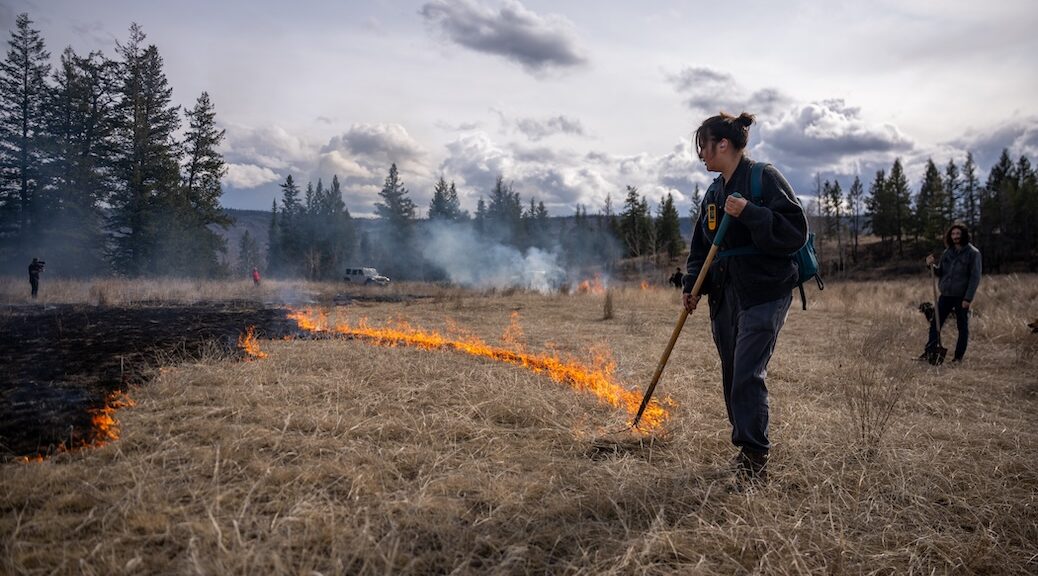

A new UBC led study of 111 peer-reviewed papers found that forests and biodiversity are better, or at least equally, protected if they are managed by Indigenous peoples. Between 2005 and 2012, vegetation loss in native areas of the Brazilian Amazon was 17 times lower. In Australia, 60% of the nation’s 1,574 threatened species were found on Indigenous lands. In the United States, Indigenous lands harbour more mature trees and higher tree volume. Close to two-thirds of the articles noted that Indigenous peoples were themselves threatened, and some offered suggestions to either provide resources or strengthen their tenure over the land. While little of the material dealt with British Columbia, lead author William Nikolakis has worked with First Nations in the Interior and was prepared to comment.
William Nikolakis: “This work is the most comprehensive analysis of peer-reviewed publications on the relationship between Indigenous peoples’ lands and conservation outcomes. Most of the papers referred to forest cover as a metric, and to fauna or flora diversity — so, biodiversity — and three-quarters of these papers found that there were positive relationships between Indigenous peoples’ lands and conservation outcomes. So when you mapped out Indigenous peoples’ lands, they typically demonstrated higher rates of intact forest landscapes or higher rates of biodiversity than other lands. In some cases, that included state-protected areas, so national parks, provincial parks, et cetera.”
“An important finding in our study was that only 8 articles out of the 111 that we analyzed had any self-identified Indigenous peoples as authors. This suggests that there’s a major gap when it comes to Indigenous peoples being involved and being able to publish in the peer-reviewed literature.”
One Study from Canada
Cortes Currents: What about BC?
William Nikolakis: “There was only one paper that referred to Canada. It grouped Canada together with Australia and demonstrated that there were high rates of vertebrate diversity on Indigenous peoples’ lands. There’s a real dearth of information in the peer-reviewed literature on conservation outcomes on Indigenous peoples’ lands in Canada. That doesn’t mean the data’s not there. It just means that data hasn’t been published in the peer-reviewed literature, which to me is a real gap.”
“The current nature strategy released by Prime Minister Mark Carney last month did call for more data around nature-based solutions in Canada. This is a real call to action to start developing studies and to start understanding the conservation outcomes from Indigenous peoples’ lands.”
Indigenous conservation projects in BC
Cortes Currents: Would you know of some conservation efforts in BC?
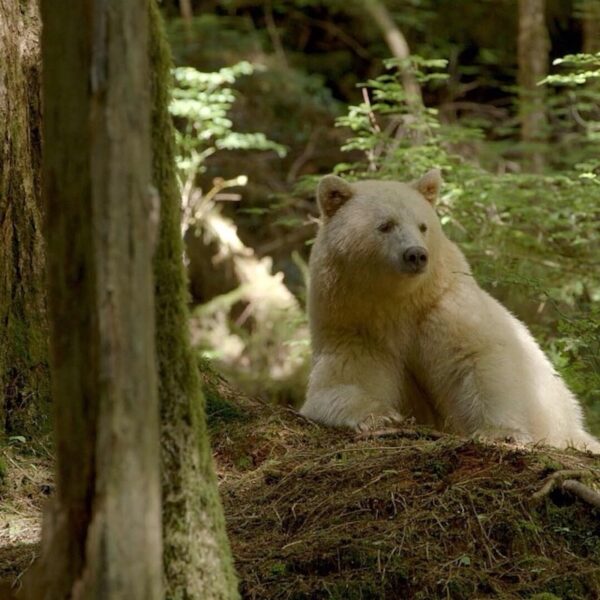
William Nikolakis: “The most well-known study is the Great Bear Initiative on the Central Coast of British Columbia. There are other initiatives happening in northern Canada, northern Ontario, and elsewhere, but we just haven’t seen what those outcomes are in the peer-reviewed literature.”
Cortes Currents: What about all of the First Nations Guardian efforts that we see up and down the coast?
William Nikolakis: “They’re no doubt collecting data that hasn’t appeared in the peer-reviewed literature. It might be in the grey literature, as we call it — studies that haven’t been through the peer-review process.”
0.4% of BC under Indigenous People’s Control
Cortes Currents: Your study also mentioned Indigenous nations’ control over their traditional territories and, here in BC, we are also talking about DRIPA.
William Nikolakis: “When we talk about Indigenous peoples’ lands, these studies typically refer to them writ large. Lands that are actually under the control of Indigenous peoples are very small. If we look at British Columbia, a recent study found that less than 0.4% of the province is actually under some form of control by Indigenous peoples.”
“As we start to balance the scales and talk about land back, which is a central tenet of Canadian law, Aboriginal title is part of the common law. Aboriginal treaty rights and title are a part of our constitutional framework.”
Misinformation and Pushback
“There seems to be some pushback against this in some quarters. There’s a lot of misinformation out there.”
“There’s a lot of inflammatory and misguided diatribe, which is very unfortunate because we’re in a biodiversity crisis. This study demonstrates that Indigenous peoples’ lands actually can help us move toward at least mitigating some of these crises that we’re facing, yet it gets captured in this political storm that’s happening right now.”
“DRIPA was part of a positive cycle moving toward redress and justice. Now we’re seeing pushback against that because of what happened in Cowichan. Some interests are pushing back against it. I think clear minds, and those who are reasonable, will start to see that addressing that inequity is important. It’s not only important, it’s a central tenet of our legal system.”
Cortes Currents: Have you looked at the Cowichan decision?
William Nikolakis: “Briefly, but not enough to provide a deep analysis.”
Strengthen Indigenous peoples land tenure
“Most of the papers that we analyzed in the study offered policy recommendations, and these policy recommendations revolved around strengthening Indigenous peoples’ tenure to land. Right now, most Indigenous peoples have very little control or say over what happens in their territories. Most of the studies argue that we’ve got to strengthen Indigenous peoples’ land tenure because their lands can be encroached upon without Indigenous peoples having any say over what happens.”
“That’s a first pillar: provide secure rights for people over their land and support their decision-making powers.”
“The second part of that was resourcing Indigenous peoples to steward their lands effectively. There’s always a threat that these guardian programs won’t have funding over the long term. For most First Nations across Canada and BC, they’re going from year to year, sometimes, with funding. It’s critical that Indigenous peoples be resourced to steward their lands effectively because there are a lot of threats out there on the land base, including wildfire and invasive species.”
“The third one is strengthening and supporting Indigenous governance of their lands, and that means real powers to make decisions over their lands free from outside pressures.”
Cortes Currents: One thing I hear from a lot of First Nations leaders is that they should be in control of environmental decisions. It’s difficult when we talk about traditional territories because they overlap so much.
William Nikolakis: “First Nations have been negotiating boundaries with their neighbours for millennia. That’s nothing new. We’ve put a lot of focus on this overlapping claims issue. This can be solved. We can’t put it in the too-hard basket. We just need to support nations to get on with that process. It shouldn’t be used as a stumbling block or an insurmountable hurdle for land back.”
“In terms of environmental decision-making, I work with nations in the Interior and there’s been a wildfire crisis. People put their hands in the air and go, ‘We can’t solve this wildfire problem. It’s an act of God,’ or ‘It’s a function of climate change,’ or whatever.”
Forests neglected or mismanaged
“The reality is most of these lands have been mismanaged or neglected for a good 50, 60, 70, 100 years. We’ve got a lot of tree encroachment because we’ve been managing and designing forests for profit-driven monocultures. This makes them very susceptible to wildfire and disease. The reality is our fibre supply is under severe threat and our land base is under severe threat because of how we’ve been designing forests and stewarding them.”
Designing Forests for the future
“At some point, you need to look past profit as the main driver and motivator for how we design forests and start to say, ‘How do we design forests that are resilient into the future?’”
“That’s what I’m hearing from a lot of First Nations. They want to see forests into the future, to support their community.”
Cortes Currents: Can you tell me some of the solutions they had?
William Nikolakis: “Yes: having mixed-age forests; the use of fire, with the communities I work with; addressing tree encroachment; and building landscapes that reflect what they once were, with native grasslands.”
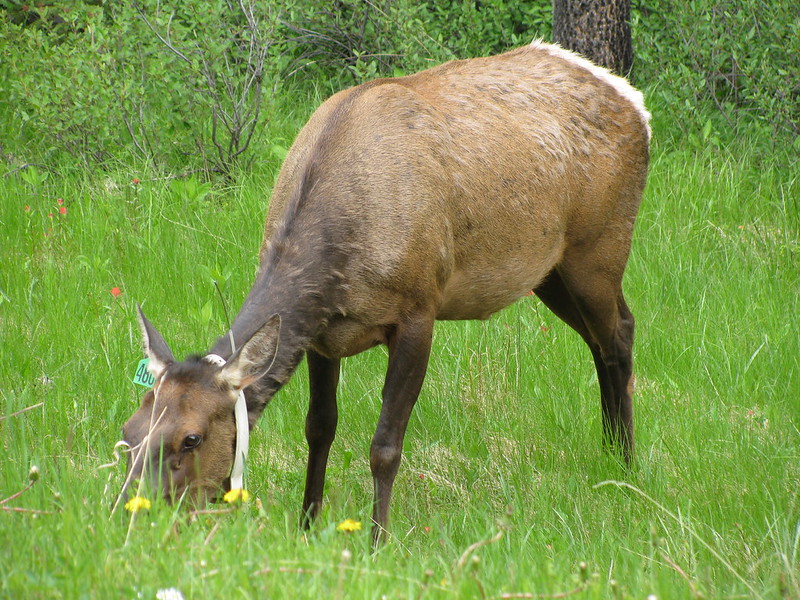
“Native grasslands are severely under threat. We don’t talk about them across the province, but we wonder why many of these ungulates, which are important to the food security of many communities, are under threat. It’s because we just don’t have the native grasslands. We’ve got these green deserts across the landscape.”
“These are elephants in the room that we need to address if we’re going to get serious about tackling things like the wildfire crisis. The land is highly vulnerable, and you add drought to that, you add all these other factors and, of course, you’re going to end up with the severe degradation that we have across the province.”
“Mills are closing because we don’t have fibre supply anymore because of fire. Some communities are taking back some of these licences and wanting to return them to health. I think that’s an important direction that we need to take.
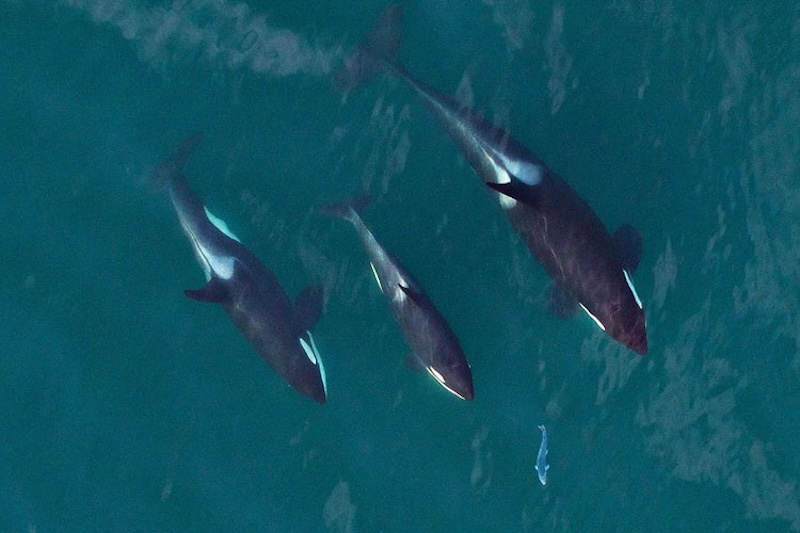
(Southern Resident Killer Whales hunting salmon – courtesy NOAA)
Cortes Currents: Dr. Teresa Ryan was talking about a more holistic approach. As she put it, you’ll never see the Southern Resident Killer Whalescome back unless you take care of the Chinook, and you won’t take care of the Chinook unless you take care of the forests. Do you want to comment at all about that kind of approach?
William Nikolakis: “It’s all connected, isn’t it? Whether it be hydro dams and landslides from forestry or road building in areas with steep slopes and rivers, or overfishing in our oceans — it’s all connected, and we’re incentivizing degradation. How do you shift beyond that? How do you re-incentivize other activities? We’re just at the beginning of building a different set of incentives for nature-based solutions. We’re tiptoeing around it, but I think the future is to say, ‘How do we create incentives for sustainability?’ We need to move in that direction, but unfortunately the political winds right now aren’t conducive to that.”
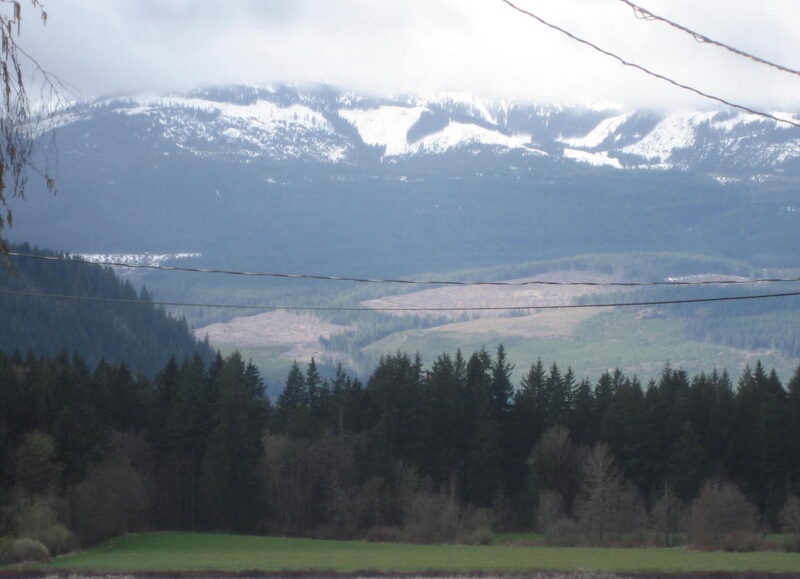
Cortes Currents: I’m thinking of the land behind Campbell River. You looked up at the hillside and it was more clear-cuts than not. It was ugly, among other things. How are you supposed to turn that back?
William Nikolakis: “Some of these forests took hundreds of years, thousands of years, to develop and grow. Is it going to be another 400 to 500 years? Will they come back the same? The jury’s out on whether you’ll still have the potential to grow forests like that.”
“We’re in a really difficult period because we’re at the tail end of that old-growth logging period. There are still many communities reliant on it, particularly on North Island.”
“How do we transition to the next phase? We haven’t been particularly good at thinking about that, and I think we’ve had a lot of talkfests, but we’re still geared up for old-growth logging in many parts of the province. We often look to forestry to manage these areas, and in many cases they haven’t done a great job and they’re not sticking around. Much of their business now is south of the border.”
“We operate in a very divisive era with social media. It’s very convenient to keep in touch with people, but it’s also very divisive. People can be anonymous and say very hateful things.”
“We’re operating in a post-truth era where some people don’t believe in science. They don’t trust it; they don’t trust government.”
“How do we move toward saying, ‘Okay, we’ve got a real crisis that is here. It’s not a concocted crisis.’ Blind Freddy could go out into many parts of BC and say things aren’t right. How do you then build a vision for that and then resource it?”
“We’re operating in austerity as well, with tightened budgets, and much of the work of stewardship costs money. It doesn’t come for free.”
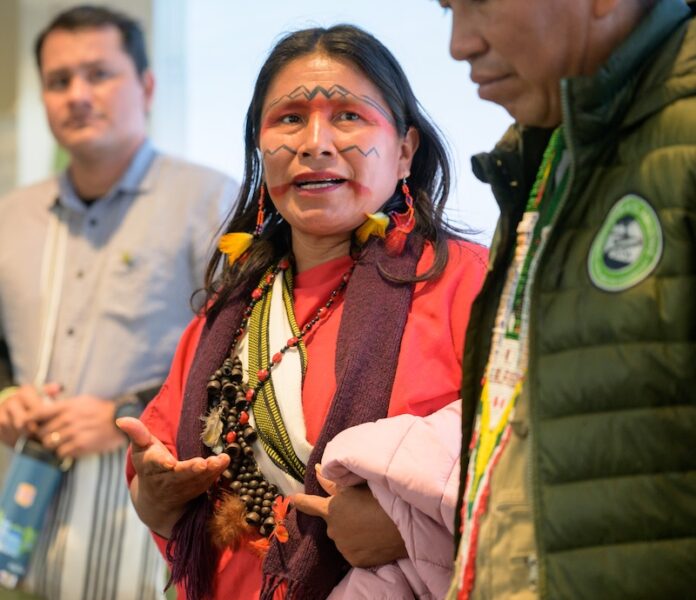
Cortes Currents: Did you find that the attitude of Indigenous Peoples toward conservation was similar from society to society?
William Nikolakis: “There are some commonalities. Recognizing the connection between the health of people and the health of nature seems to be a commonality across many Indigenous cultures around the world. Also, this holistic recognition that if you take too much from here, it’s going to have an impact elsewhere. We are connected.”
“That’s nothing new for us, but it typically gets ignored when we make policy decisions.”
Cortes Currents: What is the definition of Indigenous?
William Nikolakis: “In this paper we draw on the Cobo definition. It’s peoples that have a historical continuity with pre-invasion and pre-colonial societies that developed on their territories and consider themselves distinct from other sectors of the societies now prevailing on those territories. It’s a definition that’s used widely at the United Nations and elsewhere.”
Cortes Currents: So if you were talking in a European context, that would pretty well limit you to the Sami and who else?
William Nikolakis: “The Sami tend to be the Indigenous people in Europe most recognized by outsiders who have come and conquered. They consider themselves distinct, and they would definitely be the most prominent in Europe.”
Cortes Currents: As for the rest of us: at one time you might have been able to say that, but we’re basically cut off from our ancestry.
William Nikolakis: “Yeah, it’s really fascinating. I come from a Greek heritage. Before the Dorians arrived, there were other tribes in the area my family comes from: the Thesprotians and the Molossians.” (Two tribes from ancient Epirus, in northwestern Greece – ed.) “Then came the Dorians, (about 1100 BC), followed by the Romans (in 167 BC) and later the Ottomans (in the 15th century). It’s obviously a pastiche of people that are there now. So yes, the idea of Indigenous Peoples is very complex in Europe.”
Cortes Currents: Is there anything you would like to add on any sector of anything we’ve talked about?
William Nikolakis: “Building an evidence base around the contribution of Indigenous Peoples’ lands and stewardship is a really important step in being able to bring some conservation financing to really amplify this work going forward.”
“I’ve travelled to just about every corner of the province, and we’re seeing significant environmental degradation. You can turn a blind eye to it and say, ‘It is what it is.’ But there are vast areas that just aren’t growing back after wildfires. If they are, it’s with invasive species, and they’re not as productive as they used to be. We really need to have a concerted effort to safeguard the systems we have, otherwise we’re going to be handing over a future to our children, grandchildren and great-grandchildren that isn’t as prosperous. Their wellbeing will be highly threatened unless we take up this challenge.”
Cortes Currents: One of the founders of Cortes Island’s community forest compared the forest to a garden, and he was saying when you put the first crop in, “Wow, it’s fantastic.” The second one, not so good. By the time you’re getting into the third year, especially if you’re not putting anything back in, your crops are getting pretty bad. Then he’s looking at the forest and saying, “We’re in our third and fourth years.”
William Nikolakis: “Absolutely. It’s a very good way to look at it. Many of these systems require extensive stewardship. It’s not just ‘come back in 200 years.’ There are roles there for humans in these systems, to help protect them and steward them. We take resources from forests and oceans, but there needs to be some kind of return. We can’t keep riding the ladder and expect it to continue to be replenished and provide what it always has. It doesn’t work like that.”
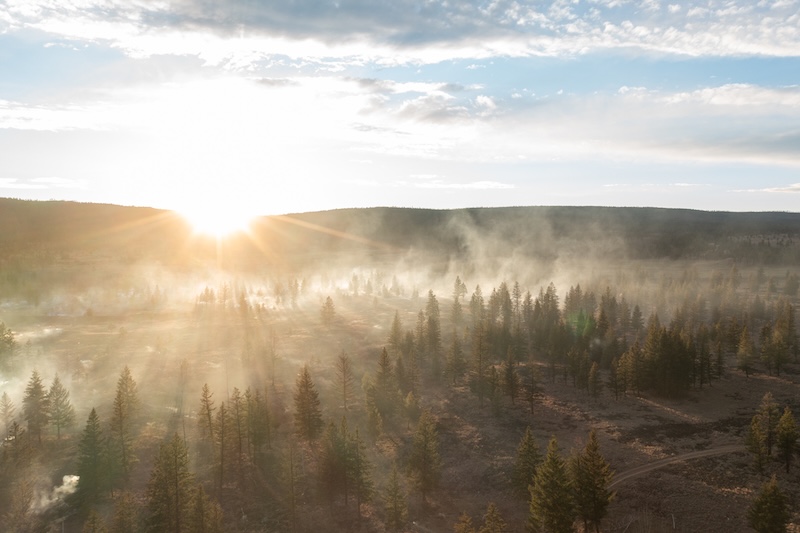
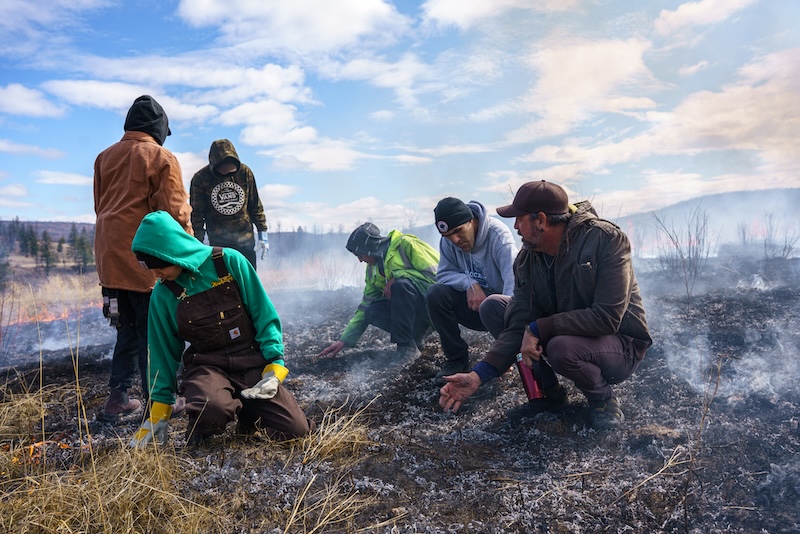
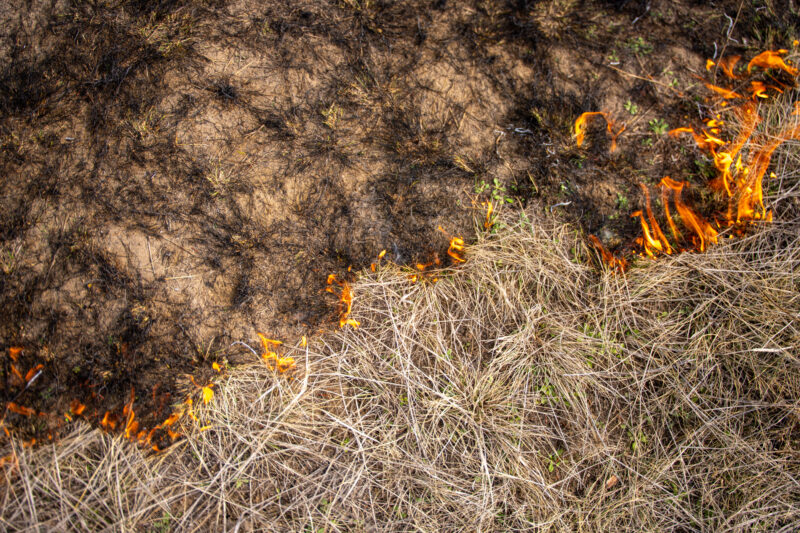
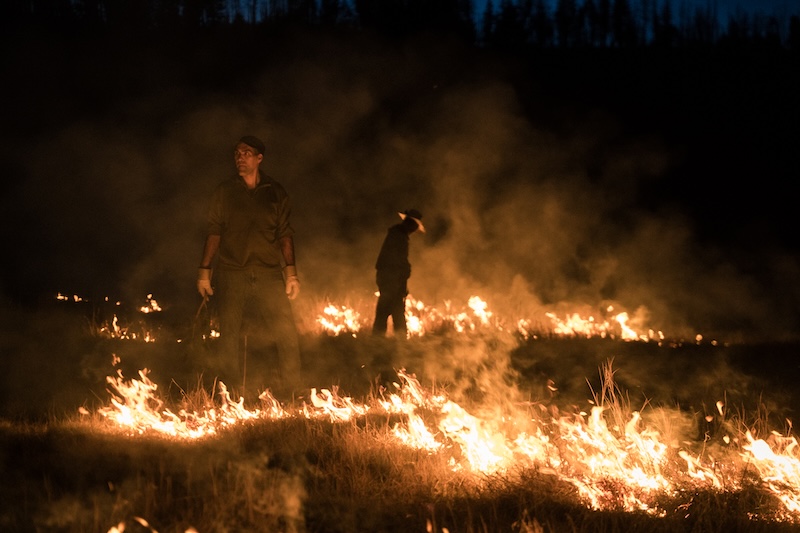
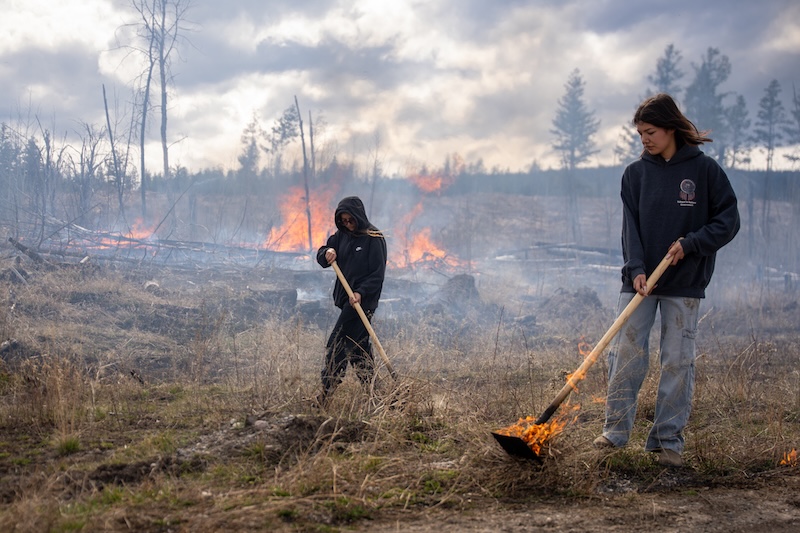
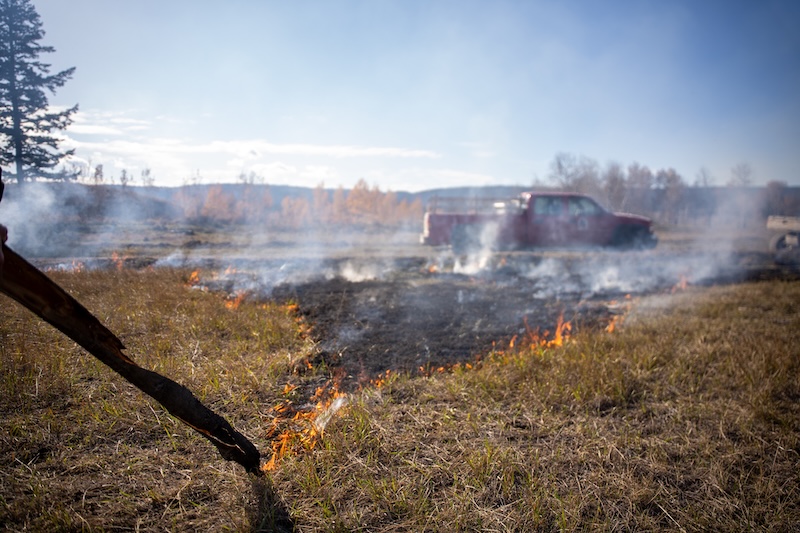
“We’re finding in the Chilcotin that when we apply low-intensity fire to areas, plants of importance like soopolallie (a Chinook term, meaning ‘soap’ and ‘berry’), or soapberry, are coming back with five times more berries and far more nutrients than in areas that haven’t been subject to low-intensity fire. We’re finding patches of Douglas fir that are far larger than in other areas that are unburned and in planted forests. The use of low-intensity fire is actually helpful in restoring landscapes that have been clear-cut or subject to significant wildfire.”
“Many of the areas across Canada are fire-dependent landscapes. In Interior Canada, they’re used to fire. Fire is an important function for many of these areas. We’ve removed that from the landscape, and now bringing it back is very tricky and complicated.”
Cortes Currents: That’s a First Nations method as well.
William Nikolakis: “I’ve worked with the Yunesit’in, a member of the Tŝilhqot’in Nation that have been very, very active in this space. I take my hat off to them because they’ve been very active in bringing fire back. Now the science is showing that the benefits from this work are actually very profound and significant.”
“There’s a lot of learning for us to do, and I think that arrogance doesn’t get you anywhere. We really need to be adaptive, nimble, flexible, curious, and open to learning and modifying our behaviours on a dime. Otherwise we’re looking very much like the Titanic, a big ship that delivered lots of outcomes for a long time, but there are icebergs around.”
Cortes Currents: One of the problems with wildfires is they’re so intense they burn off the seed-bearing level.
William Nikolakis: “In some cases you have to bring that seed bank back by starting nursery programs or harvesting wild seeds from areas that didn’t get burned out, because these high-intensity fires are insane. Some areas got hit really hard by the 2017 fires and nothing’s growing back in certain sections, particularly rocky areas. We have to do something, and it’s often about reintroducing seeds into that system.”
Cortes Currents: I want to give a plug for your article — when did it appear?
William Nikolakis: “It came out in April this year and it’s published in People and Nature. It involves a First Nations leader and thinker, Gary Merkel from the Tahltan Nation, who was involved in the old-growth review with Al Gorley, Joe Morrison, CEO of the Indigenous Land and Sea Corporation in Australia, as well as Terry Sunderland, an academic at UBC who’s been working on conservation issues across many tropical areas. So it’s got a really strong breadth of expertise, it’s freely available online, and if you Google ‘The relationship between Indigenous Peoples’ lands and conservation: A systematic literature review’ you’ll be able to find it.”
Links of Interest:
- The relationship between Indigenous Peoples’ lands and conservation: A systematic literature review – William Nikolakis et al, People and Nature
- A tale of two fire systems: Indigenous fire stewardship in British Columbia and California – William Nikolakis et al, Springer Nature
- How bureaucracies interact with Indigenous Fire Stewardship (IFS): a conceptual framework – William Nikolakis et al, Springer Nature
- Amid climate impacts, leading Secwépemc firekeeper shares ‘a better way of looking after the land’ – IndigiNews
All undesignated photos courtesy Josh Neufeld photography
Sign-up for Cortes Currents email-out:
To receive an emailed catalogue of articles on Cortes Currents, send a (blank) email to subscribe to your desired frequency:
- Daily, (articles posted during the last 24 hours) – [email protected]
- Weekly Digest cortescurrents – [email protected]