

Interview by Manda Aufochs Gillespie; written version by Roy L Hales

On Friday, May 29, 2026, Chief Kevin Peacey of the Klahoose First Nation came to the Cortes Radio station, where he was interviewed by Manda Aufochs Gillespie. This is a highly edited and abridged transcript of that program.
In part one: Kevin talks about the Klahoose population, housing, the new cultural centre, the chief and council, canoe journeys and community activities.
Manda: “Cortes Community Radio sits on the ancestral and territorial lands of the Klahoose, Tla’amin, and perhaps the Homalco peoples. I’d like to thank this land, these people who have walked this land through time, and all those who continue to love and work to honour this place we call home. Today, we are very lucky to have our neighbour and leader of the Klahoose First Nation join us in the studio. Chief Kevin Peacey, thank you so much for being here.”
Kevin: “Thank you for having me.”
Manda: “It’s a beautiful day, and it means even more that you are willing to sit inside in the studio on a day like this.”
Kevin: “I just left my office with air conditioning, and yeah, it’s warm in this office.”
Manda: (Laughs) “Yeah, we haven’t quite invented air conditioning down here at the community radio. If the hot seat really gets going, we’re going to have to fan the door.”
Growth of the Klahoose Population
Manda: “Your website looks gorgeous, and I love that there’s this introductory piece that talks a little bit about the Klahoose people: ‘Occupying traditional territories that span from Cortes Island to Toba Inlet, the Klahoose Nation has existed since time before memory. Our primary village site, Squirrel Cove, is home to approximately 75 full-time residents who live and work on Cortes Island and in the surrounding areas. The remaining 309 members reside in on- and off-reserve coastal communities in the Lower Mainland and Washington State.'”
Kevin: “We’ve actually grown since then. I believe we now have 92 people on our reserve, about 150 in the United States, and a total of roughly 430 members.”
Manda: “Wow! Can you talk a little bit about what’s made that growth possible, particularly on reserve? And will more people be able to come home?”
Housing on the Reserve
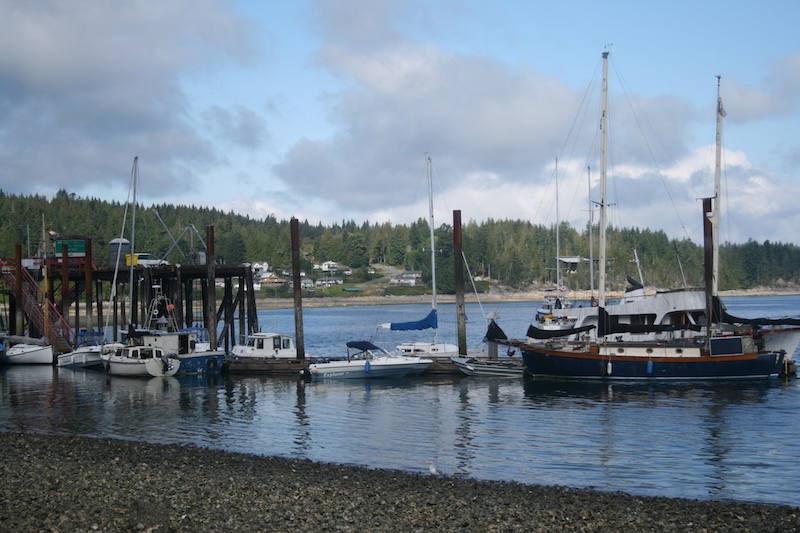
Kevin: “Absolutely. Our Nation has been growing over the last 10 years. More people would move back, but there is no housing. It’s in the works.
“Right now, we’re working with the federal government toward getting a new $20 million septic system. It’s supposed to happen in the next two and a half years, and once that’s completed, we’ll be putting in another subdivision—maybe 10 to 15 homes to start with. There are people on the housing list who want to move back home. Over the last 10 years, we’ve developed several businesses to support members coming home. We didn’t have that before, and there will be work here for them.”
Manda: “I was looking on the website and was quite impressed by the range of jobs and opportunities that are growing. I want to spend just a minute on the housing front, because it’s such an issue everywhere, and everything that has to do with government can feel slow. But things are actually moving now?”
Kevin: “Yeah, every year seems to change with the government, and right now the government has basically put not only First Nations, but a lot of people, on hold. It feels like they’re more focused on spending billions of dollars on war and on supporting all these different countries. And I’m like, ‘Wow,’ how come they’re putting out all these billions of dollars, and why aren’t they helping Canada out?”
“With the housing crisis we’re having, and the addictions crisis that is happening, and losing a lot of people because drug deaths are climbing, I would think that would be a priority instead of sending all that money somewhere else.”
Manda: “Me too. I’ve got lots of ideas about what we could do with even a tiny fraction of that money—say, $100 million. Come on. We could have those houses built and hire local people to build them.”
Kevin: “Absolutely. That’s what I love: local—everything local.”
The Klahoose Cultural Centre
Manda: “Well, it’s great to see that is in the works. I’m jumping ahead, but I have to ask about the new cultural centre.”
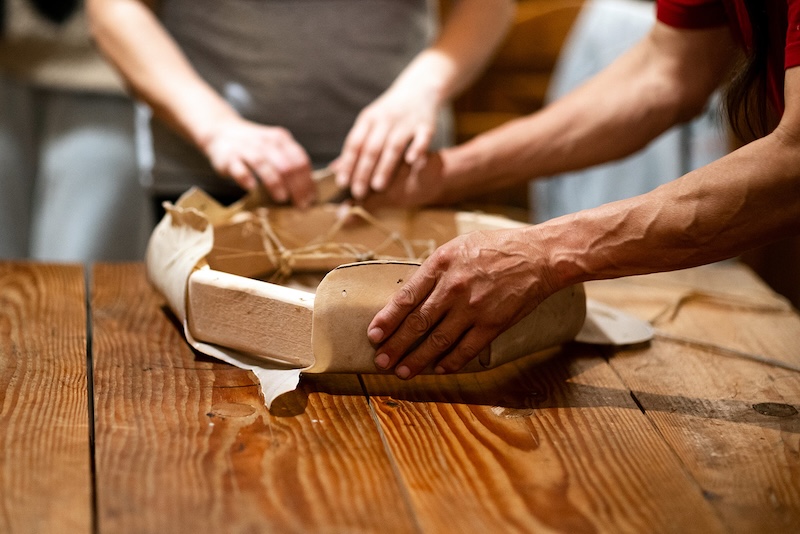
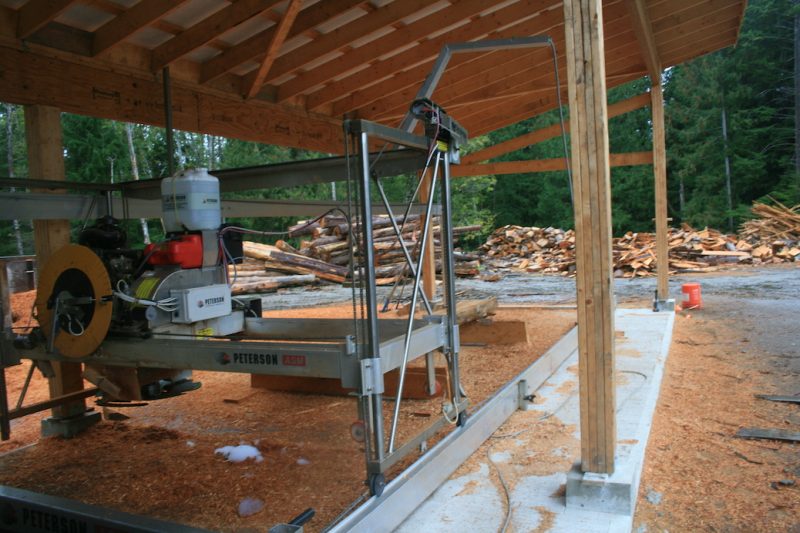
Kevin: “It’s something that we’ve wanted for years, and it finally got passed through council quite a few years ago. They started building it just over a year ago. It was completed about three weeks ago—an amazing building. I’m proud that I was part of it and that I was working at the mill at the time, milling a lot of the wood for the building.”
“It really grabs my heart when I’m in that building. It’s almost like you can feel the ancestors being in there too. And it’s got a beautiful view right on the ocean.”
“We had our grand opening and had over 200 people show up. They got to see the totem pole and a lot of our belongings that were returned from the museum here. I really want to thank the museum for giving our things back to Klahoose. It was very emotional to see that come back to us. So we’re really happy with our building.”
“Our language will be in there. Cultural programming will be in there instead of in our band office. The building holds 140 to 160 people. Right now, we’re just figuring out who we’re going to place in there from among the staff.”
“We are going to have a grand opening for Cortesians sometime in August.”
Manda: “What kinds of things are going to continue to happen there?”
Kevin: “Basically, all the cultural work. We’d love to see a lot of our sister Nations come, do drumming there, hold canoe journeys there, and probably hold funerals there too.”
Totem Poles and Culture
Kevin: “It has a gorgeous pole. I got to work with Tommy Hunt painting it, and it was the first time I’ve ever painted a pole. I just felt so attached to it. Having Tommy teach me how to paint the right way—not the sloppy way—meant a lot. It probably took us about three weeks to paint it, maybe a little more. A lot of our members took part, which was exciting. It’s always nice to see your people get involved, especially with our culture.”
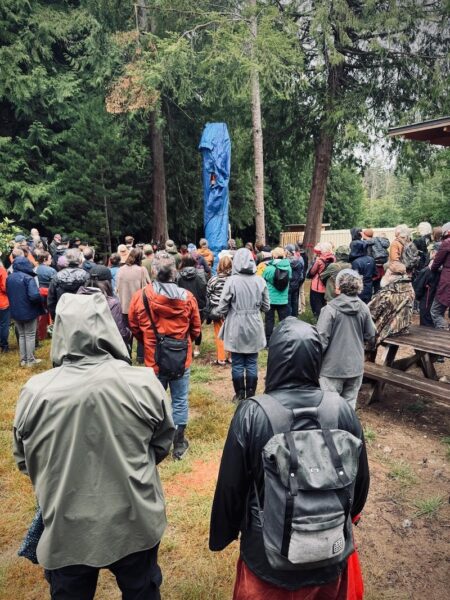
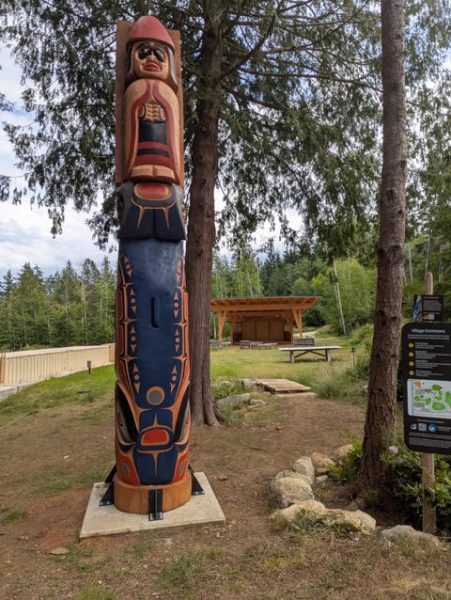
Manda: “When we were putting up the pole near the radio station in the Village Commons, I think you said that pole carving is not a traditional Klahoose art form. Is that right?”
Kevin: “I’m not that great on the history back in the 1700s and 1800s. I have a hard time remembering whether we did have poles in Toba or not.
“When I retire, I’d actually like to learn all the history of Klahoose. My wife is always wanting me to carve. I wish I had the time to do that, but when I retire—which is coming up not too long from now—I’m going to get into all that kind of stuff and spend more time with the culture.”
When Kevin Went Away
Manda: “Since we were talking about retirement, you were gone for a couple of years.”
Kevin: “I disappeared.”
Manda: “You disappeared, and we missed you. Can you talk a little bit about that time and this new council that you’re now a part of? What’s different now?”
Kevin: “Right. I did resign due to not having enough support from the previous council—I’m not going to lie about it. We had a council come in, and a lot of them were young and didn’t have time for meetings or to provide support. After a year, I finally had a sort of breakdown and said, ‘Look, I have to look after my health. I have to take care of myself.’ I just couldn’t go on for three more years like that, so I decided to resign.”
“So I started working for myself and working up at the coastal resort. I found myself again and just felt so relaxed—like, ‘Wow, this is amazing, to be who I am and who I want to be, and to let the politics go.'”
Coming Back
Kevin: “Some people weren’t happy, and I don’t blame them. It was just horrible, the way it was run, and I feel like that was probably a bit my fault for resigning. People were coming up to the sawmill and saying on the ferry, ‘You need to run. It’s not going good. It’s toxic in the band office.'”
“I guess the acting chief hired a bunch of staff who weren’t experienced in working with First Nations. They had attitudes, and I was getting upset hearing all this stuff. It took me probably a couple of months to get the okay from my wife and to make sure that, if this is what the people wanted, I’d come back and work for the people again.”
“Sure enough, I got back in, and I’m proud to be back. I have a great council behind me now with a lot of experience. They’re always around if we need to get something done. It took us almost a year to clean up the band office, the finances, and all that kind of stuff. Anyway, it’s all fixed now, and we probably have the best staff I’ve ever worked with.”
Manda: “I know that during that time when you were gone, the elders occupied the band office. I’m not sure exactly what that means, but it seemed like a lot of elders felt their voices needed to be heard. And I think one of the things they were asking for at that time was elections.”
Kevin: “To be a leader, you have to be there for your people. You have to listen to your people. The new employees they hired inside the band office treated the staff badly, treated the village badly, and had no clue what they were doing to our people.”
“That’s why the elders were like, ‘We’re not going to be spoken to like that in our own community.’ A lot of the members were also speaking out, and the former acting chief didn’t really take it seriously. They started a boycott to push for an election and a new chief and council. Then I heard that one or two of the members got fired for protesting.”
“That was part of my decision: ‘Okay, maybe I have to come back and fix this,’ because it’s getting cancerous, and I don’t like seeing that in our village or our Nation. We’ve come so far, and to have it go backwards is wrong.”
The New Chief and Council
Manda: “Looking at the new council on the website, I was quite impressed to see such good representation from women. There’s Arlene Brown, Sharon Francis, Helen Hansen, Laurier Louie Mathieu, and yourself. It just seems like an energetic group, and at least some of you live on Cortes.”
Kevin: “I don’t mind having maybe a few who don’t live on the reserve or who live a couple of cities away, but I also like to have council members who are actually on the reserve, because I can have that support right away instead of waiting three or four days for an email. Having two councillors here and one in Campbell River gives you that quorum, and they respond pretty fast. Arlene Brown is a former chief, and Sharon is a former councillor, so they have that experience.”
Manda: “It’s nice that you’re enjoying working together. Do the elections and the governance process work similarly to what we’re used to in the rest of Canada? Can any Klahoose member decide to run for council or chief?”
Kevin: “Any band member can run for council. I believe you do not have to be a member to run for chief, but that’s never happened.”
“It used to be two-year terms, and I found that with two years, you’re just getting going and then there’s another election. If you don’t get back in, things go backwards again. With a four-year term, you can get a lot done and make a big change.”
Manda: “When you’re running, is the chief the one who gets the most votes, or do you have to run specifically for chief?”
Kevin: “I get nominated. Our electoral officer sends out a letter that says, ‘We’re having an election.’ If anybody wants to put their name forward for chief or for council, members can do that. What I’ve witnessed in the last 14 years is that usually about 150 people vote. My numbers for being chief—I think for three terms—my highest were around 80 or 90. Then it goes down to lower vote counts like 20, 30, 12, or 10. It’s up to the membership to vote for who they want as councillors and chief.”
Manda: “What I’m most familiar with is the way municipal governments work, both in the U.S. and Canada. I have to imagine it’s different with Klahoose, because you’re a nation, not just a municipality. What kinds of things end up on your plate?”
Kevin: “My role, again, is to be here for our people and to listen to our people. If I’m stepping over the line, I’ll be told. But each councillor has their own portfolio—language, culture, education. My thing is forestry.”
Manda: “What about housing?”
Kevin: “We have our housing manager, who is an amazing woman, and then one of the councillors backs her up.”
“Right now, our reserve is getting a whole new facelift on a bunch of houses. We’re getting rid of the vinyl, putting on Hardie Board, and adding nice-coloured paint. It’s starting to look like a different reserve with all the nice colours. I’d like to see these upgrades happening instead of the old-looking stuff.”
Manda: “When something like that is happening, is it up to you then to find the grants?”
Kevin: “We have so many experienced people who are now grant writers. Melinda, our housing manager, does a lot of the grant work, and those applications have to come to chief and council for us to approve and do the BCR to get those grants. We’ve been very successful.”
Canoe Journeys
Manda: “We were talking about the new cultural centre and also about the importance of bringing culture back. Can you talk a little bit about the canoe journeys?”
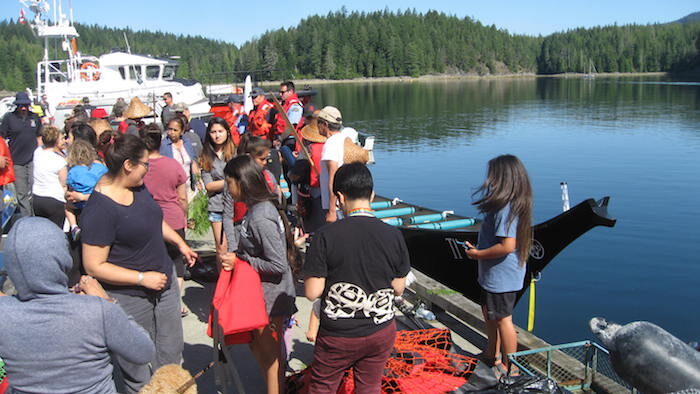
Kevin: “We started, I believe, in 2016 or 2017. We raised money to buy our first traditional canoe and started having practices at the hall for our songs. We had Tla’amin come in and help us make our own songs. That’s when I really got into the culture.”
“We have protocols when we are paddling. We make sure there’s no alcohol or drugs involved. It’s healing. Normally, we do it in honour of some members that we lost. That’s what we’re paddling for—because of drugs and alcohol.”
Manda: “With the canoe journeys, are those all the island and coastal Nations that participate, or only some of them? Who’s invited?”
Kevin: “Anybody from our Nation is invited, and some other Nations will jump on board with us. When I first went, I think there were 30 canoes from 30 different Nations.”
“I believe it took eight days to get to Seattle, and each night you pull into a different Nation. It’s amazing because we get welcomed to shore. We get fed. Our tents get set up, and then we’ll do drumming and singing anywhere from 8:00 at night till 12:00. A lot of times we’re back on the canoe paddling at 4:30 or 5:00 in the morning.”
“Because the journey is so long, we have to put in a good 12 hours a day paddling. When you get tired, we’ll put some more people in and take some out. We also have a boat out there. Actually, we borrowed Sadhu Johnston’s boat one time. He’s a good guy. It’s so amazing to see different Nations and what their culture is like.”
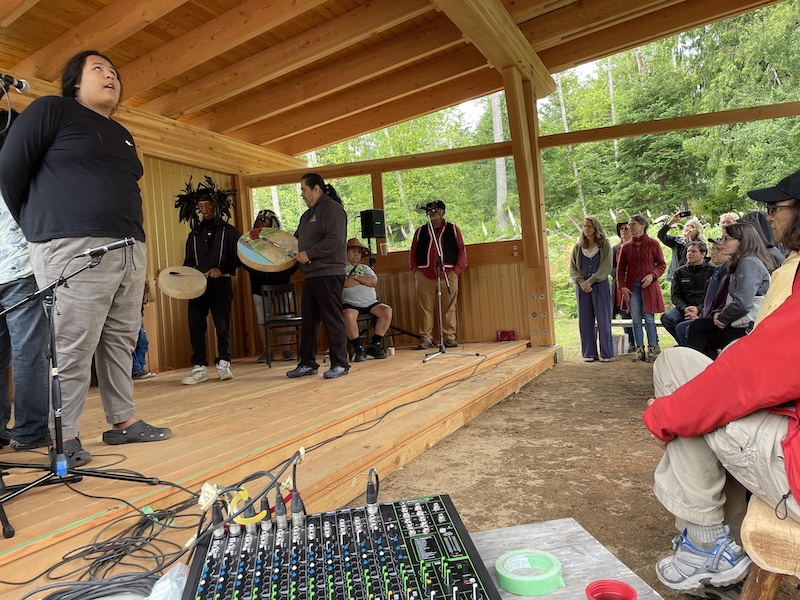
“When the younger generation sees our older members doing this—drumming and singing—and sees how much work it takes, they start to get involved. I’m like, ‘That’s what I want to see: the younger ones,’ because we can only do it for so long, and somebody else has to pick it up after us.”
Manda: “I got to participate a little bit in the CASE Youth Summit that the Cortes Island Academy has put on at Hollyhock the last couple of years. We’re totally open to doing it at the Wilderness Lodge, should you ever want to—just putting it out there. It’s a dream, anyway.”
“And seeing all the young people, particularly the Ayajuthem-speaking young people, talk about these really physically challenging but also bonding times and experiences of the canoe journey—it’s very inspiring.”
Kevin: “It also brings our people back together. I’ve noticed a lot of the families don’t get along. This is what it takes sometimes—to do a canoe journey. When I first ran as chief, I was like, ‘Okay, I hope I’m that person who can get everybody to get along,’ but I’m still trying after all these years.”
Community Activities
Manda: “On your website, I was really impressed by how many things are going on in the community right now. I saw weekly canoe practice, preparing for the canoe journey, and Culture Night. What other things are bringing your people together?”
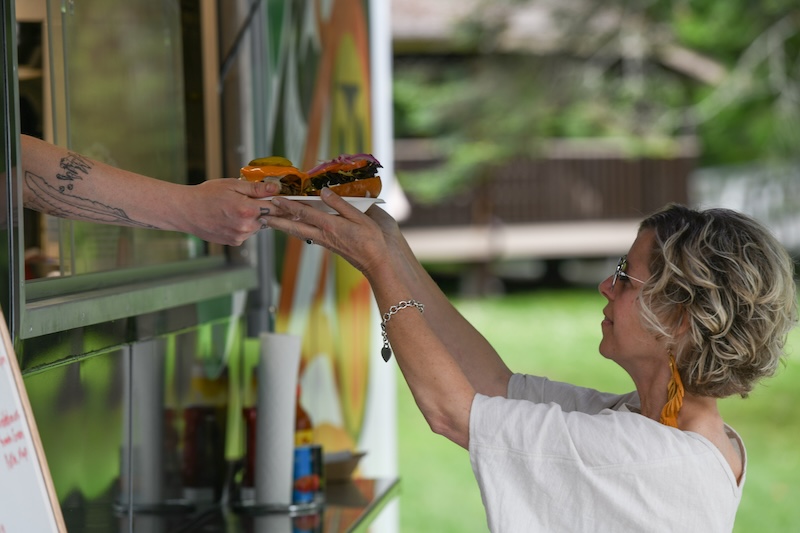
Kevin: “What brings people together is food.”
“We just started doing canoe practice and brought out the canoe. Laurie, our councillor, put it in the water two weeks ago. There’s been, again, a great turnout. Last week was too windy to paddle.”
“We have Culture Night once a week. It’ll probably go up to two times a week with the canoe journey coming on.”
“We have language bingo that happens at the hall, and now there’s another bingo over the radio. It’s run by Homalco. I was talking to Chief Darren Blaney one day, and he said, ‘Yeah, I learned from this other band that started it down island,’ he said, ‘and it became so big that they’re making, like, a million dollars a year on their bingo.’ Every week there are more and more people, right across the island and down to Powell River. There’s some good payout.”
“That’s totally different for us, but it’s something new that brings out the people—families or whoever—to sit together and play bingo.”
Manda: “In the Ayajuthem language?”
Kevin: “Yep. That one is done by Norman Harry Sr. I haven’t gone to that one yet, but I do hear there’s quite a turnout for that too.”
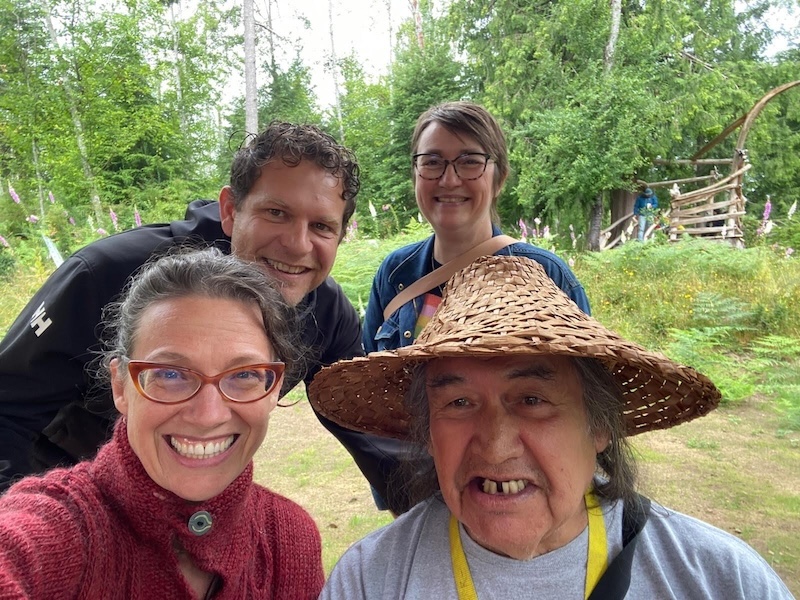
Wedding at the Band Office
Manda: “I also have a friend who is having a wedding at the band office this summer.”
Kevin: “I think we’ve already had three weddings at the hall.”
“Georgina and I were actually the first ones to get married in our new band office. It was a funny story because when I was doing the cedar ceilings in the main hall, I said, ‘Wow, wouldn’t that be amazing if I ever got to be the first one married in this hall?’ I guess the Creator heard me, because a year later I was married in the hall—and I was the first one.”
“There are people who book ahead of time if they’re going to use the hall to get married or for whatever else they have planned.”
Manda: “But it might be possible to book?”
Kevin: “Yes, absolutely.”
Links of Interest:
- Folk U: Chief Kevin Peacey on Politics, Projects & the Past (Part 2)
- Klahoose First Nation
- Articles about, or mentioning, Tribal Journeys
Undesignated photos by Roy L Hales