


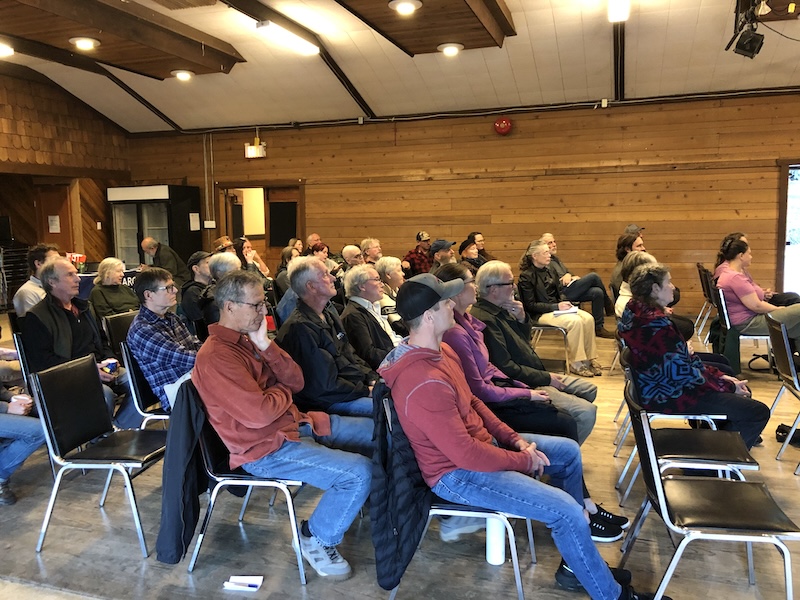
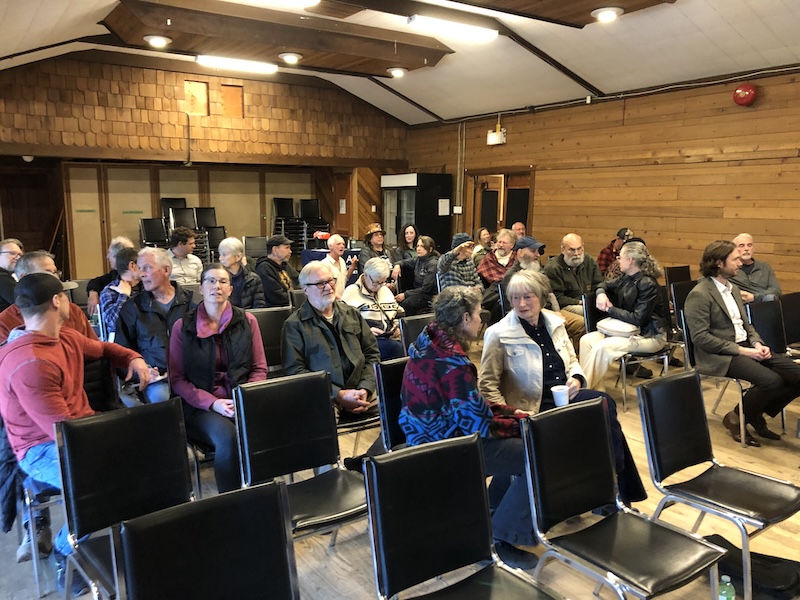
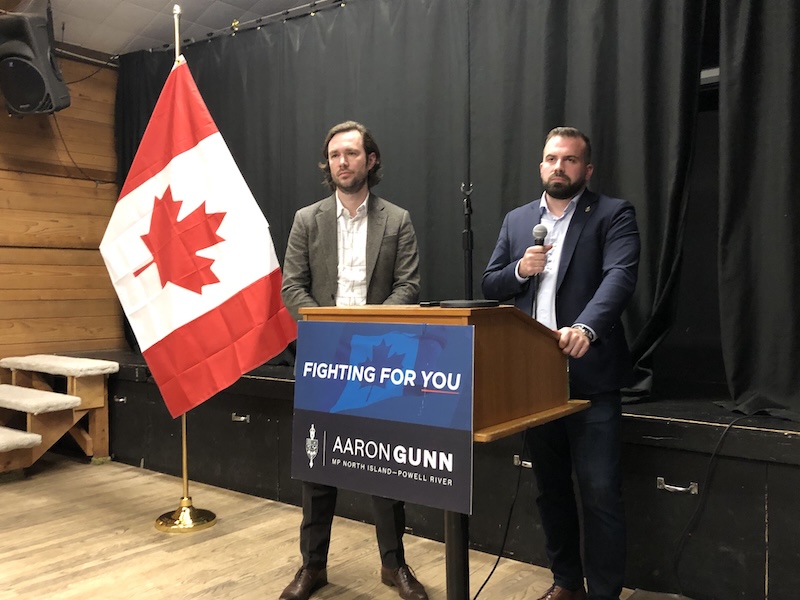
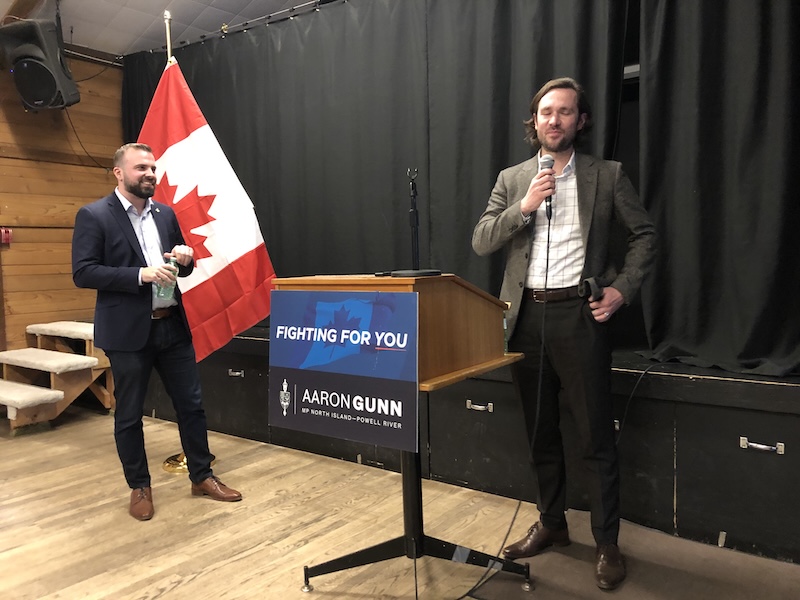
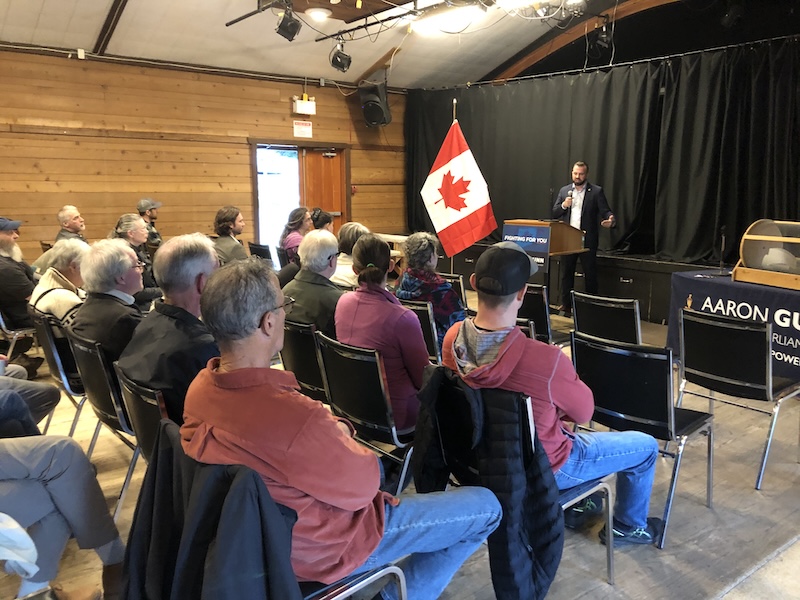
Aaron Gunn, the MP for North Island-Powell River came to Cortes Island on Thursday April 9. Jacob Mantle, the MP from York-Durham in Ontario, accompanied him. About 60 expectant Cortes residents showed up at Mansons Hall. The resulting town hall meeting covered everything from the cost of living to the future of the resource sector. The report that follows consists of highly edited audio clips from an hour and a half meeting.
(Cortes Currents 30 minute broadcast)
(The one and a half hour unedited audio. Image credit: Samantha Storfie, Gunn’s Office Manager, reading a written question.)
Cortes Island’s Community Spirit
Aaron Gunn: “This is definitely the best turnout per capita that we’ve had of any of our town halls.”
“ One thing that I really feel here on whether it’s Cortes or Quadra, is there’s a much stronger element of community. There’s a much stronger element of volunteerism and there’s a much stronger element of ‘we’re not going to rely on the government. We’re going to go out and just do it ourselves as a community.’ I think the whole country, quite frankly, could learn from that.”
“You guys have an absolutely amazing museum here, just an incredible group of volunteers. Then this (Rainbow Ridge) housing development that’s getting put up here for families in need, I think that’s just really incredible.”
Gunn’s Team
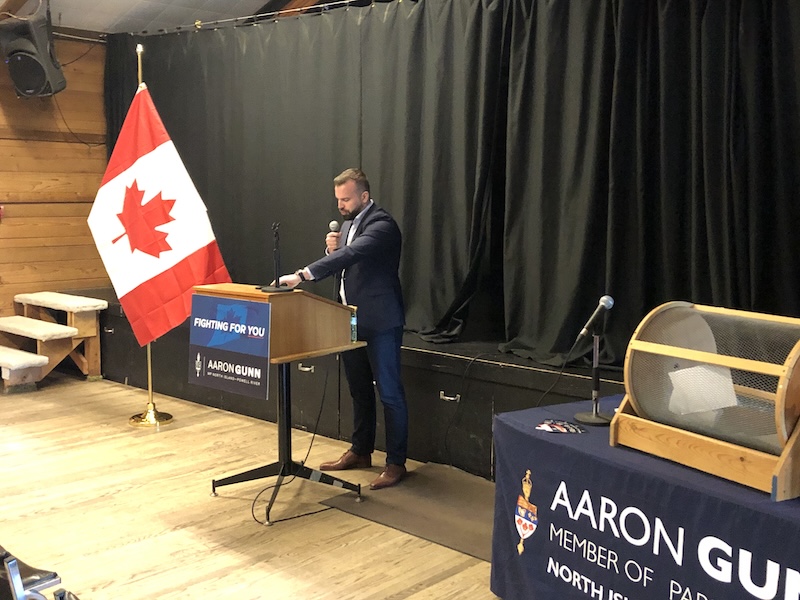
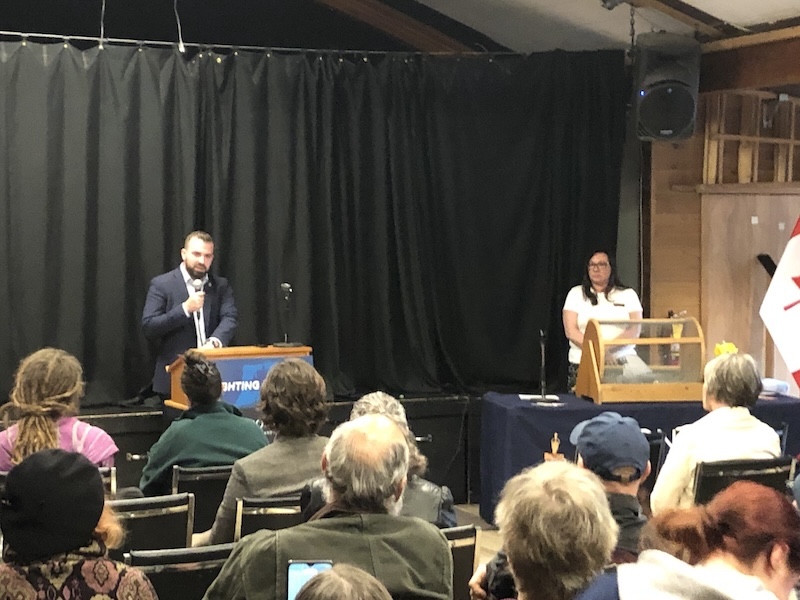
Samantha Storfie, Gunn’s Office Manager, was the MC for this meeting. Mel, another one of his staff from the Campbell River office, was at the back of the room.
Aaron Gunn: “They’re here to help you if you’ve got any issues with the CRA, with citizenship and immigration, veteran affairs, or any federal department. If you’re running into a roadblock, we’re here to try to help. Then if you’re still running into the federal government not making a common sense decision, then that’s when I come in to try to apply a little more pressure to try to guide them in the right direction for your guys’ benefit. One thing I’ve definitely noticed is that Ottawa is very far from this riding and Cortes Island. We want to always put it on the radar whenever that can help.”
Format for the Evening
The format for the evening was for Gunn to make his presentation, then he would accept written questions from the audience. His team believes this takes less time and is more efficient than having people speak out at meetings. To their credit, they do read out the questions verbatim, but some would argue that this format limits the group discussion.
Aaron Gunn: ”If you don’t want to write your question down, I’m here as long as it takes. You can come up and ask your question. Also, if you want to have a private conversation, talk to Mel or Sam. We can arrange a phone call and of course, you’re always welcome to come to our Campbell River office, and I’m sure I’ll be back on Cortes this summer if you’d like an in-person meeting as well.”
Cost of Living
“Back in Ottawa, my big goal as your member of Parliament is trying to be a voice on the issues that I believe in and that I hear from the constituents of the riding. Issues like the cost of living crisis where we’ve experienced the highest inflation in more than 30 years, where the price of groceries and housing has become just out of reach for so many working people, especially young people.”
“I’ve said this before, but in my view there used to be a promise in Canada where if you worked hard, you paid your taxes, you followed the law, you would be able to afford a home and a decent standard of living.”
“A great example of this, my grandfather, when he first came to this country as a refugee fleeing communism in Eastern Europe. He came to Canada in 1957, and he started out like many refugees who didn’t know the language – working at the lowest possible job, so working minimum wage on the railway on Vancouver Island. Yet on that minimum wage salary, he was able to afford a home and a nice piece of property while raising three kids in a single income household and have that house paid off in 10 years.”
“Now, does anybody on Cortes today think that on a minimum wage salary, you could raise three kids, buy a home, a nice piece of property and have it all paid off in 10 years?”
“Probably nowhere in Canada. Yet you would think with all of the advances in technology and everything, we should be much richer and wealthier than we were nearly 60 years ago. I think that is the direct result of a series of economic policies.”
Crime
We’ve also seen issues with deteriorating levels of public safety in our cities. I know there have been issues here on Cortes. I know you don’t have a permanent police presence, but in places like Campbell River and Courtney and Powell River, to a lesser extent, these issues around public safety and open air drug use have gotten quite a bit worse.”
“A few months ago an elderly couple who live in Campbell River, Serge and Deidre Melancon, were randomly and violently attacked in broad daylight in downtown Courtney at Lewis Park. They were just minding their own business. Someone came up to their car, asked if they could borrow a cell phone. Next thing they knew, Serge was ripped from the car and beaten violently. Deidra, his wife, is a double leg amputee, but tried to fight back with everything that she had. The individual in this case, as is almost always the case, was known to police as repeat, violent offender who should have never been free walking our streets.”
“It’s just part of a trend in this country. In the last 10 years: violent crimes are up 50%, homicides are up 27% and a third of those are being committed by individuals on some sort of release (bail pr parole, etc). In my view, this is not acceptable and we can’t allow it to become the new normal.”
“Before running for office, I used to make documentaries. The most famous one was called Vancouver is Dying, which looked into the opioid crisis and some of the public safety issues that we have. I was interviewing a business owner in London, Ontario. He had had all sorts of issues with theft, property crime, open air drug use, and he had this line that stuck with me, ‘ we get what we tolerate as a society.’ That can be a good thing, if you’re tolerating types of behaviour that you want to see more of. We want to be in a tolerant society, but if you start tolerating anti-social behaviour, if you tolerate repeat violent offenders, then that is what you’re going to get.”
Hollowing out of the Resource Sector
“Another issue, that I’ve talked about a lot, is the hollowing out of our resource sector. The forest industry here on the coast, for example, has been cut in half. More than 10 coastal mills have closed since 2018. Powell River used to be the largest pulp mill in the entire world – closed. Crofton Pulp Mill closed. There has been a cascading effect. In Port McNeil, the chip plant closed: the direct result of government policies that have restricted our forest sector from harvesting fibre.”
“Perfect example: The Crofton Pulp Mill. Over 25% of the fibre, just before it closed, was being imported from the United States. So we were importing fibre for that mill, not using our own, but taking it from the US when in many cases raw logs are being sent out of the country.”
“We see the result of all of these different policies: people out of work; families cutting back; individuals desperate for work, seeking whatever they can- in mines in the Northwest Territories or Yukon are working up in oil and gas in Fort McMurray. Those are good jobs, but I know in every case those are individuals who would rather be working closer to home, closer to their families, and closer to this beautiful place. I see it at the Comox Airport when I fly out, every other week or so, heading to Ottawa.”
“I’ve been very outspoken along with my colleague (Jacob Mantle) on Bill C-9, which in my view is another one of these nefarious attempts to restrict free speech, free expression and freedom of religion in Canada.”
The Opioid Crisis
“I’ve also spoken out on the opioid crisis. Since 2016, more than 50,000 Canadians have died from overdoses on drugs in this country. That is more Canadians dead, mainly young Canadians, than died in the entire second World War, just to put it in perspective. It’s a policy that I think is the direct result again, of tolerating and perpetuating open drug use instead of putting those dollars into recovery and rehabilitation and doing whatever we can to help return these fellow citizens to being healthy members of our society once again.”
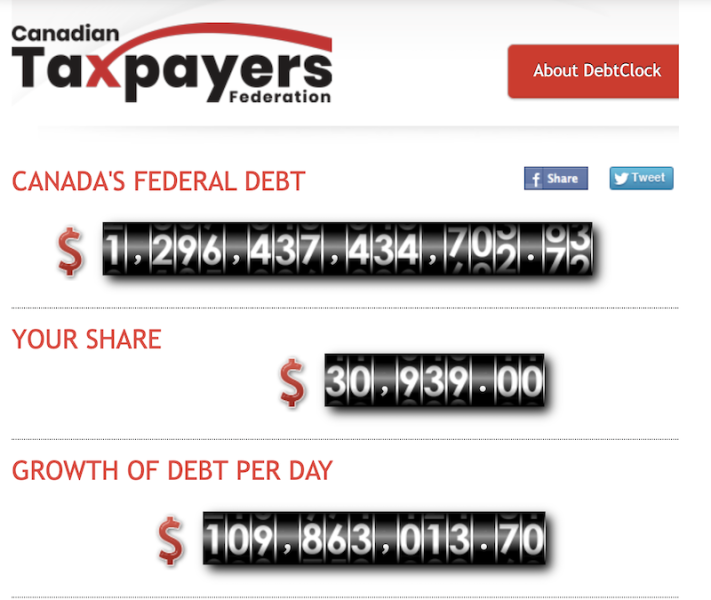
The National Debt
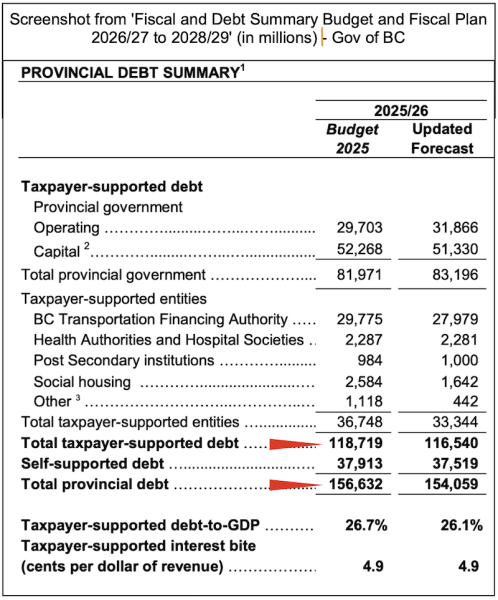
“I used to work at a group called the Canadian Taxpayers Federation. We had this giant clock that showed Canada’s national debt ticking up in real time. Canada just introduced the largest deficit in Canadian history outside of COVID. BC is currently running its largest deficit. The deficit nationally is over a $100 billion. The interest payments on that, because we’ve accumulated so much debt, are $70 billion a year. That’s money that can’t go towards roads, it can’t go towards healthcare or education. It’s money that’s wasted paying bond holders on Bay Street. It’s a bill that, in my view, we are unethically passing on to future generations.”
Trump’s Tariffs
“Of course there’s also been the issue of the massive trade dispute with the United States. 75% of Canada’s trade is with the United States. There’s no replacement or substitute for the US market, but we cannot control what the Americans are going to do. We cannot control, obviously, who the Americans are going to elect, and we also can’t be willing as a country to sign any deal at any price. So I think that means it’s more important than ever to diversify our trading partners around the world. It means to actually start trading with ourselves by reducing interprovincial trade barriers. Most importantly, we actually have to start building things in this country again.”
The Fisheries Committee
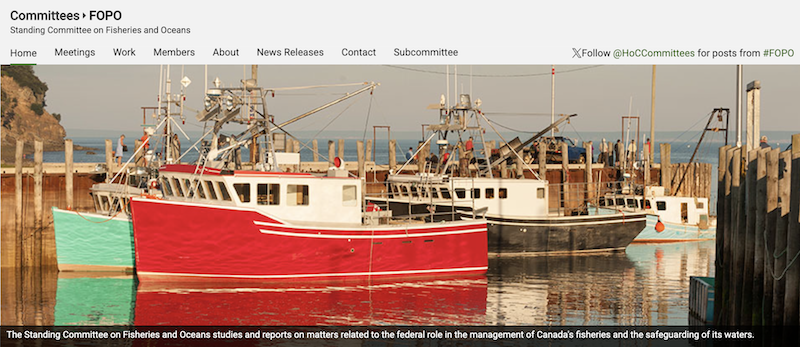
“That actually brings me to my first appearance at committee. The House of Commons ‘Question period’ can be quite scripted and staged, but you can have very robust and dynamic debates at the committee levels. Right now I sit on two committees.”
“The first is the Fisheries committee, where I’ve tried to stand up for fishermen and their families over the government attempts to close 30% to 40% of BC’s coast to various forms of fishing, a measure that has the potential to collapse an entire industry. In my view, it would actually be worse for the environment because you’re going to push the same size fleet into smaller and smaller areas, which increases the risk of localized overfishing. I also believe we don’t need to sign on to some international agreement where we here in Canada can make the best fishery management policies, by Canadians for Canadians.”
“On that note, there’s another issue that’s cropped up. Is there anyone here that fishes recreationally? I think it’s also very important that we preserve access for recreational fishermen too. That’s a very important expanding sector as well.”
Building Canada Act Committee
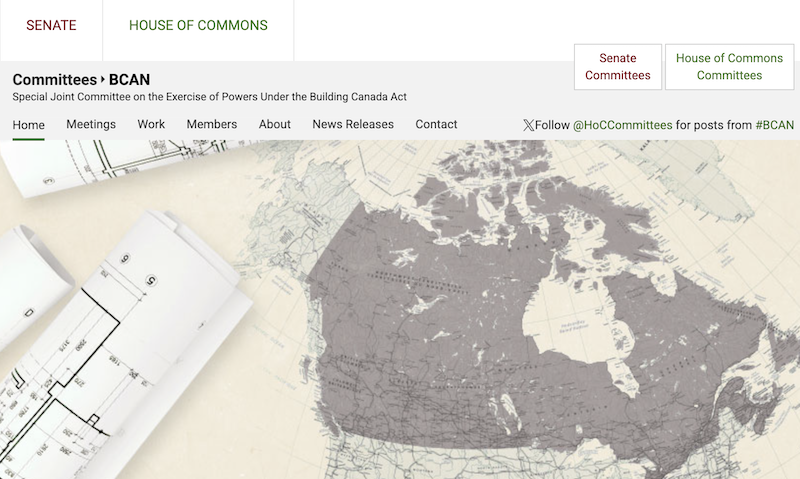
“The other committee that I’ve recently been appointed to is called the BCAN committee. So it’s Building Canada Act Committee. It’s a joint committee, so involves the Senate and the House of Commons, to oversee the construction of projects that have been deemed in the national interest.”
“Last summer we actually worked with the Liberals to pass Bill C-5 to speed up building of major national infrastructure projects. Part of that was to create a new parliamentary committee that would oversee what is in reality an unprecedented amount of power for what’s called the special projects office in the Prime Minister’s office.”
“So the goal for myself on that committee is to ensure, despite this concentration of power, we don’t have corruption. We make sure that important environmental regulations are being followed and also that the government is doing what it said it was going to do and actually get these projects built. Unfortunately, that committee has yet to review a single project.”
Transport Committee
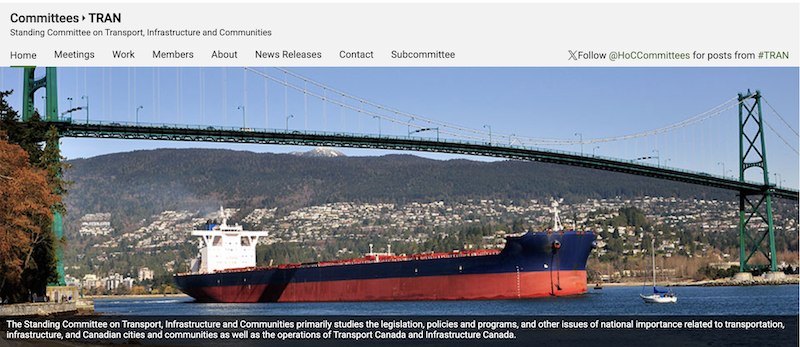
“The first committee appearance I had was on Transport, last summer, where I got to go one-on-one with Gregor Robertson, the former mayor of Vancouver and Minister of Infrastructure. I’ve been waiting, maybe 25 years to lock him down in a one-on-one conversation. We talked about the decision by the government to basically spend a billion dollars in taxpayer money to bankroll the purchase of ferries built in a state owned shipyard in Communist China.”
“It underscored my belief that the solution for Canada going forward is that we have to start building things again. Instead of subsidizing ship building in China, we should have built those ships right here in Canada, right here in British Columbia. Just like we should be building our own refineries in British Columbia. And just like we should be building our own pipelines instead of sending it all to the United States and selling it at a discount while they get rich off our natural resources.”
Selling Powell River’s Hydropower to the US
“The last thing I’ll just add very quickly is I’ve tried to be outspoken on another very specific issue. It’s not specific to Cortes, so I’m not sure if you heard about it, but it was about allowing foreign corporations to exploit our finite supply of hydropower and sell it to the United States in the middle of a trade dispute, with no benefit to the people who lived here.”
“There are two dams that were built over 100 years ago over in Powell River. They were dams built to power the local pulp mill and create thousands of jobs. Dams that by extension. also literally built the city of Powell River.”
“About 10 years ago, the mill fell into financial trouble and the dams were sold as a distressed asset to a very politically well connected company called Brookfield Renewables. A dam that went from supporting 2,000 jobs went to supporting about six. The company began exporting all of that power directly to the United States through old permits and through a subsidiary with almost no benefit to the people of Powell River, British Columbia, or Canada. Late last year, they applied for a 30 year export permit, which is the longest in Canadian history, to keep sending this power to the US again in the middle of a trade war, quite frankly.”
“In response, the local Tla’amin First Nation, the mayor and the council, sent letters opposing this permit to Canada’s energy regulator. As did I, as the member of parliament. We put out a call for signatures starting in Powell River and then across the riding. More than 2000 individuals wrote in to the regulator from this riding, saying that this was not in the interests of our region and our country. We brought it up on four different occasions in the House of Commons and that committee. A couple weeks ago, for the first time in Canadian history, Canada’s energy regulator rejected that permit request and is now going for a full licensing review, which will allow local town halls and community engagement, and hopefully, in my view, a complete rejection of the export permit request so we can use that power right here on our coast, in our province, and in our country to create Canadian jobs and power the Canadian economy.”
Elected to Represent North Island-Powell River
“So that’s a little bit of what I’ve been up to, trying to hold the government to account on these issues and many more.”
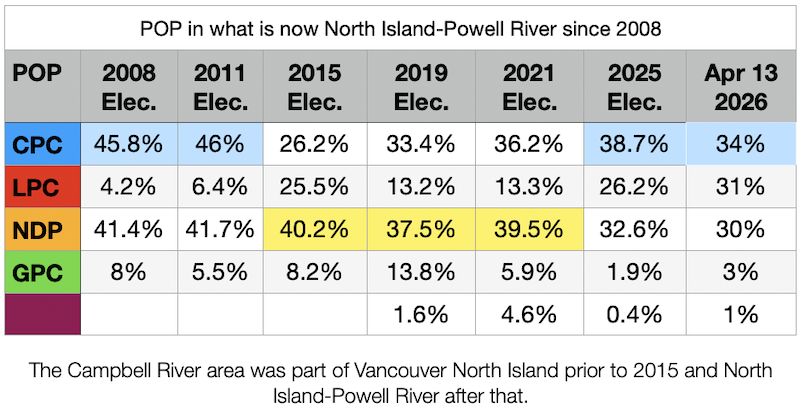
“Also know that we have to go to Ottawa 25 weeks a year, but every weekend I come back to this riding because the most important part of my job is interacting and listening to all of you and trying to represent you in Ottawa. That is my primary responsibility, serving those I was elected to represent the people of the riding of North Island-Powell River, including Cortes.”
The question period started after this.
The Cowichan Decision
Question: No documented cases of First Nations seeking title over property are known. Richmond warned its citizens this could happen, but the judge, BC government, and Cowichan tribes all say private property was not affected on the Cowichan decision. The court restored title to 800 of the 1,836 acres of the old Cowichan Village site, which has been illegally taken from them. What do you say?
Aaron Gunn: “The judge said that Aboriginal title exists as a senior title above fee simple title. I disagree with that. This situation has been evolving in the courts since the 1970s and 1980s. The provincial NDP government is appealing this ruling, so it’s not like I’m up here alone. The point is that private property, in my view, should be a red line and what we’re putting forward is that we do not believe there should be further agreements with First Nations that don’t explicitly extinguish that title.”
“I would say honestly on the issues of private property, if the First Nations have no interest in it, then that’s going to be a very simple fix because we can just put that into every agreement and then we move forward.”
Canadian Culture
Question: (Gunn mentioned that he was) focused on Canada’s heritage and culture. I’m curious, for you: what is the culture and heritage of Canada you are talking about?
Aaron Gunn: “This was a country that many people thought would quite simply never exist. Everyone was expecting Canada to be basically become consumed by the United States. The audacious vision to build the National Railway was a project that people thought would never be done. They said it was financially impossible.”
“They said there was no way you could have this engineering feat that could carve through the Canadian Shield across the Canadian Rockies. Some people thought we should cut down through the United States. Instead, Canadians came together and we got it done and we got it done quickly.”
“By the way, many people don’t know that railway was originally supposed to go along Bute Inlet, across Quadra Island to on Vancouver Island. They switched the route at the last second. It would’ve very much changed the history of the development of this province.”
“This used to be a country that used to get things done, that used to punch above its weight on the international stage. On D-Day in 1944, there were five beaches and no one got further on that first day than the Canadians on Juno Beach. On Vimy Ridge (where the major achievements were Canadian), basically the first battle that started turning the tide of the first World War, I believe yesterday or today is the anniversary of that battle.”
“This is a proud country. This is a country that has always brought people together. We can talk about the history with First Nations. You also had English and French; Catholic and Protestant. A situation that many other countries descended into civil war, and yet we came together to build this country together. Has it always been perfect? Obviously not. No history ever is. Hindsight is always 2020, but I think we have so much that we can be proud of in this country of what we have built together. I think trying to harness that spirit of cooperation, that there is nothing that we can’t do if you put our minds together, is what we need to do. That’s what I think of when I think of what it means to be Canadian and what Canadian values mean.”
First Nation Land Issues
Question: I really appreciate what you’re saying. There’s an enthusiasm that we all have as a culture, but it is all on the back of the land that was stolen from the Aboriginal people here. All that accomplishment happened, stealing the land all the way across the country, and it keeps on going. It is really hard for me to reconcile those two things.
Aaron Gunn: “We can go down the history wormhole, which is maybe a longer conversation. The real question for town halls like this is how do we go forward together? Nobody’s leaving.”
The CBC and Local Journalism
Question: When the Conservative party becomes Canada’s government, will they defund the CBC?
Aaron Gunn: “For sure, not only defund the CBC though, but also make sure there’s a lot of great local media and local journalists that deserve a lot more support than a corporation that’s getting $1.4 billion and in many cases, duplicating a service that could cost you nothing because CTV and Global are also providing national broadcast news.”
“I know you have a great radio station here (Cortes Community Radio, CKTZ 89.5 FM) that has a summer intern through the Canada Summer Jobs program, I think. So the answer is yes. We want to keep more money local instead of going to a big government behemoth like the CBC.”

The CUSMA Agreement
Question: “What will happen to free trade after July 1st when the CUSMA agreement (Canada-US–Mexico-Agreement) expires?”
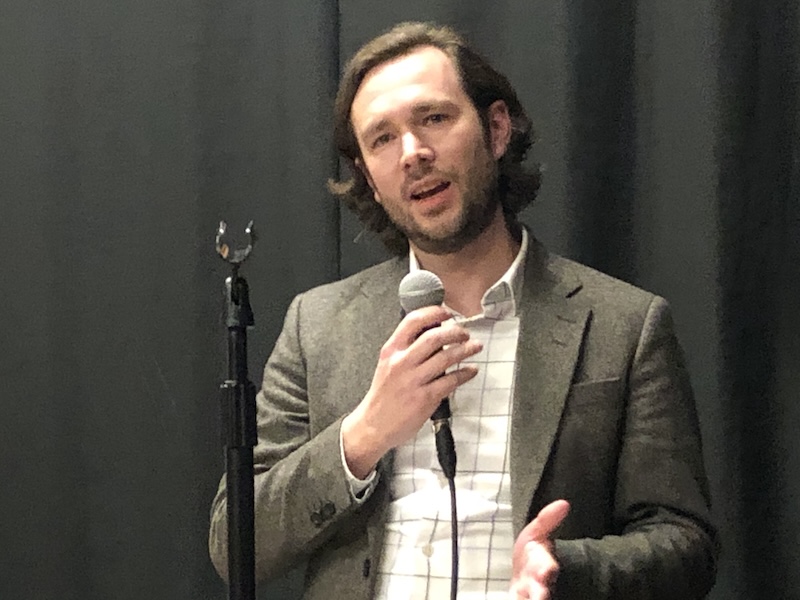
Jacob Mantle: July 1st is a deadline when each of the three parties has to say they’d like to continue the agreement. If they say that, then the agreement will continue for another 16 years and then there’ll be another review in a further six years. If one of them doesn’t say that they want to continue the agreement, that will trigger the expiry of the agreement over 10 years, but if one of the parties says they don’t want to continue the agreement, then the parties will have to meet every year for that 10 years to try and negotiate and resolve what other issues they couldn’t do.”
“So I don’t look at it as a drop dead deadline. If we reach July 1st and we’re still negotiating, we’ll still be negotiating. Remember, you apply pressure in a negotiation and the guy down there is very happy to apply pressure to us.”
“I think that’s where we may end up, that we’ll still be negotiating. It’s not going to be the end of the world. We’re still going to have, trade with the US. It’s three quarters of our goods there. Canada doesn’t have a substitute for the US market. We need a resolution. I’m very disappointed that we haven’t had any progress in almost a year now when one of the primary promises that the government made was, ‘ I’ll be better at negotiating with this guy than anyone else.'”
Question: Why does the Liberal government seem to be dragging their feet on trade talks?
Jacob Mantle: “I’ll give you my honest answer. I think it benefits them politically. When you’re faced with an external threat or adversary, there’s a natural reaction to support the people in power. That’s understandable. We all are Canadians. We want to see everyone succeed and we want to get through this, but, I’m sure you have the expression here in BC as well, I think the government’s ragging the puck on this because every time Donald Trump is in the media, every time there’s an issue, it benefits the government. The problem is while we wait, industries are being harmed. We need to put national interest above political interest here. That would be my message to the government. Get a resolution.”
Pierre Poilievre’s Leadership
Question: You’ll both answer this one. How confident are you in the Conservative party leadership?
Jacob Mantle: “Very confident. I ran as a candidate under Pierre Poilievre because I believe in him. I’ve been here one year and I’ve seen so many politicians change their opinion, change their review. One of the things I admire about Pierre is he’s very consistent on some of his core philosophical beliefs. We talked about one today, private property, less government, more freedom for people. Those are emanating values that I’ve seen over and over again, emanate his decision making and the way he’s leading our party. I much prefer, a leader who is going to stick to their philosophy, stick to their beliefs, no matter what issue is coming. So I have full confidence in our leadership.”
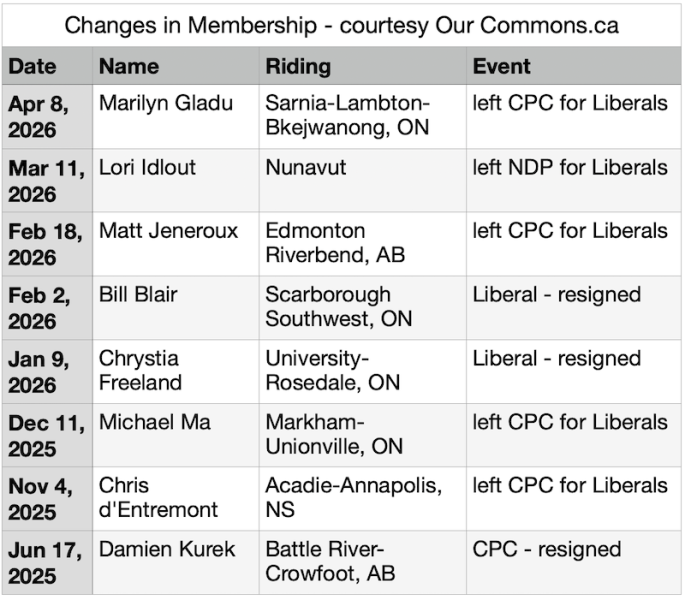
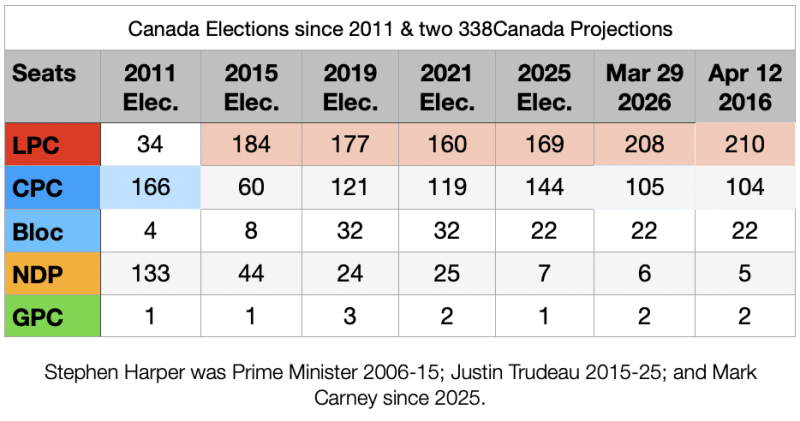
Aaron Mantle: “I’ll echo what Jacob said. There was another floor crossing yesterday. It’s not just conservatives, there’s also an NDP member of Parliament that crossed. Carney is going to have a majority government on Monday, a majority government that they didn’t earn at the ballot box. That’s going to change the dynamics of Parliament. Up until this point, they’ve had to work with opposition parties, whether it’s the NDP or us or even the Quebecois. They’re going to reconstitute committees so they can just push forward whatever they want, without review or compromise. That, in my view, is not a mandate that he earned from the Canadian people during the last election.”
“The other thing that frustrates me about these individuals who have crossed the floor is that the election was less than a year ago. The party leaders are the same. I would say the party platforms are essentially the same. They ran and campaigned on being Conservative or NDP, in the case of the one from Nunavut. I think it’s disenfranchising to the voters that voted for them. A lot of people are voting for the parties as well and the policy platforms that those parties represent, so I think it’s a disservice to democracy what’s been going on. As far as Conservative leadership and the Conservative caucus, I’m focused on being a loud voice for the people of the riding, but also with Pierre and with us as we believe the same thing on the day that we were elected and chose to run for election as we do today.”
Forestry
Question: After a hundred years of harvesting forests far beyond a sustainable rate, how does the revitalization of the forest industry happen?
Aaron Gunn: “I’m not a scientist. I’m not a forester. I don’t think politicians should be expected to be that, but we should be expected to follow the leaders and the experts in that field. This is a provincial issue, but I’ll still talk about it because it’s important to this riding in this region. We have a Chief Forester. His job as set forth by the provincial government is to find an environmentally and economically sustainable annual cut.”
“The annual allowable cut has been falling in recent years. There’s various reasons for that, but right now we’re not even cutting half of our annual allowable cut. So the economically and environmentally sustainable rate, we are at half of what that is. If you’re asking me to contradict the Chief Forester, I have no reason to do that. I certainly don’t have the background to do that.”
Tourism
Question: ”Tourism is a really big industry here. We don’t often talk about that, and we’re on the precipice of it working really well or not. Just to refer back to the protective spaces conversation, a national reserve is not just an empty protective space. It has the potential of generating jobs and also a sustainable way of us living here on the island.
We’re at a very interesting point where we can be overwhelmed by people coming here. At the same time, tourism could be the type of future industry that could really allow us to be sustainable here.”
“Our national parks across this country support Canadian values, our connection to the environment. It’s another way of looking at economic opportunity here, that is different from direct resource extraction.
“We have a history here of logging. When I walk through the forest, I see (stumps from) some pretty big trees. We don’t notice what’s really going underneath the ocean here. So it’s just that cautious approach. if we follow the success stories from the national park system, there’s a lot there that we might be able to pick up on. Not necessarily national parks, but a different way of creating tourism.”
Aaron Gunn: “This is the most beautiful place in the entire world. I’m sure most of you agree, it’s why you probably live here. It’s not just Cortes, I probably get to represent the most beautiful riding in the entire country. It goes up almost to Bella Bella, over to Kyuquot Gold River, obviously Butte Inlet, Powell River, Lund, going up Desolation Sound. It’s an amazing place.”
“We all want to protect it and we should make sure we have policies that do that. I do think, to your point, there’s no reason why that can’t coexist with the economy.”
“Forestry’s a great example. No one wants to go back to the forestry practices of 50, 60 years ago. So where do you find that balance and just how do you make sure it’s being driven by science and not ideology. As a member of parliament, it can be difficult to discern between the two because I’m not a forester. There’s so many different issues that pop up. Sometimes everyone’s throwing studies in your face that say contradictory things. I’ve got my study, I’ve got my study. And like trying to thread that needle and try to look out for the best interest of the community , is always a challenge, but it’s also one of the reasons why these town halls are so good.”
Renewables and Fossil Fuels
Questions: Why aren’t the Conservatives doing more to promote renewable energy production?
Aaron Gunn: “I think it’s about promoting energy production, of which renewables are one component. Probably the loudest issue, the issue that I’ve been loudest on is trying to prevent this finite hydro resource from getting shipped down to the United States with no benefit to the people that live here.”
“I’ve also been very opposed to the current government’s ideological predisposition against hydrocarbons. So it’s mainly the province, but shutting down the natural gas plant in Campbell River, basically choking it out, that’s going to leave the island with a very dangerous power deficit.”
“There’s talk about building new wind farms in various locations. I have no issue with these energy sources being supplements, but you also need what’s called base load power. We do have a lot of hydropower here in British Columbia, but natural gas is another very important component of that, and it makes no sense in my view, while we’re building large LNG export facilities, be it in Kitimat or down in Squamish, to send our natural gas all over the world, that we would then forcefully close our own natural gas plants here in Canada.”
“This is a resource that’s here in British Columbia, here in Canada. There’s always ways to do it better. I have no issue on any issue, any policy of having the highest environmental standards in the entire world. But, I also think that we can’t be choking out our own economy and our own industry.”
Climate Change
Question: The biggest threat to jobs and the economy is climate change, fires, heat waves, and ecosystem collapse. What are the Conservatives doing to address the climate crisis?
Aaron Gunn: “The climate is clearly changing, but I definitely would not say it is the biggest challenge to our economy. To put this into perspective, Canada’s 1.5% of global emissions. China is still building coal plants. This is a global issue; this is not a Canadian issue.”
“We have a situation right now where we have a cost of living crisis, where we have the highest inflation in 30 years, where young people are struggling to afford homes even though they’re working hard and paying their taxes in communities that they grew up in. We’ve got mills closing every month. The last mine on Vancouver Island closed.”
“It’s not that I care about the industry owners, it’s the fact that they employ people. Those are good paying jobs. They get money which is recycled back into our local economies, our communities, our society. That’s what pays the bills for our education, for our healthcare, for our roads, for our military. I don’t like dismissing any concerns at all. I wouldn’t dismiss this one, but it is one of many, and I certainly would not frame it as the single largest issue facing our economy today.”
“I’m a very optimistic person at the end of the day. because it seems like there’s lots of challenges, but it’s always seemed like that in history and you just try to bring as many people together as you can and move forward together. We do have such an incredible citizenry. We have such an insane wealth of natural resources and opportunities. Thank you, again, for having me. Please come up if you have additional questions or if, tonight doesn’t work for you.”
Returning to Cortes
“When is the best time to come back in the summer? It seems like every community has their own festival or is there like a Cortes Day?
Woman in the audience: “Cortes Day, or also Seafest.”
Several voices: “Love Fest“
Aaron Gunn: “Are you saying Love fest?
Someone: “Love fest.”
Female Voice: “He is still single.”
Aaron Gunn: “Okay, Love Fest it is Cortes. Thank you guys.”
Samantha Storfie: “I’m coming to the Seafood festival (Seafest), not the Love Fest.”
Links of Interest:
- The Klahoose ‘Elder’ and other embarrassing aspects of Aaron Gunn’s visit – Cortes Currents
- Articles about, or mentioning, Aaron Gunn
- Aaron Gunn, MP
- Aaron Gunn (Index page) – Our Commons.ca
- Jacob Mantle, MP
Sign-up for Cortes Currents email-out:
To receive an emailed catalogue of articles on Cortes Currents, send a (blank) email to subscribe to your desired frequency:
- Daily, (articles posted during the last 24 hours) – [email protected]
- Weekly Digest cortescurrents – [email protected]