
Tag Archives: Doctrine of Discovery

How did settlers get to British Columbia?

Europeans knew about North America for over a century before they began settling here. Basque, Portuguese, French, and English fishermen regularly sailed to Newfoundland and Nova Scotia in the 1500s and 1600s for the rich offshore cod harvest. They often camped on the beaches but rarely stayed through the harsh winters. At the time, most Europeans lived in smoky, windowless huts heated by an open fire on the floor—hardly an incentive to brave even colder conditions overseas.

Archaeologist William Gilbert, working at Cupids in Newfoundland, suggests a few changes in homes construction changed everything.

“Recently it has been suggested that the late 16th century innovations such as fireplaces, wooden floors, glazed windows and woolen and felt clothing may have made it easier for Europeans to adapt to and survive during our cold northeastern winters. The first successful colony was established at Port Royal in Nova Scotia in 1605, followed by Jamestown, Virginia, in 1607, Quebec City in 1608, and Cupids in 1610.”

Continue reading How did settlers get to British Columbia?
Indigenous Peoples Reach Unanimous Agreement on Defining the Just Transition and Provide Principles and Protocols to Eliminate Harm from Renewable Energy and ‘Green’ Development

Press Release from the Indigenous Summit at Geneva Switzerland, October 8-10, 2024

“For Indigenous Peoples, a just transition means exercising our own forms of territorial governance according to our traditions and ways of life.” –Indigenous Peoples Principles and Protocols for Just Transition

October 22, 2024 – Nearly 100 Indigenous leaders from the seven socio-cultural regions of the world have reached unanimous agreement on defining a Just Transition with respect to impacted or potentially impacted Indigenous Peoples.

Continue reading Indigenous Peoples Reach Unanimous Agreement on Defining the Just Transition and Provide Principles and Protocols to Eliminate Harm from Renewable Energy and ‘Green’ Development

SISȻENEM will be the first land trust returned to a First Nation

By Chadd Cawson, The Columbia Valley Pioneer, Local Journalism Initiative Reporter

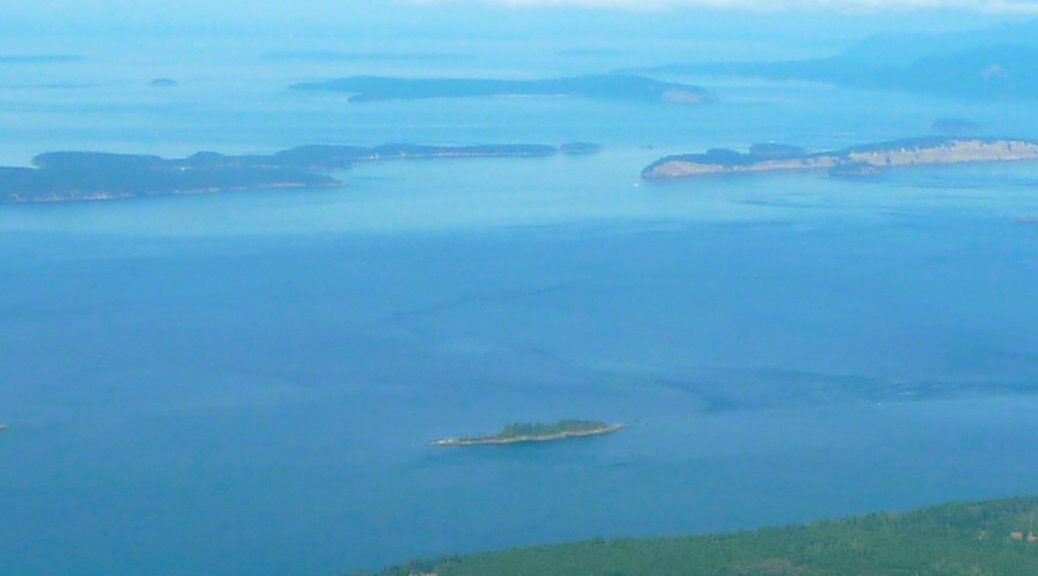
An untouched piece of Indigenous land called Halibut Island, also known as SISȻENEM, near Salt Spring Island, will be the first piece of land given back to an Indigenous community through a land trust. The nearly 436,000 square foot island has been stewarded by the Saanich, or W̱SÁNEĆ, Peoples for thousands of years.

Continue reading SISȻENEM will be the first land trust returned to a First Nation

Centuries later, the Doctrine of Discovery takes the spotlight

By Alexandra Mehl, Ha-Shilth-Sa, Local Journalism Initiative Reporter

Christopher Columbus, John Cabbot, and Jacques Cartier are just some of the names known for landing on North American soil as early explorers. Many of these explorers are known for their great discoveries. However, it is widely known that before European explorers, First Nations lived on the lands.

The complex legal history of Canada’s origins, and the Indigenous-Crown relationship, began with a series of Papal Bulls from the Pope of the Catholic Church. Presently, the weight that the Doctrine of Discovery has in Canada’s systems is being argued.

On September 9th the First Nation Leadership Council (FNLC) published a statement saying they believe renunciation of the Doctrine of Discovery should be King Charles III’s first official act. His coronations is set for May 6, 2023.

Continue reading Centuries later, the Doctrine of Discovery takes the spotlight

Unresolved Indigenous Issues

By Roy L Hales

They occupied Cortes Radio’s broadcast area for thousands of years before the European advent. The Homalco, Tla’amin, Klahoose, and K’ómoks nations’ shared language testifies to their common ancestry. Their neighbours, the Laich-kwil-tach were fierce warriors, whose canoes carried raiders into the southern Georgia Strait, Puget Sound and up the Fraser River. (They attacked the Hudsons Bay Company post at Fort Langley in 1837). When the influx of settlers was sufficiently numerous, they took over. The indigenous population was deprived of lands they had occupied for generations. Their customs and governance was superseded. Prior to 1960, the native population could not vote in a Federal election unless they first surrendered their treaty rights and Indian status. This situation is slowly improving. The BC Treaty Commission was set up in 1992, but so far has only signed a single treaty within our area. So I asked the candidates running in the Powell River – North Island what their parties will do about unresolved indigenous issues  

Continue reading Unresolved Indigenous Issues