As the course of history attests, civilizations tend to rise and then fall. This process poses two fundamental questions. What causes people
to coalesce into complex societies? And what causes them to fracture
into disorganized populations? Perhaps the most cogent and credible of current explanations to both their formation and collapse is in Goliath’s Curse: The History and Future of Societal Collapse, a remarkably insightful 2025 book by Dr. Luke Kemp, a scholar from the Centre for Studies of Existential Risk at the Cambridge University.
Category Archives: History
The Quadra Project: Invisible Enemies
Alpha Male – Photo by Art DiNo via Flickr (CC BY SA 2.0)
Anthropology reveals interesting information about ourselves, particularly because of its ability to conduct an examination of our human behaviour and customs from the distance of different cultures and long periods of time. This provides anthropology with an illuminating perspective that is available to few other sciences. An illuminating example of this is provided by “The Enemy Within”, an article in the July 12, 2025, edition of New Scientist, written by Jonathan R. Goodman. (Also see his book, Invisible Rivals: How We Evolved to Compete in a Cooperative World.)
As a sociologist, Goodman explores the interface between anthropology, primatology, psychology and economics to explain the dynamic of inequality. This has become particularly worrisome in our present culture as the rich get richer, the powerful more influential, and everyone else is feeling justifiably victimized. Goodman begins by taking us back to our very historical beginning.
Continue reading The Quadra Project: Invisible EnemiesThe Quadra Project: Intelligence
In the back pages of New Scientist magazine, in a section called Almost the Last Word, readers pose questions that are then answered, usually by well-informed other readers. In the July 13, 2024 edition, someone asked, “Once life is established, is the evolution of intelligence inevitable?”
Garry Trethewey of South Australia attempted the first answer. “Probably not. Wings have evolved four times—in birds, bats, pterosaurs and insects. Legs and eyes have evolved multiple times. Swimming ability has also evolved many times. But intelligence has only evolved once, very recently. Is it useful? Is it a survival trait? Is it somehow better than not-intelligence? Given the 8 billion of us versus the vastly greater numbers of microbes and how long they have been around, I would put my money on the microbes.”
Continue reading The Quadra Project: IntelligenceTwo Abolitionist Models For Ending the Reign of Carbon

In his book The New Abolition, Chris Hayes draws a provocative parallel between the modern transition from fossil fuels and and the historical abolition of slavery in America. The challenge is truly staggering: in 1860, 400,000 Southern slaveholders faced the total loss of their “property” and economic base. Fast forward to 2014, and the fossil fuel sector sat upon at least $10 trillion in wealth. Hayes argues that it is nearly impossible to find a precedent for such a massive economic upheaval other than abolition. It took a bloody civil war for the United States to free its slaves, but the British abolitionists accomplished this through legislative action rather than armed conflict.
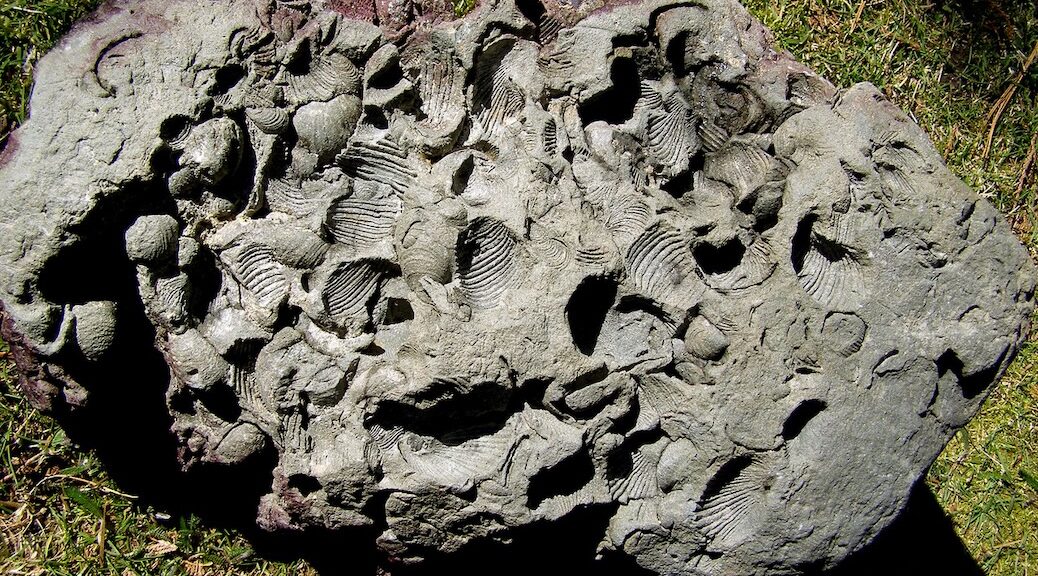
Continue reading Two Abolitionist Models For Ending the Reign of CarbonHow a Comox Valley fossil discovery forever changed paleontology in BC

By David Flawse, The Discourse, Local Journalism Initiative Reporter
In late autumn 1988, Richard Hebda — then head of botany at the Royal BC Museum — stepped into the living room of a man named Mike Trask following a report of an interesting fossil find on the Puntledge River.
According to Hebda, when he shook hands with the amateur fossil hunter, he was not expecting much. Before this, the paleobotanist had a call about dinosaur ribs in a dry creek bed near Chemainus that turned out to be dirtbike tracks.
But this stop at the Courtenay resident’s home would be different.
Continue reading How a Comox Valley fossil discovery forever changed paleontology in BC