

This week: The growing cost of climate change, a major EV milestone hit in the birthplace of the automobile, and how a Vancouver project is making clean mobility more equitable

by Keri McNamara, Trevor Melanson, Sicellia Tsui and Ciara Torrance of Clean Energy Canada
The climate bill is coming due
Extreme heat is no longer just a public health emergency. It’s becoming an economic one, too. Europe, where temperatures are rising at roughly twice the global average, is now the world’s fastest-warming continent—and the impacts are rippling through its economy. A single June heat wave cost the U.K. an estimated £1.5 billion as hotter working conditions dragged down productivity.
Canada is getting its own reminder. Early estimates suggest Ontario has already experienced its worst wildfire season on record, with more than 7,250 square kilometres burned, over 1,800 people displaced, and the season far from over. And the most visible costs are only part of the tab: wildfire smoke is linked to an estimated 2,500 premature deaths in Canada each year, with the resulting public health impacts averaging $19 billion annually between 2014 and 2025.
B.C. is preparing for an electric future
B.C. is investing in both EVs and the grid that will power them, with $700 million to install 2,500 public EV charging ports over the next decade and a 100-megawatt grid-scale battery on Vancouver Island to help meet peak electricity demand. As Clean Energy Canada’s Joanna Kyriazis put it, expanding the charging network is “one of the best ways the government can unlock EV ownership for more households, helping them save thousands of dollars a year on gas,” adding that a focus on urban fast-charging hubs will help ensure charging is available for apartment dwellers, renters, and younger Metro Vancouverites who want to go electric but need a reliable place to charge.
Who lost when the carbon tax disappeared?
New research from Maytree’s Welfare in Canada report finds that eliminating the federal carbon tax (and with it the Canada Carbon Rebate and related provincial payments) was a major driver of income stagnation for low-income households. On average, these families received substantially more through the rebate than they paid in carbon taxes, meaning the end of the program left many of Canada’s most vulnerable households worse off.
Affordable EVs need strong standards, too
Opening Canada’s market to more affordable Chinese EVs could help close the upfront affordability gap for Canadians. As Clean Energy Canada’s Rachel Doran notes, Chinese competition could encourage automakers to introduce lower-cost models, as it has in Europe. But affordable vehicles alone won’t get Canada to 75% EV sales by 2035. While automakers are on pace to meet the fleet emissions-intensity standard this year, reaching the EV sales target will require the federal government to make those standards considerably more stringent. That’s why Clean Energy Canada is recommending stronger long-term regulations, early ambition, consistent rules across all vehicle types, and fewer loopholes.
Germany hits a major EV milestone
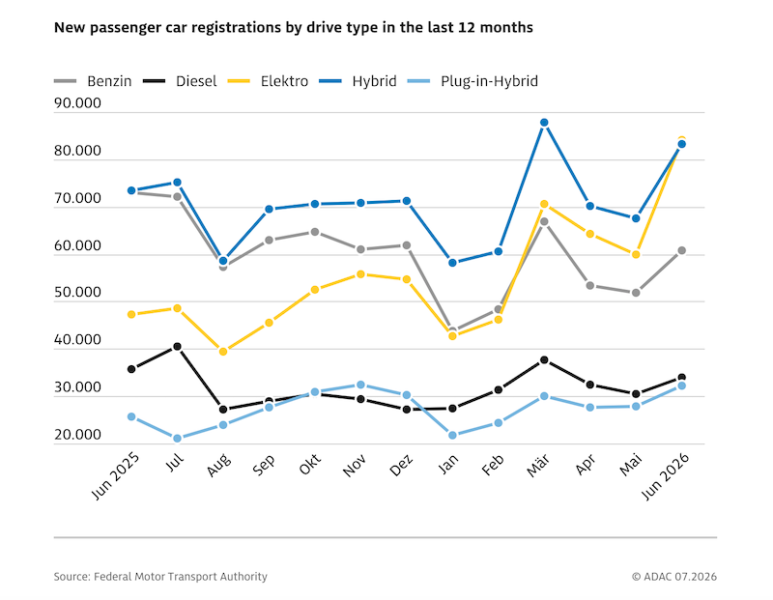
(Graph of Sales in Germany – Courtesy ADAC)
The birthplace of the automobile just reached a major turning point: for the first time, battery-electric vehicles became Germany’s best-selling powertrain, outselling gas, diesel, and hybrids in June, with EV sales jumping 78% compared to a year earlier.
Making clean mobility accessible for everyone
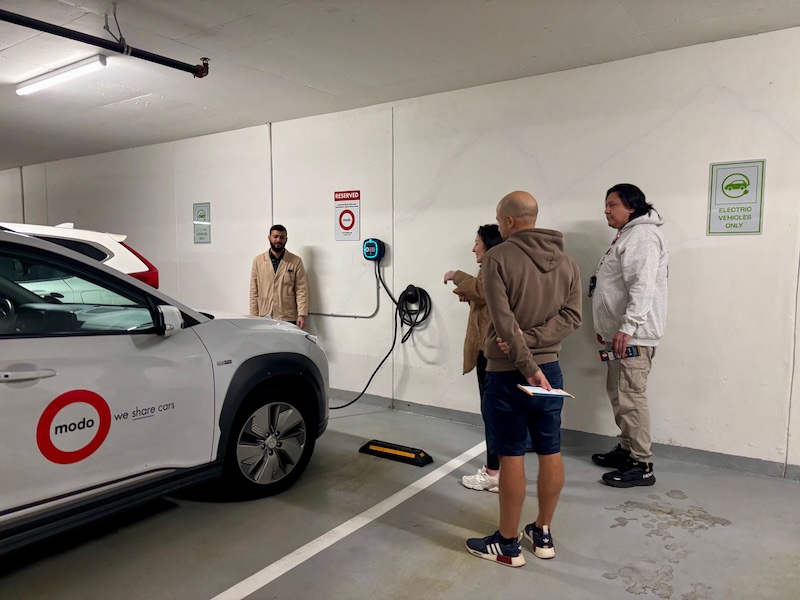
A new Vancouver pilot is showing what equitable transportation can look like. Delivered by Kambo Energy Group, the BC Indigenous Housing Society and the Aboriginal Housing Management Association, the Clean Mobility Project combines free transit passes, access to a shared EV, ride-and-drive events, and community-led education to make clean transportation more affordable and accessible for urban Indigenous residents. Early results include 3,490+ transit trips and 130+ shared EV trips.
Links of Interest:
- Wildfire Myths Spread While 19B Cost is Ignored – The Energy Mix
- Why Europe leads the World In Rising Temperatures – Cortes Currents
- Welfare in Canada (Download) – Maytree
- New passenger car registrations June 2026: Electric cars become the strongest drive type for the first time (in Germany) – ADAC
- Advancing Equitable Clean Mobility for Urban Indigenous Residents in Vancouver – Kambo Energy Group
- Clean Energy Canada (website)
Sign-up for Cortes Currents email-out:
To receive an emailed catalogue of articles on Cortes Currents, send a (blank) email to subscribe to your desired frequency:
- Daily, (articles posted during the last 24 hours) – [email protected]
- Weekly Digest cortescurrents – [email protected]