
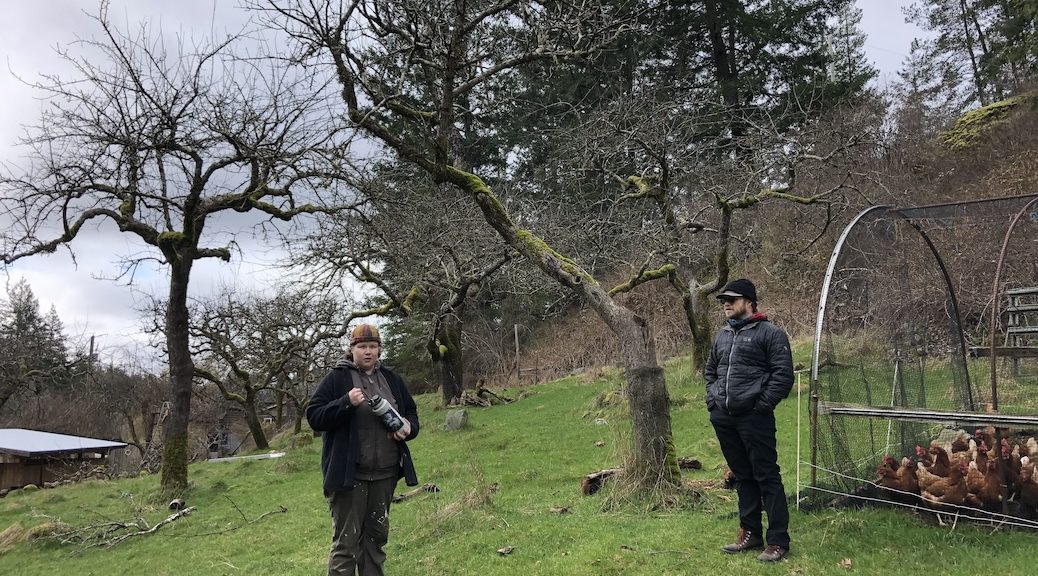

Michael Manson started clearing the land for what is now Linnaea Farm in 1887. The Hansen family lived there during the early 1900s, and in 1997 the farm became a charitable land trust. In this morning’s interview, Adam Schick and his daughter, Nola McPhail, talk about their experiences and the next generation of Linnaea Farm.
Adam Schick: “One of the biggest challenges of the last few years is having people live here long term. Farming offers more of a lifestyle opportunity, but as our population ages, often the only thing left you have is to sell your property to ensure you can retire successfully. That’s a real problem. Because this farm is a trust, we don’t get to sell the property. We simply have the honour of looking after it. While I feel it is an honour, more and more, it seems that people see it as a burden; they want a job, or something that’s paying you money.”
Linnaea Farm As A Lifestyle Choice
“We are at a place on Cortes Island where, to get anyone to even answer the phone, it costs $25 an hour. In the summertime, there are groups of landscapers making $40 or more. It is pretty hard to entice those people to come to the farm to work unless they have a personal interest in these things. To me, this represents a breakdown in our society where we’ve decided to value people’s time only in this way. Personally, I never really got into this for the money. The things that don’t show up on a spreadsheet are the things that truly make a community a good place to live.”
“The lifestyle aspect is harder to entice people with. Farming is sometimes very difficult, and community living can be equally challenging. We try to do both of those things here together. We can get people to stay for a year or two, but then when we ask them to commit further, they realize that committing more means taking on more responsibility without a pay raise. It is simply the responsibility of looking after the property. Maybe we should ask the young person in the room why she is here.”
Another Generation at Linnaea Farm
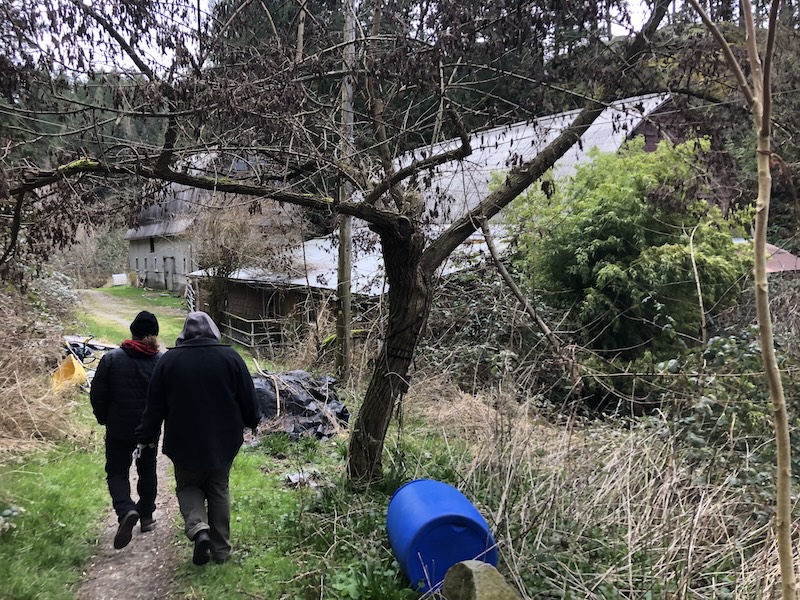
Nola McPhail: “I’m Nola, the daughter of Tamara and Adam. I’ve grown up on the farm my whole life, but I left the island after high school and only returned last November. I’ve been back for a bit over a year now, full-time, which has been really nice. As my dad is saying, it’s common in many places that the younger generation isn’t returning to do this type of work. There are many other things happening in the world, so this is becoming a bit of a lost art. A lot of our work this year is focused on changing our methods and thinking about how we can better include the community—starting more activities and inviting more people here so we can find more interest and build more capacity.”
Adam Schick: “Nola is going to take on the role of interim manager. It’s one thing to have people here, but you need to figure out exactly what they are going to do on the farm, and Nola has stepped up to take on that role. When it comes to the interns, Tamara and I will still be guiding them through the actual work.”
“Someone has to ask the human questions like, ‘How are you doing? How is the house? How is your time?’ Nola is a great communicator. Many of the interns are young, and because Nola is also of that generation, there is a natural relatability. She has a great work ethic and a real keenness for this work, so it seemed like a natural fit.”
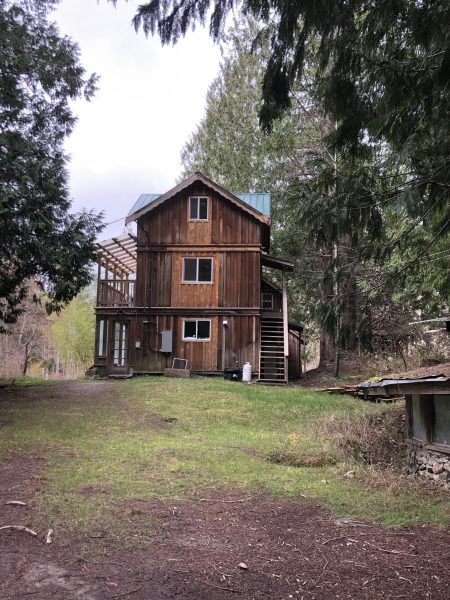
“We are currently in the Ed Centre. I’m sitting at the table where we have our weekly farm team meetings. We talk about everything from the minutia—like needing a chain to fix a leaking toilet—to the bigger picture, such as talking to other organizations about how they manage their interns and business. We discuss how to host Lovefest, large community events, workshops, and literary afternoons with the seniors.”
“Another role Nola has taken on is managing the Ed Centre. We are trying to encourage more community synergy this year. We had a seed swap a few weeks ago, and we have a Fruit Guild and a Fiber Guild. These are people from off the farm who live on Cortes and come here to use the facilities to meet and work. For example, the Fruit Guild members help prune and look after the trees; later in the year, when it’s time to harvest, everyone takes some of that fruit home for their own use.”
Scale of the Land
Cortes Currents: “How big is Linnaea Farm?”
Adam Schick: “The whole farm is 314 acres.”
Cortes Currents: “How much of that is cultivated?”
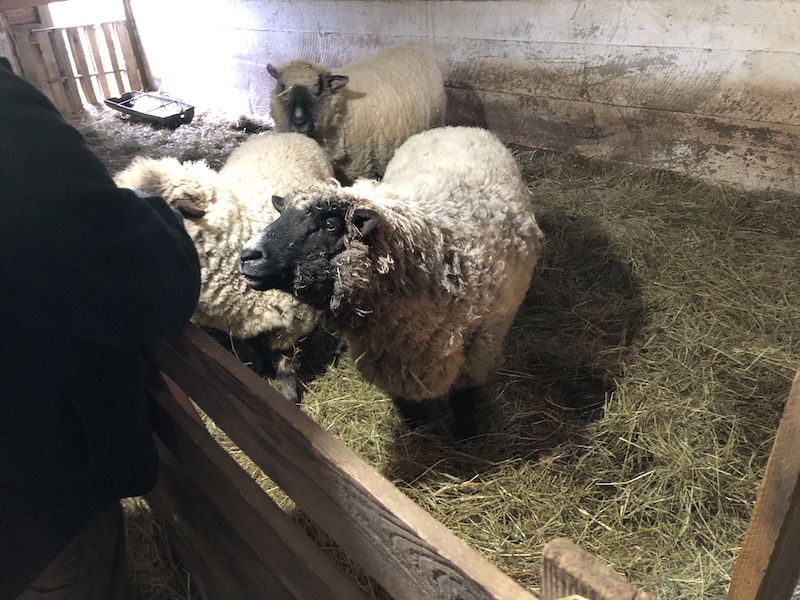
Adam Schick: “Probably about 40 of those acres are cultivated, and the majority of that is pasture. We cut enough hay to feed the cows, goats, and sheep, and we have gardens that support about 15 people.”
Nola McPhail: “Our goal with our livestock is raising them ethically and kindly, giving them a good life, and receiving the benefits they provide us in return.”
Cortes Currents: “What is in the other 274 acres?”
Adam Schick: “There is a lot of protected forested land. We have conservation covenants extending all the way from the road. Most people here have probably hiked the Easter Bluff Trail; that is all protected. Then there is the land by the lake, which connects to the Kw’as Park trails beyond Dillon Creek.”

The Stewards
Cortes Currents: “Who lives here?”
Adam Schick: “I live here with Tamara, and Nola lives here now. We also have Chris and Amy and their two kids.”
Nola McPhail: “There is also Joe Bricks, our mechanic and maintenance man, and Brent Howson. Our family and the other families who are stewards of the farm live here full-time, year-round. We pay a hundred-dollar residency fee, plus the utility costs of our housing.”
Adam Schick: “We also have to look after our own housing, and almost all of those people have spent about 5,000 hours of volunteer time to run the farm. We didn’t get paid to do those things, but if we didn’t do them, nothing would happen here.”
Nola McPhail: “Ultimately, the point of stewardship and living on the farm is to look after the land.”
The Internship Program
Cortes Currents: How many interns are there?
Nola McPhail: “Currently we have three, but they’re going to be leaving soon. We could have about seven interns in various locations doing different things. We have the seed internship and the general Linnaea Farm internship. The interns live in our farmhouse and also by the parking lot here, at the Gatehouse on the tower side.”
“The internships are offered in three-month periods, so the experience is seasonally different depending on when you join. Summertime versus winter looks very different in terms of tasks. That also gives people the opportunity to see where they want to learn more, depending on the seasonal work and requirements that are needed.”
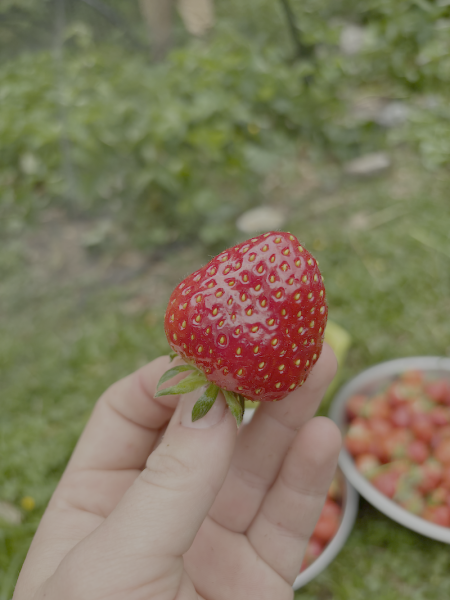
Adam Schick: “I’ve been a member of the BC Eco Seed Co-op since 2017, and I’m focusing on growing seed crops. To me, seed is the most beautiful original technology, and I’m big into that tech. We’ve been on this journey of humans and seeds evolving together, but that bond has really broken in the last few years where the concentration of seed is in the hands of fewer and fewer people. One of the internships is for someone who wants to learn those things directly from me. I have 25 years of knowledge and experience to share.”
“We also have an internship that is more about farm operations—everything from livestock to doing maintenance—whatever needs doing on the farm.”
The Daily Work and Skillsets
Cortes Currents: What kind of work goes on at the farm?
Nola McPhail: “We have three cows, so work involves daily barn chores, milking the cows, and anything within the livestock system. That includes fencing and field management. Maintenance-wise, there is an infinite amount of work to be completed on a farm. That varies depending on people’s skills or what they’re interested in doing. We always have projects like painting and random trim work. Our mechanics, machines, and all of that equipment occasionally need maintenance and daily attention.”
Adam Schick: “With all these internships, I suggest checking the website. We cater the experience to your skillset. If you happen to have mechanical skills, maybe you’d spend more time in the shop with Joe working on the machinery. If you’re generally interested in gardening, you’d probably spend more time with us. If you want to learn more about community and those dynamics, you might work with Tamara or Nola. Learning customer service and sales would all be wrapped up in it. Again, I’m not saying you get full carte blanche to choose only what you want to do, but we do value your interests.”
“What we’re really hoping to find are people who are curious and interested. Instead of perhaps spending $30,000 to get a degree in something they might not use, we look for someone interested in the rural arts—how to work in a community, how to grow things—and who wants experiential, place-based learning.”
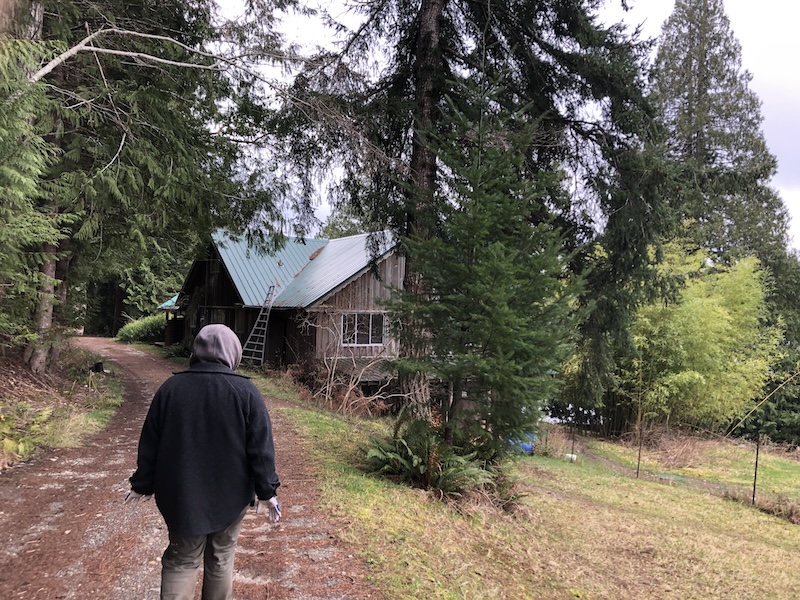
“We have a beautiful 10-bedroom farmhouse. It is shared accommodation, so learning how to live with people is part of what you’re going to get out of that whole experience.”
“We’ve set these apprenticeship periods up into three-month chunks to accommodate people’s lives who might not have a whole year to commit. However, if you are doing well in the first chunk and you want to stay, we can extend that. It just gives us a way of checking in: Are things going well? Are things working out?”
“Living on a small island in shared housing, if you’ve never really experienced those things, signing up for eight months or a whole year doesn’t behoove us, and it might not behoove the young person either. Breaking it into these three-month chunks gives everybody an opportunity to gauge how things are going. If they are working out, there’s no reason why you can’t sign up for another three months and grow with us.”
The Learning Centre and Community Context
Cortes Currents: How much of the experience is centered on the Learning Centre?
Adam Schick: “Most of the work these people will be doing will be outside and in the field. Their primary center is going to be the farmhouse where they live and prepare their meals. We’re sitting in a room right now where there’s a bunch of great books, so they have access to the library and all the things that happen here.”
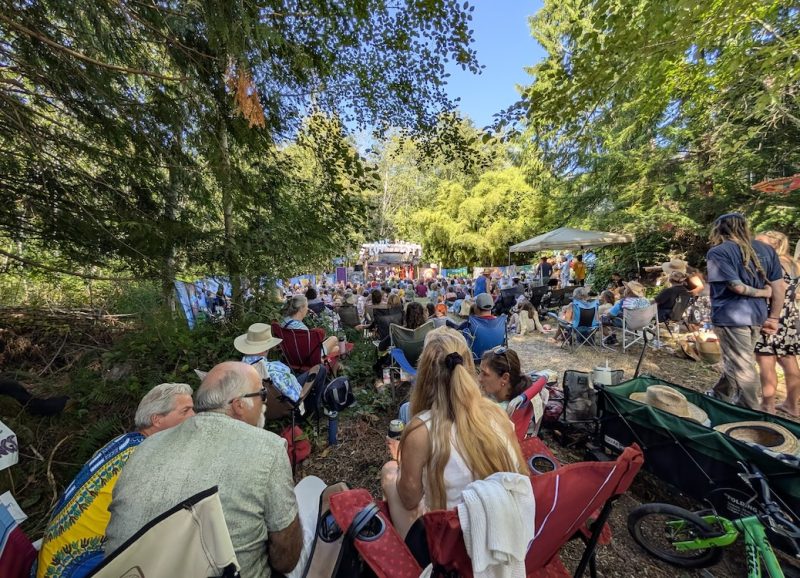
“We were just talking today about programming, salons, and educational opportunities that would be shared with the entire island this coming year. If they’re here as an intern, they’d be more than welcome to join in any of those events as well.”
“Anyone who has lived on Cortes knows it’s a quite different community. The fact that we are two ferries away from Vancouver Island makes the culture very unique. It is very different if you’ve lived through a winter here, where you interact with local people who actually make their lives and livelihoods here, versus the summertime when we have so many boats, visitors, and tourists.”
“The ideal intern comes with enough of a nest egg that they do not have to work off the farm. We have set up the internship where the farm is the priority, but the hours aren’t onerous. You would be able to get a part-time job on the weekends or in the evenings if you made that work.”
“Another issue on the island is that there’s no housing for people to work entry-level jobs because of Airbnbs and the general nature of housing on Cortes.”
Cortes Currents: Is there a cost to staying here?
Nola McPhail: “No, their labor pays for their learning and their housing while they are here.”
Partnerships
Cortes Currents: Are internships offered in partnership with other organizations?
Adam Schick: “We have some. We have Simon Fraser University coming up with a group of students, and the University of Victoria coming up to do a field school.”
“FarmFolk CityFolk has offered various seed mentorships or apprenticeships. We are in contact with them, but we are such a rural, remote place. Most of these things are happening in Victoria, Nanaimo, or Vancouver. If you’re based there, it’s hard for a young person to have the means to make their way all the way up to Cortes.”
Crops and Livestock
Cortes Currents: What exactly do you grow?
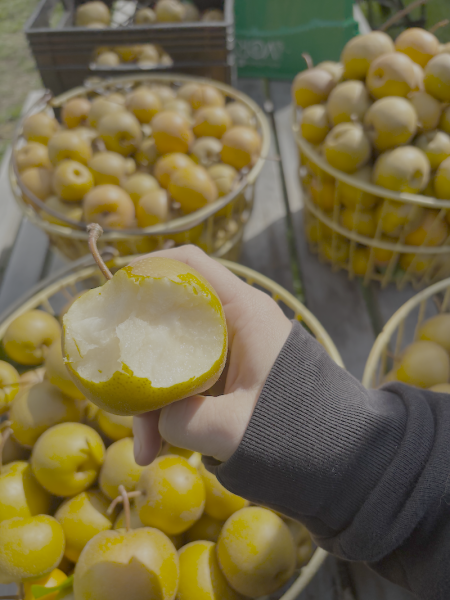
Adam Schick: “Well, we have fruit. So, apples, pears, all those things—but on Cortes, everybody has apples and pears. I mean, what you grow versus what you can sell are very different questions.
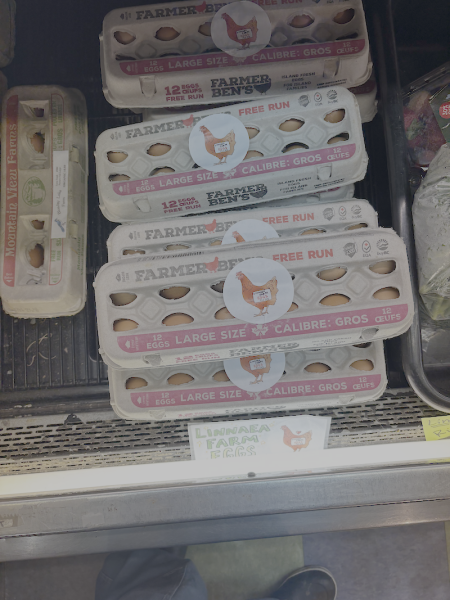
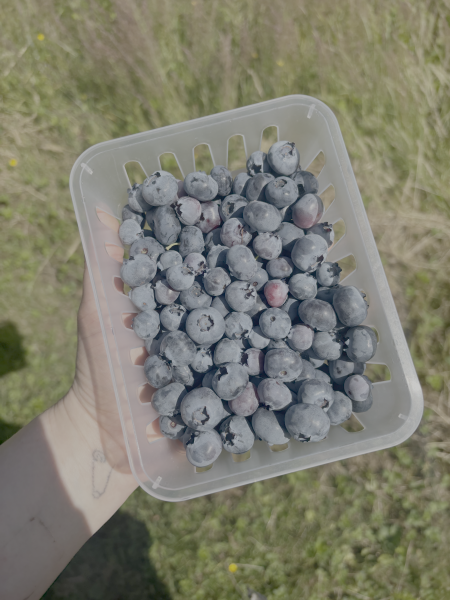
This last year we’ve had eggs at the Cortes Natural Food Coop, which is sort of exciting. We have soft fruits. We sell plant starts in the springtime. We do raise beef for sale, even though this year we’re not going to have any because of breeding cycles and how that all works out. We’ve pastured poultry, so chicken. I’ve been growing seed crops the last few years too. Right now at the Cortes Natural Food Co-op, there’s the BC Eco Seed Co-op; some of those packets say Linnaea Farm on them. The seed co-op is a group of 20-plus farmers. Now we all share resources and market our stuff through that brand, the BC Eco Seed Co-op.
We grow potatoes for all of us on the farm internally. They don’t really go out there because potatoes are pretty cheap, but that’s like fuel. Interns will come and have access to a root cellar that has carrots and potatoes in them; they pretty much grow a whole vegetable garden.
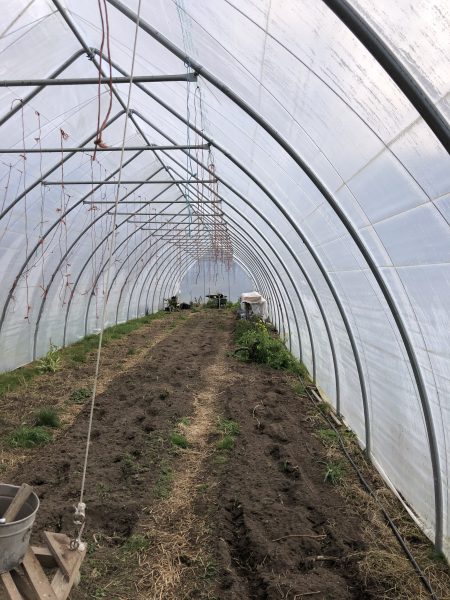
The fun thing about growing seed crops is you rogue out the stuff you don’t want and you eat it. Then you keep the seed and you sell it. So you get a little bit of both: peas, beans, winter squash, carrots. I love basil. Greenhouse management would be another skill. I have a recently new-to-me 100-by-20-foot greenhouse where I grow lettuce for seed.
So again, you plant out 200 lettuces, you eat 100 of them, maybe 125 of them, and then you leave 75 of the best ones to go to seed. So, it’s very different than being a market gardener, which I have been in the past. A market gardener and a seed farmer want the same crop, but for different reasons. The market gardener wants the biggest, fattest lettuce because he is going to receive the most money at market for it. Whereas the seed farmer wants the biggest, fattest, healthiest lettuce to produce seed so that the future will be full of big, fat, and healthy lettuces. So when I go into the garden now as a seed farmer, if that little romaine is a little bit puny and doesn’t look that great—well, that’s the one I pick to eat. I leave the ones that are the most representative of good characteristics in that plant.”
Why Food is So Expensive?
Cortes Currents: Why are farm-grown vegetables so expensive?
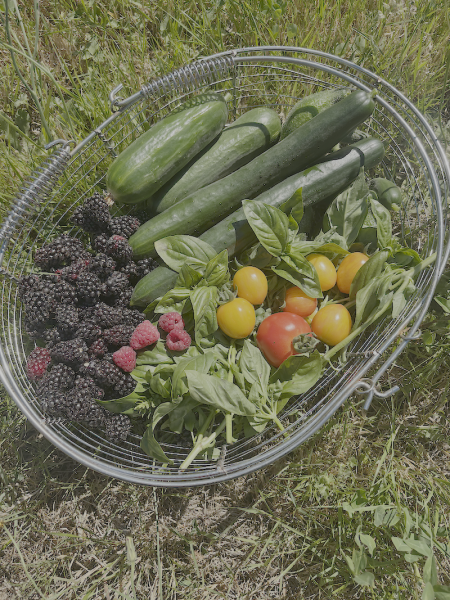
Adam Schick: “Most of the things that are grown for the supermarket are grown for things like outward appearance and transportability. Like a tomato you get in a grocery store: it’s picked green, gassed, and then presented to you. If I’m going to grow you a tomato, it’s going to be a vine-ripened tomato. It’s not going to make it to Campbell River because it’s going to bounce and turn to mush because it’s so ripe.
The first year I grew lettuce greens in British Columbia was in the Whistler area, and we were getting about $13.60 a pound. In 2024, I grew my last lettuce by-the-pound salad mix for the co-op, and the price was $12.80 a pound. So for me, the producer, over that time period, I’m making less money per pound of lettuce even though my costs have gone up. The biggest difference is all the big Arizona global salad growers that have basically driven the price down, making it harder for your local producer to compete on a global market.”
Cortes Currents: Do you find that in other crops as well?
Adam Schick: “Pretty much everything. Right now, if you went to the co-op—it’s February—the price of cauliflower or broccoli, I don’t even know what it is, $8 or $9 a pound? That’s because it’s getting imported from Mexico or California. As soon as I can grow it in BC, California and Mexico just dump it into Canada, driving the price down. So I never get that premium high-end crop because you’re competing with the whole globe.
So California broccoli—by that point, they’ve had it for months. They’re like, ‘just send it to Canada.’ That’s our A-grade fresh. The market broccoli is going to taste way better, but in the grocery store, all you see is the price.”
Livestock and Logistics
Cortes Currents: What about meat?
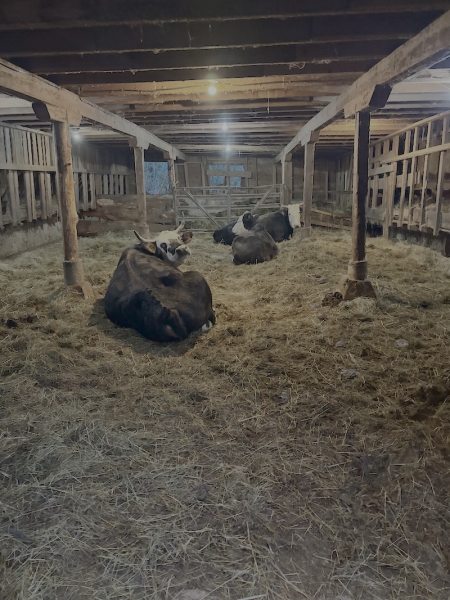
Adam Schick: “One year we had 14 cows. We currently have three. Part of that is just capacity for these things. With three, we can milk them, we can cut the hay, and we can look after them.
Another thing we’re experiencing is that not only are we having a hard time retaining and keeping people on the farm, but there are farms on Vancouver Island and a whole bunch of people in the Comox Valley that we’ve relied on for extra hay and hay haulage. They’re now getting older, and their kids aren’t replacing them. All of a sudden, there’s a doctor buying the farm. They become more like hobbies, and it actually takes people to keep agriculture happening, not only here, but in the province.”
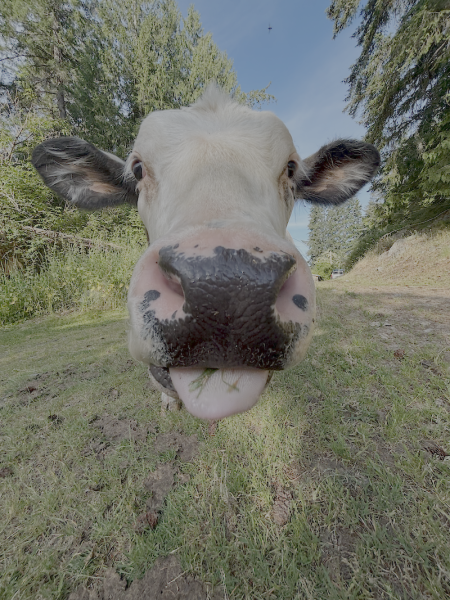
Cortes Currents: We’re talking about why beef is so expensive.
Nola McPhail: “Beef is expensive because cows are really expensive to buy, and on Cortes, we don’t have the proper facility for certified butchery. Having to ship them off the island increases our cost.”
Adam Schick: “The hay hauler that we’ve used for years had a real connection with Gunter Brothers, so he wouldn’t just pick up our cow and take it away; he’d bring us hay or some kind of implement. Both trips would be full, and we had a relationship that we built over 20 years. They used to come on a Tuesday because they were both seniors and they could get free drivers’ licenses because they were seniors, and then they would charge us break-even costs to do the haulage.
If we were to try to find someone new today, they would be trying to charge us $80 an hour for their time to be in that truck. All of these things just make it harder and harder to see any profit, even wondering why one should expand, because you’re basically paying the hay hauler and paying the abattoir and paying all these other people to do these services—which is fine, but it’s hard when you live on a Gulf Island two ferries away.
As we lose the connections with the people that you’ve been working with for years and years—who are all kind of farmers or farm-related—it becomes people specializing in one part of the whole entire chain. Everyone’s trying to make the most they can, and it doesn’t leave enough flexibility where I know ‘I’ll cover you on this’ or ‘let’s make this break even.’ We’re moving further and further away from a community where everything’s not about a final dollar value.”
Climate Change at Linnaea Farm
Cortes Currents: Where do you have your crops?
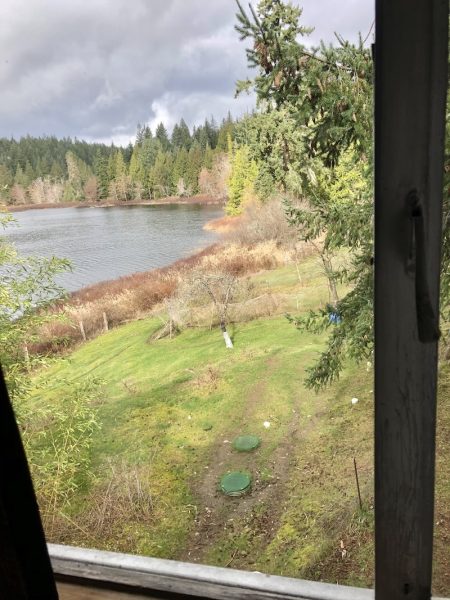
Adam Schick: “When I got here 25 years ago, the garden used to get about three and a half to four more hours of sunlight a day. But now the trees have all grown up so tall that we’ve lost significant sunlight in that garden. The other thing is it’s really close to the lake, and climate change is real. As someone who has lived in one place for as long as I have and has kept notes and records of how these seasons progress, the climate and the way things happen now is very different than it was 25 years ago.”
“The biggest change is that it used to rain a little bit all the time, and now it rains a lot at once, followed by periods of nothing, and then it rains a lot again. We’ve been having more frequent rain events where 50 to 100 millimeters of rain fall in a single period. When I first moved here, those events were rare. There was room and capacity for the ground to absorb a constant, light rain. Now, with these heavy events, the water backs up, floods, and things go underwater. It might look like a dry February or March, so you plant everything, and then it rains heavily at the end of March and the whole garden goes underwater. You lose everything and have to start all over again. It has been a nightmare trying to grow field crops so close to the lake with all the flooding.”
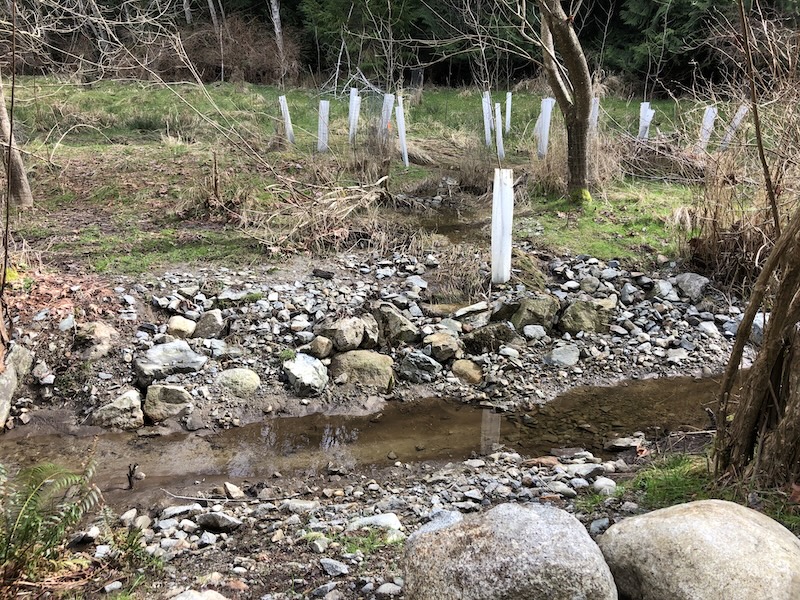
Nola McPhail: “We also had a wetland restoration project a few years ago, which is upstream from where the garden is located.”
Adam Schick: “The wetland has mitigated some of the damage. Before the wetland was in place, we’d have these big rain events and the water would rush across the fields, causing massive erosion. Occasionally, there is still a small river through the garden, but we aren’t seeing that same aggressive ‘whoosh’ of a current coming through. The idea of the wetland is that there is a cut in Dillon Creek, and when the water level gets too high, it diverts and slows the flow. It spreads over a larger surface area, so it isn’t nearly as destructive. It isn’t causing that same level of erosion.”
“Plus, we now have this great spot where the tractors used to sink even in the driest times of the year because it was always wet. Now, I have this wonderful place for all these cool red-listed species.”
“Again, because of the farm’s mission and our current situation, we aren’t trying to extract every bit of profit. We are recognizing that the land there is a little marginal. Sure, we could run a few sheep over there, but wouldn’t it be nice if the ducks, the red-legged frogs, the herons, and our other neighbors also had a space to live and thrive? We can make that happen.”
The New Field
Cortes Currents: When did the new field come into being, and how big is it?
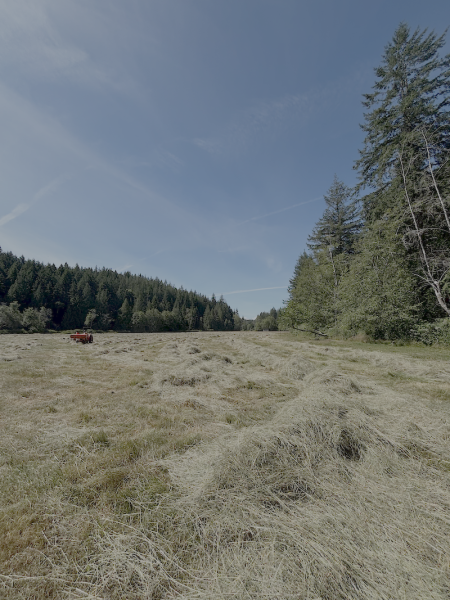
Adam Schick: “It’s been around for about 10 years, but I’ve really been trying to make it happen over the last three or four years. This new garden is higher and drier; it’s a better winter garden with better sun.”
“It used to be like the forgotten child or the runt. While the production garden was thriving, I had this little garden we were starting on. It got the broken wheelbarrows I would repair and the broken hoes I would fix and take out there. It got whatever was left over. Now, it is the focus; it is getting the right tools and the right energy.”
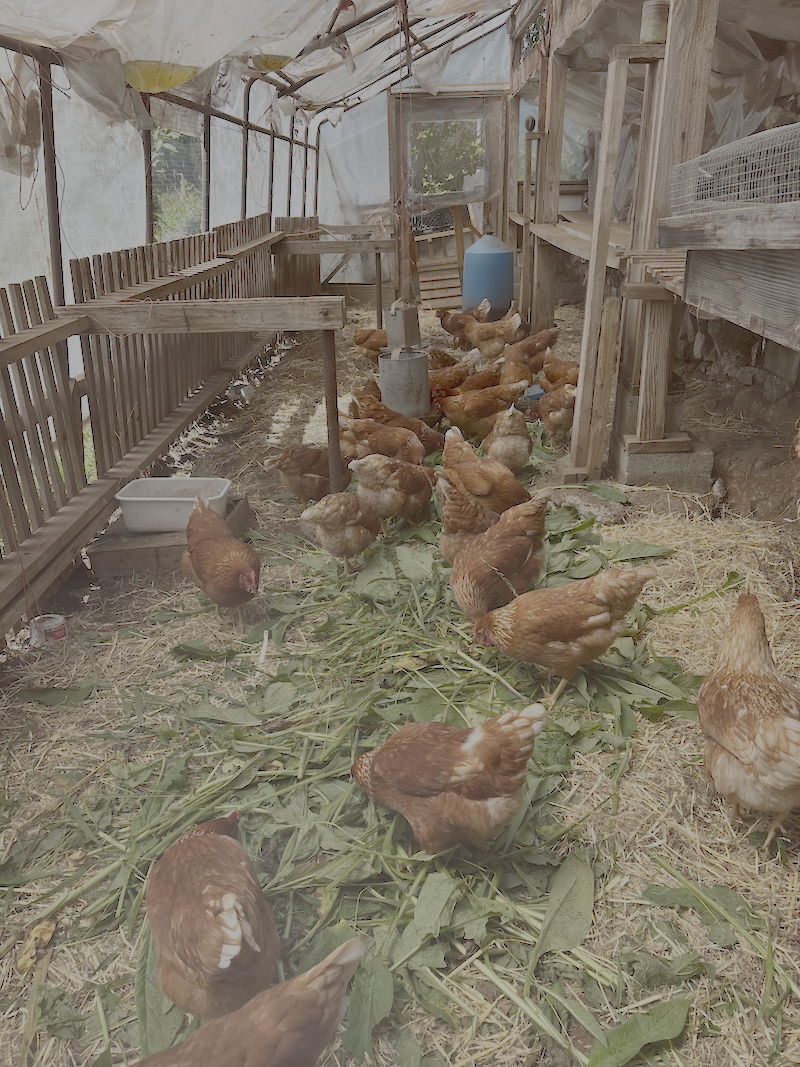
“One of the things Nola and I are working on right now is getting some milking goats to help contain the blackberries. We’re building a little goat pen and some fencing around the garden. Hopefully, they’re going to eat those blackberries. We’ll manage their manure, which brings more life and energy to the system. So, not only do you have sheep, cows, and chickens to work with, you can also work with goats. We have the full range of livestock here on a scale that is manageable at a human level.”
Cortes Currents: How many acres are in the new field?
Adam Schick: “It’s about two acres.”
What Linnaea Has to Offer
Cortes Currents: Is there anything you would like to add?
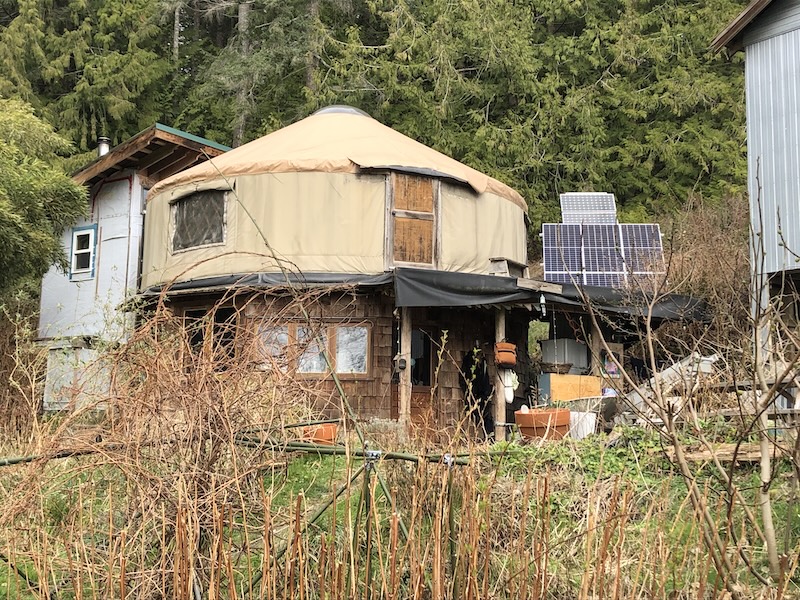
Adam Schick: “There is only so much you can read in books, and there is even less you can gather from the internet. The internet offers very specific points of view that don’t show you the struggles. An Instagram reel doesn’t spend enough time on the trials and tribulations it took to get to that point. What we’re offering is the chance to be there for all of it. If, at the end of it, you want to shoot an Instagram reel, great—but you’ve been there from putting the seed in the ground to seeing it through to the end, perhaps making a meal and sharing it with the people in your community.”
“That is the full, big-picture experience. We are looking for people who are up for challenges and who are excited by how much there is to learn. If you come with a few skills and ways to apply them to your situation here, that’s great. But if you are simply enthusiastic, want to learn more, and realize that food production is vital to creating community, then I think we have an internship that will suit you.”
“Cortes is a great place to incubate. There is not only us here on the farm, but also many cool people with alternative ideas living at the end of these long driveways. Because you’ve been vetted by us, we can help make those connections easier for you. You aren’t coming as a random tourist or a stranger; you are coming as someone who is part of this established farm community.”
Links of Interest:
All undesignated photos by Roy L Hales
Sign-up for Cortes Currents email-out:
To receive an emailed catalogue of articles on Cortes Currents, send a (blank) email to subscribe to your desired frequency:
- Daily, (articles posted during the last 24 hours) – [email protected]
- Weekly Digest cortescurrents – [email protected]