
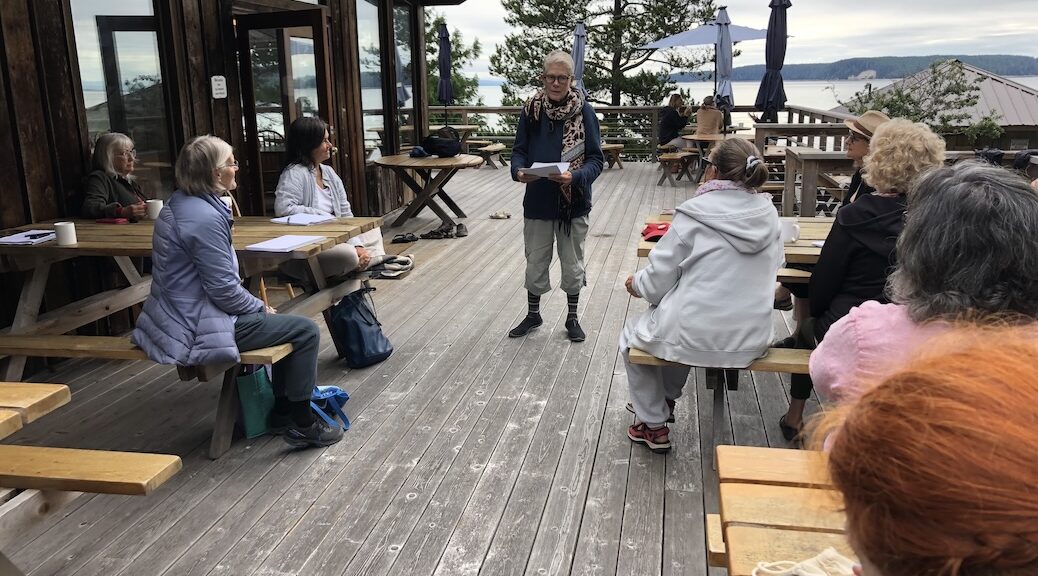

I was the only male among eighteen female writers at a week long retreat called Tapping the Stream. One of the things that set this program apart was the relaxed atmosphere in which widely recognized writers mixed with would-be authors. Personally, I might have totally frozen up had I known more about the company I was with. (That came as a series of surprises, which continues as I google their names.) Instead, we got to know each other as people as we all worked to improve our craft. This was only one of three programs during the week I was at Hollyhock.
Photo and audio clips of the Murmuration at the opening, 7:39 and the closing by Christopher Kuntzsch
Coming To Hollyhock
As preparation, I interviewed Chief Executive Director Katia Sol, who has just finished the 18 month transition from her old life in California. The trips back and forth are largely over. “We just arrived back on the island a few weeks ago, and I’m really excited to be here now for the indefinite future.”
Cortes Currents: How do your kids like it?
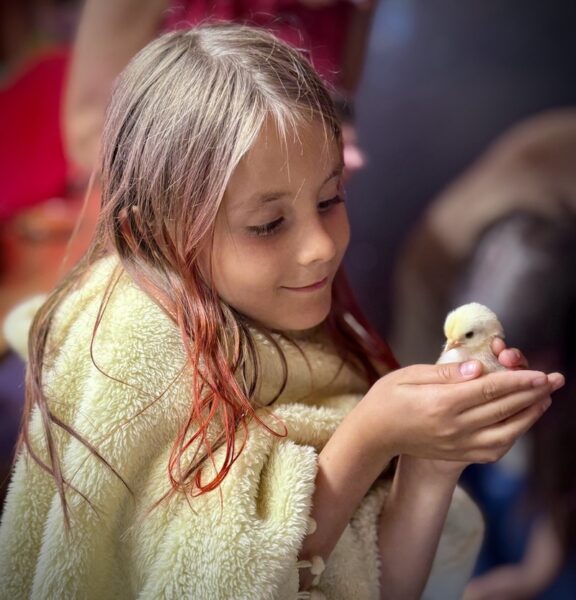
“Good, my little one is seven, and we came back in time for him to do the last couple of weeks at school. It was so sweet—he got bombed by all of his friends. They did a running jump hug, all saying, “Kolea! Kolea! Kolea!” They were really excited to see him, so it’s so sweet for him to just feel so welcomed back into the community. The last couple of weeks were like: a field trip to Smelt Bay; Indigenous Peoples Day; Sports Day competitions; and then a field trip to the lagoon. So he had a great final couple of weeks of school. I have two older kids who are almost 18 and 21, so they’re in the US and they’re launching off in their own directions.”
Cortes Currents: What’s it like at Hollyhock this season?
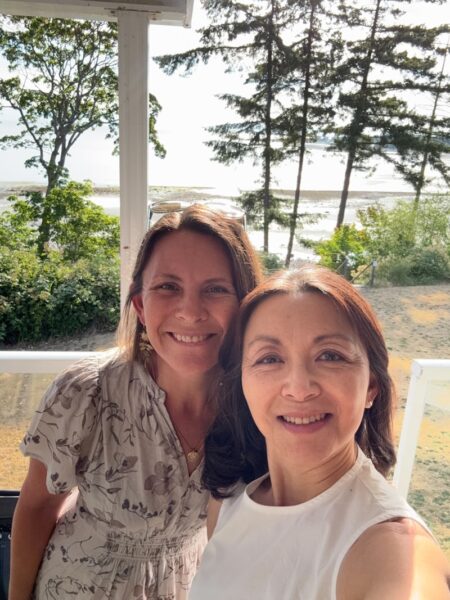
“It’s feeling really good, especially with the base lift that we did to the wage last year for all employees. We’ve just had amazing retention. All 12 of our campus managers came back, which is incredible. What that means is there’s a lot of consistency, also a lot of the chefs in the kitchen came back, and I’m hearing the food is even better than it was last season.
Cortes Currents: A lot of people I interviewed commented on the food, as well as Hollyhock’s relaxed atmosphere.

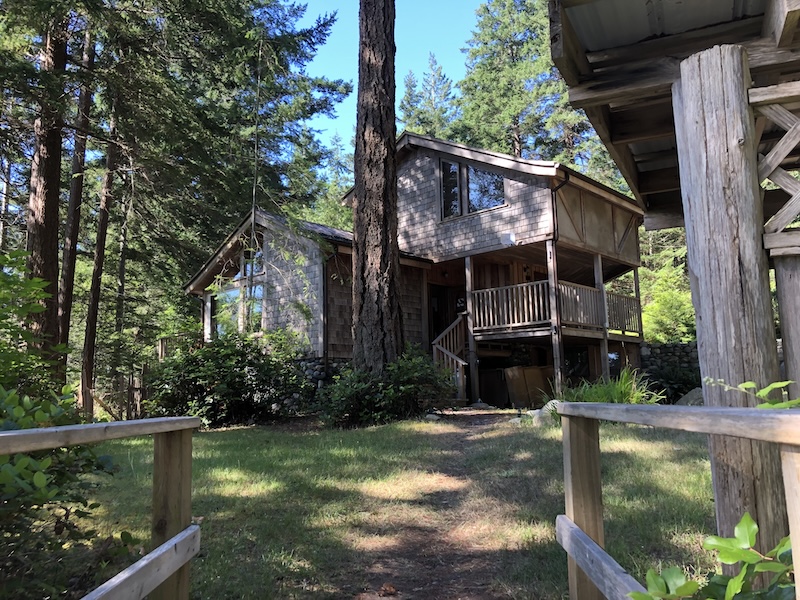
Tara McGuire (writer): “I love the food. That’s a big deal for me actually. It’s so healthy and so close to where most of it is growing that it’s just giving me extra energy for the writing that I’m doing. I’m staying in a tent, so I love being up the hill on my own with all the birds waking me up in the morning and the proximity to the water. I’ve been swimming every morning before breakfast. It’s just everything I could dream of.”
Cortes Currents: I found the atmosphere surprisingly relaxed. While the lodge is packed during meal times, after that all the writers went to specific retreat areas. Tara and I worked in opposite corners of the big room in Bluff House. There were periodic visitors throughout the day, but we were mostly alone, and one of the most prominent sounds came from the birds outside. I emailed a recording to local birder George Sirk, who some Cortes radio listeners know as Nature Boy. He replied, “Swainson’s thrush, one of my favourites, it goes to Venezuela for the winter, my native country.”
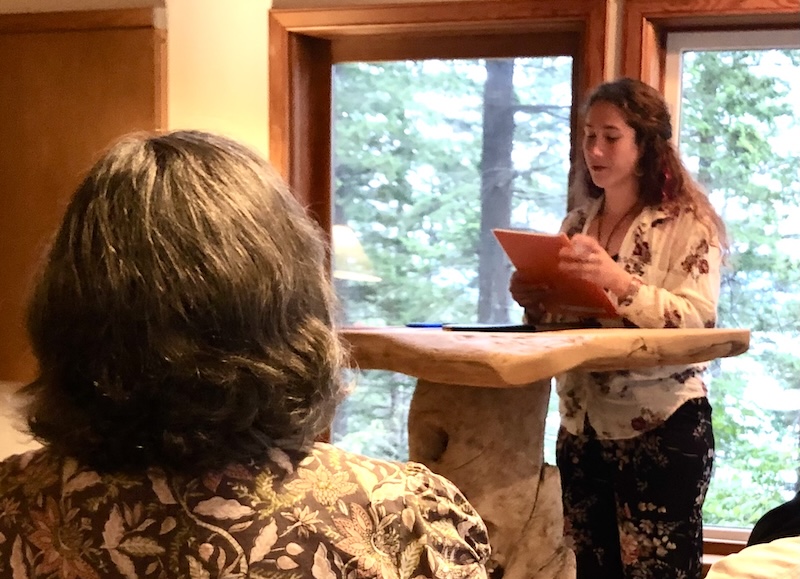
I asked another one of the writers, ‘What is it that brought you to Hollyhock?’
Florence Allen (writer+): “Well, I work here.”
That was unexpected, though Katia did say every staff member gets a complimentary retreat!
Florence Allen: “I was really excited to work here because it just seems like such a beautiful place to meet beautiful people and to learn new skills. I was just drawn to the culture of this place.”
Cortes Currents: What do you do in Hollyhock?
Florence Allen: “I work in the kitchen.”
Cortes Currents: Is that fun?
Florence Allen: “Yes I really like working in the kitchen. The food is really good here, because the kitchen staff is so good.”
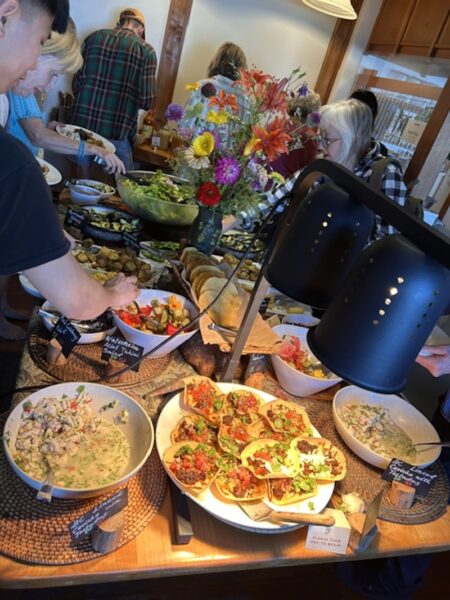
Katia Sol: “Morale feels really good. We’re just jiving and doing really well together, so everything’s feeling great. I love to just walk around campus, visit the different departments and go browse in the store, although that’s dangerous for me because I usually walk away with something. It’s just nice to be able to have some meals in the lodge and meet guests and presenters. I’m really intending to do more of that this year, because last year I was just so full on and getting my head around everything.”
Hollyhock in the Larger Cortes Community
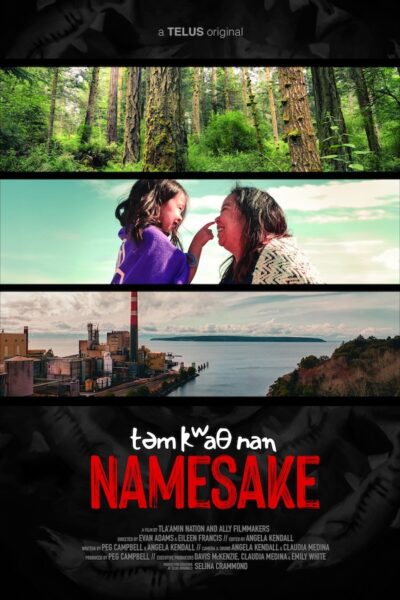
Katia Sol: “I’m still feeling very much like a newcomer, but also really, really joyful and being here on Cortes and Hollyhock. I’m excited to get involved in the Cortes Island school. I’ve been connecting with Michael Datura, who’s the principal. The first program of the season was a collaboration with the Cortes Island Academy, that brought rural and Indigenous youth here on campus. I went to the Klahoose Cultural Centre on Tuesday to see the film Namesake about the attempt to change Powell River’s name. I talked with Georgina Silby (Klahoose Community Events Coordinator) about hosting that film at Hollyhock and maybe doing a collaboration with the school around Truth and Reconciliation Month.”
“I’m eager to figure out all the ways that Hollyhock can be even more deeply weaving with the community. I understand there used to be coffee houses and music nights at Hollyhock. So I welcome ideas, proposals, suggestions, and collaborations. It’s really exciting planning to be here throughout the fall and winter, to think about how we can even start opening up the campus more in those seasons.”
The Murmuration
Cortes Currents: What are people talking about on campus right now?
Katia Sol: “Right now on campus, Rhiannon is a teacher who’s been coming here for … I just was told it’s her 30th year teaching at Hollyhock. She’s actually a teacher of mine. She lives in Hawaii but I met her in the Bay Area in California. Right now they’re singing a lot in the lodge, and around campus outside. I’ve been sneaking into Raven to join some of their sessions.”
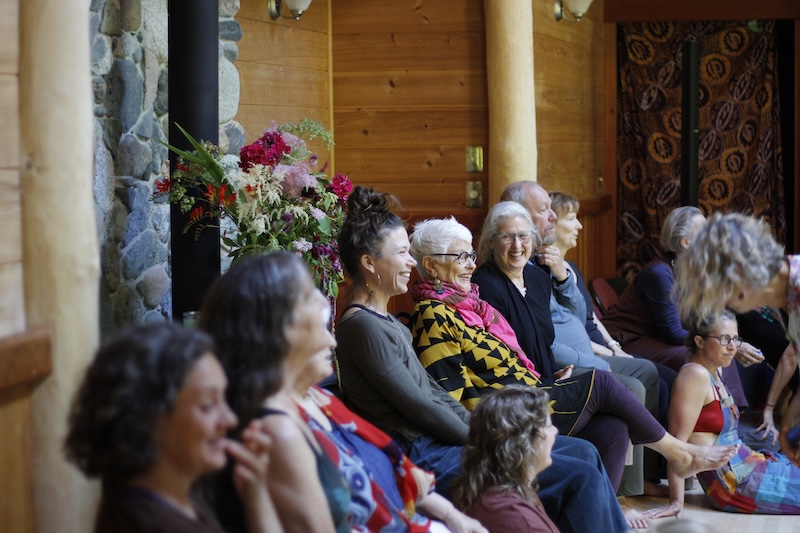
Cortes Currents: Laurel Murphy has been working with Rhiannon since 1992, but explained the Murmuration Project is something new.
Laurel Murphy: “I don’t know if anybody else is doing this, but it’s a form that’s based on improvised singing and improvised movement combined without any kind of leader. It really comes from Rhiannon’s work, which is improvised voice. Margie Gillis saw that there was a possibility of actually bringing in movement. In a performance, for instance, singers could be improvising together and then get from one form to the next using movement as the glue without having to be professional dancers, but to have that kind of body awareness and learn how to work together like birds do when you see a murmuration—like a flock of birds, which has no leader. It’s expanding, contracting and moving. Parts are spinning off from that and then coming together. That’s basically the way this form works. Bringing together tthe collaborative vocal. There’s no plan and there’s no leader, and everyone has to go into their intuition and deep listening to make it work.”
Cortes Currents: How long have you been doing it?
Laurel Murphy: “I think I started working with Margie Gillis around 2016 and shortly after that, Rhiannon and Margie teamed up and did an experiment, a workshop in Montreal. I think there were 28 of us who had been working with Rhiannon for years and were very familiar with her forms. We did the Montreal thing for two weeks. Half of that group, and I was included in that, went to Denmark and we were part of a vocal festival there. Then there was a workshop that they did in Vancouver which was open to more singers.”
“It’s starting to expand out. A group of about 12 singers broke off and went back to Denmark. Some singers who were in the original group went back to Italy where they live, and they started a practice group. They’ve started teaching it to anyone who is interested in learning.”
Cortes Currents: Where do you go from here?
Laurel Murphy: “I’m going to Quebec. Margie Gillis has a place outside of Montreal. There’s, I think, about 14 singers who will be spending four days in the studio and getting familiar with each other again. Then we’re going to the International Body Music Festival in Quebec City, and we’ll be doing a performance there.”
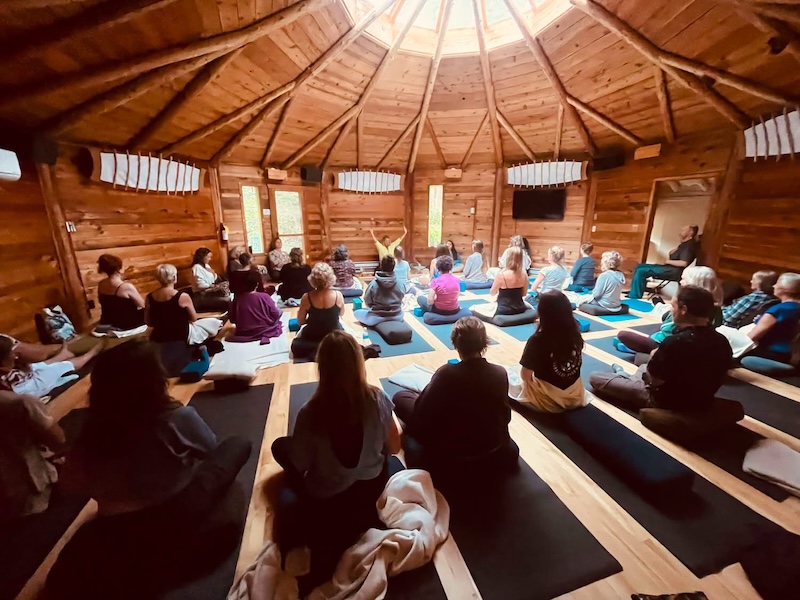
Homecoming: Yoga with Mara Branscombe
Cortes Currents: For those who wanted to take advantage of everything Hollyhock had to offer, there were 6 AM self guided meditations in the sanctuary followed by Mara Branscombe’s 7 AM Yoga classes.
Mara Branscombe: “This was my eighth year leading a program at Hollyhock. Every time I return it is like a homecoming, and that’s why I named the program Homecoming this year. Cortes feels so magical. I love this island so much.”
“We have a strong yoga practice every morning along with a long meditation and breath work, and then we do something called Japa Mala Mantra. So we work with mala beads and say the mantra into the beads. It’s quite a practice, very deep and then every afternoon we go into one element per day, earth, water, fire, air, and ether. We do ritual practices to invite the elements deeper into us, almost like a consciousness.”
“The first day the element is earth. How can we ground into this earth? What can we learn? From the Earth at this cycle and season of our life, for some cycles, we need to become more grounded. For some cycles, we need to be more like water and fluid and fire. We invoke and invite in for courage and for passion, and to do the work that we want to do as humans in the world. Right now for air, it’s more expansive and spacious and almost like a bird’s eye view. How can we open our mind to actually become the bright light inside our consciousness. Lastly, ether is the element of spirit. That’s the fifth element, and it really is around what is spirituality to you or what are your beliefs and how can you come into a deeper connection and awareness with a sense of something other than the mundane. Something more universal, higher knowledge, whatever the spiritual beliefs are, it’s really around how to become more intimate with listening to our intuition and with the inner calling of what wants to be expressed now?”
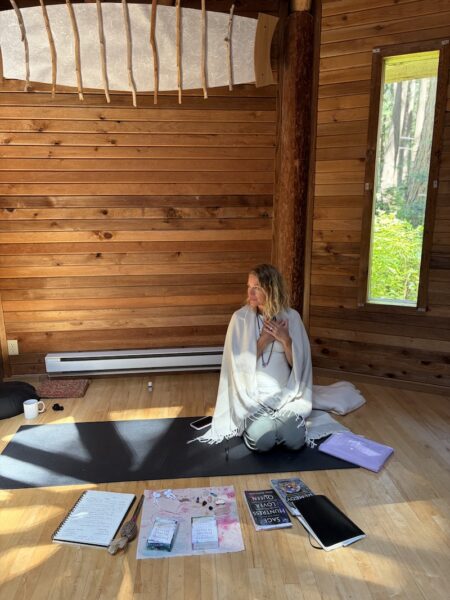
Cortes Currents: The writers were invited to special evening sessions of the other programs. Mara offered something called ‘Sleep Yoga,’ which I did not attend. I was so tired that I would probably have fallen asleep! Still, I had to ask, what is sleep yoga?
Mara Branscombe: “It’s called Yoga Nidra. Yoga Nidra is a practice where you lie down and stay in the same position the whole time, and you are working to relax your body parts. And so I am there guiding body parts to relax. For example, relax your forehead, relax your eyes. Relax all the muscles in your face and your jaw. This takes about an hour and I go through all the body parts.”
“Often people do fall asleep right away, but the point is with Yoga Nidra is somewhere that halfway point between being awake and being asleep. It allows our nervous system to reset. It’s been known actually to help heal PTSD. People come to Cortes and Hollyhock for a reset. They come here to restore, to renew, to perhaps rebirth and yoga, sleep really helps with that.”
“Now is the time in humanity to come together to support one another, to not get distracted by the state of the world or pulled down by it, but actually to ignite your fire and to settle into your own self to ground and calm your own self so that you can do your work. You can do your art, you can do your service to this community and to this world.”
Tapping The Stream
Some of the writers who came to Hollyhock were seeking a reset. Others wanted to improve their craft. The most common question among those of us working on our first book, seemed to be ‘what do I do with it? How can I get my work published?’
Betsy Warland, a leading poet, non-fiction writer and one of the co-leaders of Tapping into the Stream, explained, “If you arbitrarily approached 10 people on the street and you asked each of them, ‘would you like to be a writer?’ Probably, everybody would say yes. It’s a very appealing profession.”
“It just takes so long. It’s hard work. It goes on and on. I will see a friend, a writer who says, ‘oh yes, I’m almost done with my novel.’ Come back a year later, they’re still working on it. This is just typical. It takes way longer. It’s really much harder work than anybody would anticipate, but it’s so endlessly fascinating.”
“To me, it’s a spiritual practice in whatever the writing is about, whatever the narrative is about, it’s to make our world better. People aren’t writing to make it worse. My main comment to writers is that the narrative is the boss. That’s what we have to accept. We’re not the boss. This narrative that each of us are writing, it already exists. What we’re doing is just opening our ears, eyes and mind and channeling it in. Using our own lived experience for this to come out into the world and to be available.”
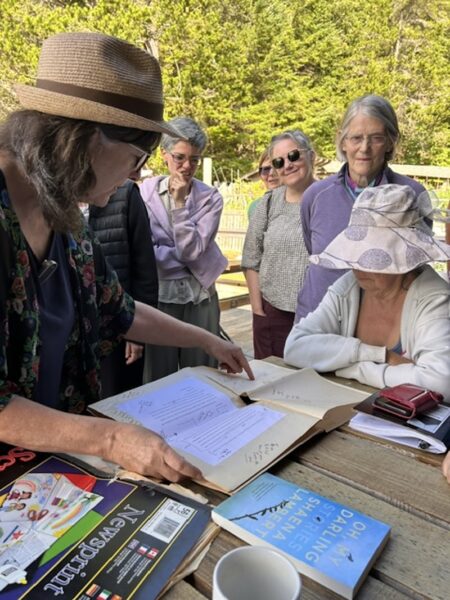
Shaena Lambert, the other co-leader of Tapping the Stream, is a widely recognized novelist who is now based on Cortes Island.
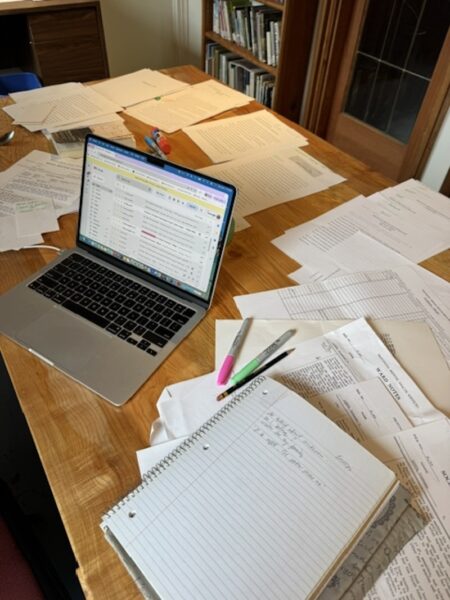
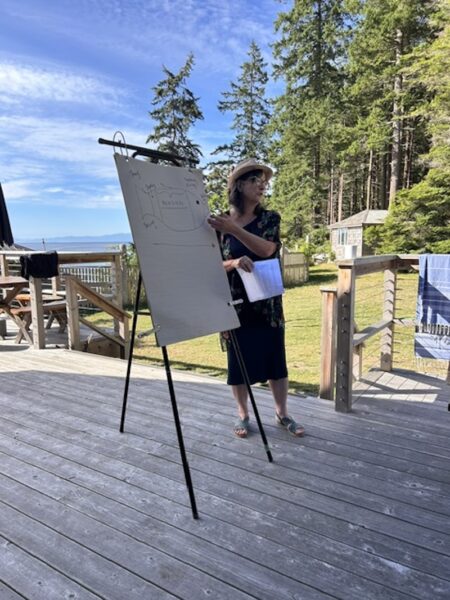
Shaena Lambert: “It’s exciting to get together with other writers in a retreat setting and on Cortes, at Hollyhock, it’s unique for a number of reasons. One is because it’s a retreat with people working on something in progress. That’s exciting: to be surrounded by 15–20 people all of whom are working on their manuscripts, and that’s a lot of fun. Betsy and I read 10 pages in advance, so we have a flavour of every single taste in the room. We’re like hummingbirds. We can dip into each person’s manuscript and give them assistance, or talk to them very specifically about craft issues as they’re working. Writers mostly are alone: it’s exciting to come together in the summer and be together.”
“Usually what happens out of Tapping the Stream is a little community is formed. This time is no exception. People are sharing emails at the end and then they continue to work together. Building community is a really important part about being a writer. For all those reasons, I really love it.”
“Also I love working with Betsy. We’ve worked together for years. We worked together at SFU and through the Vancouver Manuscript Intensive, which she founded. I love the way she works. I love the way she holds space. So that’s really nice to be in that container with her.”

Cortes Currents: Is there anything specific you want to say about this particular workshop?
Shaena Lambert: “It felt like there was more at stake this time. When everyone talked about what they were working on, I realized there was an Indigenous land defender (Rainbow Eyes). Who, of course, I admire and recognized her name from Fairy Creek. She’d found her way here. Judy Rebick is here from writing another brilliant book about the genocide in Gaza. Different people are gathering with their stories and there’s a lot of discussion of physical pain. It just felt like there was a lot happening in the room, and that with the intensity of what’s going on in the world, this weaving of stories, this way that people are using their own minds and hearts and heads to create feels magical, but also really potent right now.”
“We had some really interesting conversations about AI, and we realized that people are using AI as a tool for research and writing now, and they’re using it as a way to gather information. But people, hear me! – it dumbs down writing. It takes the breath away. So much of what was happening in this room or in conversation was about the breathing, living communication that happens through the body onto the page, from the page into the mind. I just came away with a conviction that what humans create is miles away from what machines create.”
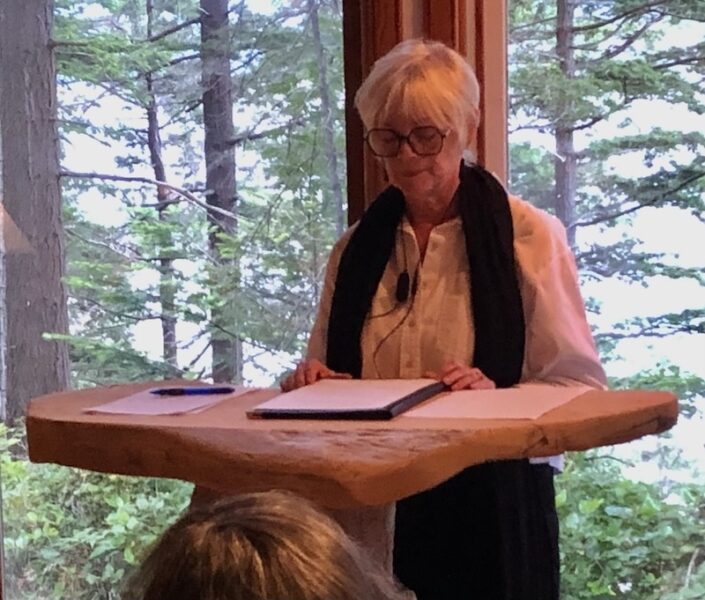
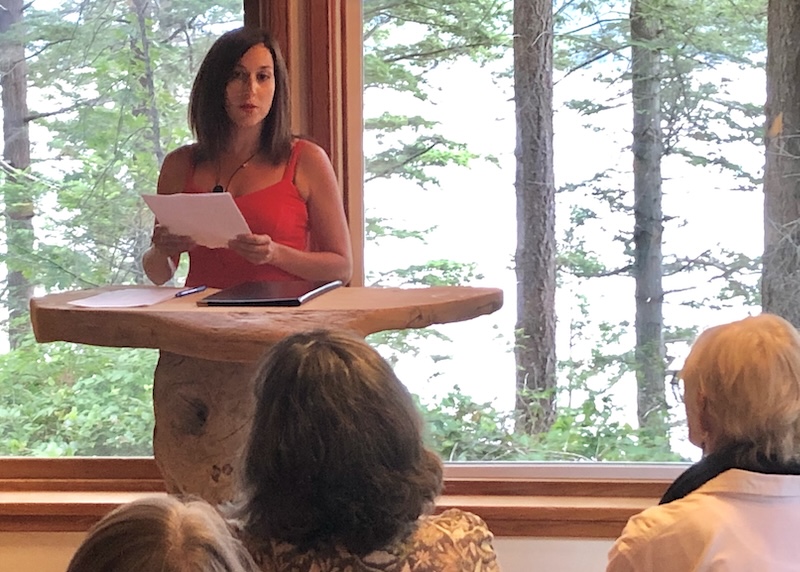
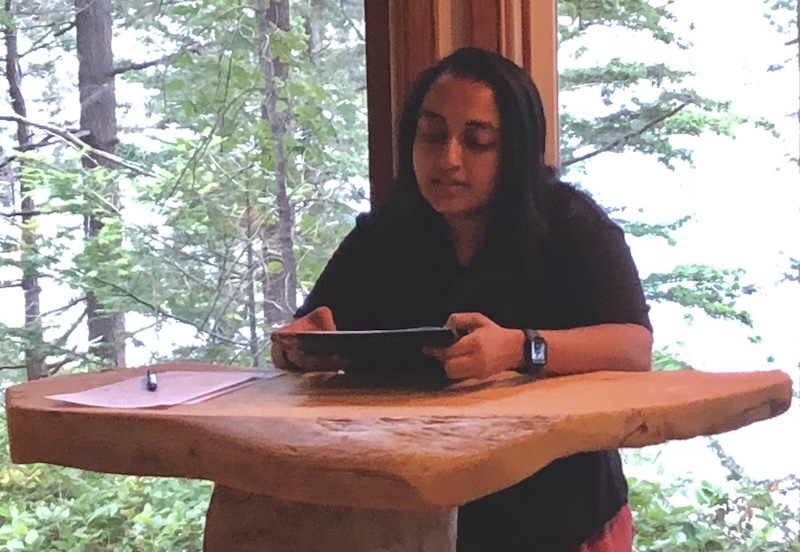
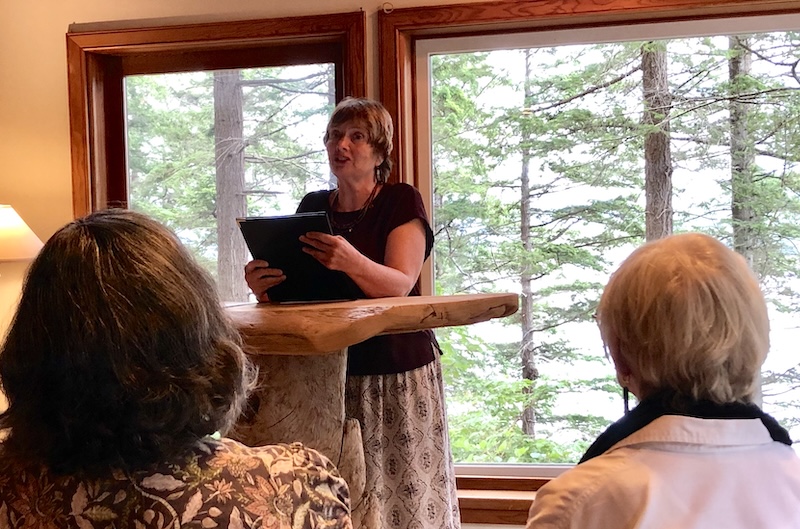

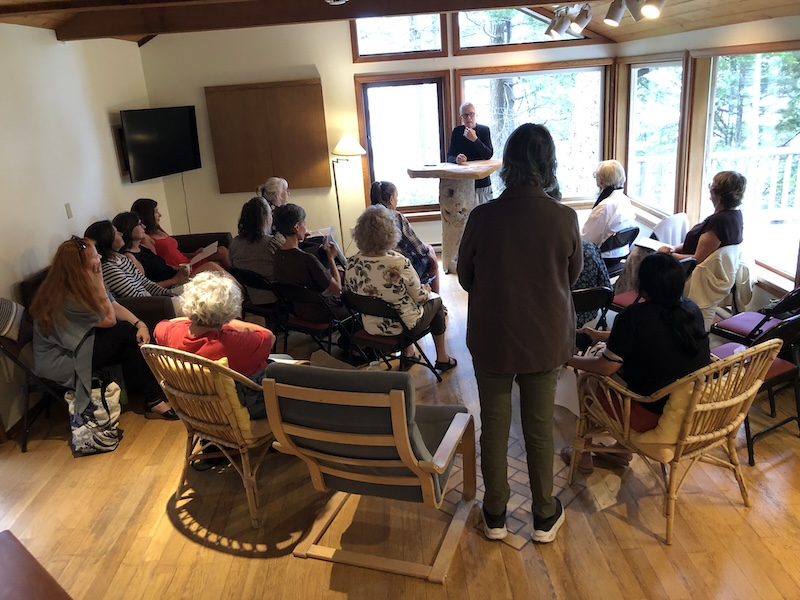
Cortes Currents: The Literary evening was exceptional. I’ve only been to a few in the past and some of the material was not very inspiring. In this case, both the published authors and ‘wannabes’ sounded like professionals.
Diane Guthrie (writer): “I couldn’t believe that everybody had such interesting stories to tell. They were all, in their different ways, really worthwhile listening to. Some people’s writing was quite funny and others were touching. I felt like it was like a pollination between all of us happening in the room.”
Cortes Currents: What made our literary evening so exceptional? The biggest difference between this group and other readings seemed to be our presenters, and one of Betsy’s craft sessions had been a preparation for our readings.
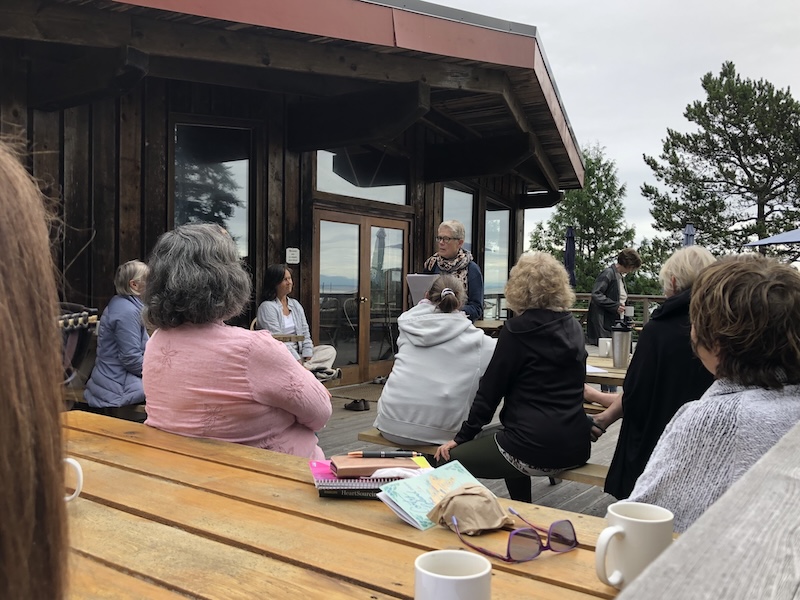
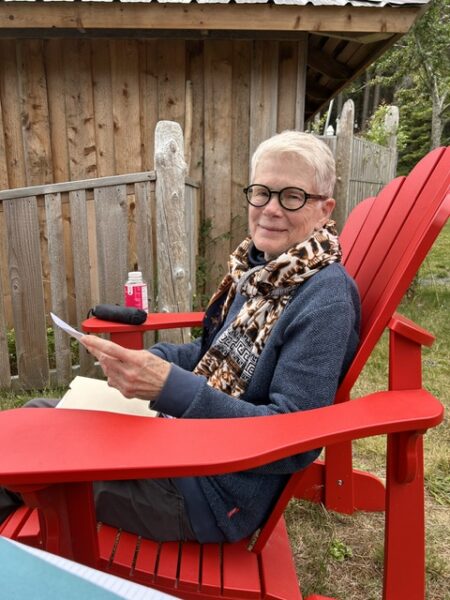
Betsy Warland: “It’s a group of really good writers and really interesting writers, that makes a big difference. The group has, through the course of the several days, really connected with each other. Sometimes readings can be like people are trying to outdo each other, or they go on for way too long. So, I made the initial plan with everybody: three minutes and no explaining. It has to fly.”
“Everybody stayed within the three minutes. They chose fun and moving, provoking excerpts. It was really refreshing because it can happen in readings that people go on way too long or they mumble through. There’s an art form to giving a reading: preparing, timing yourself and everything. You guys were just fantastic last night.“
Cortes Currents: Tell us about your relationship to Hollyhock.
Betsy Warland: “I used to come a long time ago for meditation retreats, that’s how I first got to know it. I did one or two writing sessions. Then Shaena and I got the idea that we would do this together: working, teaching and bringing our different sensibilities. I’m nonfiction and poetry; she’s in fiction. We’re good friends. We’ve been doing it since 2022 and we just love it. It’s just so dynamic, actually fun and moving often.”
The Magic of Hollyhock
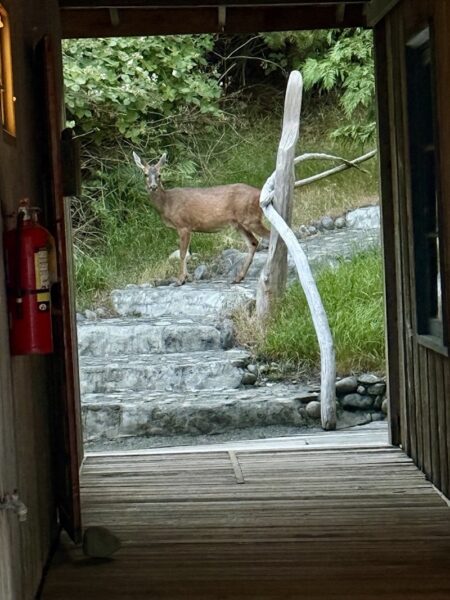
Shaena Lambert: “There’s lots that happens here that is magical because it’s Hollyhock, because it’s Cortes, and a lot of people talk about it being a sacred space. I was so pleased that there was the drumming at the beginning, at the orientation and the welcome from the Klahoose welcomer, and that we are honouring this as an ancient place that has been a storytelling place for millennia. We’re part of that.”
Betsy Warland: “It’s a very well-run retreat center. I’ve been at gigs like this and the food is appalling. When you’re giving your full attention and taking chances with sharing your work and talking to each other, it helps that the food is good and nourishing and interesting. The whole environment is just a wonderful fit for a writing retreat and so many other art forms too. They know what they’re doing. It just takes quite a while to get here. That’s the only thing I don’t like about it.”
Cortes Currents: How far are you coming from?
Betsy Warland: “Well, just Vancouver, but it takes most of the day.”
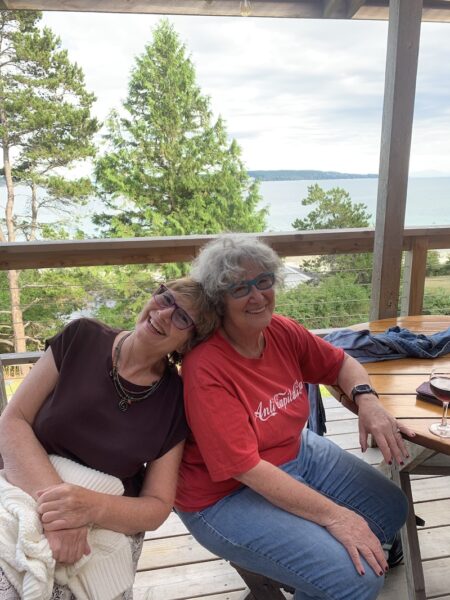
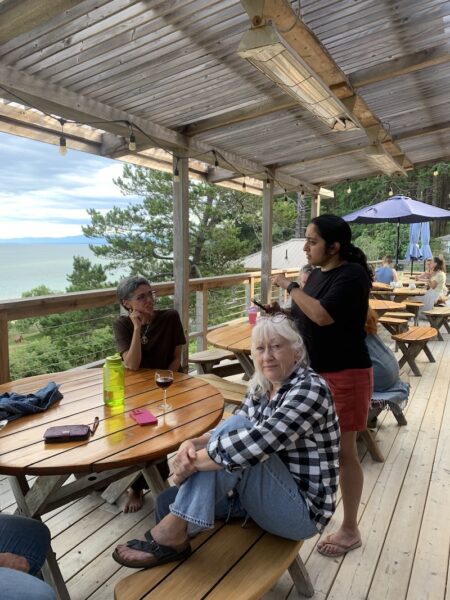
Cortes Currents: Judy Rebick (above, right) is a nationally recognized author, broadcaster, and public speaker who’s come to Hollyhock far more often as a presenter than as a guest.
Judy Rebick: “I don’t really believe in magic, but it’s kind of a magical place. It’s very beautiful and peaceful. You always meet wonderful people here, and the food’s great. It’s just a lovely community. You always feel safe here and somehow it enables creativity in a way I don’t really understand.”
Diane Guthrie: “I have wanted to come here for over 30 years, and I just am so grateful I was here and able to have this really wonderful experience. I’ve had so many amazing, interesting conversations and met so many different people. It’s been just a joyful experience for me.”
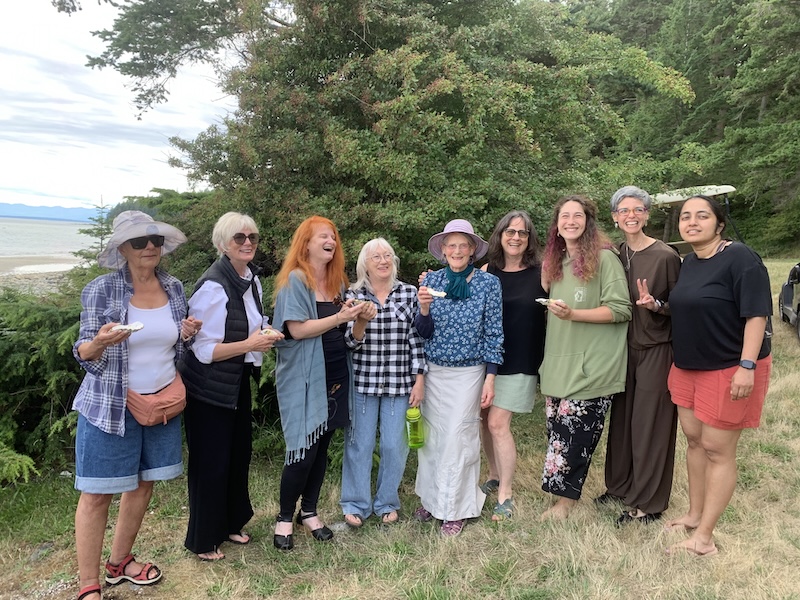
Hollyhock is running 80 programs this year, three of them ran during the week of July 4th to 10th, 2026.
Links of Interest:
- Hollyhock (website)
- Mara Branscombe (website)
- Shaena Lambert (website)
- The Murmuration Project
- Betsy Warland (website)
- Articles about, or mentioning, Hollyhock
All undesignated photos were taken by Roy L Hales.
Sign-up for Cortes Currents email-out:
To receive an emailed catalogue of articles on Cortes Currents, send a (blank) email to subscribe to your desired frequency:
- Daily, (articles posted during the last 24 hours) – [email protected]
- Weekly Digest cortescurrents – [email protected]